While the start of spring of 2017 had brought quite a few developments in Croatian aviation, the main talk of the town has consistently been the long-awaited opening of Zagreb Airport’s (ZAG/LDZA) bespoke new passenger terminal – and its associated bespoke new apron – on 28 March. Much had already been said in the media about its design and furnishing, advancements and failings, costs and politics – so for my part I’d decided to skip over all of that and devote some space to the one bit that people rarely see first hand: life airside.
Having had the opportunity to experience its workings for its first two days of operations – inevitably with camera in hand – I’d quickly found myself with enough interesting material to put together a short “early days” photo story. Biased a bit (OK, a lot 😀 ) towards the Q400, these shots are not intended to be a tour of the terminal/apron nor a serious documentary piece – but merely a “first look” at the place our airliners will now call home… 🙂
For handy reference, the official airport chart (in PDF format) is available here.
CTN Squadron (or rather a quarter of it) set and ready for its first day of operations from what is colloquially known as “NPT” (short for “novi putnički terminal”, New Passenger Terminal). Notably smaller than the old apron – which had up to 22 stands – this new one only has 12 (E1 through E11, with E8 able to be split into E8L and E8R as conditions dictate), eight of which have jetbridges.
Welcome aboard! Even though they cannot use these jetbridges due to the design of the bridge floor pan, Q400s can nevertheless normally use these gates, with E4 – in the middle of the terminal – seen here.
One of the bigger sources of complaint is the FMT Airpark Visual Guidance Docking System (VGDS), which is… well, rudimentary at best. Unlike more advanced (i.e. partially or fully digital) systems elsewhere, this one is completely analogue and somewhat crude in guidance – since it relies on a human operator rather than an integrated laser system.
A wheel + towbar + little truck = pushback. Even though Zagreb had always had a push capability (including a pretty powerful tug sufficient even for the heavies), the “taxi-out” nature of the old apron had meant that it was very, very rarely used. However, since all stands at the NPT require pushing to get out of, this had necessitated a lot of dry practice runs by the ground crews…
Given that most of the visitors at ZAG are of the turboprop or medium jet variety, pushing is generally done in the manner shown. However, if need be, the airport has a heavy duty tug that lifts the entire nose wheel and is used to move the heavier stuff.
I wonder what the fines are for parking in other people’s spots… trying one of the standard non-bridge stands – E10 – on for size. Even though there are three such positions, their configuration and usability depend on the occupancy of E8, the only jetbridge stand able to accept a widebody.
The calm before the evening rush hour. Even though it seems large here, the apron is actually quite tight; indeed, a major criticism from flight crews and operators alike is the lack of maneuvering space and the existence of only one taxilane. This oversight became most acute during the day’s three major rush hours, when multiple aircraft arriving, departing and pushing at the same time led to long delays and unnecessary congestion – particularly problematic for flights time-restricted by slots at their destination.
And finally, a bit of video from a push out of stand E4 on the Day #1… with a nice view of the entire terminal:
Update – Day 5: showing off the airport’s ambitions…
Aiming high? Nose gear position markings for the 777-300, A340-500 and 777-200 at stand E8. While all of these types had visited Zagreb before (some multiple times), not one had as of yet made a habit of it – though Emirates had recently announced it was planning to change that with a daily year-round 777-300 service to Dubai.
Markings for the 777-300, 747-400 and 777-200 at stand E10R. The prevalence of 777-capable positions reflect the type’s status as one of the most popular widebodies in town, particularly frequent during the summer on twice-weekly tourist charters from Korea.
Update – 21 May: it took me until Day #53, but I’d finally managed to capture the operation (of lack thereof) of the FMT Airpark VDGS. As is (hopefully) visible, lateral guidance is provided by simple optical systems that change shape with viewing direction – while distance is regulated by ground personnel through the (rather crude) semaphore.
While the imminent arrival of fine(r) flying weather has been met with much enthusiasm here at Achtung, Skyhawk!, it will nevertheless take awhile for operations to return to levels sufficient to provide a continuous stream of quality material. In the mean time, I have once again been able to put together a small feature from photos taken over the autumn and winter, enough to (hopefully) set the stage for the fresh stuff coming in with the spring 🙂 .
Since most of the machines I’d picked for this piece have a bit of history behind them in one way or another, their stories have had a tendency to become long-winded – even more so than usual 😀 – resulting in a post that had quickly outgrown its intended role as filler… hopefully to the satisfaction of my readers!
Fog, low cloud, rain – all daily realities of autumn in Zagreb. But when everything disperses, clears and dries up, what remains is beautiful sunshine, crisp air and a full palette of fall colors… perfect conditions for a bit of photography at your local airfield! A relative newcomer to the Croatian register, 9A-KVY – formerly OE-KYV of Austria – is normally based at Pisarovina Airfield south of town, Croatia’s only truly private airstrip.
A bit of color on a dreary, rainy day at Sarajevo (SJJ/LQSA). Even though it is not really interesting per se compared with other aircraft of its class, the little Hawker perfectly epitomizes the complicated family tree common to many British aircraft. Starting out in life as the de Havilland DH.125 Jet Dragon of the early 60s, it would enter production as the Hawker Siddeley HS.125, after this mighty conglomerate – itself formed by the merger of Hawker and half a dozen other companies – took de Havilland under its wing. This turn of affairs would last until 1977, when HS would be nationalized and melted into an even larger entity, British Aerospace – in the course of which the HS.125 would be renamed into the BAe-125. To keep people on their toes, BAe would in 1993 sell off their bizjet division to Raytheon, which had already back in 1980 bought Beechcraft. To make managing these two companies easier, Raytheon had formed a separate company called Hawker Beechcraft, where the BAe-125 would become known as the Hawker Family. Of course, this is not the end of the story; HB would go bankrupt in 2012, leading to the formation of the Beechcraft Corporation out of its ashes. This would in turn be bought in 2014 by Textron – who already had Cessna in its portfolio. Thankfully, the heirs of the Jet Dragon (including the Hawker 800) had gone out of production in 2013, signalling the end of the Mexican soap opera that was its production life!
A bit of winter wonderland at Sarajevo as JIP and its “shadow” await their evening freight run to Ljubljana (LJU/LJLJ). One of several Metroliners operated by Spanish carrier Flightline, JIP is a mid-production example, being an improved version of the original Metro – itself a commuter stretch of the short-body SA-26 Merlin bizprop (which in turn is a radical modification of the Beech Queen Air piston twin).
A tight fit as Croatia’s only G-2 takes shelter from the rain incoming to Čakovec Airfield (LDVC). In many ways the defining product of ex-Yugoslavia’s aeronautical industry, the Galeb (“seagull”) intermediate trainer is nowadays a popular warbird, with almost a dozen – out of the 248 produced – flying in civilian hands. Even though its looks and absolute performance leave something to be desired, the G-2 boasts very pleasant, predictable and enjoyable handling, and is still well regarded locally for its robust and durable airframe and nearly-bulletproof systems (if maintained properly). Of interest, the type also features removable tiptanks – stowed along the hangar wall on the left – almost always carried in normal operations, but occasionally removed to save on hangar space during long-term storage.
A lack of symmetry that immediately attracts the eye… another indigenous Yugoslav design, the Soko 522 was one of the country’s first post-war mass-produced military types, intended primarily for the advanced training/light attack roles. Quite an ugly machine from most angles – one only a mother could love – the 522 would cling on in service until the late 70s, when it would be replaced (along with a slew of other 50s designs) by the UTVA U-75, which would go on to become Yugoslavia’s second most produced design. This particular example – coded 60206 – had been re-purposed as a gate guard following its withdrawal from use, located from the outset at Čakovec Airfield. One of the bases of the nascent Croatian Air Force during the 90s civil war, it would in the summer of 1991 be subjected to several air strikes by Yugoslav MiG-21s, with 60206 ending up on the receiving end. Recently taken down off its pylon for partial restoration, it will soon get a rebuilt wing from another 522, hopefully an overture into a complete rework… interestingly, the damage had also revealed an unusual feature of the 522, its folding wings. A simple affair reminiscent of early carrier aircraft, the folding mechanism is located just outboard of the main gear – but had likely been little used in actual service.
An all too common sight at Lučko in winter: a bare apron, an empty circuit – and a gorgeous fiery sunset behind the Žumberak Hills as yet another storm system approaches from the north, blown in by a bitterly cold and piercing wind…
A suitably sombre shot as the sun sets once again on poor old BDR. One of the oldest light aircraft in Croatia (manufactured back in 1967), BDR has quite a local history, having been attached throughout its life to the AK Zagreb flying club – one of Croatia’s oldest and (once) most respected aviation institutions. Having seen off generations and generations of young pilots – many of which had become the backbone of Yugoslavia’s national carrier JAT – BDR had since become collateral damage of the club’s financial woes and general infighting of the early 2000s, flying for the last time in 2003. Moved about from time to time (mostly when it gets in the way), it had been left neglected ever since, having been washed and TLC’d only once in 2009 by your’s truly. Most of the time it has been left to die by weather, useful now only as a prop in an apocalyptic movie…
The newest resident of Lučko catching some air under its wing on this pretty windy and gloomy day. If I’m not mistaken the first Rolladen-Schneider glider in Croatia, D-0138 was manufactured in 1980, and still looks crisp despite the 37 years of flying behind it. When sporting a 15-meter wingspan (as is the case here), the LS3 has a lot of similarities to the home-grown 15-meter Vuk-T (featured previously): both are tough, robust and long-lived machines whose designers had sacrificed some of the performance seen in competing models for more pleasant handling and more predictable characteristics. Another interesting tidbit is that the LS3 is considered to be the first glider to introduce wingtip extensions (to 18 meters), which had allowed it to be used in several competition classes without much (factory) effort – an approach used today by almost all European manufacturers.
One of two AIS Airlines machines on service in Croatia soaking up the last light of day shortly after its arrival from Osijek (OSI/LDOS). Developed at the beginning of the 80s from the very similar Handley-Page HP.137 (itself designed in the 60s), the Jetstream is one of the UK’s bestselling airliners, and can even today be found in service all over Europe and the Americas. Despite its deficiencies (a high interior noise level and a lack of sophistication in the nose), the Jetstream had proven itself in service with its flight performance, durability – and the fact that it had been designed to demanding airline specs right from the outset (which could not be said of its main rivals, the Swearingen Metro and Beech 1900, both developed from smaller corporate twins). Even though it has been withdrawn from intensive line operations, it can still be found in the fleets of smaller operators – while in the States it had latterly found a new lease of life as a large bizprop. An interesting detail on almost all Jetstreams – apart from the fact that most have no autopilot – is the so called “baggage pod”, a removable streamlined compartment under the fuselage that can accommodate approximately 200 kg of bags. Even though early Jetstreams (like the HP.137) had a dedicated space for luggage in the aft fuselage, on later models it had been taken up by the toilet, requiring a bit of improvisation with a solution most often seen on Cessna singles. Another feature – seen on almost all multi-engine turboprops – is the additional plating behind the cockpit, intended to protect the fuselage from ice being thrown off the propellers.
The allure of Pacific adventure – and another sad reminder of the fickle airline fortunes on the Balkans. Today already part of the landscape of Skopje Airport (SKP/LWSK), Z3-AAM had been the only aircraft of MAT Airways, formed in 2009 by Kon Tiki Travel – one of neighboring Serbia’s biggest tour operators. Intended to both bring foreign tourists into Macedonia and create something of a national airline serving key cities abroad (a field where many had failed previously), the company had never managed to reach profitability in its two years of existence, in some parts due to local politicking, in others due to a lack of experience – but mostly because a simple lack of demand abroad, financially capable travelers among the small 2.1 million population at home, and constant competition from foreign airlines. Exacerbated by the imminent need to change the number 2 engine due to its dwindling service life – and pressure from foreign banks and investment funds that had financed the aircraft – the company had declared bankruptcy in 2011, bringing to an end another chapter in post-Yugoslav air transport history. Z3-AAM itself – manufactured in 1991 for the equally extinct Sabena – had thus ended up parked in front of Skopje’s disused old terminal. Previously known as Z3-AAH (also with MAT), this machine doesn’t have the rich history of other 737 Classics, having mostly been handed down from one investment fund to another following its departure from Belgian service. However, as a type, the 500 series was always something of an oddball in the 737 line, a shrunk 737-400 intended to appeal to operators of the equally-sized 737-200. Small and light – but sporting the same wing, engines and fuel capacity of the much larger 400 – the 500 was always a stellar performer in both climb and range, characteristics that had eventually led to its demise. Like today’s A318, the 500 was always too heavy for its passenger capacity (its structure being optimized for a larger aircraft), making it more expensive to operate. This had come to a head when fuel prices picked up by the mid 2000s, forcing many operators to ditch them en masse. Interestingly, their large numbers and low prices on the used market had attracted a lot of interest from the CIS, where operators scooped them up in handfuls to replace their aging and similarly-sized Tupolev Tu-134s. Indeed, if you want to see a 500 without waiting too long, Russia is the place to go!
While the very mention of its name often invokes fond nostalgia and strong apprehension in equal measure, there’s no denying that the pudgy little UTVA 75 remains one of the most famous, significant – and perhaps maligned – aircraft ever produced by the Yugoslav aviation industry. One of a number of piston props conceived, designed and built solely in-country, it had left a lasting mark on the local aeronautical landscape, having over the years seen off generation after generation of young pilots, service in a bewildering number of roles in every nook and cranny of the land – and the occasional appearance in the odd accident column…
But for all its past ubiquity, the type has become somewhat of a rare sight today, with most of the airworthy civilian examples nowadays confined to flying clubs in Serbia, Bosnia and Herzegovina and Macedonia. Outside military dumps, finding one elsewhere requires a bit of luck – so much so that even the locals (many of which had flown them extensively in the 80s and 90s) raise an eyebrow when one happens to rumble by.
So imagine my surprise when – having so far only five examples under my camera’s belt – I became aware of a beautifully curious four-seat example parked just 70 km away at Novo Mesto Airfield (LJNM) in southeastern Slovenia. Having only seen such a “quad” in one 80s photo, I was through the roof even before I found out it was the only such example in existence – a fact that (as if any further persuasion was necessary!) had seen me grab my car keys and set off across the border to see what’s what… 🙂
It may be fully white and featureless – making it particularly unsuitable for photography in direct sunlight – but being the only survivor of its kind had meant that I just had to have a crack at it whatever the conditions…
Wings of the nation
But, before we cover this prime example of Achtung, Skyhawk! material, a bit of history to introduce this compact little type to readers who may have never seen one in the metal 🙂 . Flying for the first time on 19 May 1976, the UTVA 75 – known under the factory designation U-75 – was designed to be a simple, straightforward basic trainer1 that could be efficiently used both in civilian and military roles. Even though the Yugoslav aviation industry had always put much stock in this segment, its offering of such aircraft was next to abysmal at the time, with the late 40s Ikarus Aero 2 and mid-50s Aero 3 being the only machines widely available for the role. Despite having given wings to post-WW2 Yugoslavia, they were both very much outdated designs, sporting wood & fabric structures, tandem cockpits, narrow-track tailwheel landing gear, basic instrument fits – and flight characteristics that often did not inspire much confidence in the student.
1 interestingly, the project had originally envisaged a whole family of aircraft stemming from one basic design, including a four-cylinder two-seat utility machine dubbed the M-10, and – most interesting for us 🙂 – a six-cylinder touring four-seater called the M-11. Eventually though, financial difficulties (which had also seen the temporary inclusion of Polish aircraft manufacturers in the design between 1973 and 1975) had left the M-10 as the sole survivor, paving the way for its development into the U-75
Designed around more modern principles, the U-75 had a lot going for it in the trainer role: it was robust, simple, easy to maintain and had just enough power to pull a few basic aerobatic maneuvers – but not enough to allow the student to correct every mistake with liberal application of the throttle. Additionally, it had a side-by-side seat configuration, a large instrument panel suitable for more advanced avionics (including blind-flying gear) – and, most importantly, was built entirely of metal (prolonging its service life in the aerobatic role) and used a wide-track tricycle gear with low pressure tires that made it safe and relaxing to operate even on poor airstrips. Other features had included a tailhook for towing gliders or banners, while the military could be content with a removable pylon under each wing, which could accommodate jettisonable fuel tanks, cargo drop containers (carrying 100 kg (220 lbs) each), light bombs of 50 kg (110 lbs) – and even unguided 12-tube 57 mm rocket packs and twin 7.62 mm machine gun pods.
One of the Croatian AF’s post-1991 examples (now decommissioned) doing what it was designed for during low-level training near Zadar (LDZD). Of interest, the fleet would in the mid 1990s be repainted into a mint CroAF scheme and be transferred to a bespoke military register (photo from: www.aeroflight.co.uk).
Designed from Day 1 to meet the requirements of the FAA’s FAR Part 23 regulations concerning UTILITY category aircraft, the U-75 can also boast a +6/-3 load limit – and was found in actual operations to be rather crash-worthy, since its wing and wing box were strengthened to cope with the rigors of “external cargo” 🙂 . Despite hailing from “the East”, under the hood the U-75 sports quite a bit of Western hardware, including a four-cylinder, fuel-injected 180 HP Lycoming IO-360-B1F whirling a Hartzell HC-C2YK-1 BF/F 7666A two-blade constant speed propeller.
With a MTOM of 960 kg, this package is responsible for a maximum level-flight speed of 215 km/h (116 kts), a maximum ceiling of 4,000 m (13,100 ft) and – combined with a wing profile suitable for low speed maneuvering – take-off and landing runs of only 125 m (410 ft) and 100 m (328 ft) respectively. The efficiency of the constant speed prop also means that the U-75 can be relatively frugal in a stable cruise, registering a range of 800 km (432 NM) on 150 liters (40 USG) of internal fuel. When fitted with two 100 liter (26 USG) drop tanks however, the U-75 was supposed to be able to reach an impressive 2,000 km (1,080 NM) – though this was a theoretical calculation only, since the aircraft had never been test flown to this extreme (the tanks themselves were never used in actual training operations).
Equipment-wise, the standard 75 was provided with the usual VFR instrument setup, including everything from the Basic 6 with the addition of an ADF receiver (all of which were powered from a simple and unremarkable 14 V electrical system). The armed versions used by the Air Force would also be provided with a simple optical aiming sight on the left side, while all models could be additionally equipped for night VFR operations. Interestingly, the instruments used were an unusual East-West mix, with the artificial horizon, turn and bank indicator, ADF, manifold pressure/fuel flow gauge and the tachometer all sourced from the US, with the rest of the instrumentation either indigenous or acquired from other European states that had used the metric system.
In service, the U-75 was always much blighted by a popular reputation for violent spinning (sometimes fatally), which bred some distrust in the design. However, while it could indeed be thrown into a serious spin if the pilot was determined enough, most of the type’s spinning accidents were due to it being flown contrary to manufacturer recommendation. Even before it had entered series production in 1978, official flight tests had concluded that the U-75 had no abnormal tendencies to spin if flown by the book – a fact also testified to by numerous operators who had never had any such problems, despite regularly putting their machines through various aerobatic and near-aerobatic routines2.
2 one of the main causes of the 75’s willingness to spin if pushed was the location of the (rather heavy) battery. Initially, it was to be located immediately behind the cabin; however, it was calculated that this would shift the CG too far forward, making the aircraft too stable and docile for its intended training role. To combat this issue, the battery was relocated to the extreme of the aircraft – the tail cone – thus moving the CG backwards and making the aircraft less stable and more maneuverable (but still well within accepted limits).
Interestingly, the U-75’s public perception parallels another love-hate civil aircraft, the sporty Mitsubishi MU-2 twin turboprop. From a purely statistical viewpoint one of the unsafest designs around, the MU-2 had gained its unenviable reputation mostly due its users’ inexperience with turboprop hot ships, coupled with poor and insufficient training (especially in the US). Once these issues are surmounted, owners swear on them to no end, with numerous examples having clocked up accident-free flight time that runs well beyond 15,000 hours
By the time production had ended in 1985, the U-75 had become one of the most produced indigenous Yugoslav designs, with 138 examples made (including the prototypes) – though not coming close to the country’s other notable aviation product, the Soko G-2 Galeb jet trainer, of which 248 were made 🙂 . Being a wee little piston prop had also meant that the U-75 was very usable outside military and training circles, with a good number eventually making it into various civilian flying clubs and to various private owners following Yugoslavia’s collapse. Despite 20 years of attrition still a common sight in Serbia, Bosnia, Macedonia and (very occasionally) Slovenia, the type is – as noted previously – sadly absent from Croatian skies, with the only examples operated after 1991 having flown with the Croatian Air Force. Used initially for limited combat operations during the war, the type would continue to soldier on in the basic training role until 2007, when it was withdrawn and replaced by the Zlin Z-242L…
The only CroAF U-75 to return to civilian life, 9A-DIH – formerly known as 008 – is unfortunately not airworthy… though major steps are being taken in that direction.
2+2=78
The story of the four-seat U-75 would, however, begin not long after the first of the standard machines had started rolling off the production line. For all the variety produced by the Yugoslav aviation industry, no manufacturer of the time had a modern touring machine on offer, with most of their light aircraft output catering to utility and training needs – leaving various imported Cessnas and Pipers to fill the gap. Having been the newest indigenous design available when the industry had finally turned more of its attention to this segment – not to mention its connection to the stillborn M-11 – the U-75 had seemed to be a good place to start, its basic design offering a low-risk opportunity to quickly (and cheaply) produce a suitable aircraft for the role. From the very outset, the design goal had been to create something of a home-grown PA-28 that could be used both for personal flying and IFR training – as well as potentially exported abroad3.
3 even though the international public’s unfavorable perception of Yugoslavia’s engineering capability (in part well earned) might have put off people from buying its hardware, several of its aircraft were in fact highly regarded in Western aeronautical circles. Most notably, in a USAF fly-off competition in the 80s, the Soko G-4 Super Galeb jet trainer was judged superior in a number of respects to the visually similar BAe Hawk – however, the implications of a major Western power buying military hardware from a Socialist state (never mind its alliance) had sealed the aircraft’s international sales prospects well before it had even been flown
However, since the whole project had had “cheap and cheerful” as its premise, the changes necessary to turn the standard 75 into a four-seater had to be kept minimal (in part to also reduce disruption on the production line). To this end, the design team had taken the second pre-production two-seater (53004/YU-DRJ) and reconfigured its capacious cargo bay to give a bit more room, slotted in two additional seats – and then fitted a longer, extensively-glazed two-piece canopy to make entry into the back easier.
… and then, post modification. Pretty much the only dead giveaway at a glance is the new canopy (equipped with shades) (author: unknown, photo kindly provided by Mr. Dragan Kolundžić).
Dubbed the U-78, the new aircraft had in other respects remained identical to the stock 754 (retaining even the towing hook under the tail). Even though it had also retained the original’s spartan mil-spec cockpit, production models were envisaged to sport a comprehensive IFR suite, sourced in full from Bendix-King and including the:
KI 525A HSI (slaved to a remote gyrocompass and with full ILS capability) + ADI
KI 229 RMI
KNS 81 RNAV system (a fascinating piece of kit used for early area navigation, covered in more detail here)
KN 62A DME
KT 79 transponder
and the system’s associated navigation and communication radios
4 there were indications in some sources that flush-headed rivets were used in lieu of the dome rivets of the standard model; available photo evidence however shows dome rivets on the fuselage, though it is not possible to discern their type on the wing. Informed opinion from a UTVA engineer is that it is highly unlikely (on a cost/benefit basis alone) that flush rivets were used anywhere on the aircraft
However, back in the actual world, many of the finer details of both the design and DRJ’s service life remain a mystery; according to people in the know, the production documentation for the U-78 had always been scant at best, and what little was widely known was further lost during Yugoslavia’s violent dissolution in the early 90s. Furthermore, the aircraft had never been formally tested by the Vazduhoplovni opitni centar, or VOC – the state flight test center which was required to sign off each indigenous design – so no accurate or official performance numbers exists. Pretty much not even the people who had worked on the basic U-75 at the time have a complete and definitive picture of its capabilities…
What is known for certain is that DRJ – as the U-78 – had flown for the first time on 23 March 1979. Following standard factory testing, it would be transferred to the VOC at Batajnica Airbase (LYBT) just outside Belgrade, where it would continue to fly informally until 14 August 1981, when it had suffered an unspecified accident and was written off.
The loss of the only prototype – and the continued desire to press ahead with the project – had meant that the UTVA works would eventually need to produce a replacement. Interestingly, this would occur only in 1986, a year after production of the standard 75 had come to an end. This had meant that the new aircraft would not be manufactured outright in the classical sense, but rather assembled from the ground up using replacement parts (manufactured in advance to support the fleet in the future) and DRJ’s vertical stabilizer (which had survived the accident). Given serial 53263 – denoting it as the first of the post-production modifications – this new aircraft would officially be designated the U-75A-41 (though always shortened to just U-75A), and would initially carry the reg YU-XAC. Despite the different name though, XAC would not differ from DRJ (apart from dome rivets definitely being used throughout 🙂 ).
Flying for the first time on 14 May 1986, XAC would also initially pass to the VOC – again informally – before ending up with UTVA’s own flying club (AK UTVA Pančevo) as YU-BRJ. Sadly though, it would be completely destroyed on 24 March 1999 when the factory and its facilities were severely damaged in a NATO air strike.
I’m leaving on a container ship…
Even though XAC would – as proof of the design – go on to fly for a good number of years, forewarning of Yugoslavia’s 1991 implosion had quickly dashed many hopes of continuing development beyond the prototype stage. However, just before the country’s whole aviation industry would grind to a halt, the UTVA works had managed to cobble together one final aircraft, the lucky No. 3 that would lure me to Slovenia 🙂 .
Like XAC, this new machine could only come about in an unusual manner. Despite not having produced any new aircraft since 1985, the factory was still busy repairing, overhauling and scrapping in-service 75s – activities that would continue right up until the start of hostilities. At one point in the very late 80s, the company had come into possession of YU-DJO – a stock 75 manufactured in 1983 with the serial 53230 – which had been written off following an accident. Seeing their last chance at keeping at least something of the four-seater dream alive, the factory had decided to take what remained of the aircraft and rebuild it into an XAC-like model using any available spares and parts of other demobbed 75s.
What happens next, however, requires a short digression. The consensus among online sources and forums dedicated to Yugoslav aviation is that the aircraft had never actually been completed prior to the war, and that only an empty shell had been produced. Much doubt is also cast on the extent to which it would have conformed to the U-78/75A standard, especially since it was a rebuild of an existing 75 (using its basic fuselage), rather than a bespoke four-seat model.
These sources also state that the aircraft had remained at the factory until 2003, when it was sold – along with a regular 75 – to a buyer in the US. However, the buyer was said to have been unable to register the four-seater due to issues with its paperwork, with specific reasons given including missing/discarded documents, the aircraft being a composite of several different serial numbers and “unassigned parts” – as well as available documentation pertaining only to the bits belonging to DJO. Having thus sat around for a while, it was said to have returned to Serbia in 2008, to be restored, re-certified and sold on to a buyer in Slovenia shortly afterwards.
But, having had the great opportunity to personally interview the buyer in question, the story I was made aware of was quite different. It transpires that the aircraft had actually been fully completed and outfitted by spring of 1991 – and that its paperwork was, in fact, clean and in good order. Possibly intended for export right from the outset5, the machine would soon be dismantled, crated up and – in the company of the aforementioned two-seater – shipped by sea to Mr. John Wallace of Oshkosh, Wisconsin, who had recently become the official distributor for UTVA aircraft in the US.
5 whether this export was just a fluke or planned from day one is not known with certainty. Given the ad-hoc nature of the build – with Yugoslavia already disintegrating – the project documentation was not diligently kept, so even UTVA employees are in the dark on this issue
53230 nearing completion in early 1991, with a stock two-seater visible behind (author: unknown, photo kindly provided by Mr. Dragan Kolundžić).
Two of Yugoslavia’s best-known people movers, the U-75 (aptly in its four-seat guise) and the Zastava 101 family sedan (author: unknown, photo kindly provided by Mr. Dragan Kolundžić).
Interestingly, Mr. Wallace had specifically requested both versions of the aircraft, since he was interested in marketing both its military and civilian potential (that is, having a single design fulfill the training, light attack and touring roles). However, to be able to actively offer them on the market, Mr. Wallace had first needed to make some changes to comply with FAA regulations, most notably swapping the existing Yugoslav instruments and avionics for a US-spec cockpit suite sporting imperial measurements (in another point of contention, there is some doubt that US instruments had already been fitted in Yugoslavia – though this is believed to be incorrect).
But, by the time the changes had been made and the aircraft were ready for re-assembly, open hostilities in now ex-Yugoslavia had already started, leading to the introduction of a wide-ranging UN embargo against all of its former states. For Mr. Wallace this had meant that he could no longer import any new aircraft from Serbia, making both of his current examples – worthless.
Faced now with a whole new set of financial problems, he had immediately decided to sell the engines of both aircraft in order to try and recoup at least some of the funds invested in setting up the dealership and shipping the machines across the Pond. This had made the already unwanted machines even more useless, with both examples eventually consigned to languish around in Mr. Wallace’s garage, still packed up in their original shipping crates. Having absolutely no use for two engine-less jigsaw puzzles whose market value had been steadily decreasing, he had in 2007 decided to put the aircraft up for sale, going so far as listing them on – eBay 🙂 .
As it is often stated online, “if it looks stupid and it works, it’s not stupid” – which fully applied here, since the aircraft were quickly spotted on that very site by Mr. Leon Pogelšek of Ljubljana, Slovenia. Having recently completed his PPL, he had expressed a desire for his first aircraft to be indigenous, with the four-seater seeming like the perfect ticket for the job. However, since both aircraft were being sold as a single item, there was no other option but to buy the lot and possibly use the two-seater for spares.
With the sale finalized, the aircraft – complete with all papers and US instruments, as provided by Mr. Wallace – were once again loaded up into a container and shipped to Slovenia’s main port in the city of Koper. However, once they had arrived, they would immediately be launched into a world of legal issues, which even today – nine years on – conspire to keep the four-seater grounded. Despite the U-75 having been as common as trees in ex-Yugoslavia, no certified mechanics or service centers had remained in Slovenia by 2007, making the aircraft impossible to assemble and fly within the country’s existing regulatory framework (being a one-of uncertified example didn’t help the four-seater either).
Pretty soon though, a workable solution was found, whereby the assembly and overhaul of the quad would be contracted out to a company based at Lisičji jarak Airfield (LYBJ) in Serbia – and headed by a former UTVA executive and engineer – with the two-seater used as payment for the work done (being a low-timer with prime potential for resale)6.
6 unfortunately, the identity of this aircraft is virtually impossible to determine today, since its documentation had been handed over during overhaul. However, it is known that it was one of reportedly six examples sent to Sudan around 2008/2009, where they had resurfaced under the designation SAFAT 03. Interestingly, that designation had initially been used for an upgraded, Sudan-built version of the U-75, which had failed to gain any meaningful orders and progress beyond the prototype stage…
In the event however, the work would drag on for four years – having even been handed over to a third party at one point – during which only the wings would be attached and a new engine and propeller from another U-75 fitted (both of which with only eight hours on the clock). Dissatisfied with the pace of the work so far, Mr. Pogelšek would in early 2013 ship the aircraft over to an official UTVA service center in Sremska Mitrovica – a road trip of 80 km that had, once again, seen the aircraft disassembled into its original state.
Here, the aircraft would be fully completed, outfitted with the type’s original instrumentation and test flown, making it finally suitable for delivery and operation. Wary of the legal requirements that had prevented it from being assembled in Slovenia, Mr. Pogelšek had originally wanted to register it in Serbia – but was informed by the Slovenian CAA that it was also possible to have it on the Slovenian register. Being a unique, uncertified example, it was initially allocated to the country’s experimental register, becoming S5-MZT the same year (M – experimental/homebuilt). However, it was soon decided that – given its commonality to the stock U-75 – the aircraft could even be added to the standard register (prefixed with D like in all former Yugoslav states), becoming S5-DZT in the process. Under this registration, it would be flown to Slovenia sometime in June 2013 (the exact date eluding Mr. Pogelšek’s recollection), making this the longest time it had been airborne in its entire life – for a grand total of just 7 hours and 13 minutes accumulated by the airframe.
The future is now
Unfortunately, soon after its arrival at Novo Mesto, the Slovenian CAA had withdrawn its approval for registration, effectively grounding the aircraft then and there (the exact reasons for this change of heart appear to fall into a domain I wish to steer clear of 🙂 ). Given that the issue was still not resolved at the time of writing, the aircraft had remained immobile for the next three years, though Mr. Pogelšek has made overtones to eventually register it in Hungary and potentially return it to airworthy state. Being employed in the art world, Mr. Podelšek plans on eventually turning the aircraft into a “mobile canvas” (more precisely, an “aero art” flying installation), and repainting it with stylized images of themes from Yugoslavia’s industry – thus paying homage to both the cultural and technical aspects for former Yugoslavia.
In the mean time, it remains the perfect “poster aircraft” for Achtung, Skyhawk! – and provides an almost unparalleled glimpse into a bit of left-field aeronautical thinking that I hope my readers will enjoy! 🙂
Something’s rotten in the Kingdom of Denmark… and the UTVA factory at Pančevo. A decidedly odd sight for the locals… four people in an UTVA 75…
Unlike similar aircraft, the 75A sports two individual seats in place of a one-piece bench. But, while this may sound like a nice touch, the space and structural constraints in the cabin mean that none of the four seats can recline even one inch.
DZT’s only external difference from both the U-78 and XAC is the shape of the canopy, which has a slanted as opposed to a straight rear edge. The reasons for this change are unknown; however, it is possible that this was a concession to ease of production, since this shape avoided the need to modify the fuselage and rear cabin frame (interestingly, straight-edge version had afforded less visibility to the rear passengers).
Having descended from what was primarily a military trainer, the A is naturally quite airy and full of light, with good view afforded in pretty much every direction except below and aft.
The same logic applies to the cockpit as well, which means that the pilot is spoiled for choice in terms of throttle and prop controls, with one set (the yellow level) on the left sidewall, and one in the traditional place in the throttle quadrant. Combined with an ambidexterous stick, this means the aircraft can be easily flown with both left and right hands, appealing to civilian and military pilots alike. However, like DRJ and XAC, DZT and had retained the basic setup of the standard trainer.
While the instrument panel itself is pretty conventional – reminiscent in layout to a 60s Cessna – the UTVA-75’s traditionally quirky central pedestal gives the cockpit an unusual feel. From top to bottom, the quadrant features the prop control (blue lever) and throttle (leverless… lever), with dual heating/ventilation on each side of the engine controls; the mixture is the first blue-red plunger below the throttle, with the brake block and elevator trimmer below (whose indicator – barely visible – is horizontal as opposed to vertical). To the right is the parking brake plunger and the injector air intake lever, which is a fancy name for an alternate air source. Finally, the small metal lever at the bottom of the pedestal is the fuel selector.
Always a relevant test of any light aircraft: how will I – with my 1.91 m / 6ft 3in frame – fit inside! Sadly though, the crossbeam near my knees (another remnant of an aircraft always designed to have two seats) makes sitting in the back somewhat uncomfortable. Likewise, the rear fuselage being relatively low, closing the canopy and sitting upright was a challenge…
Customarily, I would once again like to extend my sincerest thanks for their time and assistance to:
Mr. Leon Pogelšek, the current owner of S5-DZT
Messrs Matej Jevšček and Štefan Može of AK Novo Mesto
Mr. Mario Hrelja, who was one of the people responsible for DZT’s thorough refit
and Mr. Dragan Kolundžić, engineer at UTVA and author of several publications on its aircraft, without whose patience and education on the U-75 this article would not have been nearly as informative!
Sources:
Istorija vazduhoplovstva Pančeva: UTVA 75 (The History of Aviation in Pančevo: UTVA 75) by Dragoslav Dimić & Dragan Kolundžić
With happenings on the Croatian GA scene once again grinding to a halt as the winter fogs set in – and several in-progress articles remaining stalled for a stubborn lack of information – I had once again decided to dip into my airliner photo bag and pull out a small Photo File to make Achtung, Skyhawk! seem actually alive 😀 . Thankfully, my travels of late had frequently taken me among the region’s turboprops both small and large, many of which tended to have a couple of interesting stories behind them. Naturally, with my camera being a permanent traveling companion, very few of these had managed to go escape being documented, allowing for enough material to take a quick trip through Turboprop World… 🙂
Doing its best not to go amphibian, the first daily flight to Osijek (OSI/LDOS) – operated by AIS Airlines on behalf of local carrier Trade Air – trudges through the rain towards Zagreb’s RWY 05. Nowadays quite a rare sight – even though it is one of the more successful British passenger designs – the Jetstream family can trace its roots back to the 1960s Handley-Page HP.137, a light (but loud!) 18-seater that had made its name with a long and distinguished career with the Royal Navy. Equipped with Garrett TPE331 engines instead of the visually- and aurally-distinctive Turbomeca Astzaous of the original, the Jetstream is a real hot-rod, and can even keep pace the odd large transport turboprop. An interesting detail is the baggage pod; while the original design had included enough space for a reasonable amount of baggage (stowed in the rear fuselage), the addition of a toilet later in the production run had drastically reduced that capacity – requiring a solution most often seen on piston and turboprop singles…
A peek into the nose of DCI’s sister ship, NCI. Quite an anachronism in an age when even the smallest piston single has digital avionics, the cockpit of the Jetstream leaves little doubt that this is a 60s design. Alongside a somewhat unusual instrument layout on the center console, interesting details include a lone, basic IFR GPS, and the absence of even a cursory autopilot – a feature that some pilots despise, while others laud for the nowadays rare chance of experiencing “manual” airline operations. A big thank you for this shot goes to the crew Ed and J.J., who had – with typical Dutch openness – warmly greeted me and answered a ton of my Achtung, Skyhawk-y questions!
A welcome (pun intended) splash of color at Zagreb as one of Welcome Air’s Dorniers lights up for departure following an unscheduled stop. Apart from its unusual elegance, the Do-328 can also boast an advanced wing design, which – when coupled with the type’s abundance of power – places it among the fastest passenger turboprops in the air today. With typical “high speed” cruise figures of around 620 km/h, only the Q400 (650 km/h) and the SAAB 2000 (670 km/h) are able show it their tails in level flight…
Even though it is – rarity-wise – the aviation equivalent of the light delivery van, the King Air nevertheless rarely fails to attract attention out on the ramp. Looking mighty and regal in the crisp afternoon sun of Munich Airport (MUC/EDDM), D-IICE was manufactured back in 1977 (not that you can tell from the outside!), and despite being a native of the airport can often be found all over Europe.
An eye-catching train of ATR-42-300s waiting out their fate on Zagreb’s maintenance apron. Latterly owned by South American carrier Aviateca – operating mostly out of Honduras and Guatemala – all three have over the months become well-known residents of the airport, though the leading machine will soon become the first to fly the nest. Originally known as HR-AXN, it had recently been re-registered G-ISLJ and will – if the Internet is to be believed – imminently join the fleet of UK operator Blue Islands. Somewhat more worse for wear, HR-AUX and TG-TRB in trail have a more uncertain future ahead however… but, they at least have a past to compensate, having previously been two of the three 42s operated by Croatia Airlines in the 90s and 2000s, known as 9A-CTU and 9A-CTT respectively.
Somewhat of a stereotypical way of knowing you’re at a former East German airport… one of the many remains of Interflug scattered all the way from the North Sea down to the Czech border, DDR-STG is not the only preserved Il-18 out there; but it likely is the only one still fulfilling a useful function. Produced back in 1962 (and originally known as DM-STG), it would serve with Interflug all the way into 1988, when it would be withdrawn from service and stored at Erfurt Airport (ERF/EDDE). In modern times however, it would take on the role of an airport personnel training aid – as a consequence of which it does get some occasional care, and can even be towed around for pushback practice…
The two schools of commuter turboprop design: the slow, unpressurized, but tough and STOL-capable Turbolet – and the fast, refined, delicate and complicated Metroliner. Worlds apart, both serve as a fascinating glimpse into what made the Eastern and Western markets so different in the 60s and 70s – and why have their designs survived as long as they did. Ironically, both are now more commonly found shuffling freight than people…
A little show of force at Zurich Airport (ZRH/LSZH). Even though these stands are usually dominated by Austrian Airlines’ Q400s, today’s rendezvous of Croatia Airlines flights from Dubrovnik (DBV/LDDU) and Zagreb (ZAG/LDZA) had slightly tipped the scales on the apron…
And finally, Quebec Alpha revving up for an evening departure out of a rainy and gloomy Zagreb. A visually curious aircraft from any angle, the Q400’s long fuselage makes it look relatively compact – even though it is quite a large and heavy aircraft. Those seemingly-normal R408 propellers are in fact 4.11 meters in diameter – a couple of centimeters more than the huge prop of the Vought F4U Corsair!
It is perhaps the nature of aviation photography – or a consequence of living off the beaten airways – to assign a sense of “finality” to those rare (and invariably old) machines that occasionally pop into Croatian airports. Back in 2012, Zagreb was briefly host to a beautiful JT3D-powered DC-8-60 freighter from Ghana, a type that was an unusual sight here even at the best of times. As it left, many had felt that that was that, we’d seen a DC-8 and would likely never see one again… until a CFM56 DC-8-70 freighter decided to rock up less than a year later 😀 .
Since history has a habit of repeating itself, the feeling was much the same in 2014, when we got wind of a gold-painted 727-200 bizjet thundering in from Azerbaijan. For me the first live sighting (and hearing) of a 727 since 1989, this was an event on par with the visit of the An-225, likely the final opportunity to enjoy what was – in Europe at least – a rapidly disappearing breed.
It took two years this time round, but – invariably – we would once again be proven wrong :). What’s more, Murphy would throw in some bonus content as well, presenting us with a fantastic opportunity to simultaneously indulge in triholers from both sides of the Iron Curtain…
Cold War Mk. II at Zagreb: an American triholer airliner-turned-bizjet vs. a Soviet triholer airliner-turned-bizjet. Apart from ample material for comparison of design philosophies (despite the 727 and Yak-42 not really being rivals), one really has to admire the cheek of the airport planners who had decided to park the two side by side!
Boeing 727-21, VP-BAP
Unlike the Azerbaijani machine that had opened this entry, VP-BAP is a nowadays rare(er) “short body” 100* series, the 727’s first production version. A tad over six meters shorter than the more common 200, the 100 would enjoy an excellent production run even by modern standards, totaling out to roughly 500 examples completed between 1964 (the type’s entry into service) and 1972 (10 years prior to the end of all 727 manufacture).
* for the sake of accuracy (and aviation nerdiness), the “100” designation warrants a bit of discussion. Before the introduction of the 200 in 1967, the 727 did not carry a series number, only a two-digit customer code (a Boeing practice that is in use even today). After the former’s entry into service, the “short body” machines were re-designated as the 727-100; under this regime, the 727-21 (for example) would officially become the 727-121. However, while Boeing still uses this nomenclature internally, most sources on the net have reverted to the pre-200 system – so much so that even 100s manufactured after the 200 appeared are designated with two digits only.
VP-BAP itself would turn out to be a mid-production example, having left the assembly line in 1967 wearing the serial 19260 and line number 412. Its 21 code denotes it as originally being a Pan Am example, where it became known as N358PA and christened Clipper David Crockett.
Its service with what is still considered to be history’s most prestigious (if deeply flawed) airline would continue for the next 14 years, during which it would go through a raft of name changes – including Clipper Berlin, Clipper Wuchtbrumme (which actually means “foxy lady” in German!) and Clipper Flotte Motte. All of these indicate that it had spent most of its time with Pan Am in Germany, operating the carrier’s Internal German Services (IGS) between major West German cities and West Berlin.
By 1981, its time with Pan Am had come to an end, and in September that year it would be sold on to International Executive Aircraft, becoming N727SG in the process (the reg N358PA would later be reused by Pan Am for another 727, albeit a 200 Advanced). At this point in time, it appears that the aircraft had received an executive interior and a new paintjob – though available evidence suggests little else was done.
In early 1984, the aircraft would pass into ownership of another business operator – Fun Air – where it would continue flying as N727LA until some indeterminate time in the early 2000s.
As 2004 came about though, its life would suddenly become a bit more interesting :). Now already 37 years old, it would be picked up by the Malibu Consulting Corporation, taking on yet another new identity, N727GP. However, the purchase was marked with problems and disputes, with Malibu’s maintenance contractors being refused a thorough inspection of the entire aircraft (which was at the time stored in Tel Aviv). Going ahead with the buy nonetheless, Malibu would soon discover that the aircraft was in a far worse shape than advertised, necessitating extensive – and thoroughly expensive – work before it could be flown again.
Though the exact timeline is not entirely clear, it appears that Malibu had decided to try and make the best of the situation, sending the aircraft – following court proceedings against Fun Air – not just for repair, but also a thorough overhaul and modernization. Completed in 2006, the work had included the usual refit of the interior – but also the installation of winglets, removal of two overwing exits and Boeing’s trademark “eyebrow” cockpit windows to save weight… and the addressing of performance issues with the Super 27** engine upgrade.
** having changed more hands than the average MD-80 – conceived by Valsan Partners, sold by Goodrich, and now supported by Quiet Wing Technologies – the popular Super 27 mod entails the replacement of the 727’s outboard JT8D-1s with more economical, quieter and significantly more powerful JT8D-217C or -219 units, allowing the aircraft to now meet Stage III noise regulations and somewhat saner fuel consumption figures.
Interestingly, the No. 2 (center) engine is not changed, since there is simply not enough room in the fuselage to accommodate the larger -200 series core. To lessen the -1’s noise footprint, it is fitted with an advanced exhaust mixer and noise-insulated exhaust cone, both of which require the removal of its thrust reverser. Other changes also include strengthened engine mounts to cope with the -200’s higher weight and thrust.
It takes a lot of imagination to believe that this aircraft is 49 years old – and that it had just made a non-stop hop from Canada. Like virtually all 727 bizjets, VP-BAP is clean to a fault… while its flight record suggests it may continue working well into its 60s.
Turned now into nearly the ultimate head-turner (beaten in style only by the 737-200), N727GP would in 2007 be transferred to the Virgin Islands register, becoming VP-BAP – but still reported as owned by Malibu. No stranger to Croatia – having also visited Dubrovnik (DBV/LDDU) several years back – it had on this occasion hopped across the pond from Ottawa on unknown business, staying just long enough for its Soviet companion to arrive… 😀
Yakovlev Yak-42D, RA-42423
Even though it too is no stranger to Croatia – nor my camera – the imposing Yak-42 nevertheless still manages to attract much attention – even when parked next to a 727 :). While most of its allure comes from its Soviet origins and rock-solid looks, the -42 also has an air of significance, and can easily be considered as one of Russia’s most important regional airliners. While it had not introduced anything really new or groundbreaking when it premiered in 1975, it did signal a small – but important – shift in Russian design philosophy, for the first time bringing together the swept wing, an advanced two-man flight deck and modern turbofan engines in one “cheap and cheerful” short-haul design. Even more so, despite its firm stance, the -42 has been designed without rough-field capability, a consequence of improved infrastructure available across the USSR and an increasing drive for efficiency at the expense of ultimate versatility.
This combination had proved to be a local hit, with 180 or so examples produced between 1979 and 2003. While this doesn’t sound at all impressive – considering that similar Western designs are pushing four digits – it has to be viewed in the context of the time, with the Yak-42 catching its production stride just as the stage for the colapse of the Union had been set. But, while the fragmentation of Aeroflot and the disappearance of state funding in 1991 had dealt a serious blow to the design’s ambitions, the -42’s low price and suitability for use on some of Russia’s most vital routes – to and from Moscow – had meant that it was able to avoid the sad fate of similarly modern, but more grandiose, projects from the 80s (such as the Ilyushin Il-96).
Indeed, the example featured here was part of a large batch of -42s produced in the years immediately following 1991, leaving the shop flow in 1993 as a Yak-42D*** with the serial 4520424216606. Christened RA-42423 right from the outset, it would remain with Yakovlev as a company shuttle and/or demonstrator all the way until 2006 – though photo evidence suggests it had briefly flown with airline City Star 100 in 2000.
*** having replaced the standard model on the production line in 1988, the D’s principal claim to fame is increased range (D – dalniy, long range), providing for an extra 400 km at maximum payload – and up to 700 with more usual in-service loads. Other tweaks included 500 kg added to the Maximum Take Off Mass – now at 57,500 kg – as well as improvements in both ceiling (31,500 ft vs 30,000 ft) and hot-and-high performance (with Yakovlev claiming the D could successfully operate from elevations of 8,000 ft at ambient temperatures of 45° Centigrade).
My first Tu-154? Though it lacks the smooth, curving elegance of the 727, the “sewer pipe” Yak-42 makes up with brutish purposefulness. Note also the large “bypass ducts”, spaces through which the majority of air from the fan flows around the engine core – a hallmark of the turbofan engine. An additional detail – not often seen on Western designs – is the wing anhedral, the downward stoop of the wings outboard of the fuselage. Used most notably on the aforementioned Tu-154, this feature reduces the aircraft’s stability slightly – not enough to make the aircraft difficult to fly, but enough to provide an additional degree of maneuverability.
Following its departure from home, RA-42423 would join the fleet of regional carrier Centre-Avia, where it would remain until 2008. As was the case with N358PA on becoming N727SG, it would at this point sail into executive waters, passing to bizjet operator S-Air.
Again mirroring the story of the 727, it is likely – though unclear from available info – that it had been outfitted with a VIP interior at this time (in Russian nomenclature often called salon). Whatever the case, in 2009 it would be acquired by another executive outfit – Rus Air – in whose fleet it would remain until mid 2016. Though many sources still list it as a Rus Air machine, Sirius-Aero (billed as Russia’s largest bizjet operator) now calls it its own.
Be that as it may, on this occasion it had popped into town direct from Bratislava (BTS/LZIB) as part of an increasing flow of hockey charter streaming into Zagreb these past few years… 🙂
While the met office tended to respond with much doom and gloom every time the summer of 2016 came up, out in the (air)field we had mostly been treated to beautiful flying weather all throughout the season, with gorgeous conditions from dawn all the way until the last dusk. This had particularly been true for the week preceding this article, with a large high pressure area over Europe responsible for skies clear as far as the eye could see (even from the flight levels).
Unsurprisingly, this turn of events had lured out many light aircraft all throughout the region, with plains, seas and hills alive with the sounds of pistons. By sheer good luck, this fine spell had seen me travel all over the place, allowing my camera to see what our little piston singles – and gliders – were up to… 🙂
One of only three aircraft on the Pula Airport (PUY/LDPL) apron greets a calm – and slightly foggy – morning. If you had a feeling that this is a bit too elegant to be a Cessna, you’d be entirely right… for despite the name, this is actually a Lancair LC-42-550RG Columbia, a speedy carbon fiber design that Cessna bought some years ago and started selling under its own brand. Like all Lancairs, the LC-42 is notable for its sleek aerodynamics, as well as an enviable power-to-weight ratio, with 310 HP hauling only 1500 kg of all-up mass. Coupled with a modern propeller, this ratio gives the Corvalis cruise speeds in the 340 km/h range – which puts this little “toy” in the same league with some turboprops…
A very welcome visitor to Lučko warming up prior to its afternoon hop to Vrsar Airfield (LDPV). Even though DYG looks at first like a stock late-model 172, details such as the three-bladed constant-speed prop, large exhaust and an air intake on the right side of the cowl reveal that it actually sports Thielert diesel muscle under the hood. A thorough rework of the 2 liter CDI unit out of the Mercedes A Class, the Centurion 2.0 can boast a maximum output of between 135 and 155 HP, and a consumption of only 20 liters per hour – significantly less than the 35+ of the standard avgas model. An additional benefit are the digital engine controls (FADEC), which replace the traditional levers fverniers for power, propeller RPM and mixture with only one jet-style lever…
Proof that even airline pilots are not immune to the call of light aircraft! Briefly swapping gas turbines for cylinders, the crew of OM-M902 prepares for a one hour joyride on and around Lučko. Still pretty rare in Europe, the Jabiru family ranks among the most successful Australian light aircraft programs in recent years, and already pretty much has a cult following in its home state. An interesting detail is that the majority of Jabiru models use the company’s own engine – in this case a 2.2 liter petrol four-cylinder engine developing 80 HP for takeoff.
A mint Reims-built C172P of the Motorfluggruppe Zürich potters calmly along taxiway Alpha at Zürich Airport (ZRH/LSZH) following an afternoon arrival into RWY 28. Despite the airport handling hundreds heavier aircraft every day – ranging from regional turboprops to intercontinental widebodies – it still manages to seamlessly integrate its resident GA population into the traffic flow. In what is almost a case study of Swiss efficiency, the airport manages this through IFR-style regulation of VFR traffic, including strict departure routes and procedures (intended to keep light traffic separated from the big boys and on known tracks) – and even VFR slots, specific periods during the day when commercial traffic is slow enough to permit unhampered operations on both sides.
The newest resident of Lučko just starting to roll towards RWY 28 for another skydive flight. The permanent replacement for C210 9A-DZP – which had been written off in a landing incident – G-MILN is also one of the most well-kept classic Cessnas in Croatia, and had accumulated only around 1300 flight hours since its completion in 1977 – and with only one owner at that. Equipped with a pretty modern avionics setup – including a Garmin GTN 650 touchscreen GPS – this machine will in future also receive a specialized skydive door and other ancillary equipment for such ops.
Easily concealing the fact that it already has more than three decades of service behind it, GOD prepares to wait out an incoming storm in the field’s main hangar. One of former Yugoslavia’s most popular gliders, the Vuk-T was conceived in the late 70s as an intermediate training type – most closely fitting the Standard Class – sporting an all-fiberglass body and a 15 meter supercritical airfoil wing. To make it suitable for its intended role, it had sacrificed ultimate performance for ease of handling and structural integrity – and even today has a reputation for toughness, durability, crashworthiness and simplicity of maintenance (some examples even pushing 6000 flight hours). Despite this, it still boasts a 1/38 glide ratio, and is cleared for maneuvers such as loops, wingovers and spins. Interestingly, the type was also one of the first Yugoslav aircraft designed using CAD tools – and the country’s first glider to be comprehensively tested in a wind tunnel. Another tidbit is its name: translated as “wolf-T”, it comes from a peculiar subdued howl it makes in high speed flight.
Even though summer is in full swing – with matching weather to boot – the airshow season in Croatia has nevertheless been uncharacteristically subdued of late. While there still are many small local shows around, large events are few and far in between, with even some long-standing and popular gatherings failing to make an appearance in 2016. The hopes of the nation had therefore been invested in this year’s Croatian International Airshow Varaždin (CIAV), which had – listing everything from ultralights to multiple combat jets – promised to be one of the country’s biggest and most exciting shows of the decade.
While the full guest list had indeed made for a mouth-watering read, the attendees that had caught my eye the most were (naturally!) rare lighties from the East, including the L-200 Morava (one of which had previously been featured here), Europe’s sole airworthy Aero Ae-145, a rare Yak-11, an even rarer Soko J-20 Kraguj counter-insurgency piston single – as well as two Soko G-2 Galeb jet trainers.
Unfortunately though, various issues beyond the organizers’ control had eventually whittled the list down considerably, with my anticipated oldies being particularly hard hit. The Morava and Aero had been unable to attend due to other commitments and a bit of unfavorable weather enroute from the Czech Republic, while one G-2 and the J-20 had to throw in the towel when mechanical problems prevented them leaving their bases in Serbia. This had only left the other G-2 and Yak-11, the latter of which had quickly become the main target of my visit. While not the first of its type for my camera, the attending example was nevertheless the first one I could get close up to – allowing me an opportunity to put together enough material for a short (but interesting) photo report… 🙂
Taking a creative shortcut across the grass while returning to its parking position following a fine display. With visibility over the nose being virtually non-existent, the Yak-11 (in common with many taildraggers) has to constantly weave from side to side during taxi to allow the pilot to see where the aircraft is going. Since the -11 has a non-steerable tailwheel, all steering is done through differential braking, which can be a cumbersome and tiring experience – making it easier to simply taxi in a wide arc wherever possible.
The Moose Is Loose
A design that is not really easy on the eye, the Yak-11 can trace its roots back to 1944 and the exploits of the diminutive – but superlative – Yak-3 fighter. A lightweight development of Alexander Yakovlev’s first military design – the Yak-1 – the -3 had gained an enviable reputation for crisp, precise and forgiving handling, as well as low altitude maneuverability that few (if any) contemporary fighters could match. The main key to its success was its low weight and high power, with its 1,300 HP Klimov VK-105 V12 having to pull just 2,700 kg all-up – which makes for roughly one horse per every two kilos of loaded mass*.
* however, as impressive as it is, this figure only tells half the story. Among the Yak-3’s European short-range interceptor contemporaries, the Spitfire XIV – still regarded as one of the best of the Griffon-powered Spits – could boast 2,200 HP spread over 3,810 kg, giving an even more astounding 1.7 kg/HP; however, this numerical advantage was – in terms of outright maneuverability – somewhat blunted by an extra ton in mass, giving the Yak a slight edge especially in the dense air at lower altitudes.
Interestingly, the -3’s main rival, the Bf.109G, was almost equal on paper, with 3,400 kg and 1,455 HP for 2.3 kg/HP. But, like the Spitfire, its added bulk did not help its case – nor did the type’s characteristic high wing loading, which made it an inferior performer in the type of prolonged low-altitude turning fight in which the Yak-3 excelled.
Unsurprisingly, its successful record in duels with the Luftwaffe had pretty quickly led to attempts of increasing its kinetic performance even further, in the hope it could even take on the Me-262 with relative ease. Unfortunately, the only suitably powerful Vee engines available at the time were the problematic VK-107 and 108, both of which were pushing the limits of the Union’s development capabilities – and suffering from frequent overheating, failures and fires as a consequence. In an effort to get around this problem, Yakovlev had decided to swap the existing VK-105 for a tried-and-tested radial engine, hoping its simplicity, availability and greater power – not to mention a shorter time-to-service – would offset the increased drag and redesign effort necessary**.
** going radial on a Vee engine airframe was not really a new idea per se. The UK in particular had undertaken several similar efforts during the war – though for different reasons – most notably on the Avro Lancaster bomber in 1941 (creating the Bristol Hercules-powered Lancaster B.II) and the Hawker Tempest fighter in 1943 (taking the form of the Tempest F.II with a Bristol Centaurus unit).
The engine that was chosen in the end was the 1,850 HP Shvetsov ASh-82FN 14 cylinder twin-row unit, at the time one of the USSR’s most common large radials – and, interestingly, also a thorough development of the equally famous Wright R-1820 Cyclone. The installation of a shorter, but heavier engine had also required a tweak of the wing, which had gained a small increase in span and was moved slightly forward to compensate for the new mass distribution.
So equipped, the first (and only) prototype would begin flight testing in early May 1945, quickly demonstrating a 34 km/h / 17 knot increase in speed, as well as markedly improved climb and high-altitude performance – all due to the extra torque generated by the two additional cylinders and 6 liters / 366 cu in more cubic capacity.
However, while this modification was becoming all it was hoped to be, it had arrived too late to make any impact on the war. By the time the prototype had taken off for its first flight – 29 April 1945 – most of Berlin was already in Soviet hands, and the Luftwaffe had long ago ceased to be a functioning force. And while history would show that piston fighters could and would remain in service well into the 50s, the promise of the jet engine had instantly hammered a major nail into the coffin of the radial Yak-3 as a front-line fighter.
Fortunately though, the development effort had not gone to waste. At the time, the vast majority of Soviet flight training was performed on the Polikarpov Po-2 biplane, which – while a sterling design in itself – could in no possible way prepare students for the rigors and requirements of the modern combat-proven high-performance fighter. While there were various two-seat training modifications of such machines available already in 1944 (such as the Yak-9B and La-7UTI), they were few and far in between – and since they took away from the combat strength of the units involved in the actual fighting, only a handful of flight schools could ever get their hands on them.
What was needed here was a relatively modern aircraft, low wing, with a closed canopy, retractable landing gear, flaps, constant speed propeller and all the goodies (and most of the weaponry) that could be found on actual in-service aircraft. It also had to be able to adequately teach students about high-performance flight – while still remaining docile and predictable enough to stop them killing themselves. And lastly, it needed a robust and simple engine that would be more tolerant to student misuse than the sophisticated V12s of front-line machines.
Ticking pretty much all of the boxes, the radial Yak-3 had promised to be a natural for this role. All that was needed to turn it into a trainer was the addition of a second cockpit for the instructor – and swapping the too powerful ASh-82 for the seven cylinder 700 HP ASh-21 (itself essentially a single-row version of the former) whirling a VISH-IIIB-15 or VISH-IIIB-20 two-blade constant speed prop. Flying for the first time in 1946, the new aircraft would soon be given the designation Yak-11, becoming known as Moose in NATO parlance.
In flight testing, the -11 had soon proved that its Yak-3 DNA still ran strong, with the only major design criticisms being levied at the low power available. While 700 HP may sound like a lot for a two-seater, it still had to haul 2,400 kg of mass, making for a chunky 3.4 kg/HP. Even though this was actually slightly better than on similar trainers elsewhere – the T-6 Texan, for example, commanding 600 HP for 2,550 kg of mass – it had nevertheless meant that the Yak-11 was quite sluggish in the climb, and had quickly become known for its lengthy take-off roll. One particular problem, often mentioned, was that during a go around in full landing configuration, the aircraft would barely climb – while a reduction in flap angle in an attempt to clean up the airframe would produce an alarming drop in altitude until the speed built up (once in level flight however, its Yak-3 legacy had meant it was one of the faster trainers out there). Some reports also mentioned a lack of longitudinal stability in production aircraft as compared to the prototype; this – and the lack of power – had meant that the -11 often flew without its full fuel load, with 150 kg being the standard versus the 270 it was actually able to carry.
There were other issues as well; in common with many Soviet light aircraft built in the years following WW 2, the production quality of the Yak-11 had left a lot to be desired. A major source of bother were the effects of long-term exposure to the elements, with wood and fabric components – and particularly the paint – requiring constant intensive care and frequent replacement. Reports also mention cracks in the fuselage structure and control surface mountings – as well as leaking fuel tanks – but most of these problems would eventually be resolved with various production line fixes and general improvements in build quality.
Despite these issues, the Yak-11 would quickly become the mainstay of the USSR’s post-war training fleet – arguably not just because of its handling qualities, but because it was the only suitable and proven aircraft available at short notice and in quantity. By the time production had ended in 1956, 3859 examples had been made, 3152 at the No. 272 and No. 292 Aviation Plants at Leningrad and Saratov respectively – and 707, under the designation C-11, at the Let works in Kunovice, Czechoslovakia between 1953 and 1956.
A mint C-11 taxis in following its performance at a rainy 2007 Kecskemet Airshow. Externally indistinguishable from the regular Yak-11, the C-11 had only differed in minor on-board equipment specifications and replacement of some wooden parts with metal.
Regardless of their factory of origin, all Yak-11s had shared the same flight characteristics, and could be employed in a number of different training scenarios, including intermediate flight, gunnery and reconnaissance training. While its on board equipment would vary considerably throughout its production run, the Yak-11’s armament options had pretty much stayed the same, consisting of a single Berezin UBS 12.7 mm synchronized machine gun firing through the propeller arc (swapped in 1955 for an Afanasyev A-type gun of the same caliber at the request of Czechoslovakia) and two hardpoints for 50 kg of bombs located just outboard of the main landing gear.
Unsurprisingly, its capabilities, production numbers – and the fact that it had the market mostly to itself – had meant that the -11 had found widespread use even outside the Warsaw Pact. Thus, examples could be found even in Albania, Algeria, Angola, China, Egypt, Iraq, Mongolia, North Korea, Somalia, Syria, Vietnam and Yemen. However, the most interesting operator was – hands down – Austria, which had between 1956 and 1965 flown four C-11s (and four Yak-18s) left behind – still in their crates! – by the withdrawing Soviet forces in 1955.
Our particular example can, however, also boast an interesting story 🙂 . Part of a batch of 40 or so Yak-11s intended for Egypt during the early 50s arms buildup, D-FJII was completed in 1952 – likely at the No. 272 works in Leningrad – sporting the serial Y-5434***.
*** some online sources state that all examples delivered to the Egyptian AF were in fact C-11s; however, D-FJII’s current owners state it had been manufactured in Russia one year prior to the start of Czechoslovak production. Additionally, while quoted in all the sources I found, the serial is at odds with those of most other Yak-11s/C-11s, which come in a seven-digit numeral-only format. The reason for this difference is unknown.
However, the tense political and military situation prevailing in Egypt at the time – exacerbated by the 1948 Arab-Israeli War, and later even more so by the Suez Crisis – meant that finding accurate, unbiased and uncensored information about military aircraft dispositions was near impossible, making D-FJII’s history in Egyptian service very hard to trace. Various incomplete production lists suggest that the ordered aircraft may have been delivered in several batches – which would, on account of its production year, make D-FJII part of the first. Other bits and pieces of information suggest that it had likely been based at Bilbeis Air Base in the Nile Delta – the location of the Egyptian AF’s main flight academy even today – remaining in service for less than a decade before the entire fleet was withdrawn from use in 1970.
What is known for certain is that in 1982, aviation restorer Alain Capel had discovered the hulks of 41 examples stored – in a pretty appalling state – at an Egyptian AF dump at Al Akhaa Air Base****. Over the course of the following year, Raymond Capel, as well as Jacques Bourret and Jean Salis of the famous aircraft collection Amicale Jean Baptiste Salis, had managed to persuade the Egyptian government to allow them to buy the entire batch, eventually transporting the lot by container ship to the French port of Marseille in 1985.
**** many sources state that the aircraft had been interred at the “El Aakha” Air Base. However, no such place actually exists; the name is likely a transmutation – through numerous rewrites – of Al Akhaa, a real place with a real air base located almost within spitting distance of the Yaks’ former home of Bilbeis.
Arriving soon afterwards at the mecca of French historical aviation – the airfield of La Ferté-Alais (LFFQ) near Paris – many of the aircraft would be taken under the wing of a dedicated restoration team, who had been tasked with the painstaking process of sorting through the entire mess, hand-picking good parts, reconditioning what could be saved and cannibalizing what could not. Nearly a decade of their perseverance would eventually pay off – and pay off in full – since the dozen or so examples to come out of the process nowadays represent the vast majority of the world’s remaining airworthy Yak-11s/C-11s 🙂 (some having even been converted to single-seat models resembling the original radial Yak-3 prototype).
Borderline
What would become D-FJII had, however, followed a slightly different path. Soon after arriving at Le Ferté-Alais, it would be sold to a buyer in Switzerland, being transported – as is – to the border town of Lausanne for restoration by aircraft engine specialist Philipe Joyet. Having been rebuilt and cleaned up to a fault, it would fly for the first time – again – on 8 July 1995, becoming F-AZIO soon afterwards. For the next decade, it would be based at Lons-le-Saunier Airfield (LFGL) on the other side of the Franco-Swiss border, sporting a two-tone gray scheme once carried by the Yak-3s and Yak-9s of the Normadie-Niemen, a highly-decorated squadron of Free French pilots flying with the Soviet Air Force during WW 2.
Reportedly one of only two fully original Yak-3s remaining, 4 is an actual ex-Normadie-Niemen machine nowadays displayed at Le Bourget (LBG/LFPB). The paint scheme is broadly analogous to the one initially worn by D-FJII.
In 2005, it would be sold to Meier Motors of Germany, becoming D-FJII and operating out of Bremgarten Airport (EDTG) near Freiburg – located, you guessed it, just off the French border 😀 . Its stint there would be comparatively short lived though; in a pleasing bit of circularity, it would return to its spiritual home of Le Ferté-Alais in 2011, rejoining the Salis collection while retaining its German reg. Interestingly, in 2012 it would receive its current paint scheme, with the darker gray tone replaced by olive – and the underside repainted cyan from its original light gray (also one of the schemes used on Normadie-Niemen aircraft).
An Egyptian-French-German Russian in Croatia
Meanwhile at CIAV, D-FJII would – sadly – manage to fly only a five minute display due to time constraints… but its ample time on the ground and a very friendly crew had nevertheless allowed me opportunity to peek around and briefly document this charismatic and beautifully ugly machine… 🙂
Even though it is based on one of the smallest fighters of WW2, the Yak-11 is still a sizable machine! With its pronounced nose-up stance – needed to ensure adequate propeller ground clearance in case students became too enthusiastic with the brakes – the -11 is quite hard to clamber up onto, made all the more difficult by D-FJII’s lack of a handy step behind the wing.
A profile only Father Yakovlev could love. Note also the mixed construction: wood for the front fuselage (minus the cowl) and fabric for the rear, both on top of a steel frame. The wing, however, is metal in and out, with only the control surfaces covered in fabric.
A peek into the front cockpit. While they may be unusual by today’s standards, the ergonomics and layout of the panel do have some interesting touches: the dominating artificial horizon intended for easy reading during aerobatics or instrument flight; the engine gauges grouped generally out of view, but tilted upwards toward the pilot; and all system and navigation controls set within reach of the left hand.
Like many Soviet light (and not so light) aircraft, the Yak-11 makes extensive use of pneumatics, as opposed to the hydraulic setup favored in the west. While air systems are hard to accurately meter out and pretty coarse in application, their advantages include a lower system weight, easier replenishment – and, critically, more predictable behavior in the diverse temperature ranges experienced across the Soviet Union. On the Yak-11, the pneumatics are responsible for actuating the flaps, landing gear and brakes – and are fed from two large air bottles located on the left side on the cockpit (one of which is visible above). Both bottles can be opened and closed by rotary valves next to the seat – which, essentially, are analogous to hydraulic on/off switches on western aircraft.
Back during Achtung, Skyhawk!‘s early days in the years around 2010, I had every once in awhile tried to liven things up by posting short collections of in-flight photos taken from a variety of light aircraft above northern Croatia (and occasionally beyond). Dubbed, somewhat unimaginatively, “The View From Up Here”, the three-strong set (Parts 1, 2 & 3) had been quite well received by readers, prompting me to – belatedly – put together a new & improved batch to keeps things rolling 🙂 .
However, since the time of 1, 2 & 3, most of my flying had taken me onto bigger machinery, having landed a job in the right seat of the Dash 8 Q400 a little over a year ago. While the “straight & level” nature of airline operations might suggest that interesting, unusual and attractive shots – as possible in GA – would be few and far in between, the realities of life aboard a turboprop – operating at lower levels, day & night and often in the weather – had meant that I had pretty quickly managed to amass quite a nice heap of interesting material.
Sprinkled additionally with a handful of ground shots that had taken my fancy, I am thus glad to be able to present – for more-or-less the first time – “the view from the right”… 🙂
An unusual perspective of QC as it soaks up the last sunlight of this beautiful summer day at Munich Airport (MUC/EDDM). The day must had also been interesting for the four handlers sitting in a pushback truck behind me, wondering why was this guy with a big camera clambering all over a baggage trolley…
An old aviation book I have – printed back in the late 70s – states that “a fascinating range of vehicles can be seen at any airport”… somehow I doubt they had had this in mind!
You know you’re at Zagreb (ZAG/LDZA) in the winter when the tail of a 30 meter long aircraft starts disappearing into the fog… the bane of the Balkans, the winter fog is often more than a passing nuisance, and can persist – with little variation – for days on end.
When you don’t have a tripod on you, you have to use whatever you have at hand – even a main gear tire! CQA is seen waiting about for one of its last flights of the day as company traffic further out prepares to taxi out for a short hop north.
The colorful cockpit of the Q400. The yellow panel floods, white switch backlighting and green sidewall map lights really give a lot to play with when you have a camera on you!
A snap I’d borrowed from a previous post – but one I just couldn’t leave out. Saluting the setting sun on another beautiful, calm and crisp summer evening. Traversing southbound above the Northern Adriatic Sea – just off Pula Airport (PUY/LDPL) – we were treated to this fantastic view by a large high pressure area that had been parked over the region for several days…
Waking up at the crack of dawn does have its advantages! A telltale sign of the approach of winter on the Balkans, thick morning fog and layer upon layer of stratus cloud often conspire to make aeronautical operations rather… interesting. At least while we’re up here – in this instance just above northeastern Albania – we do get a nice consolation prize!
The importance of being at the right place and right time… soaking up the stunning view outside as we enter a high-level cloud bank somewhere over eastern Belgium.
Blue skies, dark clouds, a fiery sunset above the silhouettes of the Alps – and Innsbruck, Austria in the distance… not a band end to another anti-cyclonic day above Europe!
When one little cloud is all that stands between calm heaven above and fiery hell below. Enjoying a smooth ride (for now) above southern Germany as far above an A380 races past to points west…
Having covered everything from the Baltic to the Adriatic in one day – flying across eight countries in two legs – we prepare to bid the final day of 2015 goodbye as we race the sun on our way back to base… of interest, many will note that in most shots taken from the cockpit the wipers will be parked in the upright position. While their normal “resting stance” is horizontal and outside the field of view of the crew, in that position they cause quite a bit of wind noise – up to 5 dB according to unofficial measurements – leading most crews to park them vertically during cruise.
Breaking through the cloud deck at speed as we cross Croatia’s Velebit mountains on another early morning run. Even though summer may be far more enjoyable down on the ground, the odd winter weather patterns of the Western Balkans sure make for better views aloft!
A momentary escape from the rain and grayness below as we speed homewards at 25,000 ft above the eastern edges of the Alps.
Yet more cloud hopping above the Alps as we skip along this pristine altostratus in the company of our shadow and the resident halo effect…
Despite only a month having passed since my last collection of GA photos from around Croatia, I am pleased to announce that I’ve already accumulated enough material for another one :D. The return of both the summer tourist and flying seasons – plus frequent hops to the country’s coastal airports – had pretty quickly resulted in several interesting and unusual finds, allowing for yet another burst of photos to keep Achtung, Skyhawk! lively until the completion of an extensive in-progress historical piece… 🙂
More than any other airport in Croatia, during the summer Dubrovnik (DBV/LDDU) is a real Mecca for general aviation! Conspicuous primarily due to its unusual vertical stabilizer, D-EAFE is notable for another quirk: its Porsche PFM 3200 engine. Conceived in the mid-80s as the company’s attempt to fully break into the aviation market, the PFM 3200 is in essence a thoroughly modified 3.2 liter boxer out of the 911, which – once FADEC was applied – produced 215 HP normally and 240 with a turbocharger. Though it had proved popular with European customers, the engine had nevertheless failed to grab a piece of the Lycoming and Continental pie, leading to the termination of production in 1991. Interestingly, the PM-20K is actually a “bastard”; the only Mooney meant to use Porsche power from the outset was the M-20L, with the PM being an aftermarket retrofit. As of 2016, only two are known to still be flyable…
Though it is not as exotic as a Porsche-powered Mooney, another recent Dubrovnik visitor had nevertheless managed to catch my attention – if anything for its non-standard configuration. Owned by the Union skydive club based at Wels Airfield (LOLW) near Linz, Austria, N105VE had started out in life as a stock Cargomaster freighter, before being modified for skydive duties with the addition of a “skydive kit” (which includes internal and external handrails, footboards and a signalling system in the cabin). Interestingly, it had been retrofitted with six windows from the passenger model, giving it a secondary people carrying capability – the guise in which it had popped into town for a few days.
A full frontal view clearly shows just why had the diminutive Katana made such an impact on the two-seat trainer market. A Rotax in the nose for good economy, a composite structure for better efficiency – and a wing as if nicked off a glider for gentle and predictable handling… one of a total of five operational DA-20s in Croatia inadvertently posing for a cracking photo as it prepares to depart Lučko for its home base of Varaždin (LDVA).
Methinks we need to mow the lawn! While it does look like we urgently need a course in gardening at Lučko, this is actually part of a clever method of raising additional funds for the field’s maintenance. Left to freely grow in select areas (with the runways, taxiways, overrun and underrun areas regularly trimmed), the grass is split into grids which are then auctioned off to farmers and farming companies. When the bidding is completed, the winners use their own equipment to cut the grass – thus saving the airfield the costs of doing it itself, while at the same time bringing in some extra cash.
The replacement for the replacement of our sorely missed CarryAll 9A-BKS, “spotty” is seen warming up for its sole flight of the day. One of only two purpose-modified skydive C182s in Croatia, the 1967 PET is also among the oldest lighties of any sort in the country – which does not really stop it from clocking serious time during the summer season.
While the high wing, underslung turboprops, large tires and a rear loading ramp are nowadays a common configuration for light and medium tactical transports, this profile was still a novelty with the Transall entered service in the mid-60s. One of the most stubbornly long-lived transport aircraft ever made, the C-160 is also among the earliest instances of post-WW2 European cooperation, having come about as a joint project between France and Germany. With uninterrupted service spanning five decades, the Transall is still actively flying in France, Germany and Turkey – and had already in 2001 clocked up one million flying hours. Of interest, the Transall name is an amalgamation of “Transporter Allianz” – while the 160 is its wing area in square meters. 50+75 itself – pictured here at Split Airport (SPU/LDSP) – is one of the last first-generation examples (mfd in 1971), and had visited as part of a multinational exercise.
As is usual for this time of year, the ever-improving weather conditions (with the inevitable hiccup or two) have slowly started waking the local GA scene from its winter stupor. While operations are still very much in the 7 AM pre-coffee stage, life is nevertheless returning to airfields across the land, with planes, gliders and helicopters being dusted off for the coming spring. Naturally enough, I had once again decided to snoop around and check on proceedings, hoping to capitalize on the calm before the storm… 🙂
One happy little bear roaring away during a late-afternoon engine test. Even though Lučko had still been closed at this point (its grass runways soaked), AK Zagreb had decided to use the time well and send DBS through a post-overhaul shakedown…
Clean and tidy following deep servicing, GPA waits for its turn to be parked in the hangar after its first flight of the year. Even though it carries the Pilatus name and sports the designation PC-11, this type had actually originated in Germany in the mid-60s as a product of a small group of up-and-coming engineers. Initially called the B4 after Gert Basten – the owner of the factory that had manufactured the prototypes – the design had not entered series production until the mid-70s, when it was acquired by Pilatus. Praised for its simplicity, robustness and quality of manufacture, the AF version can boast respectable aerobatic capabilities, a role in which it is still used worldwide. GPA itself had been manufactured in 1977, and is today one of seven examples listed on the 9A register.
Hands down one of the most unusual aircraft that can be seen in Croatia, OE-9129 is seen firing up for an entire afternoon of glider towing. Essentially a motor glider itself, the HB-21 was conceived in Austria during the 60s, and is in this form powered by a 100 HP VW engine mounted behind the cabin – and driving a unique pusher prop arrangement integrated into the aircraft’s backbone.
When the sun sets and the temperature drops, normal pilots go home… but then, with the rising fog, come those who wander around with big cameras. Having a bit of fun with Piper PA-28RT-201 Arrow IV 9A-DCB and Cessna 172N 9A-DMG, on a December day – albeit not unlike many found in spring.
Instantly recognizable among Čakovec Airfield’s (LDVC) fleet of gliders, YU-CPE is seen providing a suitable metaphor for Yugoslav aviation as it waits out an uncertain fate by collecting bird droppings in the corner of the hangar. An aircraft much of 60s and 70s Yugoslavia had learned to fly on, the indigenous Aero 3 had over the years garnered a reputation as an unforgiving and sometimes difficult to handle trainer, which had over the years claimed a number of lives. Despite this, the design – made almost entirely of wood and powered by a 190 HP Lycoming O-435 – is viewed with today increasing nostalgia, resulting to several attempts at preservation and restoration. Sadly, given the lack of spares (only 100-ish having been built) and the financial requirements of such work, only one machine had been returned to airworthy state, with the rest left in limbo… (including its brother, Lučko’s own YU-CPC/9A-XPC)
Even though it was pretty much the only aircraft on the apron at Split Airport (SPU/LDSP), N828PA nevertheless proves that quality is still better than quantity! Still a rare type in Europe, the Eclipse 500 was the forerunner of the Very Light Jet (VLJ) category, “pocket” bizjets that were both simple and cheap enough for owners to fly themselves – while still providing better performance than traditional business turboprops. N828PA itself was completed in 2008, and is one of the last examples manufactured before the company filed for bankruptcy. It would eventually be restarted in 2009 under new ownership, rolling out an improved model – the Eclipse 550 – in 2013.
And finally, something that doesn’t really fit all that well into the GA category – but is nevertheless worthy of note! Soaking up the noon sun, 6M-BH of the Austrian Air Force had popped into Zagreb (ZAG/LDZA) to take on fuel before continuing northwards to Varaždin (LDVA), where it would provide transport for an Austrian presidential delegation attending a regional summit. An interesting detail here is its designation; even though the name “Black Hawk” is almost universally associated with “UH-60”, export models are often labelled as S-70, which is the manufacturer’s official designation for this type.
It’s a pretty sure bet that all of us had, at one point or another, casually ignored an aircraft sitting right under our noses… you know, the sort of machine that may as well be rare and interesting – but one we’re so accustomed to seeing that it pretty much becomes part of the landscape. While the small size of Croatia’s aviation sector doesn’t provide much “opportunity” for the above, there nevertheless still are a couple of aircraft lying around that have become – for lack of a better word – invisible.
As it often so happens, I had chanced upon such a machine purely by accident, running into it while browsing through historic photos taken at Zagreb Airport (ZAG/LDZA). While the gallery in question had much eye candy with which to distract the viewer – Convairs, Caravelles, early MiG-21s and so on – hiding in the corner was a lonely little Let L-200 Morava, unceremoniously preserved at the far end of the airport. While I had seen it numerous times before in my adult life – not to mention having played on it as a kid in the late 80s 😀 – I had completely pushed it out of my mind, always looking further and further out for fresh material.
Caught on a suitably dark and gloomy December day, being kept company by UTVA-66H 52105. Other aircraft that had previously been displayed alongside were Agusta-Bell AB.47J YU-HAG and Lockheed T-33B Shooting Star 10250 (the latter nowadays displayed at Čazma Airfield (LDZC))
Having always had a thing for Czech light aircraft – especially “visually curious” types such as the L-40 Meta Sokol and the L-200 – I decided it was high time to have a look into this example, and see if it maybe has a story worthy of Achtung, Skyhawk!. Though its lack of identification markings had raised some doubts online about its true identity, I once again had the great fortune of being able to call upon the men and women who had worked on it in the past, allowing me yet another fascinating glimpse into the country’s aviation heritage…
Pan-Slavic
While there is nothing on the outside to suggest it being anything other than a stock L-200, this machine does indeed have a bit of color in its history. Even though the Morava had had a short production run of just eight years, considerable interest in the design had still existed when Czechoslovak manufacture came to an end in 1964. One of the parties keen to continue building them was Yugoslavia, which had soon managed to secure rights for license manufacture, handing over the baton for the same to the LIBIS works of Ljubljana, Slovenia. Short for Letalski institut Branko Ivanus Slovenija (the Branko Ivanus Aviation Institute of Slovenia), this small factory had previously been responsible for a few notable GA designs, including the KB-6 Matajur two-seat trainer, KB-11 Branko four-seat tourer, and Libis 17 and 18 training gliders – all of which were produced in relatively small numbers, preciously few of which survive today.
The plan for the Morava, however, had called for just simple, small-scale assembly of aircraft from “knock-down kits” provided by Let (there is no indication that “proper” production was considered, though this cannot be ruled out). To this end, LIBIS was in 1964 supplied with a total of 14 kits, which, when completed, would produce aircraft known as the L-200 Libis. Named so purely for marketing purposes, these aircraft would be identical to the standard L-200D, which itself was an evolution of the early L-200A in response to Aeroflot requirements*.
* Aeroflot would, in the event, go on to operate the majority of the 360 Moravas produced, using them both in training and air taxi roles. To make the basic design suitable for this sort of work (as well as the conditions it was expected to operate in), Aeroflot had requested the addition of:
an engine-driven hydraulic pump for the landing gear, fitted to the No. 1 engine (replacing the A model’s manual hand pump)
dust filters on the engine intakes
a winterization kit to prevent engine over-cooling in low temperatures
a radio compass to aid in long-range navigation
and – most important of all – an increase in propeller ground clearance to prevent damage on rough strips. This was achieved by substituting the A’s two-blade 1.9 meter V410T/V410AT constant-speed propellers with three-blade 1.75 meter V506 units – making this the primary way to visually differentiate the two models (the original idea had actually been to move the whole engine nacelles higher up – but this would have drastically reduced visibility from the cockpit, so the idea was quickly dropped). A notable curiosity here were the propellers’ pitch control mechanisms: while the V506 had sported a “traditional” hydraulic actuator using engine oil, the old V410 was based on an electrical system, with propeller speed commanded by pushbuttons rather than the familiar blue levers
Of interest (since we’re already digressing 😀 ), two other versions had been considered while the Morava was still in series production. The first, dubbed the L-200B, would have been an evolutionary development of the A, while the L-200C was intended to be certified to UK airworthiness standards and sold as an export model. Both of these though had gone down to the tubes due to the sheer commitment required by Aeroflot and the model D.
In the event however, only five kits would be completed – with out example having been the first :). Rolled out in mid-1964, it would carry two distinct serials, Let’s own (and rarely used) 17-14-13, and LIBIS’ internal 300-20 (changed to 301-01 in September). Its first port of call following completion would be Pan Adria – a small Zagreb-based passenger and light freight airline – where it would become YU-BBE on 10 August.
A very rare pre-1991 shot of BBE in its original state. The photo source (Wikimedia) states this was taken during the aircraft’s formal handover to Pan Adria.
Joined soon by three other LIBIS machines (BBF, BBG & BBH), it would initially be used for just the odd crew training flight, most of which were flown at night. However, the little fleet would quickly be put to use on nightly newspaper and airmail services as part of the carrier’s newly instituted Noćni avionski poštanski saobraćaj (Night-time Aircraft Postal Service, NAPS) program. Ran in cooperation with the Jugoslovenska pošta, telefon i telegraf (Yugoslav Post, Telephone and Telegraph, JPTT), this service would be the first mail-only aerial operation Yugoslavia since WW 2, and had served – among others – Belgrade (BEG/LYBE), Split (SPU/then LYSP) and Dubrovnik (DBV/then LYDU) direct from Zagreb (then LYZA).
The program’s increasing success, however, had soon meant that the Morava was becoming too small and too slow to cope with demand. Piggybacking on one of Yugoslavia’s first mass acquisitions of light aircraft from the West, Pan Adria had in early 1968 ditched the L-200 in favor of the much more suitable Aero Commander 500, a type that would go on to serve in this role right up until the carrier’s dissolution in 1977**.
** interestingly, an identical service would be started in early 1991 by another local operator – Zagreb Airlines (Zagal) – using a fleet of Cessna 310s and 402s. In concert with the carrier’s freight feeder work for DHL and UPS, this operation would provide the essential foundations for the formation of Croatia Airlines later the same year.
Having now been left without a job, the little fleet (sans BBH, lost in Macedonia in June 1966) would on 15 March pass into the hands of the Aeroklub Zagreb flying club, which had at the time been dabbling with the idea of starting an in-house air taxi service. However, despite the bulk of the club – which had always been one of Croatia’s most eminent aviation institutions – standing behind this venture, the L-200 had proved to be simply too thirsty and maintenance-intensive to make the proposal work, resulting in the operation’s continual uphill battle to break even.
Coming to terms with its predicament, AK Zagreb had decided to finally part with the type sometime in 1973. BBF would quickly find a new home in Slovenia, while BBE and BBG would end up in the court of the newly-formed Obrazovni centar zračnog saobraćaja (Air Traffic Education Center, OCZS) based at Zagreb, later to become one of Yugoslavia’s most respected aeronautical organizations. Having had the finances, equipment and know-how to efficiently operate an aircraft of the L-200’s caliber, OCZS had naturally wanted to put these machines to some use, allocating them to its in-house flight school, the Viša zrakoplova škola (Aviation Polytechnic, VZŠ).
No spares to spare
However, right at the very outset, the school ran into a few problems. BBG was reportedly in such a poor state that it was immediately consigned to the scrap heap, while BBE needed a thorough work-over before it could be used in regular service. But, even when this was completed, issues remained; though they still had some time left on the clock, BBE’s engines were very near the ends of their 800-hour service lives. Given that parts and replacement engines were becoming increasingly hard (and expensive) to come by – and the school could do without the bother – it was decided to fly the aircraft as sparingly as possible in order to conserve it for when it would really be needed.
To this end, BBE was earmarked solely for the final stages of Commercial Pilot License instrument training – and would even then be flown only by the school’s first two generations of students. From 1975 onward, it would operate just the occasional staff transport flight, logging only a couple of hours per year in the process. To maintain it in a working condition during this extended downtime, it would be fired up and ran two to three times a month; but even this would cease in early 1980, when the engines finally ticked over to 800 and the aircraft lost its Certificate of Airworthiness once and for all – having flown just 50-ish hours in VZŠ service…
Despite it now being ripe for the chopping block, the school nevertheless did not want the aircraft to go to waste (especially given all the effort so far invested in it). Following its removal from the register on 28 May, BBE would be towed from the apron to the school’s courtyard, where it would be set up as a gate guard and teaching aid.
But, to properly explain what (little) happens next, I though it best to first mention some of the inner peculiarities of the OCZS. Even though the VZŠ was always the most famous thing about it, the OCZS had also ran another institution called Srednja zrakoplovna škola (Aviation High School, SZŠ). While the VZŠ was a higher learning organization that dealt almost exclusively with flight training, the SZŠ – opened in 1976 – was tasked with teaching various aeronautical topics at a high school level. In 1981 though, the OCZS as such would cease to exist, with both VZŠ and SZŠ becoming “standalone” partner institutions sharing the same building***.
*** to further complicate matters, the VZŠ had the habit of occasionally changing its name, but without any alteration to the underlying “mechanics”. This is most evident in official documents, which state that on 1 April 1977, BBE was transferred to the “Centar za odgoj i usmjereno obrazovanje kadrova u zračnom prometu”, or The Center for Education and Specialist Training of Air Traffic Cadre – a seemingly significant change, but in reality it was business as usual. To make the whole issue all the more ironic, the school would revert to its original name within a couple of years.
Having always been attached to the VZŠ, BBE would remain on its books all the way into late 1989, when the school was disbanded in the political turmoil that had preceded the violent collapse of Yugoslavia two years later…
YU-BBE pictured in a sad state in 1995. In common with a lot of preserved aircraft, the YU prefix and all Yugoslav markings had been removed following Croatia’s 1991 independence (photo from Erwin Alexander’s Flickr profile)
Despite the circumstances of VZŠ’s demise, the SZŠ – lacking high-value assets such as aircraft – had managed to remain below the radar throughout the ordeal, coming out of the late 80s relatively unscathed. Designated the nominal successor to VZŠ’s files and infrastructure, the school – nowadays named Zrakoplovna tehnička škola Rudolfa Perešina (The Rudolf Perešin Aviation Technical School, ZTS) – had also become the new owner of BBE, which would continue to serve in its role as a teaching aid all the way into the present.
Paper trails
While I strove throughout to dig up as much info on BBE as I could, many of the finer details (and dates) of its service between 1970 and 1980 are, sadly, lost to history – despite the very best intentions and efforts of the people who had helped me with my research. Virtually all of the aircraft’s known documentation has been confirmed as lost, some during the school’s organizational changes and collapse in the late 80s – but most through a simple lack of interest in BBE over the intervening 20 years.
Critically, even Serbia’s Directorate for civil aviation (the successor to Yugoslavia’s aircraft registry) lacks a clear picture of BBE’s movements in the mid 70s – so much so that even the exact year of its transfer to the OCZS is not known with certainty. Queries in the ZTS library and among current school staff had also failed to produce usable results – while the extensive, but ill-kept and disorganized AK Zagreb archive makes locating the right files harder than finding a needle in a haystack.
The only thing that had remained available to me were the memories and recollections of the men and women who had worked on or with the aircraft in the past – most of which were incorporated into the final article. Whether this story will get any “official closure” in the future remains to be seen…
Having led the hard life of an engineering trainer, YU-BBE is unsurprisingly in quite a shoddy state, despite its 1997 repaint. While its major structural components are still accounted for, the interior has been completely stripped to the bone, with the only thing remaining being the throttle quadrant…
Not an aircraft one is likely to lose in a crowd! Interestingly, even though the D model’s propellers were intended to give a bit of extra ground clearance when operating from unprepared strips, the space between the tips and the ground is not all that great. Note also the underfuselage supports; despite its hydraulics still indicated as being pressurized, BBE nevertheless needs some help standing up…
A peek at the right-hand side M 337Š – which looks to be pretty complete. Apart from its “inverted six” layout (producing 210 HP), this engine is also notable for its supercharger, which could be “plugged in” via a lever in the cockpit to give some extra oomph (a feature seen on several other Avia engines). Interestingly, the design itself is based on the four-cylinder M 332, which is in turn an upgraded Walter Minor – a unit designed way back in the late 20s.
As always, I would like to extend my sincere thanks to the people who devoted their time to answer my multitude of questions, including:
Capt. (retired) Antun Gabela, former VZŠ flight instructor and professor
Mr. Srđan Kisin, former BBE tech
Ms. Tihana Strmo, ZTS’ head librarian
and of course my father, who had been a dispatcher during Pan Adria’s final days, and mother, who had worked at VZŠ throughout the 80s!
Sources:
Zrakoplovna tehnička škola Rudolfa Perešina (ZTS) library
Civil Aviation Directorate of Serbia (DGCA) aircraft register
Air Britain Yugoslav Civil Register (printed edition)
In one of those instances in life where innocent scrolling through aircraft photos leads to several hours’ worth of research, I am once again able to present one of my (unplanned 😀 ) historical works, borrowing now on a theme set by my previous PC-6 engine piece. The unsuspecting party this time is the pudgy Let L-410 Turbolet, one of the Czech Republic’s most notable and successful aircraft – and a machine that many in Eastern and Southeastern Europe associate with durability, practicality and robust versatility (alongside the An-2 naturally).
The train of thought that had derailed this time was the realization of the sheer number of L-410 variants out there – 39 by my count so far! – all identified by cryptic and complex shorthand such as “UVP”, “E-17”, “E-S”, “AB” and so on. Coming to terms that I’m (at best) a bit hazy on what they all actually mean, I’ve decided I might as well dig a little deeper and see if this mass of numbers and letters can be forced to make some sense… 🙂
All aboard! One of the several Turbolets to have visited Lučko over the years, OM-PGD is by far the rarest, being a member of the “early” L-410M family – nowadays quite an unusual sight.
Despite its apparent complexity though, the classic L-410 line can actually be split into only eight easily-manageable families. Given that various online sources give various specs and details for each generation, I’ve decided to go back to the absolute basics, and concentrate solely on the one definitive source – the Turbolet’s Type Certification Data Sheet (or TCDS), available both from the Czech Civil Aviation Authority and EASA.
But, since fiddling with the sort of detailed specs that can be found in such a document would defeat the purpose of a “clarification”, the aim of this article is simply to construct an overview of the general changes from family to family – and not a thorough analysis of all 39+ versions. To keep the comparison clean, tidy and understandable, only the bits that were changed between models are noted – with an exact side-by-side comparison of key performance specs and characteristics (also my own work) provided at the end.
So, starting from the top…
L-410 “originals” (6 aircraft): despite the Turbolet being most closely associated with the Walter M601 series engine, the type’s beginnings were actually tied to another turboprop great, the Pratt & Whitney Canada PT6A. While the L-410 had been designed from the outset with the M601 in mind, the engine was still not usable by the time the Turbolet was nearing the detail design stage in the mid-60s. In order not to hold up development, the Let works had soon decided to slot in a replacement engine, the PT6A-27, developing 680 SHP. Given that engine-propeller combinations are not really open to experimentation, the choice of a Western engine had necessitated the use of a Western propeller, in this case the Hamilton 23LF-343 three-blade unit with a 2.6 meter span.
Following flight and ground testing of the four XL-410 prototypes, the design was finally “frozen” at the beginning of the 70s, subsequently entering production in 1971 as the L-410. However, only six aircraft of this series were ever produced – with all having subsequently been converted to the L-410A standard.
An interesting detail – first seen on the final two prototypes – was the de-icing system, which had dispensed with standard pneumatic boots in favor of a TKS fluid system. Increasingly popular on today’s high-performance GA aircraft, this system works by bleeding a special glycol-based fluid through micro pores on the wing and tailplane leading edges, preventing the accumulation of ice. While the system is significantly more effective than classic boots, the protection provided is dependent on the quantity of fluid carried – a factor that had limited the aircraft’s exposure to icing conditions to only 40 minutes.
L-410A (25 aircraft): picking up where the original left off, the A model was introduced at the beginning of 1972, but had essentially differed only in the propeller fit – with the Hamiltons giving way to Hartzell HC-B3TN-3D units with the same three blades and 2.6 meter span. Interestingly, some sources state that this version had also introduced a Maximum Take Off Mass (MTOM) increase to 5,700 kg from the original’s 5,400 kg; however, the TCDS states that both the original and A models were certified for the higher mass.
Sub-versions include the L-410AB, L-410AF and L-410AS
L-410M (108 aircraft): by the mid-70s, the M601’s bugs had finally been ironed out, making it suitable for installation on the Turbolet. Debuting in 1975, the M would be fitted with the increased-diameter M601A unit, developing 740 SHP and whirling three-blade Avia V508 propellers with a 2.5 meter span. Despite the increased power, this new setup had actually had a slightly detrimental effect on performance, with cruise speed now reduced by 10 km/h / 5 kts to 350 km/h / 189 knots, and ceiling by 100 m / 300 ft to 6,000 m / 19,700 ft.
The switch to the M601 had also marked the end* of the TKS de-icing system and the return to standard pneumatic boots, resulting in the lifting of the 40 minute restriction for flight in icing conditions.
* however, I’ve been told that the TKS system was actually discontinued in 1974, so it may be possible that a handful of the final A models were also fitted with boots…
Sub-versions here include the L-410MA/MU (such as OM-PGD from the featured photo)
L-410UVP: as was the case with many Eastern European aircraft, the Turbolet’s main market was – by default – the USSR, especially in the hands of the state behemoth Aeroflot. Having originally instigated the development of the L-410 as a potential substitute for the vast fleets of An-2s still being used on commercial services, Aeroflot had naturally been interested in getting the most out of the design, having had some reservations about the M model’s ability to operate in the Soviet backwoods. Under the airline’s urging, Let had in 1979 introduced the improved UVP, whose primary claim to fame was full STOL performance (with UVP being short for ukorochennovo vzlyota i posadki, or “improved take-off and landing” in Russian).
While at a glance it looks just like its predecessors, this new model is in fact a somewhat larger machine, sporting a 0.8 meter fuselage stretch (for a total of 14.17 meters in length) – and, critically, a 2 meter increase in wingspan to 19.48 m. Fitted with a pair of ground spoilers to dump lift on landing, these changes were in theory all that was needed to achieve the required short-field performance.
However, all these mods had also resulted in a significant increase in empty weight, which – without an appropriate increase in MTOM – had led to a reduction in payload (despite the extra room on board). Further complicating matters was the revised powerplant, now taking the form of the 700 SHP M601B and its associated Avia V508B propeller – making for an 80 HP deficit at take-off. This problem would be mitigated somewhat in 1983 with the introduction of the 735 SHP M601D and Avia V508D – as well as Service Bulletins which, when implemented, allowed an MTOM increase from 5,500 to 5,800 kg for the M601B and 6,000 kg for the M601D.
Despite this, the added bulk (and re-certification to Soviet standards) had also resulted in a reduced ceiling of 4,250 m / 14,000 ft, and a reduction in passenger capacity from 19 to 15 (not even swapping the metal rudder for a fabric-covered one had helped bring the weight down).
The sub-versions of this family include the L-410FG and L-410T
L-410UVP-E: to cure the UVP’s ills, the Let works would in 1986 debut the further improved UVP-E (E for ekonomicheskiy, or “economic”), also known briefly under the tongue-twister L-410UVP-L-E. This would be fitted with the 760 SHP M601E or E-21 engine (the latter intended for hot-and-high conditions), spinning more substantial Avia V510 five-blade propellers with a 2.3 meter diameter and fully automatic autofeather system. Even though cruise speeds had remained the same as on the UVP, the new aircraft could boast significantly higher maximum weights, with an MTOM of 6,400 kg and a Maximum Landing Mass (MLM) of 6,200 kg.
Apart from regaining its 19 passenger capacity (in part due to the reconfiguration of the rear baggage compartment), this version had also introduced optional tip-tanks, which together added 315 kg of fuel to its basic 1,000 kg internal capacity. Other changes had also included a revised avionics setup, now fully compatible with both Western and Eastern ground navigation aids – as well as the reintroduction of limitations for icing conditions, with the E now restricted to low and moderate icing down to a minimum temperature of -20 degrees Centigrade. The reason for this turn of events is somewhat uncertain, but was suggested to be due to the design of the oil-to-fuel heat exchanged fitted to this model, which could lead to the overcooling of both the oil and fuel in extremely low temperatures.
Sub-versions were greater in number, including the L-410UVP-E1, E2, E3, E4, E6 and E8
L-410UVP-E9: a further update of the basic UVP-E, debuting in 1988. Generally identical, the E9 had only introduced MTOM and MLM increases to 6,600 and 6,400 kg respectively
Sub-versions include the L-410UVP-E9A, E9D, E13, E14, E15, E16, E17 and E19
L-410UVP-E20: what would eventually become the definitive classic Turbolet had appeared in 1990, sporting only a 40 cm fuselage shrink and a (once again) restored ability to continuously operate in icing conditions (likely due to the removal of the offending heat exchanger). While this had hardly set the world alight, the changes “on paper” were much more significant, with the E20 being the first of the family to be fully certified against both FAA FAR 23 and (today’s) EASA Part 23 regulations. Being “universally accepted” in the world had also meant that the E20 would remain in production until this day, with new builds still being delivered left and right at the time of writing.
Sub-versions include the L-410UVP-E20C, E20D, E20G and E27
L-410UVP-EPT (one aircraft): in what would become an interesting piece of circularity, 2016 would see the Turbolet’s return to PT6 power with the EPT, a third-party conversion penned by Aero Servis of the Czech Republic. Having become dissatisfied with General Electric’s handling of the M601 program – citing rising costs and dropping support quality – the company decided to replace the Walter with the more potent PT6A-42, flat rated to 800 HP and spinning a modern Avia AV-725 five-blade aluminium propeller. Though Aero Servis does not cite any performance figures, they do say that the installation reduces fuel consumption and noise, while increasing both hot-and-high performance and the maximum cruise speed.
As of SEP 2021 when this chapter was added, only one aircraft has so far been converted.
The Lone Ranger. Currently the world’s sole EPT, OK-LRA had started out in life as a regular UVP-E9, manufactured in 1989 and sporting the serial 892216. It would be converted to Pratt Power in 2017, making its first flight on 1 September the same year. For the past 12 or so months, it had been operating domestic Croatian PSO flights on behalf of local carrier Trade Air, replacing the previous L-410 OK-LAZ
L-420 (one aircraft): the last of the Turbolet classics, the L-420 also had the dubious distinction of creating confusion far greater than its “production run”. Introduced in 1998, the 420 was often labelled as just a re-branded E20; however, in reality, the model was actually another refresh of the E line, intended for certification and export to the US market. Sporting 790 HP M601F engines driving the same V510s, the 410 could boast a top speed of 375 km/h / 202 knots and an “A level” ceiling of 6,100 m / 19,700 ft. Interestingly, the aforementioned FAR regulations had necessitated a number of unusual changes to the basic design, including the removal of the engines’ Integrated Electronic Limiter Unit (IELU) – which would reduce engine power in case any of its parameters were exceeded – the addition of a passenger door on the right side of the fuselage (identical to the one on the left) and reinforced flight control linkage.
Despite the increased performance and the additional changes, the design had not fared well against Western competition, with reportedly only one aircraft made – and a test conversion from a stock E20 at that (though it is now normally flying in commercial operations).
L-410NG – the new kid on the block: even though this one doesn’t count towards the classic family tree, I’d decided it would be unfair to skip over it – especially since it picks up the baton of the L-420. Having flown for the first time in 2015, the NG is essentially a thoroughly updated current-production E20, marketed (ironically) primarily to operators in the former USSR. The highlights of its transformation include a three-screen Garmin G3000 glass cockpit, composite materials in non-critical areas (such as doors), an elongated nose for increased baggage space – and a significant power boost in the form of the 850 SHP General Electric H85-200 unit and its associated five-blade Avia AV-725 prop. While the latter sounds like quite the change, the engine in question is actually a modernized M601, born during GE’s purchase of Walter.
The extra grunt naturally promises increased performance and capability, with an MTOM of 7,000 kg, MLM of 6,800 kg – and cruise speeds now in the 420 km/h / 227 knot range. Interestingly, the update also includes a significant boost in fuel capacity, with 2,340 kg now available with tip tanks, versus 1,315 for an equivalent E20.
Another visiting Turbolet – but this time a basic UVP that had mistakenly ended up on the military helipad and had to be pushed back… manually
The Devil Is In The Details
Given that the above pretty much covers 75% of the Turbolet’s family tree, I thought it a shame not to list – at least in passing – some of the aforementioned sub-versions. However, as they are not contained or listed in the TCDS, this review is based on various human and online sources and includes just a short snipped of what made the version special or different… 🙂
L-410AB: the L-410A fitted with Hartzell HC-B4TN-3 four-blade propellers
L-410AF: a one-of aerial photography and cartography version with a glazed nose and fixed nose wheel
L-410AS: ten examples built for the Soviet market, with upgraded navigation and communication equipment. Used to test the design’s suitability for use in the USSR
L-410MA: a standard L-410M refitted with the UVP’s M601B engine and V508B propeller
L-410MU: an alternate designation for the L-410MA
L-410FG: identical in function and configuration to the L-410AF, but based on the first UVP; seven produced. Interestingly, to enable the camera operator to reach his station in the nose, the copilots control column had to be removed; despite this, the aircraft had remained a two-pilot machine. It is unknown however (though likely) that the AF had also “suffered” from the same issue
L-410T: a standard UVP modified to be able to better handle freight, with a larger cargo door and cabin modifications to be able to accommodate pallets, stretchers and bulky cargo
L-410UVP-E1: two aircraft for Bulgaria, reportedly for a mixed photography/transport role
L-410UVP-E2: a modified version for the Polish Maritime Office
L-410UVP-E3: version optimized for skydive operations
L-410UVP-E6: navaid calibration version
L-410UVP-E-S: a “salon” VIP version with integrated steps and plush interior
L-410UVP-E4 & E8: exact details unknown
L-410UVP-E9A: a version for the Swedish marked fitted with Bendix/King avionics
L-410UVP-E9D: a sole example modified with a Bendix/King EFIS cockpit system
L-410UVP-E14: another model with Bendix/King avionics, intended for the transport of military dignitaries
As always, I would like to extend my sincere thanks to former L-410 F/O Enes Handžar, who had shed a lot of light on the Turbolet’s history and quirks!

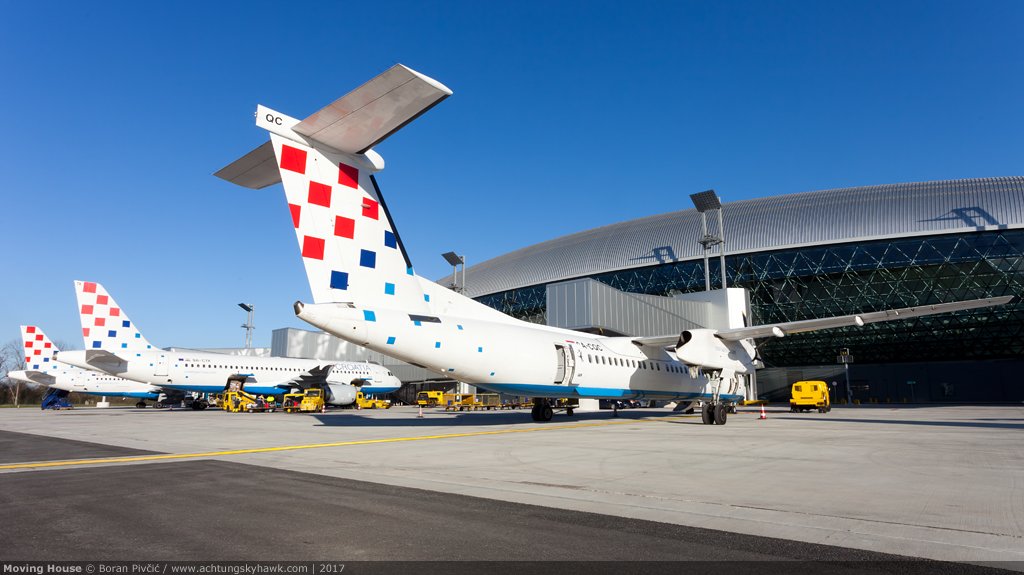
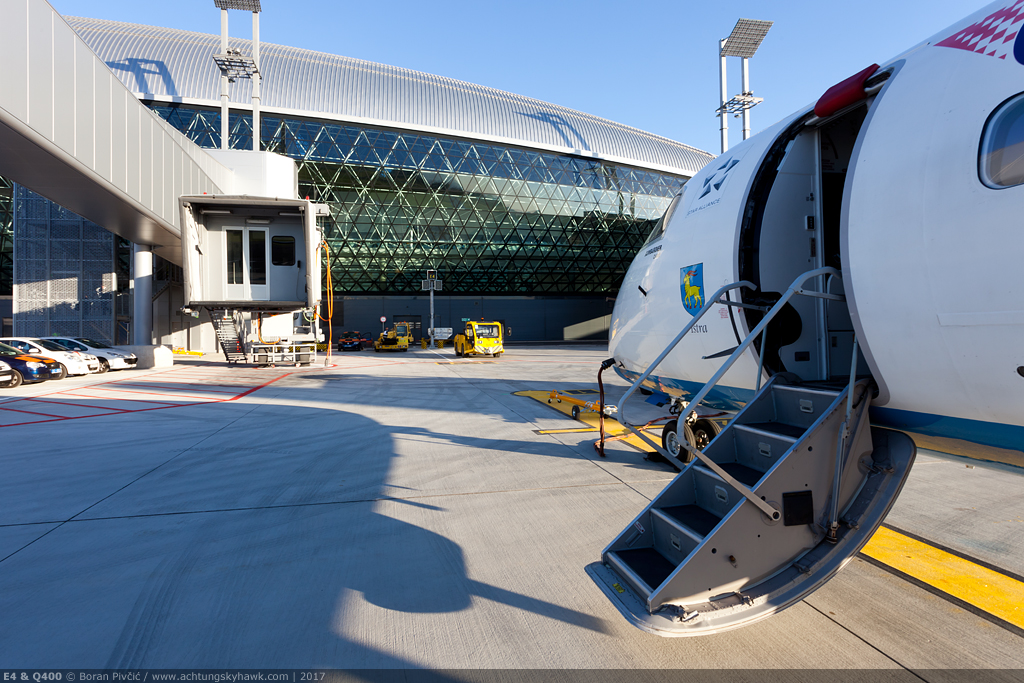


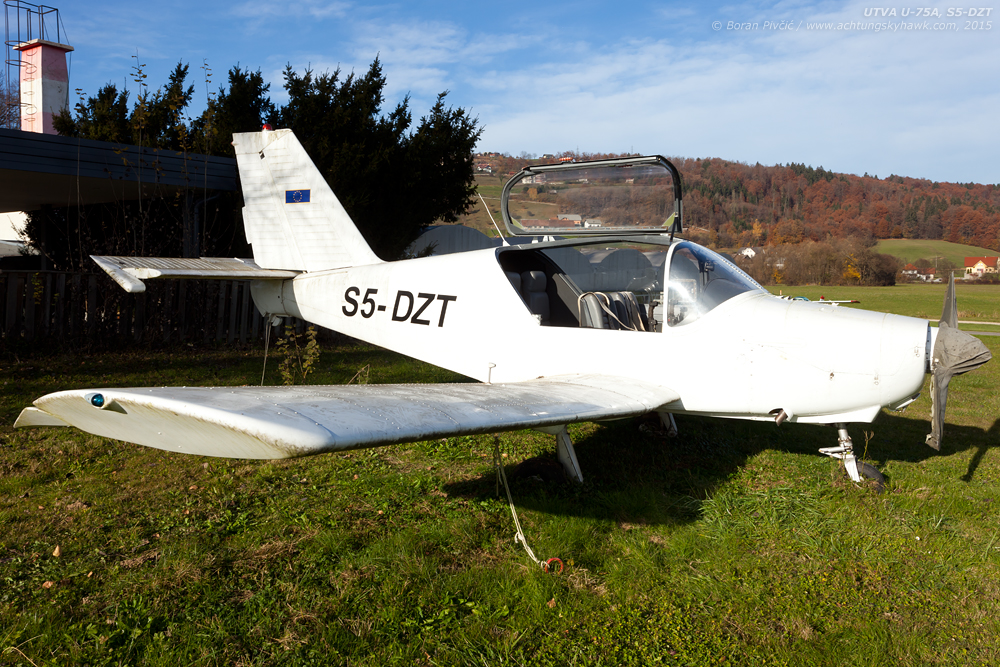


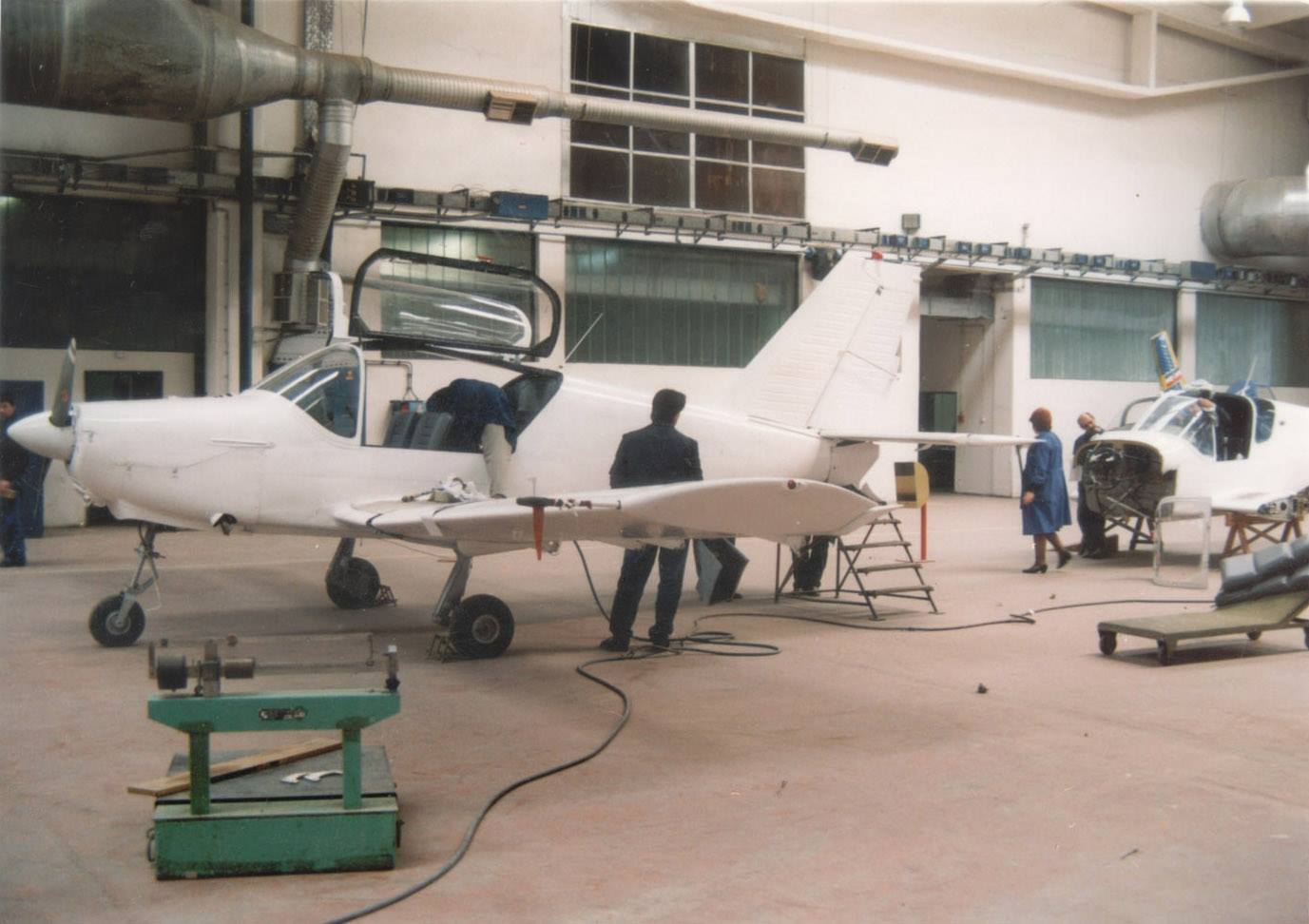
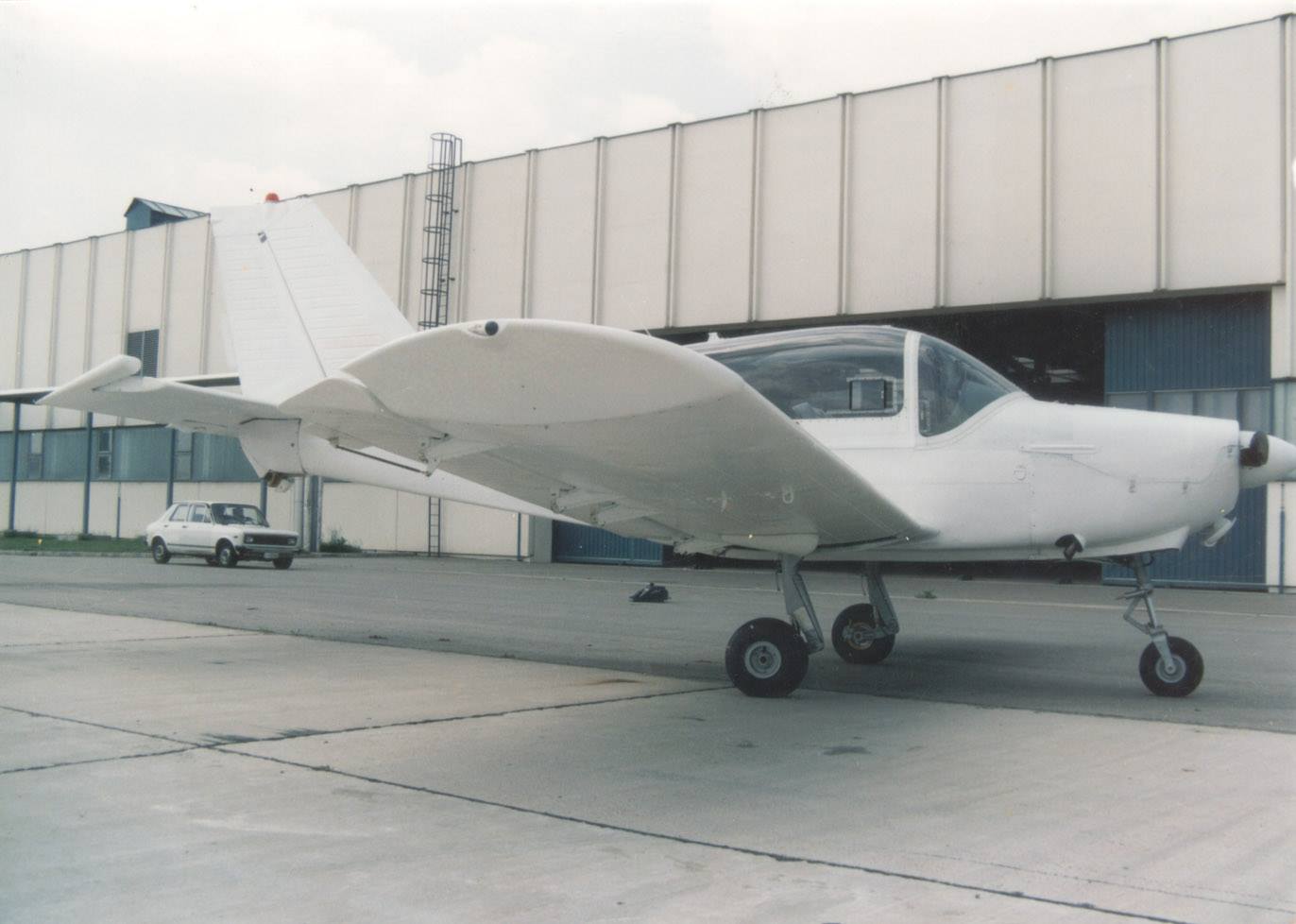

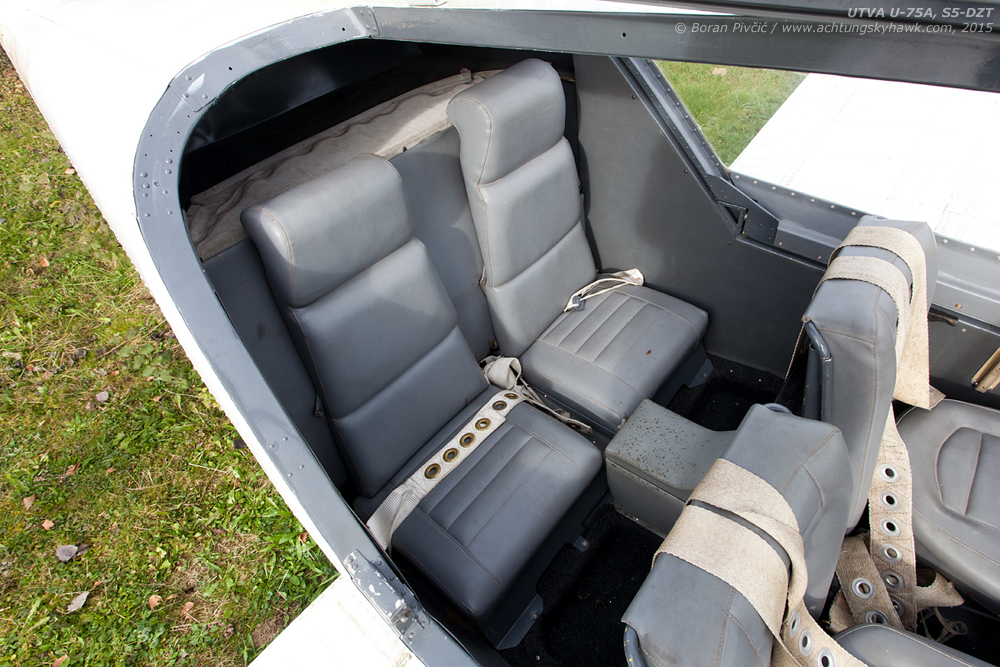


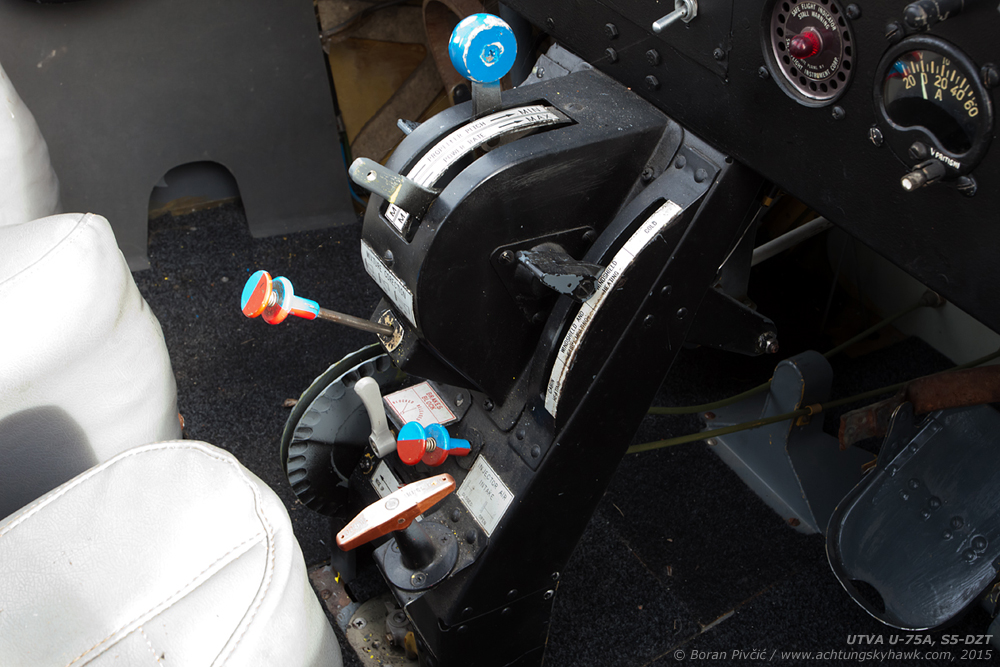


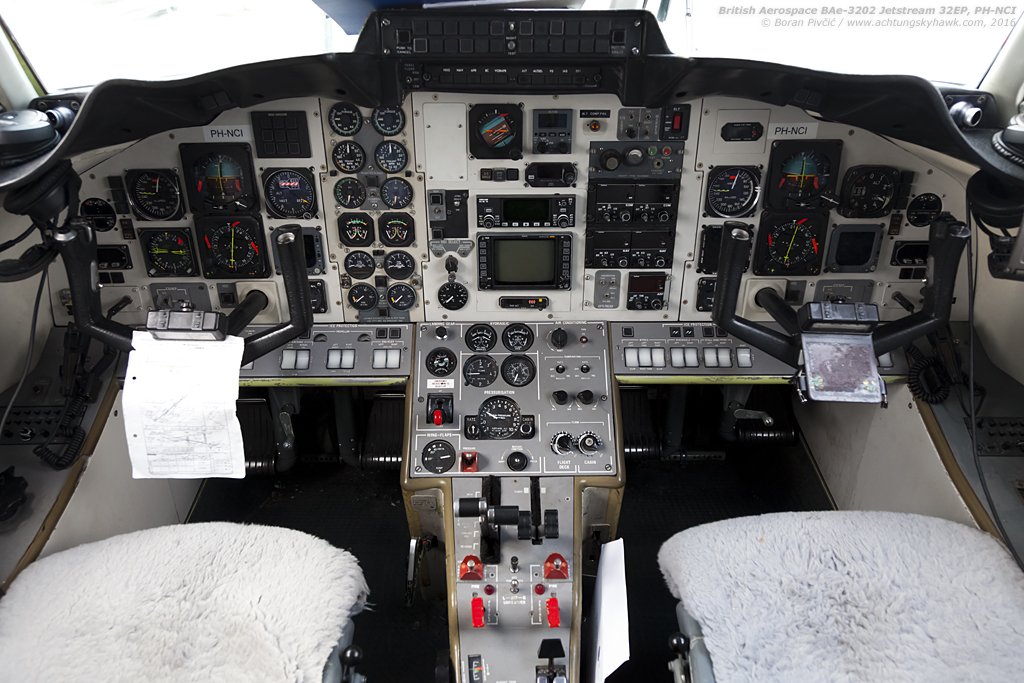

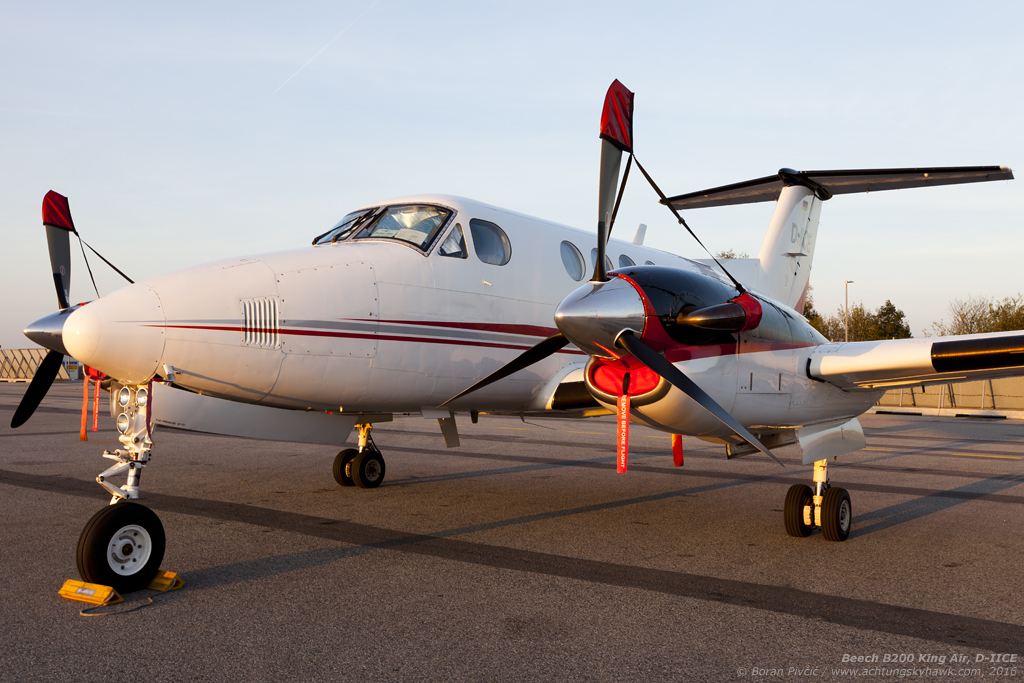


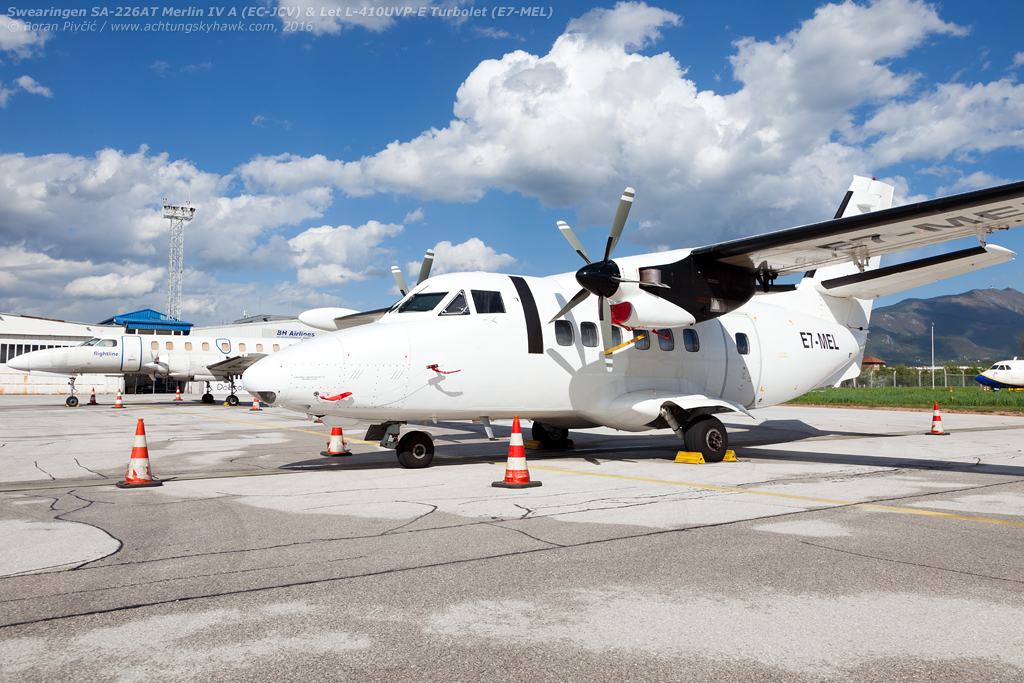


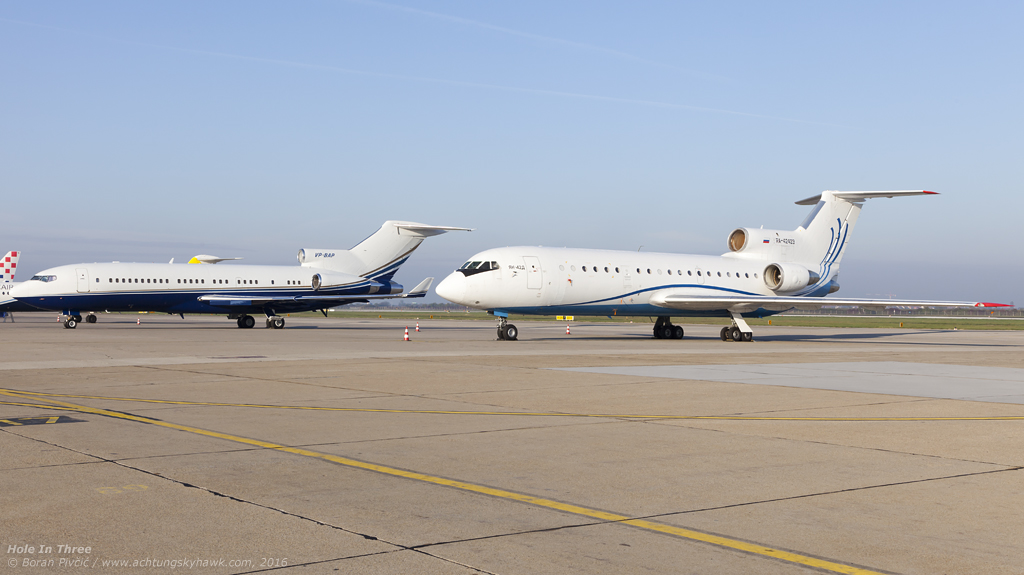
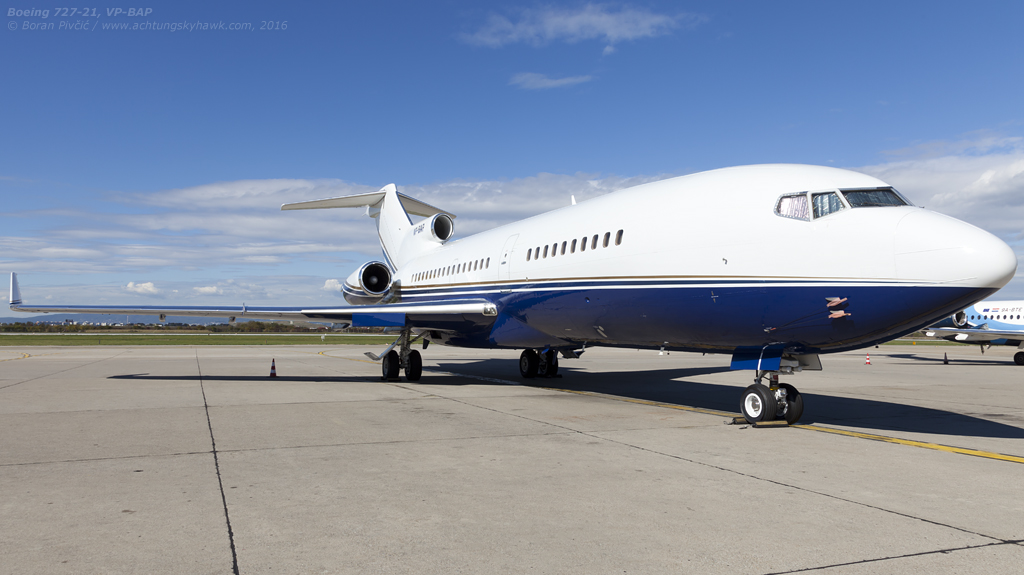
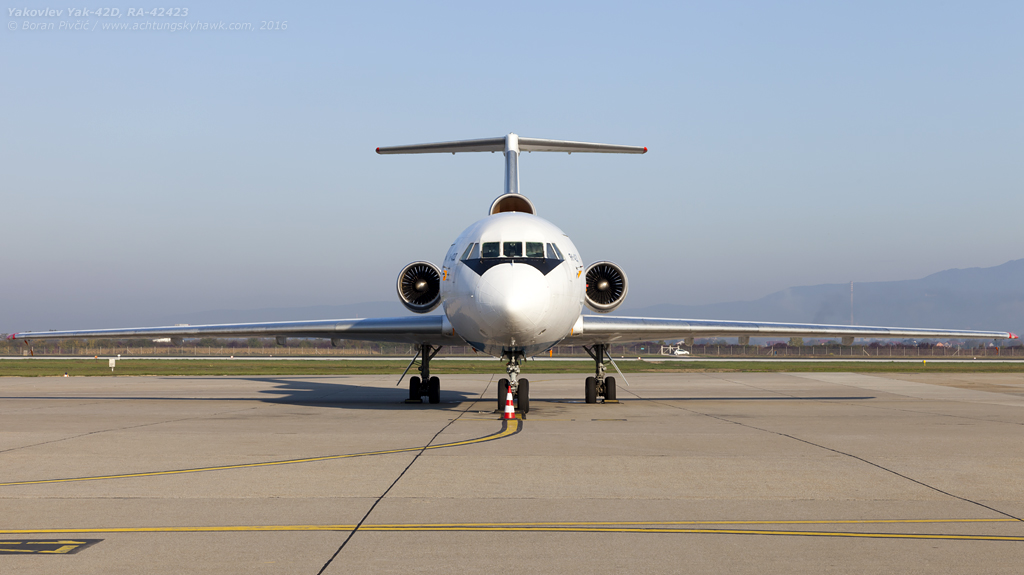


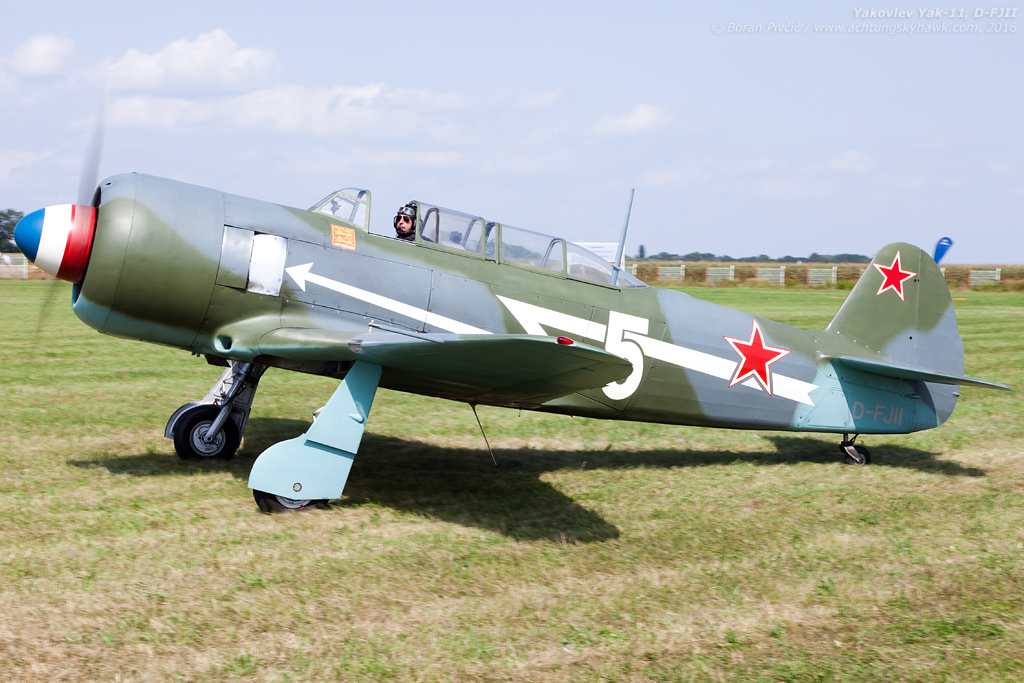


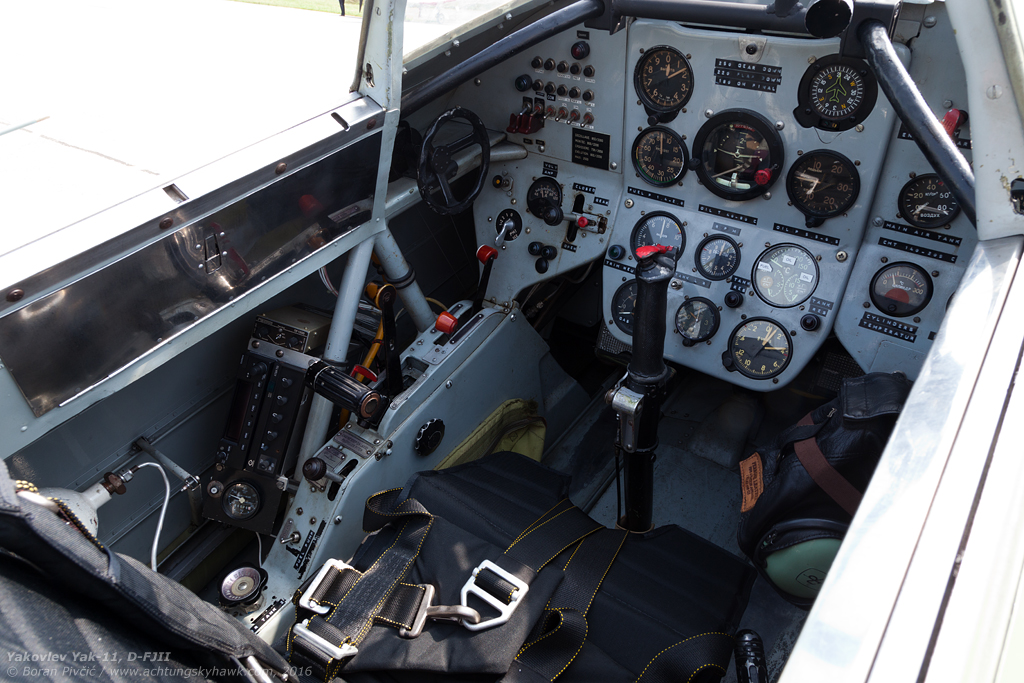
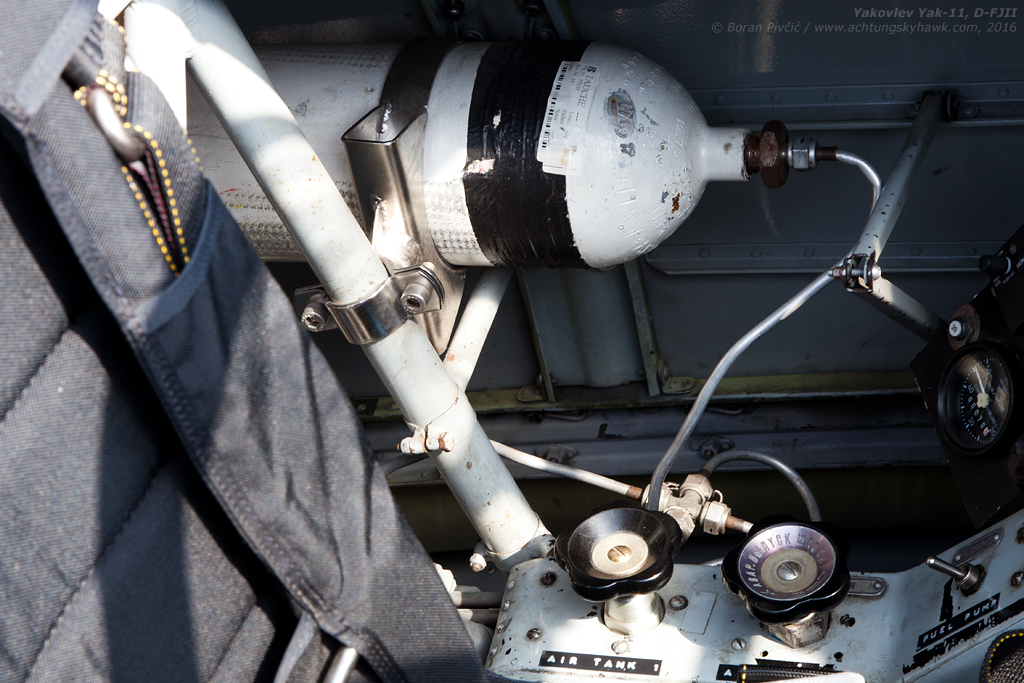


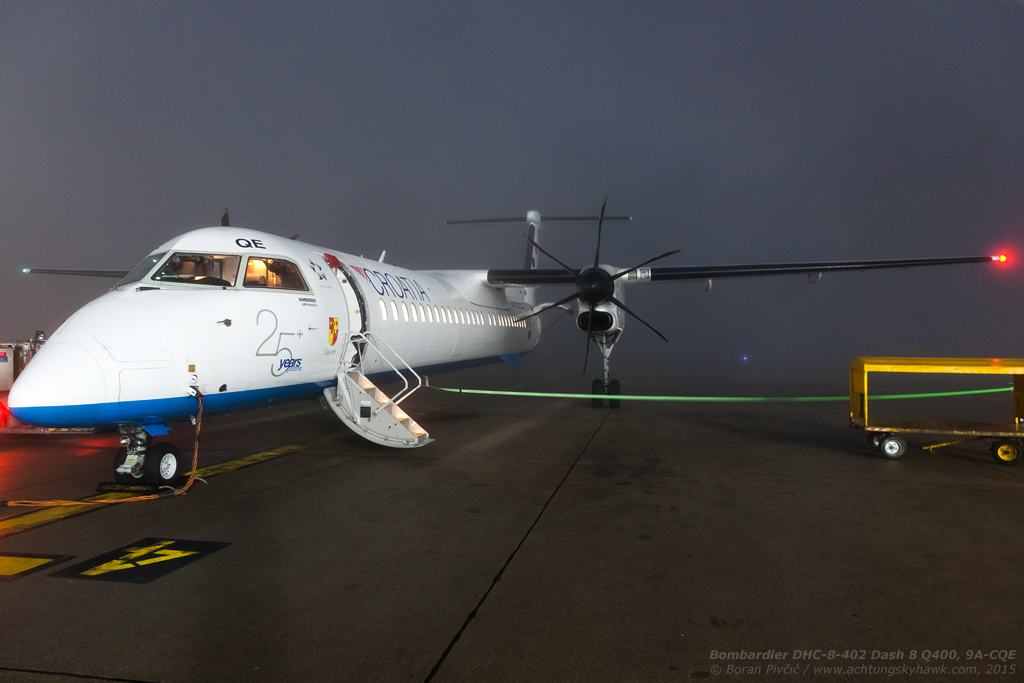

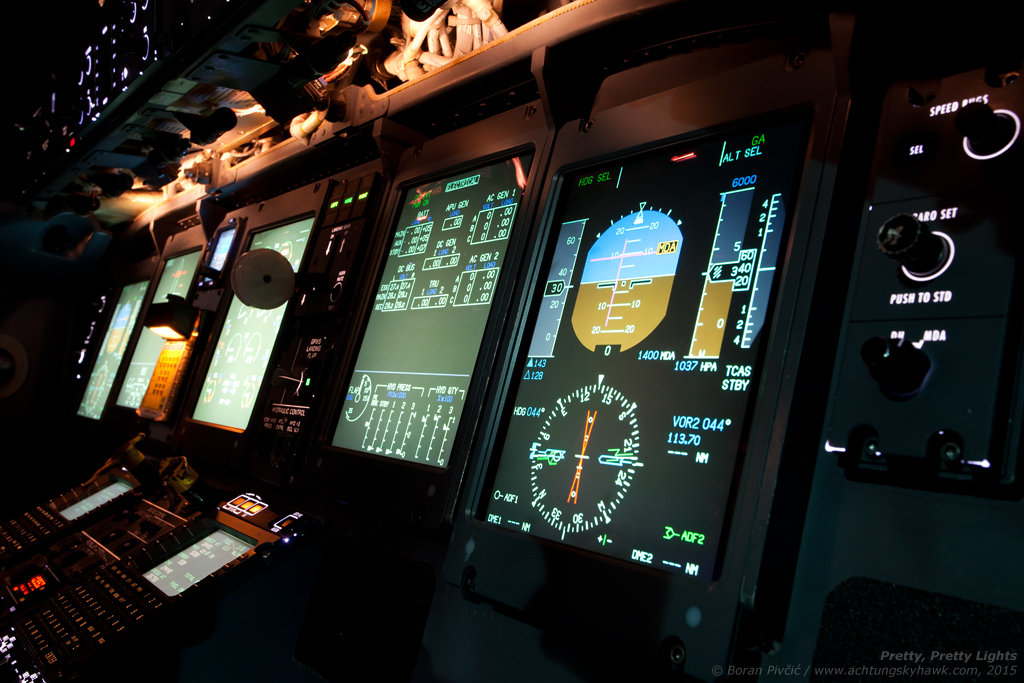





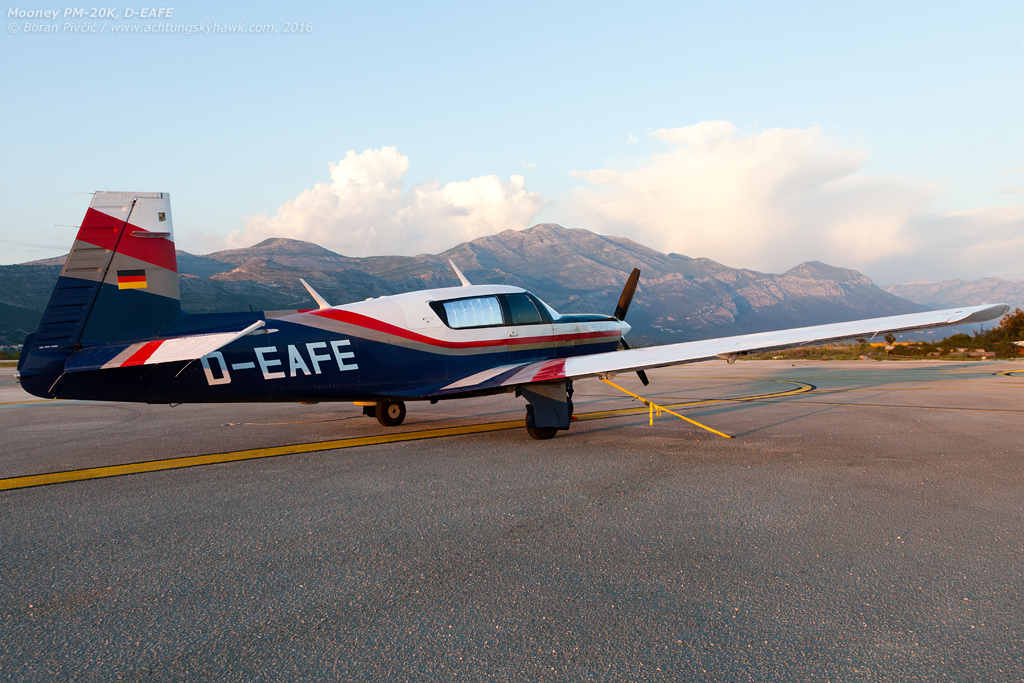
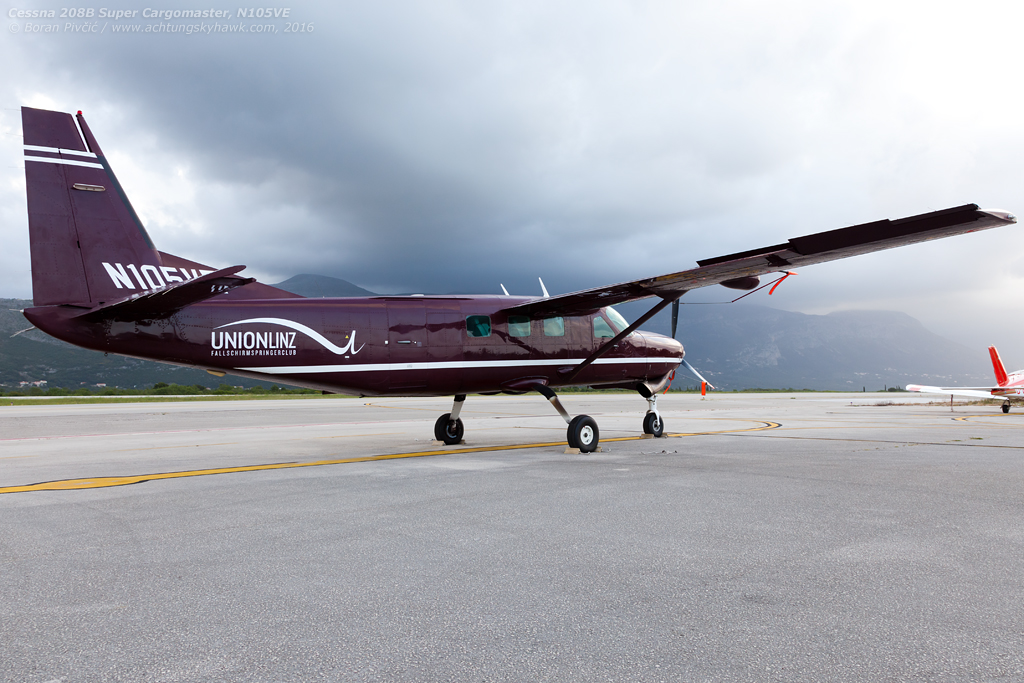


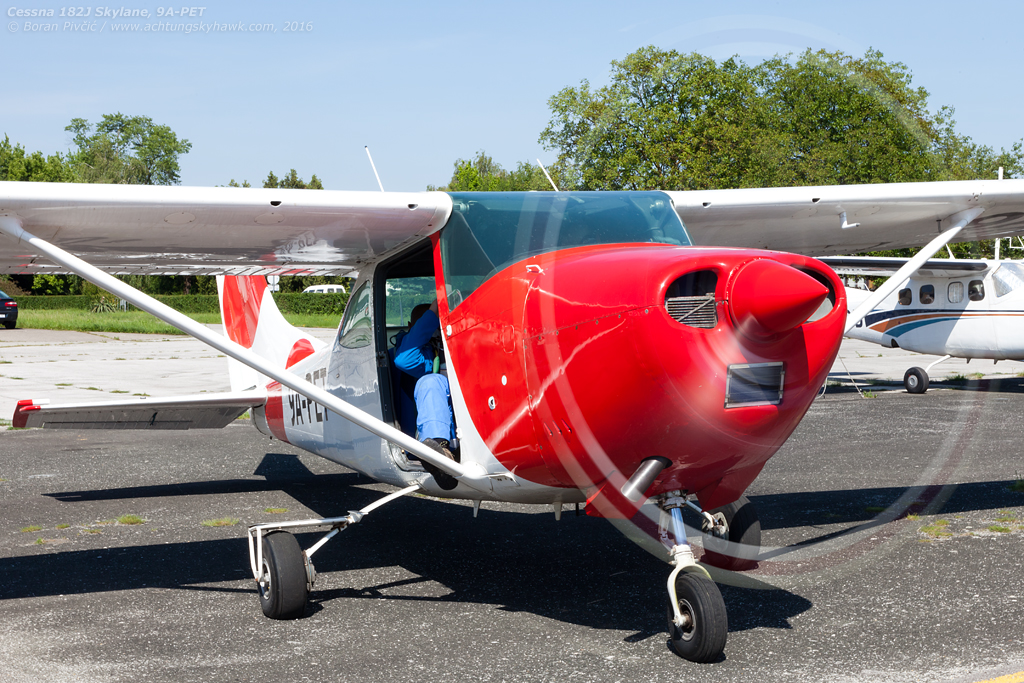


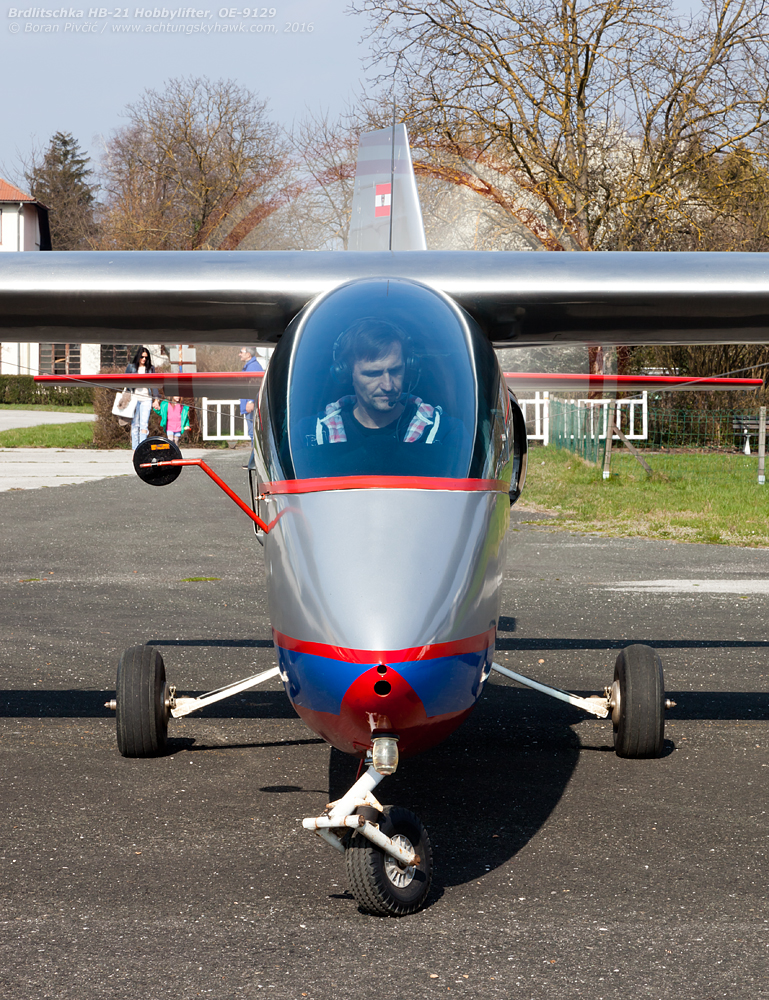


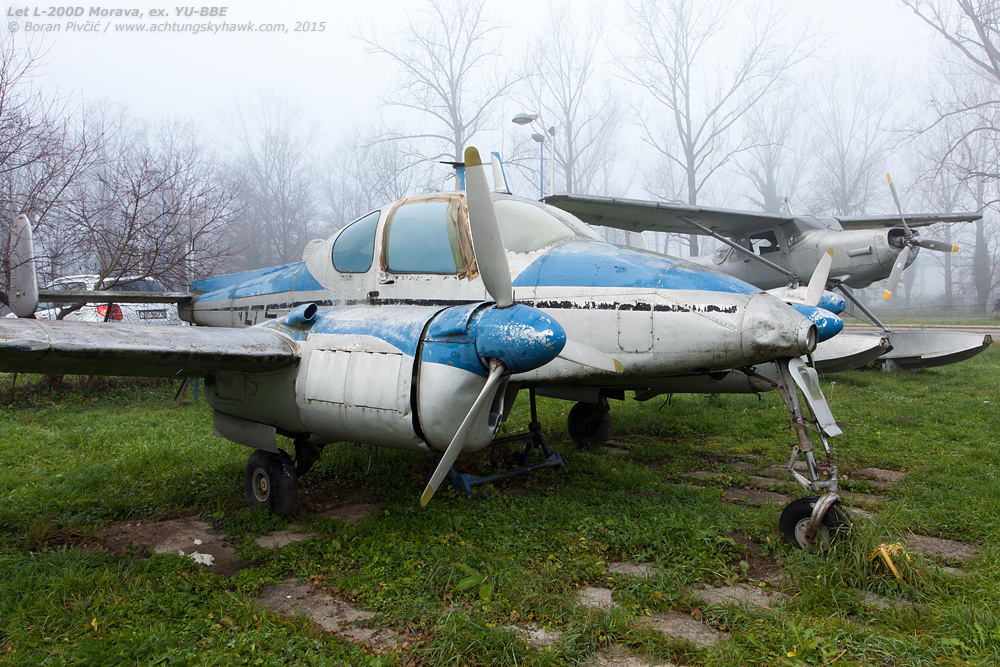
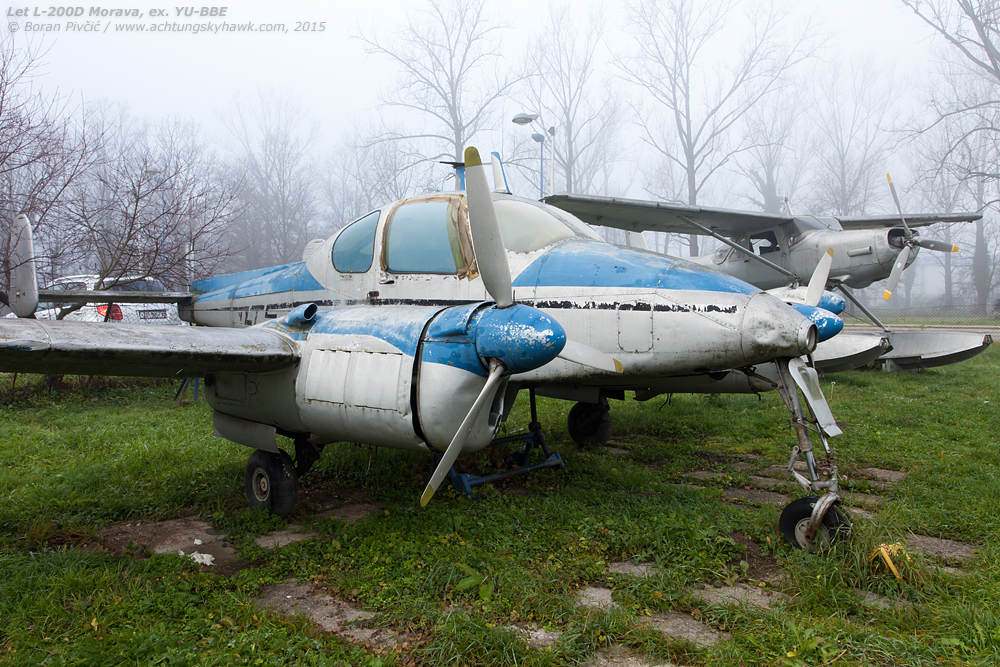


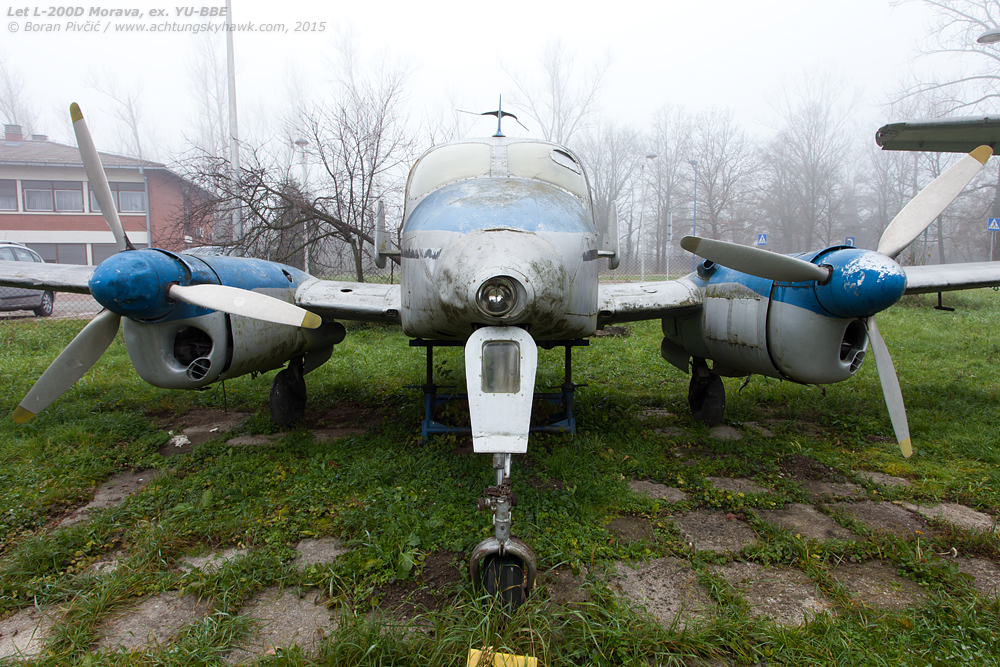


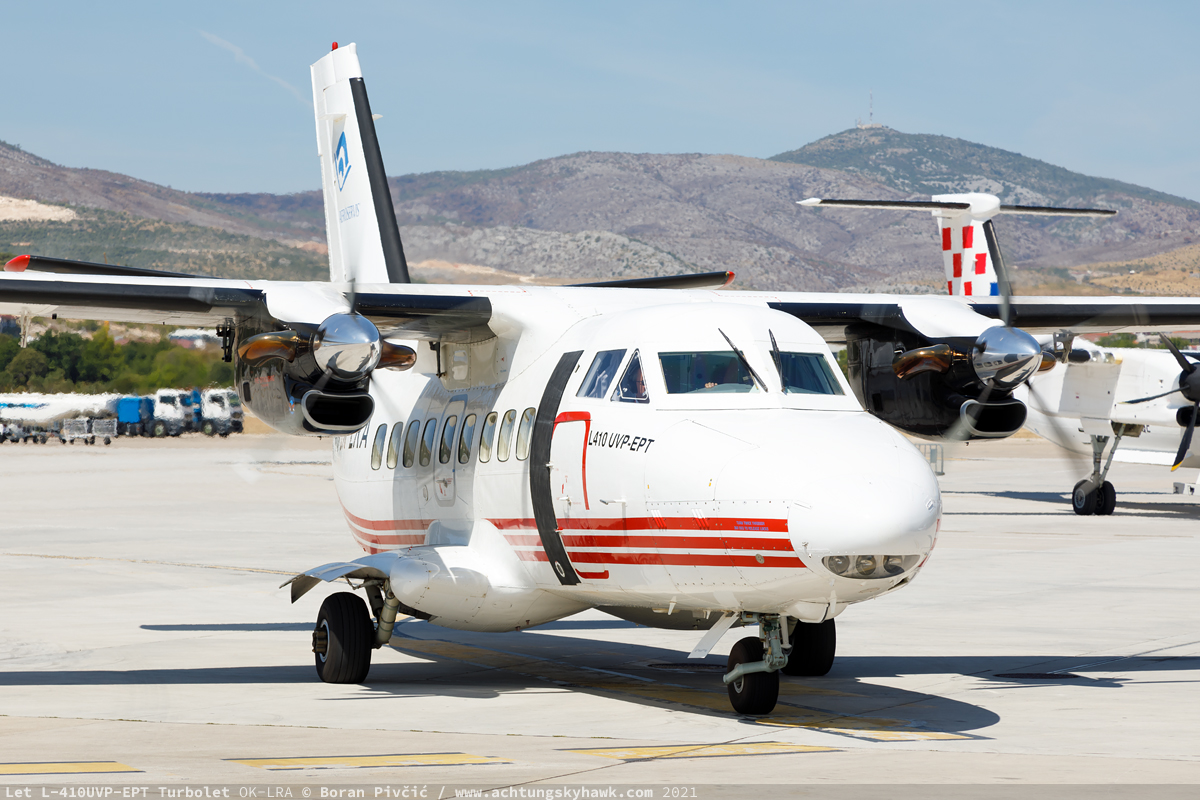

 Achtung, Skyhawk!