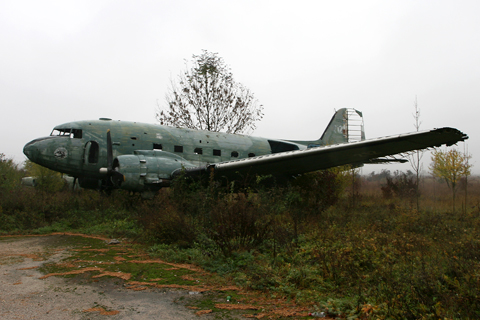
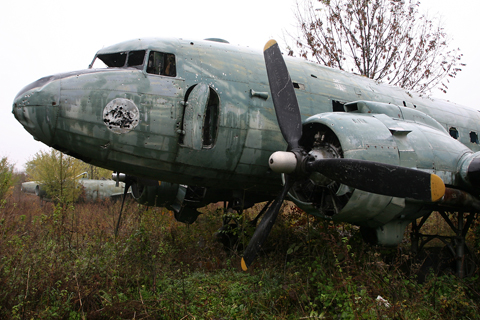
On my way back from Korenica, I had decided to stop at the abandoned Željava military airfield some 20-30 km away. I’ve always wanted to go there and now I was in the area, so what harm could a quick stop do. Quick, because 1. the weather was awful and 2. I wasn’t really prepared with maps, charts and a passport… but that’s another story, one which I will hopefully write soon, with many juicy photos :). In the meantime, I had wanted to bring you a couple of photos of one poor old classic bird I’ve found there – a nowadays rather rare B model of the venerable C-47 Dakota.
The C-47B was something of a niche model in the Dakota line, produced for one thing only – flying across “The Hump”, the western ranges of the Himalayas on the often perilous WW2 India-Burma supply route. To enable to it cope with the high altitudes and longer distances, the B was uprated with supercharged Pratt & Whitney R-1830-90 engines rated at the same 1,200 HP as the normally-aspirated variants, and additional fuel capacity. During WW2 they mostly served with the USAAF, while some were also transferred to the US Navy, where they served under the naval designation R4D-6 for cargo variants and R4D-7 for navigation trainers.
With the rapid downsizing of the Allies’ air forces after the war, many C-47s were disposed of at dirt-cheap prices, with the Socialist Federative Republic of Yugoslavia snapping up a few to complement it’s existing Lisunov Li-2s (DC-3s built under license in the USSR) and Li-3s (Yugoslav Li-2s re-engined with the DC-3 line’s original R-1830 engines). As far as I’ve been able to find out, most of these C-47s were B models…
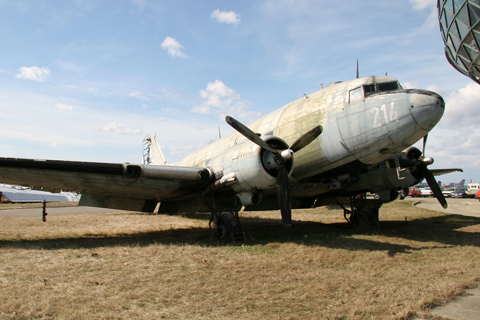
One of these is our example, coded 212, so far the third ex-Yu C-47 I’ve been able to find (the others being at Otočac airfield and Belgrade airport). By the looks of it, it had been sitting here for quite awhile and is – according to a sketchy, Eyeball Mk.I analysis – beyond any reasonable repair, especially given that there are many other C-47s/C-53s/C-117s/R4Ds in better condition…
Dumped, damaged and forgotten, hidden out of everybody's way... the low cloud ceiling and drizzle fit the picture perfectlyThe classic C-47 shape in drab green still looks good even in this bad a state. The fabric covered control surfaces were the first to "go", while the rest of the structure seems to be holding on stillRiddled with bullet holes and chalked full of nationalistic graffiti, 212 is a reminder of the region's violent past. Situated in an area that saw considerable fighting during the Balkan Wars of the early 90s, Željava was destroyed in 1992 by retreating Yugoslav National Army forces. Useless as an airbase anymore, Željava saw some see-saw advances by various armies, which all left their mark on whatever was left on the base... out back, two Republic Thunderjets keep 212 some company as the elements do their workSeen just peeking through the foliage... the Thunderjets are quite a nice historical oddity. Despite being a socialist country, ex-Yugoslavia was one of the founding members of the Non-Aligned Movement, rejecting "membership" in either bloc. But being squeezed right in between them, in the immediate aftermath of WW2 both blocs vied for it, with the West upping the ante by supplying some first-generation combat jets, including a large number of North American Sabres. In the civil world too, JAT - the country's flag carrier - was the only European socialist state-owned airline to continually operate an all-Western fleet (Caravelle, B727, B737, DC-9, DC-10, ATR-42/72)And, as an added treat on the side, one photo of the Belgrade-based C-47B 214 :). Part of the Aeronautical Museum at Belgrade's Nikola Tesla/Surčin airport, this is the best-preserved of the three
(the third Otočac-based aircraft I still haven’t photographed, but here are some shots from Airliners.net:
Now here’s something new from me – an airfield report! 🙂 And even better, a brand-new airfield report! Heard from a friend a few days ago that a new airfield was supposed to open Sunday (25th) out there in the hills of mid-Croatia. Desperately in need of some refreshing subjects to photograph – and not having much else to do – I sat in the car and went to see what’s what :).
1. Korenica – Bijelo polje (also known as “Zvonimir Rain”):
A bit about the airfield first: situated about 130 km south of Zagreb as the crow flies – or about 2 hours and 160 km by road – Bijelo polje was built on the site of a previous glider field, which had been closed some time ago (for reasons I’ve not been able to find out). The area itself has traditionally been very popular with glider pilots since the local terrain gives rise to some fantastic gliding conditions (primarily ridge lift), with almost all Croatian gliding records having been set here – including endurance and altitude records.
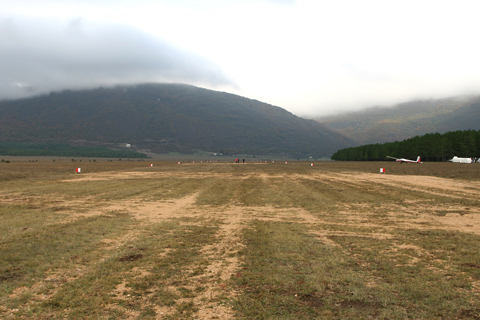
The airfield itself is located in the middle of Bijelo polje (directly translated as “White field”), which, at 2000 ft AMSL, is pretty much the lowest point of the surrounding terrain (as you’ll be able to see from the photos). The single grass runway stretches in a 02-20 direction – right into the prevailing bora wind – and is 500 meters long and a guesstimated 20 meters wide, more than enough for a Super Cub towplane :). Despite the high elevation and short runway – and hills on either end – beneficiary factors include relatively low temperatures and favorable winds, so it’s not as tight as it seems.
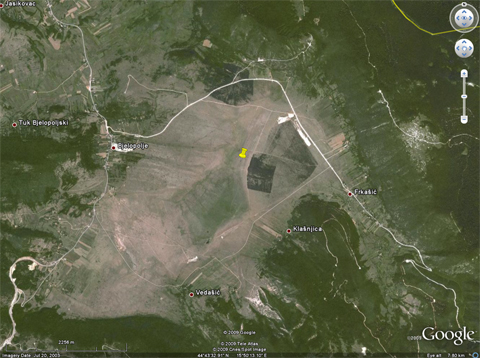
A Google Earth view of Bijelo polje. The location of the runway is "pinned down", though none of it will be visible in this dated shot 🙂A wider view. Note the field's proximity to Bosina and Herzegovina - it's literally on the other side of the hill 🙂
Since the field is small and still new, it had not yet received its ICAO Location Indicator nor a dedicated radio frequency, with all communications being done on the standard 123.500 MHz.
2. The opening:
Ideally, the way to make an entrance at an airfield opening ceremony is to dive in and screech to a halt in a Cessna :). However, the worsening autumn weather in this part of Croatia meant low ceilings, obscured mountain tops, high winds and moderate to strong turbulence – not really fun in a light Cessna, so the only option remaining was the car. It had proved to be a good choice when, halfway to the field and climbing through 1,100 meters, I entered cloud – on the road! – and stayed in it up till just 10-something km before Bijelo polje…
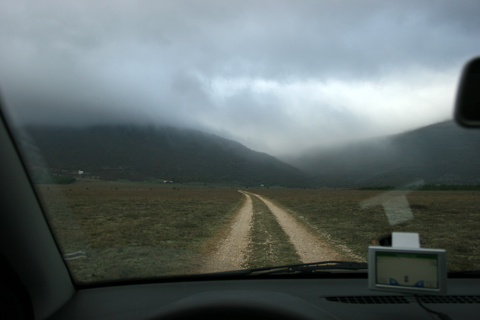
Once back in VMC past the town of Korenica, my next problem was to somehow get to the airfield itself. Though easily visible from the main regional road – seen snaking near the top of the GE image above – driving up to it proved to be not as straightforward, and eventually degenerated into an offroad session along random cobbled paths crossing the field :).
My only complaint about the whole field was the offroad driving needed to reach it :). Even my GPS was stumped...
Nailing the right path on my second try – with the help of some people also headed in my direction – I’ve finally arrived at the airfield, with my car’s lifespan considerably shortened :).
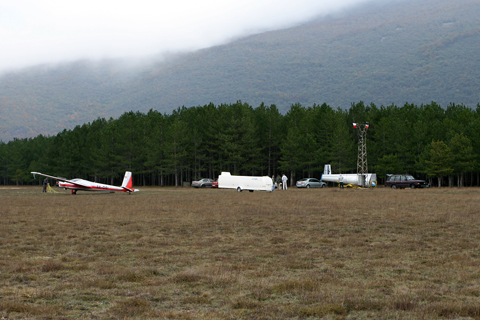
Now, the original plan had called for some glider ops to break the field in, but the aforementioned weather meant that a tiny, but significant component of that plan – the towplane – had failed to arrive. 9A-DBU, previously seen here and flying from Lučko, didn’t even bother taking off, while backup aircraft from neighboring Livno in Bosnia and Herzegovina and Rijeka in the northern Adriatic couldn’t break through the clouds and had to return. Of the three gliders present, this left only one capable of doing anything about it, a motorized L-13SE Vivat which ended up being the centerpiece of this report :).
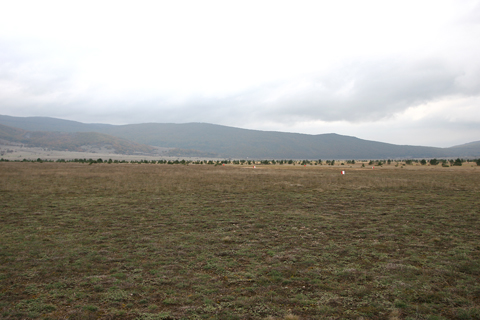
With some beautiful scenery in the back, 9A-DSI is seen waiting for the strong, 20 knot wind to subdue. The other two gliders, a standard L-13 and a Pirat, didn't even bother getting off their trailers 🙂An oblique view down RWY 02 shows the hole this airfield is in - literally. However, the surrounding hills and mountains give some excellent ridge lift, with 4 hour flights not being all that uncommonLooking straight down the full 500 meters of the runway. The first 150 meters were made soft, presumably to ease airframe stress during landing. The nearness of the terrain here means that if you decide to fly in with something sporting an engine, it had better be STOL 🙂Another oblique view of the RWY 02 threshold, look west-southwest. The hills and mountains all around are part of the Dinaridi chain, which is in itself a lower and gentler extension of the AlpsUp close with 9A-DSI, my first L-13SE Vivat. A side-by-side modification of the popular L-13 Blanik, the Vivat was also equipped with a Mikron M III AE inverted four-cyl engine to circumnavigate the need for a towplane - something very useful on this day...Ready to fly! The beautiful scenery is quite a change from the boring dullness and flatness of LučkoA rare motorglider, a pine forest in the back, hills and low cloud - what more could you ask for an interesting photo? To me this looks more like it was taken in North America than in Mediterranean CroatiaA view toward the northwest, with gentler terrain in the distance
The Vivat aside, the infrastructure of the field is basically nil – but with the onset of winter and almost certain snow, in addition to the undemanding nature of gliders, one doesn’t need really need a lot of equipment hanging around, exposed to the elements. Even this unambitious opening was a one-time affair, since right after it the airfield had shut its doors till the spring gliding season. Maybe when the weather clears, I’ll be able to post a proper, airborne report on the it… 🙂
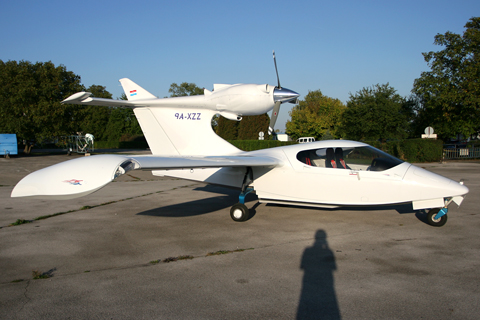
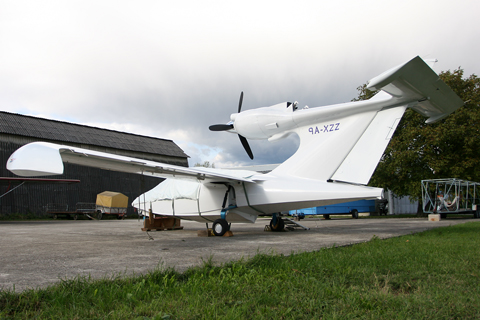
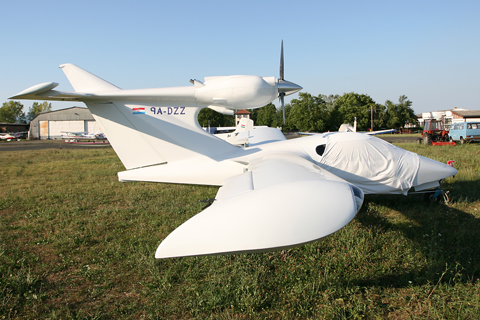
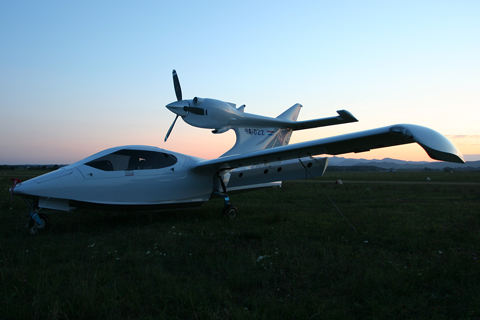
Seeing from my blog stats that the previously featured Seawind 3000 has been attracting a lot of interest (relatively), I’ve decided to put together another small gallery of more recent pictures :). Apart from adopting the experimental “X” registration prefix – a category that seems to appear and disappear on a regular basis – and undertaking a fast taxi run that didn’t end all that well (see captions below), it’s slowly but surely nearing first flight, albeit at a non-spectacular-photo pace :D.
Structurally complete and ready for some taxiing! 🙂 Now this looks more like it, complete with some color!A few days later however, I found it propped up and back under covers. It had transpired that the gear was significantly damaged during the fast taxi run (something or other with the hydraulics), but I was told the repair was relatively straightforward so we may see her move again soon 🙂Quite an oddly-shaped aircraft in profile view :). Try making this out of aluminium...Some night spotting for a change :). Still some way from completion at the time this photo was taken...
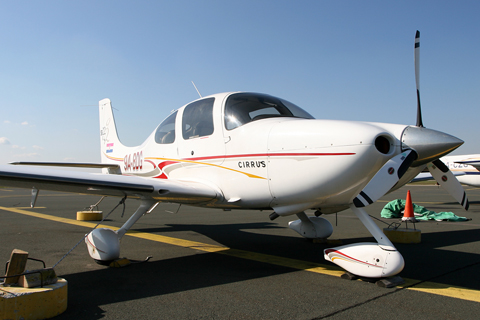
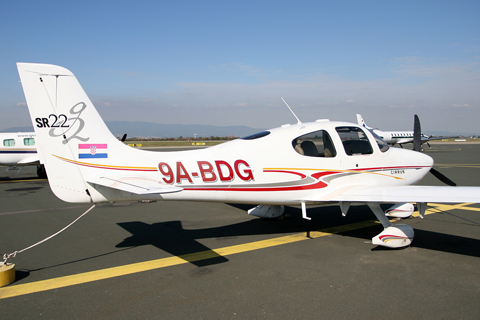
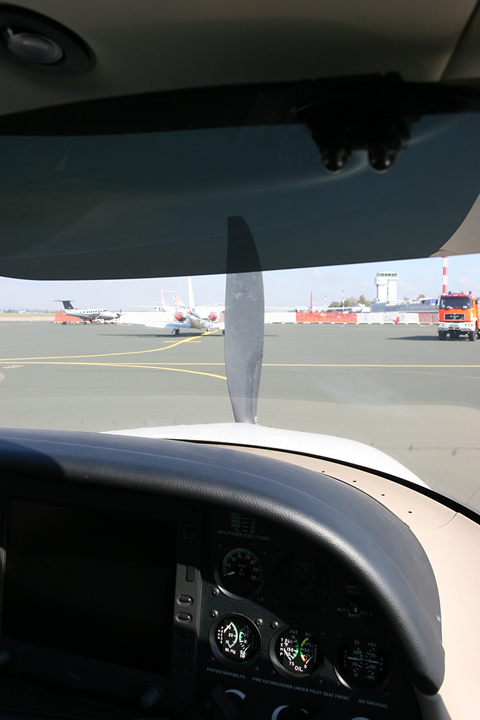
Arriving at the field a few days ago not expecting much to happen – just some quiet and calm flying around – I was pleasantly surprised when my flight instructor (who’d be flying with me for a checkup) informed me that instead of the usual dull circuits and maneuvers, we’d be heading to Zagreb Intl. to fire up a privately-owned Cirrus SR-22 that had been sitting on the ground for a spell and needed to be flown to Germany for maintenance. Having only been in a Cirrus once in my life – in a brand-new SR-22 G3 at the Paris Air Show – I was naturally through the roof, especially it being a beautiful and calm sunny day just begging for some camera work :).
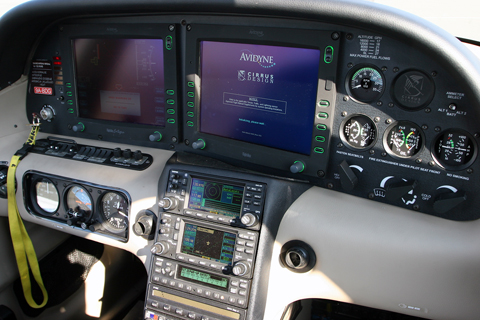
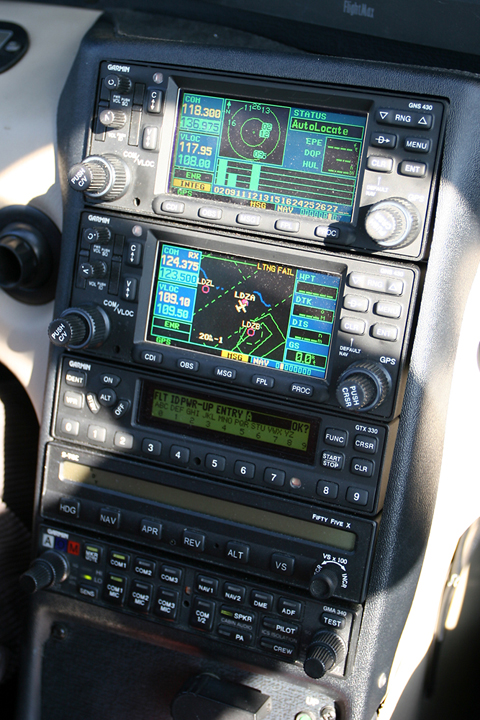
The aircraft in question is a SR-22 G2, registered 9A-BDG, bought new a couple of years ago (and had as such represented a quantum leap for Croatian general aviation :D). Our mission for the day was to fire it up and run the engine for about 10-15 minutes so it could “catch some air”. Not moving from the same spot, it gave us the opportunity to run through its excellent Avidyne Entegra FlightMax glass cockpit system – though, with the aircraft vibrating from the big six pack up front and me totally engrossed in the display, I didn’t take all that many photos…
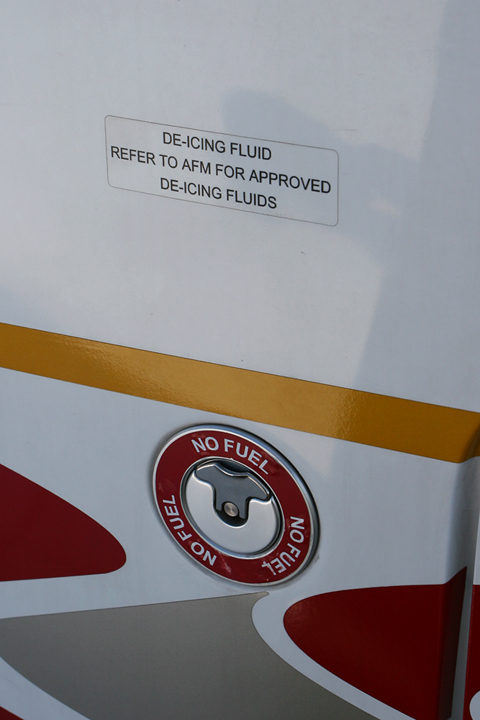
9A-BDG shining proudly in the mid-day sun. Though not as elegant as other similar aircraft - the Lancair ES comes to mind - the SR-22 is still a sight to look at. As you can see, the aircraft is lavishly equipped with deicing systems, including the state-of-the-art TKS fluid-based system on the wing and horizontal stab leading edgesRear quarterview. Completely fascinated by the Cirrus, I had completely failed to notice a much rarer Fairchild Metro in the background 😀The office :). There's a whole farm worth of cow in here :D. Unlike its follow-on, the G2 sports the Avidyne glass cockpit system, as opposed to the G1000-based Cirrus Perspective system on the G3. The sidesticks - which are also the trim controls - give the front seats a lot of roomWarming up the computer :). To feed all the electronics on board, the SR-22 has two alternators and two batteries, though as far as I've seen, Alternator No.2 comes online only at about 1500 RPM... presumably not to overburden the engine when it's running on idle. As you can also see, the G2 comes with a number of backups, including primary flight and complete engine instrumentsUnlike the G1000, the Entegra does not have comms and nav radios integrated into the system. Hence, two Garmin GNS 430 units provide the interface with the system, though which you can also load the flight plan to be followed using GPS. Below it is a juicy Garmin GTX 330 Mode S transponder, with an autopilot and audio selector panel situated belowAn artsy view of the PFD and MFD. Everything's in here - moving map, TCAS, strikefinder/stormscope, comprehensive engine information...A view from the passenger's seat. Firing up the engine for the first time in awhile, we had asked for a fire truck to keep watch nearby, should the 310 HP engine fail to cooperate...An interesting feature - the deicing system refuel valve :). The system has an autonomy of about 4 hours on the G2 I think (and 6 on the G3 if I'm not mistaken)
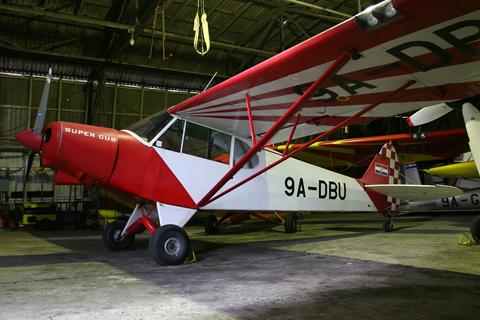
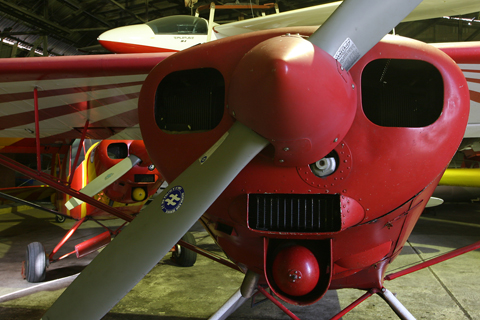
With a strong northern wind pinning everything down at the field for the past two days – and rapidly dropping temperatures killing any will to stand outside – I had decided to sniff though the hangar again in search of some inspiration :). And wouldn’t you know it – the Super Cub population had doubled! 😀 Normally parked outside the hangar – being a visitor while it’s base field of Buševec was undergoing some work – 9A-DBU, AK Velika Gorica’s towplane, took shelter alongside our resident 9A-DBS. So, with nothing better to photograph outside, here are the results!
Despite it still being light outside - plenty of it between the storm clouds - we had lit up the interior as well :). A stock Super Cub, 9A-DBU is one of a number of such aircraft bought and imported at pretty much the same time for towing dutiesFull of natural and sodium light, this family photo shows that Cubs love stripes :). Related by more than just their type, DBU and DBS are twins, coming off the line one after the other :). DBU is serialled 7809169, while DBS 7809170Another shot toward "The Crack" (no rude hidden meaning intended 😀 ), the gap between two hangar door sections. Being quite old - almost 70 years - the hangar is becoming a bit shabby...Lined up and ready to go!
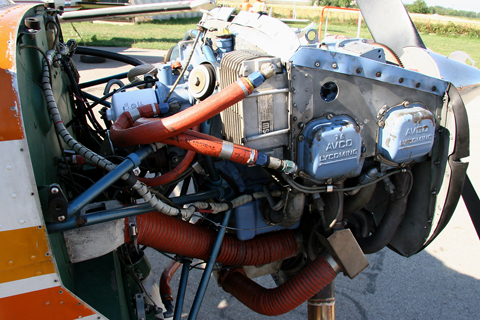
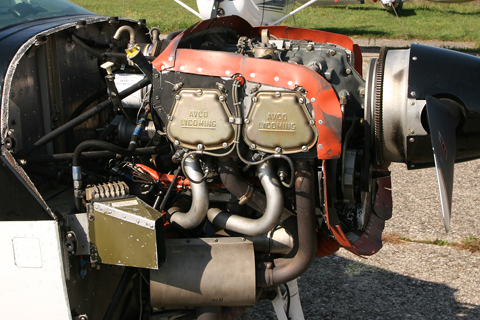
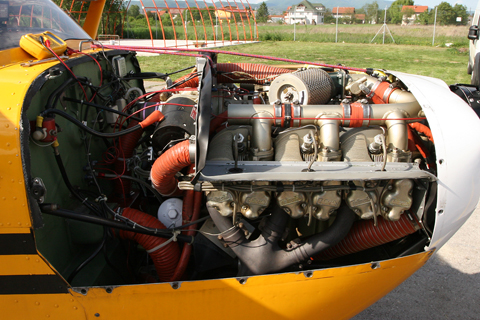
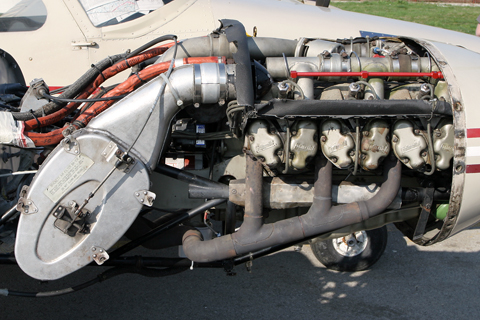
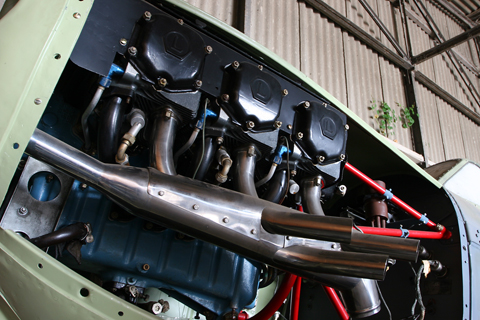
Undoubtedly one of the most important parts of any aircraft – gliders exempted 🙂 – the engine, a noisy and brutish mass of metal, is often overlooked and neglected by those not of a technical background. And who can blame them – the intangible mass of pipes, wires and often ugly casings and blocks looks best when not seen at all, hiding under often elaborately-shaped cowls. But despite their complete lack of visual elegance, engines – pistons especially – remain quite interesting things. A gyrating, rotating and vibrating mass of steel that looks and sounds like it’s going to tear itself to pieces any minute, the piston engine – despite all its operating faults – retains a charm of sorts, a soul. Temperamental and often complicated, they still have that whiff of the golden age of aviation about them, when pilots didn’t simply flip a switch to START and then ON.
With that in mind, I’ve assembled a small collection of engine shots, taken during my prowling round Lučko. Unfortunately, I’ve never had the opportunity to photograph those of our two radial beauties, the I-3 and An-2 9A-DIZ, so this article will pretty much be an American Affair :).
1. How to ruin a perfectly good piston engine:
Apart from all the physical ways you could do this, American manufacturers have taken it one step further – admittedly reducing confusion in the process. Powerful-sounding names such as Merlin, Griffon, Sabre, Hercules, Wasp and the like were replaced by dull numerical codes such as R-2800, V-1510, TSIO-360, AEIO-540 and so on. However, there is some logic in it all and before we dive into the photos, it may be best to demystify this naming numerology.
This sequence of letters and numbers pretty much amounts to the engine’s ID card, listing virtually all the information necessary for the end operator/pilot. It is divided into three sections, which can be broken down as follows:
The engine type – the alphabet soup section, which gives some of the engine’s construction and equipment details. This includes the cylinder arrangement, ancilliaries such as turbochargers and inverted flight systems, as well as any other significant device. Some common ones are:
O – opposed (“boxer”) cylinder layout
R – radial
V – “V” arrangement
T – turbocharged
TS – turbosupercharged (an old term for “turbocharged”)
AE – aerobatic
I – fuel injected
G – geared
L – left-hand rotation, for twin-engined aircraft where one engine would rotate in the opposite direction to cancel out a number of adverse effects during a single engine failure
and so on. These can be combined together to list everything the engine is equipped with.
Cylinder displacement – the numbers. These show the displacement of all cylinders expressed in cubic inches. These are mostly standardized, with the common ones being 200, 360, 540 and 550. For us in the metric system, multiply this number by 16.387 to get the displacement in cubic centimeters.
The details – the last section which can be alphanumerical and lists random details such as for example crankshaft type, sub-version, a specific oil system and so on. There is no exact decode system for this, as it pretty much depends on the manufacturer’s internal coding preferences – and in any case is not relevant for the pilot.
In the end you end up with something like O-200-A, which would be a boxer engine displacing 200 cubic inches, in the A version. Similarly, the Beech Duke profiled here some time ago has two TSIO-540s, which are turbocharged and fuel injected boxers with a displacement of 540 cu in. Another twin, the Piper Seneca, has one LTSIO-360, which is a left-hand rotation turbocharged injected boxer with a displacement of 360 cubic inches (the other is a “standard” TSIO-360). Aerobatic aircraft – the Zivko Edge 540 for example – may have an AEIO-540, an injected boxer with an inverted flight fuel and oil system, 540 cu in.
The other type codes, such as R and V are very rare nowadays, having gone out of widespread use with the demise of radial and V-block engine production in the years after WW2. Note that these codes apply to American engines, while other manufacturers use other designations. Rotax for example has the 800 and 900 series, Vedneyev has the legendary M-14 radial and Thielert has/had the Centurion. But since 90% of the engines to be shown here are American – or models built under license in Europe – I decided to concentrate predominantly on them.
2. Start dammit, start!
The engines chosen come in two basic varieties, the “four pop” for the smaller birds and the “six pack” for the heavy haulers – and we even have one two-stroke two-cyl! 🙂 These represent everything from a flexwing microlight to the Seneca twin, so we have plenty to choose from…
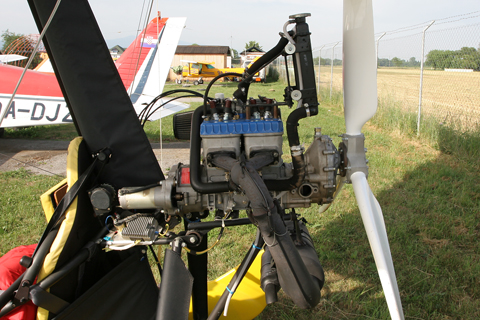
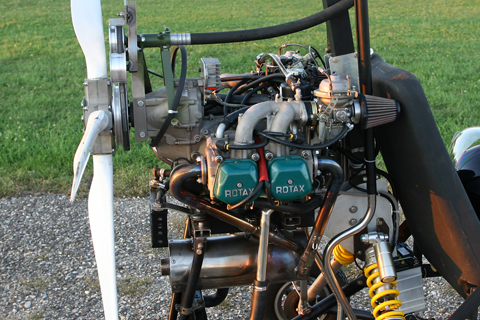
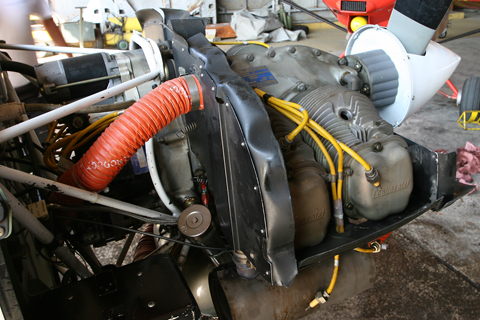
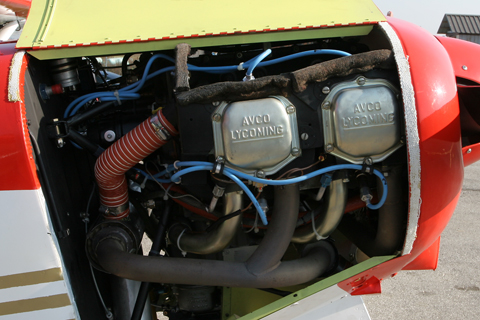
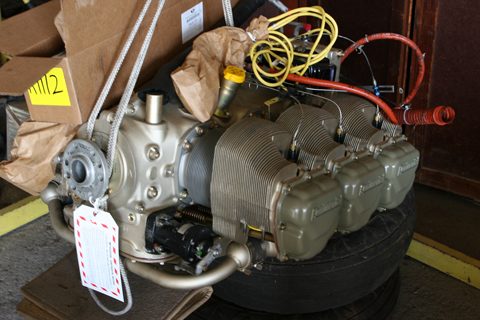
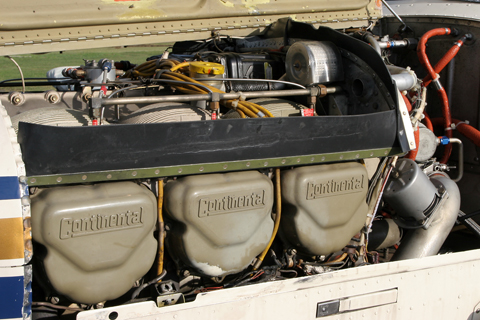
The tinyiest of the tiny, the two-stroke Rotax 582 developing 64 HP and powering the previously reviewed Apollo Racer GT microlightI must admit that my Rotax Spotting Skills are often short of the mark, but this looks like a 914, possibly 80 HP. Being mounted on a gyrocopter, that seems about right...The Cessna 150's immortal 100 HP Continental O-200-A :). Powering generations of pilots on their first flights, the O-200 has also been license-built by Rolls-Royce (though these tend to be rare-ish nowadays - I've only ever seen two)Progressing upwards is the Super Cub's most common engine, the 150 HP Lycoming O-320. Some versions - most notably those used in mountainous areas such as the Alps - have been uprated to 180 HP, a pretty chunky amount of power for the light and "lifty" Super CubOn par with the O-200 is the Cessna Skyhawk's 160 HP Lycoming O-360. Just one in a long line of engines that have powered the 172, the O-360 had replaced the earlier six-cyl 145 HP O-300 and the 160 HP "four pop" O-320, to be in turn replaced by the fuel injected IO-360s of today's 172R (160 HP) and 172SP (180 HP)The most powerful four-cyl to be featured here is the Cardinal RG's 200 HP Lycoming O-360. A development of the 172's O-360, it had first developed 180 HP for the fixed-gear Cardinals and finally uprated to cater for the RG model's increased weightThe first six-cyl here belongs to the Reims FR172 Rocket, the most powerful Skyhawk development so far (the earlier F model is pictured here). A Continental IO-360, it has the same capacity of the four-cyl model - and, as far as I've been able to find out, uses the same cylinders with a shorter piston travel. Interestingly, the air intake and its filter are right on top of the engine, an unique solution that prevents intake ice at the cost of some performanceA very similar - but turbocharged - TSIO-360 powering the Piper Seneca with its 220 HP continuous. Has a big air filter this thing...A numerical oddity is the Aero-3's Lycoming O-435-A, developing 195 HP from six cylinders. Another interesting solution can be seen here - the exhaust pipes all lead to a "muffling chamber", where outside air - fed by the pipe extending from the front of the cowl - is apparently mixed with the exhaust to reduce noise levelsAll alone with no plane to power - yet - is our Skywagon's IO-520-D, putting out 270-300 HP (not exactly sure with this specific engine). Seen dismounted after a prolonged service following a propstrikeAnd finally the "big guns" - the whopping large (as far as these things go nowadays) Continental IO-550, developing 300 HP in the Beech A36 Bonanza. To put it into perspective, 550 cu in is about 9 liters, which is truck engine range 🙂
And here’s hoping this will soon be updated with some radial action, as well as – keeping my fingers crossed – the monstrous 385 HP TIO-540 powering our local Cessna Pressurized Centurion :).
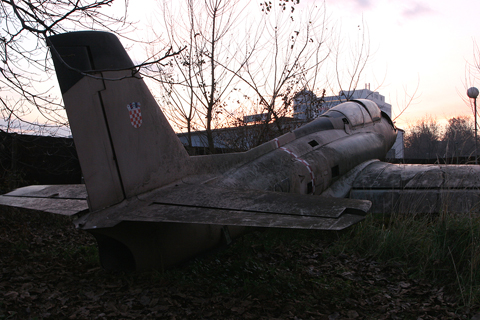
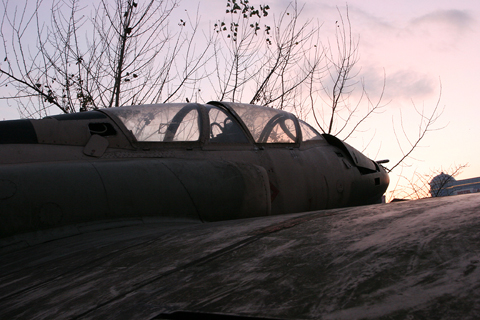
Musing over the previous Mi-6 article today at the airfield, I suddenly remembered another very interesting derelict I had seen and photographed ages ago, one that could also be made into a good story. Oddly misplaced in the western districts of Zagreb – not a hundred meters away from one of the city’s main traffic arteries – but completely forgotten and ignored, it was instant Achtung Skyhawk material :).
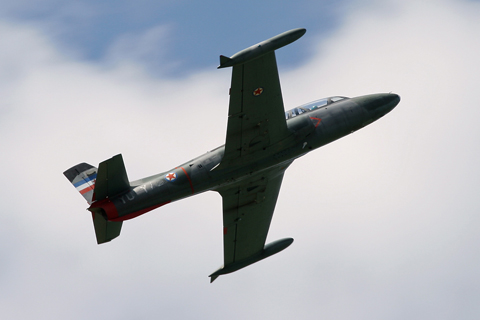
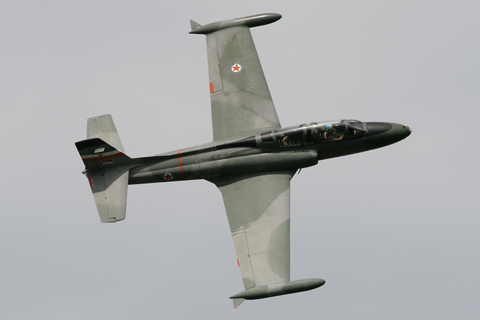
The aircraft in question is a Soko G-2 Galeb jet trainer, former Yugoslavia’s most successful jet aircraft – some would argue it’s most successful aircraft full stop. Produced by the Soko (“hawk”) plant in Mostar, Bosnia and Herzegovina, the Galeb (“seagull”) was conceived as a cheap, simple and robust primary jet trainer, easy and forgiving to fly, but still capable of pulling some serious maneuvers.
A familiar shape and sound in the skies of former Yugoslavia, the G-2 is one of the region's most distinctive aircraft
Outwardly similar to the well-known Aermacchi MB.326 – and the more obscure Chinese Shenyang JJ-1 prototype – the G-2 uses the tried-and-tested straight-wing tandem-seat configuration, powered by a single license-built Rolls-Royce Viper Mk.22 turbojet, rated at 11.12 kN dry. The sound airframe was usually equipped with one or more underwing hardpoints for training rounds, and was later developed into a dedicated single-seat ground attack variant, the J-1 Jastreb (“goshawk”).
Top view. Though not as elegant as many advanced trainers, the G-2 still has an eye-pleasing - and to many student pilots, comforting - design. It just looks right 🙂
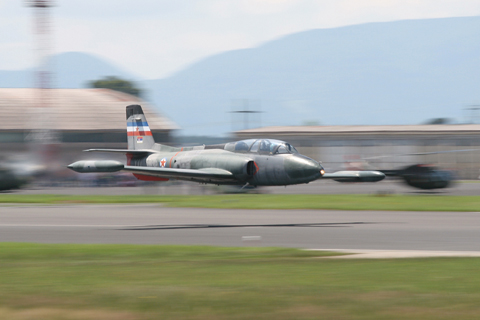
The G-2 in its element, in the hands of an experienced pilot :). The big, straight, thick wings just scream excellent low-altitude handling... and down in the ground effect, I'm told the G-2 is a pleasure to fly
First flown in 1961., the G-2 has performance numbers typical for an aircraft of its class and period, with a maximum speed of around 810 km/h – 440 kts – at an altitude of 20,000 ft, a service ceiling of 39,000 ft and a 1240 km range with tip tanks (which were almost always carried). A tough little bird, the G-2 can do anything between +8 and -4 G and is a delight to fly in all flight regimes and at all speeds – a fact underlined by enthusiastic reviews of the USAF and French test pilots that flew it in the 70s and 80s.
As the main training aircraft of the former Jugoslovensko ratno vazduhoplovstvo (JRV, Yugoslav Air Force), G-2s were scattered around Yugoslavia in large numbers, in Croatia being mostly concentrated at Zemunik airbase near Zadar, then one of the JRV’s main training fields. However, with the breakup of Yugoslavia imminent at the beginning of the 90s, they were – like virtually all air force assets – recalled to Serbia. During the ensuing civil war, a number were then again captured by Croatian forces and pressed into service, though their combat histories – if any – remain obscured and ambiguous and vary depending on who you ask.
Be that as it may, today only one G-2 is known to have remained in service with the Croatian Air Force, coded 661 (a famous bird that), though how active it was during this time is also open to speculation. Today it serves pretty much as a showcase piece at air force events and can only rarely be seen by the general public.
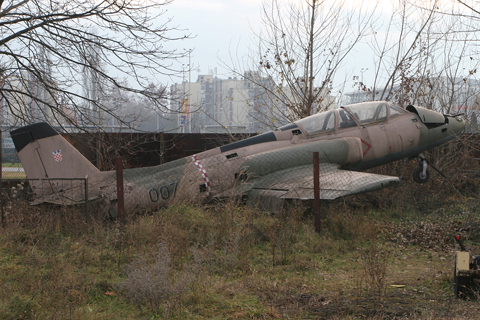
One would have thought “well that’s that then”. But in a turn that demonstrated that truth really is stranger than fiction, a friend of mine came across a near-mint example sitting unnoticed right in the middle of Zagreb’s busiest western district…
Abandoned and unnoticed, but perfectly visible from the road - and not a hundred meters away from the city's main east-west artery!
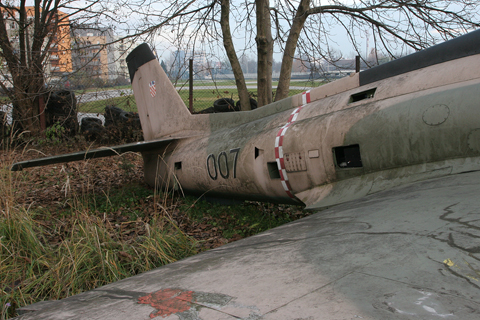
From what we could piece together, this G-2 was all that was left of some military barracks that were torn down more than a dozen years ago to make way for a new housing development (this was in 2008). Quite possibly a former gate guardian, now it was just dumped in the back of a local carting center across the road from the former barracks and left to the elements. Despite that, it was in surprisingly good shape, with only a couple of odd parts missing (on the outside at least).
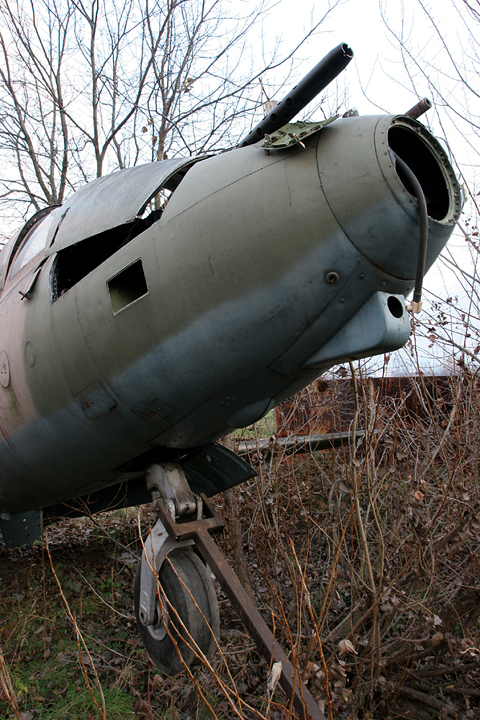
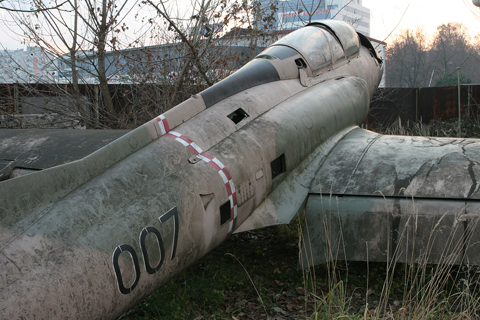
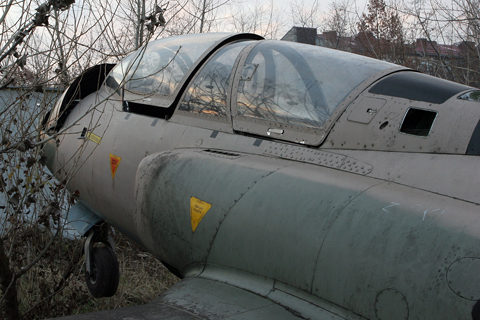
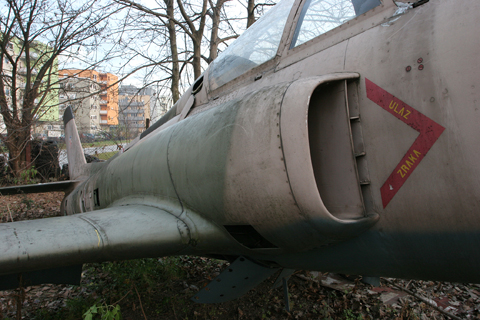
The first time I've seen a G-2 without tiptanks. Though they were detachable, they were almost always carried, providing an additional 170 kg of fuel eachThe code 007 suggest this might be a war veteran. Nowadays that code belongs to an UTVA-75 piston primary trainer (which was at the time of writing probably already withdrawn from service). An interesting tidbit is the checkered stripe running around the fuselage; like on most 50-60s designs, to remove/replace the engine, you'd first have to detach the whole rear fuselage. The joint between that removable section and the rest of the airframe is here - unusually - labeled by that stripeThough nothing heavy appears to have been removed from the front - except the cockpit instruments - 007 had tipped over at some point, probably with some assistance. The two .50 cal Brownings are still on, which suggests this aircraft was spared the usual vandalism and cannibalization. Later investigation - we were seriously toying with the idea of buying and restoring it - showed that 007 was actually privately owned, which would explain why it was relatively unscathedThough in serious need of a wash, the whole aircraft appeared to be structurally intact. Even the engine was still in the fuselage, though the tailpipe was damaged, probably when the aircraft tipped over. A couple of odd access panels were missing, but that would be an easy fix 🙂Up front, even the split canopy appeared to be in good shape - even the lock mechanism workedWith houses this close, one has to wonder how are people so oblivious to the things that go on around them... it's not like you have a jet trainer in front of every house 😀Like almost all such aircraft, the G-2 has two side-mounted air intakes. Being positioned relatively high up meant the G-2 could operate out of second-rate fields without a significant risk of FODNot easily identifiable is one permanent hardpoint outboard of the main landing gear. The large flaps - which could be lowered to more than 45 degrees if I remember correctly - permitted low approach speeds and made the G-2 a dream to land smoothlyA moody February afternoon sky is a perfect backdrop for 007One day she will reach for the skies again (poetic moment :D). The current owner has some plans to restore 007 to flying condition which - given that the G-2 was the aviation equivalent of the VW Beetle - shouldn't be too hard as far as spares and qualified technicians are concerned... as of 2009., 007 has been moved somewhere and rumor has it she's finally being worked on 🙂
By me All photos me too Cleaning, complaning and cursing me and Dean T.
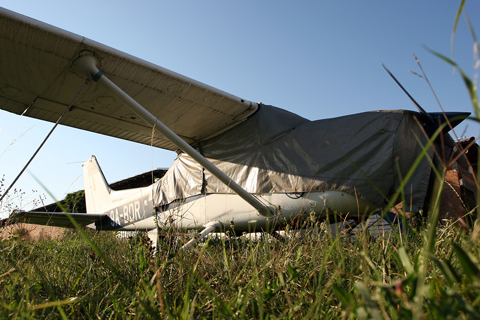
Deciding to be useful for once, I offered Dean T. – who’s always been my man for the job for access round Lučko – to come one day over the weekend and help out with the various odd jobs that inevitably pile up around the field. And sure enough, I had just arrived at 10 AM one Saturday when I saw him pulling an old, neglected Skyhawk out of the tall grass. An odd look and a couple of questions later, it had transpired that the aircraft – on the ground for the past 6+ years – was probably going up for sale and needed to be spruced up as much as possible…
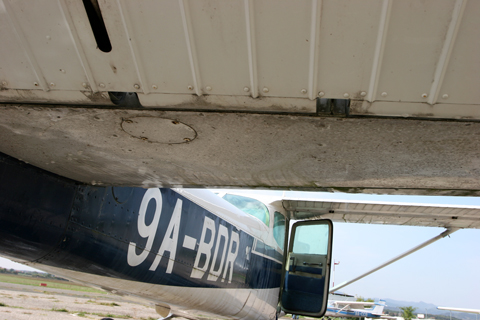
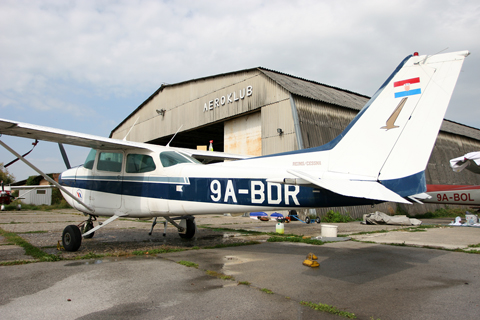
Shot about two months earlier, 9A-BDR - a Reims F172M or N - was a forlorn sight, tucked away in the corner of the apron. With a Certificate of Airworthiness that had expired in 2003., this poor thing hadn't moved from this spot in ages
It was a warm and humid day and, in need of refreshment and fun, we threw ourselves into it. However, a quick survey of equipment showed our total inventory at just three sponges, some detergent and a special wiping cloth. Not much to go on, given the magnitude of the task…
The typical BEFORE shot :). Rolled forward for the first time in years, the first thing on the list was to pump up the tires to make maneuvering on the ground easier. That didn't help much as apparently one of the brakes had locked onNext, we had to remove the covers... something we regretted a moment later. They apparently hadn't been lifted once in the past six years and in the heat all of the dust and dirt under them "baked" onto the fuselage. The wings - thankfully uncovered - were just plain dirty 🙂Exposed to the elements for as long as it was, we were surprised that this was the only paint peeling off
We were curiously optimistic about the task, as it soon transpired that much of the dirt on the wings and fuselage was quite easy to wipe off. A bit of an oddity really, but it made our life considerably easier :). The only problem was that we couldn’t get at all the tiny places and openings normally found around the controls – and lacking a high-pressure water source, we couldn’t even try and wash them out with by brute force…
Contrast; a definition :). While Dean started on the left wing, I got to grips with the cowl and soon got it glowingThe scale of the problem on top. In the long run the covers did more damage than the elements...Cleaning out the control surfaces. Despite appearances, everything down here came off easily in just one pass
The major constraint was that this was basically a cosmetic, outside makeover – which ruled out any possibility of opening a panel or two to check out the structure and control lines underneath. I has also wanted to crank the engine to give it some air and clean out the cylinders, but a quick yank on the prop – which had gone round surprisingly easy despite the magneto switch being off – scratched that as well. Upon further questioning and investigation, I had found out that, aside from a full oil tank, the engine had no alternator, starter, magnetos or battery. While we could have done without the alternator – and even the magnetos – we’d need the starter and battery (an external power supply wouldn’t have helped, as it has to go through the battery itself).
And, if the more eagle-eyed readers noticed, we had to change the position and orientation of the aircraft every once in awhile due to a very short water hose :). Having to manhandle it around the tail and landing gear, we though it simpler just to re-orient the whole aircraft.
A lunch break gave me an opportunity to peek inside while we let the upholstery breathe a bit. The panel was in a surprisingly good state, well equipped and with only the ADF radio and indicator missing. Though this is all academic, the instruments having certainly ran out of service life after having been neglected for six yearsGetting there bit by bit... 🙂 You can still see the remnants of the aircraft's old registration under the current one: YU-BDR. After the breakup of Yugoslavia back in 1991., all aircraft registered in Croatia were re-registered with the country's new prefix, 9A (with a temporary RC prefix in the meantime). On many aircraft this change was hastily done by simply painting the YU over and applying 9ANow this looks more like it :). Cleverly choosing a point of view that hid the paint damage, I could have been fooled into (briefly) thinking this aircraft was actually well maintained 🙂
And five hours, one pizza and two liters of coke later, we reckoned we’d done it! Though the faded paint job was a distraction, we felt it came out beautifully in the end – cleaner at any rate than some of aircraft that fly every day :). And by a twist of irony, half an hour later it was back in the same place it spent the past six years, still waiting for a buyer…
By me All photos me also Driving me across the whole field Dean T.
Looking to profile all the interesting aircraft at Lučko, I keep passing over one that has almost become a permanent fixture of the field, pretty much part of the landscape. Despite being huge, we’re so accustomed to seeing it in the distance that we don’t pay it much (or any) attention anymore – which is a shame, since it’s a very interesting and nowadays rare piece of (formerly) flying machinery. The subject is, of course, our old white whale, RA-21132, a Mil Mi-6 heavy transport helicopter.
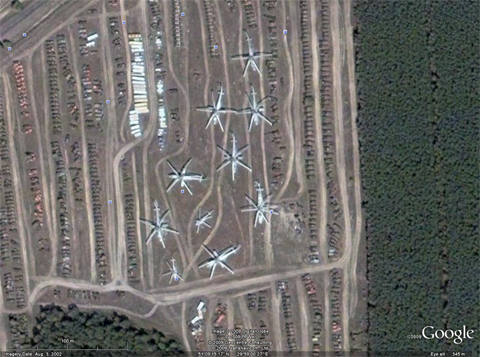
Once the largest helicopter to see mass production and regular service, the Mi-6 is an imposing and awe-inspiring aircraft from any angle, today beaten only by it’s more powerful and modern brother, the Mi-26. Powered by two Soloviev D-25V turboshaft engines delivering 5,500 HP each, the Mi-6 weighed in at an astounding 42,500 kg at maximum takeoff weight, equivalent to TWO Dash 8 Q400 70-seat turboprops (or one 90 seat DC-9-10). At its cruise speed of 250 km/h – a not at all shabby 135 kts – it could haul 90 passengers or 12 tons of cargo over a distance about 600 km. Normally this was put to good use, and the Mi-6 was over time produced in a number of versions, including electronic warfare, airborne command post, anti-submarine, firefighting, SAR and AWACS models among others. However, the Mi-6’s most famous use was during the ’86 Chernobyl nuclear powerplant disaster, when several aircraft were used to douse the still-burning reactor core immediately after the accident. Irradiated and now useless, they were dumped in the Chernobyl vehicle graveyard and can be easily seen using Google Earth.
The Chernobyl vehicle graveyard, with several Mi-6s clearly visible - they can hardly fail to be given their size. The image coordinates are: N51° 09' 15.42'' E029° 58' 59.68''
Not at all bad for a machine first flown in 1957, just 17 years after Igor Sikorsky demonstrated the single-seat VS-300, the first helicopter that actually worked and flew like the helicopters of today. Even today it’s rotor and gearbox system components are considered advanced and have been put to great use in the subsequent Mi-26 (which is – unbelievably – an even more impressive aircraft).
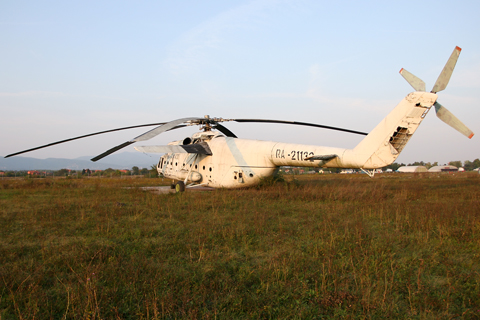
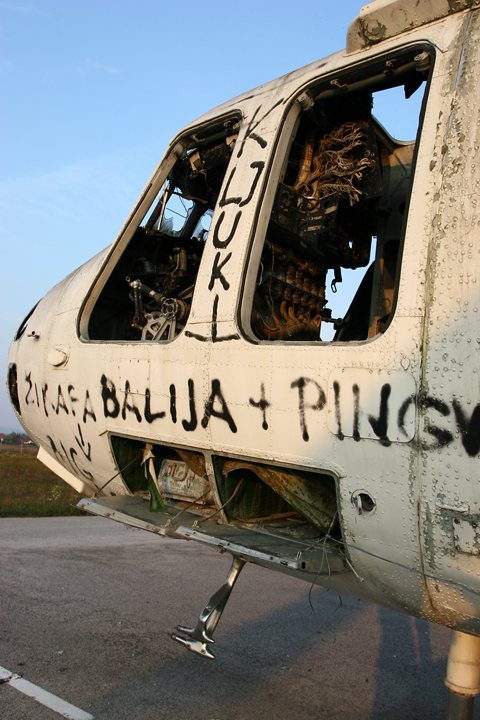
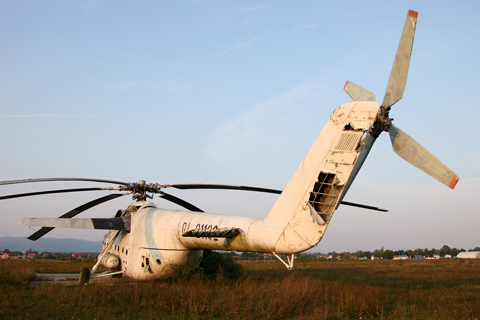
Meanwhile, back in Croatia, RA-21132 is having far less success. A stock, early-model Mi-6 with the serial 2402, it is now sitting at the far end of the field on the furthermost military helicopter pad, alone and forgotten. The lettering on the fuselage suggests it had once been operated by Aeroflot – though this is questionable, given the Soviet Air Force’s habit of operating transport aircraft in civilian Aeroflot colors. As this appears to be a non-passenger version, we can safely assume that it has had a military background (at least at some point in its life).
How it got here and why is an even bigger question and there is not clear agreement on that front. The most plausible version is that it was bought during the Civil war of the ’90s (the RA- prefix would suggest a post-1991/92 acquisition) at the end of its service life, flown here and dumped when its resources ran out and the subsequent UN armament embargo on Croatia meant spares would be impossible to come by. Whatever the case, it has been sitting here for more than 15 years, stripped of everything useful that could be carried away without heavy machinery (the engines are still up there, which could rule out any systematic and organized cannibalization).
Because it’s at the other end of the field – and the only way to reach it would be via the military base or a long trek through the grass right across the field – we don’t visit it often, but vandals do not seem to mind the exercise, as the helicopter is in a ever-worsening state every time I visit. That not being often, I’ve put together a collection of photos taken in 2005, 2006 and a couple of days ago (and many thanks to Dean T. for the drive in the AK Zagreb van 🙂 ), of varying quality and taken with various cameras… but with the key points covered :).
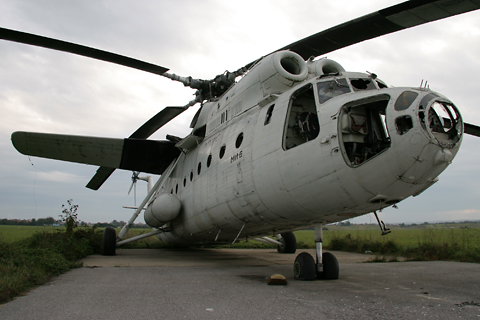
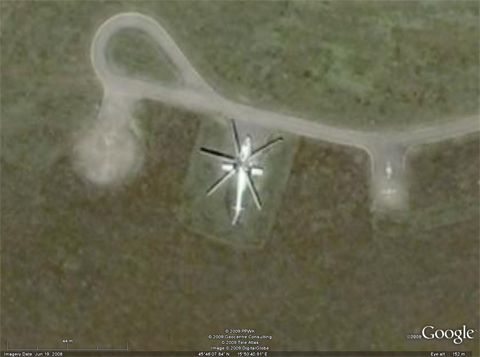
With an overall length of 33 meters and a rotor diameter of 35 meters, this is one huge machine! Shot in 2005 with my old Fuji S5000 while I was helping with a precision landing championship at the RWY 10 endUp close a year later. From right beside, the Mi-6 is more impressive than the A380 - especially given it's a helicopter. To improve cruising efficiency and get some load off the main rotor, the Mi-6 was fitted with not-at-all-insignificant span wings, which were removed on both the firefighting version and the follow-on Mi-26More akin to a fixed-wing aircraft than a helicopter, the Mi-6 required a six-man crew, including a pilot (who sat on the left), copilot, two flight engineers, a navigator and radio operator. During military and cargo ops, this could swell to even more when you add the Soviet equivalent of the loadmasterThe main rotor hub. A complicated - and very advanced - piece of machinery turning the giant five-blade rotor. Much like on the An-225, during takeoff the blades have to lift themselves first before they get to grips with the 40-odd tons of fuselage and cargo remainingTaken a week ago, with RA-21132 looking a lot worse for wear. The fabric covering the vertical stabilizer was torn off, while pointless nationalistic graffiti on the fuselage side dealt a further blow to the dignity of this fascinating machineUp close, the size of the Mi-6 becomes more apparent - when you can compare it to known details such as doors and windows. Like most Soviet helicopters, the Mi-6 carries its fuel tanks externally, seen here strapped to the mid fuselageInviting, but I decided not to climb aboard. The military might have had some objections and given the state on board, I didn't want to risk falling over - or through - something. Pictured are the pilot's and one of two flight engineer stations. The two compartments below the cabin look very much like avionics baysThere were some halfhearted suggestions to turn RA-21132 into something useful, like a restaurant, but it appears destined to rot here for a long time to come. A sad end for an impressive machine, beyond any meaningless repair...Sitting isolated and all alone at Lučko.... image coordinates: N45° 46' 07.92'' E015° 50' 40.73''
Having been quite productive during my last few visits to the field, I managed to snap some more photos of some of our rare gliders – including a gem I’ve missed before, having only seen it under cover and dismissing it as “just another” Pirat. All of these are the previously mentioned “eastern” and “local” varieties, which I think are more interesting than the ubiquitous Blanik… 🙂
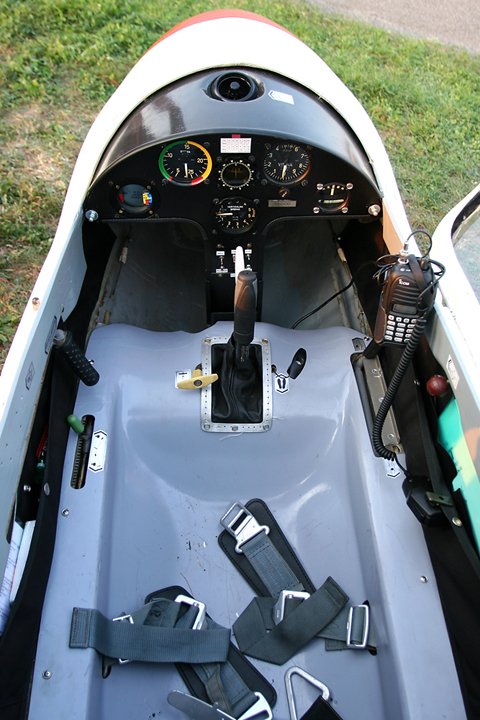
GJA enjoying a day out in the traffic circuit. A very hot and sunny day with calm winds meant that everything with wings and no engine was out and about. At one time I've seen four gliders in the circuit. Being a SZD-41A Jantar Standard, GJA is one of the most "advanced" gliders at Lučko, incorporating water ballast in addition to the usual Standard class goodiesA real beaut I couldn't believe I had overlooked - a very rare VTC-Vršac Vuk-T, Made in Ex-Yu. This 15 meter glider is one of only a few on the Cro register and wears a very interesting registration ("vuk" in Serbian/Croatian means "wolf", and since 9A-DOG was taken and gliders are on the G register - presto, 9A-GOD 🙂 )Looking very similar to other 15 meter gliders, the Vuk-T can often pass undetected in the glider crowdWaiting for its turn to be put to bed after a busy day of flying :). Unlike most other gliders at the field, GOD spends its time outside the hangar under protective coversThe very clean and tidy cockpit of GOD. Actually this is one of the cleanest cockpits of any sort I've seen in a long time. In addition to the standard analogue variometer, GOD is equipped with a digital one as well, which appears to have an additional function or two. And despite the yaw string you may have seen on the canopy, this Vuk-T is equipped with an electrical turn coordinator in the bottom right of the panelI'm just waiting for someone to ask where's the Meteor, so I can answer "Right next to the radiator" 🙂Not really a dignified storage location, but given the Meteor 57's rarity - only two built, only GSO flying - it's better to be safe than sorry with the cramped conditions in the hangarLike with most (all?) metal gliders, the Meteor's wings can be detached for transport relatively easily and simply. No electrics, no fuel tanks and not much mechanics mean that the wingroot is clean and unclutteredAnother shot of our now famous Pirat, back under cover and sodium light 🙂

































 Achtung, Skyhawk!