Due to reasons beyond my control (to put it mildly), I had quite a bit of free time on my hands this summer, which I decided to spend – like in the good ol’ days – by enjoying the scenery at various airports and airfields throughout the land. While one would have assumed that the lockdown (pretty mild in Croatia, but still keenly felt) would have had a negative impact on GA ops, the truth of the matter was that the number of aircraft buzzing about had actually increased – which meant that there were always plentiful photo opportunities wherever you went. A perfect setting then to get the camera out and see what I’d been missing over the winter… 😀
If you’re sad for the demise of Cold War underground air bases and bomb-proof aircraft hangars, don’t despair – Dubrovnik Airport (DBV/LDDU) has something for you! Not so much a Hardened Aircraft Shelter as a “Hardened Vehicle Garage”, the brand new semi-subterranean storage depot along the airport’s northwestern perimeter may seem like an unlikely place for aircraft photography… but as you can see, it pulls it off nicely!
Concentration at 120% as a young colleague readies his ship for a late afternoon training flight. Somewhat fortunately, this student-weary veteran of the Croatian Aviation Training Center – to whose weariness I myself had actively contributed a decade ago – will soon give way to…
… this. It’s startup may not have been as smoky as I would have liked (thankfully for the engine!), but it was nevertheless worth frying like sushi on the superheated apron to catch my first ever Duchess. Conceived on the same train of thought as the Seminole, the 76 was always a typical Beech design: built up to a standard rather than down to a price. Unfortunately, that made it quite expensive to buy and maintain, meaning that only 437 would ever be produced… barely half the Seminole’s ~930 (and counting). Ironically, being a replacement for 9A-DZG means that Walter Beech may still have a tiny last chuckle!
Number 2 for departure after three incoming arrivals, holding short on a parallel runway being used as a taxiway since it is too close for proper simultaneous operations… this is not Lučko – it’s Gatwick on grass!
Of course he’s happy – he’s going flying… and on an aircraft he built himself from the wheels up, and from parts of half a dozen factory Super Cubs!
The 70s are back – as an airplane. While this “50 Shades Of Brown” interior may not be all that hot by today’s style standards, it is nevertheless so throwback cool that it warrants a “10/10 would sit” rating! (it also helps that the entire cockpit is crisp, clean, neat – and fully original, with the same trim it had back in 1986 when it rolled off the production line) (and yes, despite the D- reg, this machine is a fully-fledged local)
Even on its own territory, the Reims Rocket is a shy and reclusive species, easily frightened by noise and sudden movement. Because its colorful plumage makes it easy prey for photographers, it has evolved the ability to escape and hide quickly and without warning; always approach it silently and patiently, using local terrain and foliage for cover whenever possible…
And finally, one little Cherokee I’m VERY happy to see again! Covered previously in two some of my earliest posts here (part #1 and #2), DJZ is the sole “pre-Warrior” PA-28 in the country, and had years & years ago been based at Dubrovnik (DBV/LDDU). Unfortunately, a while back it had fallen on some hard times and was left to rot in the corner of the apron. Thankfully, about a year ago it had been brought to Medulin Airfield (LDPM) in Istria, where it is now undergoing a complete restoration – and will be happily flying already in early 2021!
To properly kick off my return here after an unintentional pause of nine months (!), I’ve decided to revisit an aircraft type I had mentioned in passing some time ago – seeing that, by a stroke of sheer dumb luck, I managed to snap TWO in the space of just one week (which is twice as many as I’d managed over the past 18 years). The machine in question – as the post title infers – is the Retractable Gear (RG) version of the common Cessna 172, an aircraft whose rarity and cool factor is matched only by its apparent uselessness and absurdity…
A mint 172RG, in a modern paint scheme, under clear skies on a beautiful summer morning… I could do worse for a pre-dawn spotting session I must admit!
Swinging 80s
To immediately get an idea of why the 172RG stands out like a sore thumb within the traditionally conservative Skyhawk family, it seems best to start off with its main party pieces, as compared to the stock 172P of the same period (1980):
fully retractable gear
a longer snout to house the nose gear when retracted
cowl flaps
a 180 HP Lycoming O-360-F1A6 w/ constant speed prop (vs the standard 160 HP O-320 and fixed pitch unit)
a 66 USG fuel capacity (up from the standard 42)
and a 1,202 kg MTOM (vs the 1,088 of the P)
Performance-wise, the extra grunt (particularly the increased efficiency of the constant speed prop) and cleaner lines meant the RG could pull up to a 20 knot lead over the stock P, with High Speed Cruise pegged at 140 knots. The new prop also made for slightly better after take-off climb performance (800 fpm vs 700), while the increased fuel tankage gave a pretty chunky range boost, from 440 up to as much as 770 NM.
Cutlass #2 undergoing a wheels-up restoration after a (heh) wheels-up landing in Germany. You can definitely tell it apart in a normal Skyhawk crowd!
However, the ~80 kg added by the gear retraction mechanism also upped the empty weight, now standing at 740 kg vs the P’s 660. Normally, this was not much of a payload issue if you took on only your required fuel – but if you went all out and brimmed the tanks, you’d be left with barely 260 kg of headroom… roughly two 2020 adult males, some luggage and all the stuff normally carried around when away from home (additional oil, tow bar, cockpit/wing covers, emergency equipment, survival kits, …).
The higher MTOM also made for longer take-off and landing runs, both up by roughly 70 meters even on concrete; and while some owners have been known to fly them out of rough fields (and even back country strips), it generally goes without saying that the new legs did not take too kindly to prolonged use on the types of runways normal 172s take for granted.
While the main gear legs are no thinner than those on the standard 172 (where they’re set inside streamlined fairings), Cessna’s electro-hydraulic RG systems are quite complicated things and can go bananas even when mollycoddled. As on the 177RG, 182RG and 210, the main legs of first swing downwards and the fold back into recesses in the fuselage (barely visible here). Early 210s – which were the first to use the system – also had main wheel well doors, but they proved problematic and were deleted well before the 172RG appeared
The Cessna Retractable Dance. Go to 0:30 for retraction and 1:30 for extension. You’ll note that the pilot leaves the gear down for quite some time after take-off; the standard wisdom on RG Cessnas is to leave it hanging until clearing obstacles, since the retraction sequence causes so much drag it can noticeably impair climb performance at a critical stage (this is also SOP on airliners during windshear escape maneuvers). Indeed, the main legs drop by a whopping 60 centimetres during retraction!
Maintenance-wise, private owners, commercial operators and various incident reports all tend to agree that the upsides of its commonality with the stock 172 are frequently balanced out by the many gremlins of the RG system – though user experiences vary considerably, particularly when comparing leisure and training ops.
Persistent weak spots and items that require frequent inspection are the main electric-driven hydraulic pump, down-stop pads that (if damaged) may prevent the main gear legs from locking down, and the main gear pivots that are worn out by the legs’ aerobatics during retraction and extension. There’s also the need to periodically cycle the gear on the ground during checks – which requires jacks and additional man-hours – as well as the costs of servicing the propeller governor (though that’s a pretty standard job).
And while none of these are deal-breakers in themselves – the 182RG and 210 say Hiii! – the cost-benefit math of doing all that on a lowly 172 did not make the RG everyone’s cup of tea…
Mission-ready
So, when all was said and done, the 172RG was a cheap & simple aircraft made expensive & complicated for just a few marginal gains – so much that even the fixed gear 210 HP Reims FR172 Rocket could keep up with it in a pinch (and for noticeably less money). What’s more, if you really wanted the “Full RG Experience”, five numbers up was the (slightly) more powerful, (much) more efficient, (oodles) more comfortable and (far) more elegant 177RG Cardinal – an aircraft conceived outright for the touring role, offering 182 series frills without many of its financial chills.
The 172RG thus appears to be – in technical terms – a complete crock. However, outright performance and mass market appeal are not what this airplane is about; its forte was to corner a very specific niche of the training market by offering a suitable and affordable “quick fix” for a problem few manufacturers seemed interested in tackling.
The niche in question was for what’s termed a complex aircraft, a surprising demanding specification that calls for a simple, easy-to-fly, robust and cost-effective airplane that can also boast toys such as flaps, retractable gear and constant speed props – all the complicated and fiddly stuff that future airline drivers are supposed to deal with (did mine on an old, student-weary PA-44, so the full set of traumas is there!)*.
And with the Skyhawk’s 25 years of active service to its name, the type’s well-known middle-of-the-road handling, off-the-shelf components (even the landing gear, nicked off the Cardinal), a reliable and frugal powerplant and a developed global support network, the 172RG had hit all the nails it needed to hit. Even though it would be born on the eve of Cessna’s decade-long single engine production pause, 1,191 would be made between 1980 and 1984… not bad for a niche design!**
* the original specification for complex aircraft had not set a specific minimum power limit; in 1997 however, the FAA set the bar at 200 HP, thus disqualifying the 172RG. However, the type still remains in widespread use as an introductory platform for more complex touring machinery – as well as a charismatic “left field” personal airplane
** though there are frequent parallels with the Beech 24 Sierra and the Piper Arrow, the 172RG is actually not a direct competitor to either. Both designs boast thirstier 200 HP fuel-injected engines (the Arrow with the option of turbocharging), better performance, more amenities – and are generally set up more for the posh end of the touring market; their closest Cessna analogue would be the aforementioned 177 Cardinal. The only aircraft on equal footing with the 172RG was the very first version of the Arrow – the 180 HP PA-28R-180 – which debuted in 1967 and remained in production for only a couple of years before being superseded by the first of the 200 HP models
What’s in a name?
While all of the above ticks quite a few Achtung, Skyhawk! boxes, one more thing remains that is very worthy of mention: it’s name.
While it does say “Cessna 172” on the tin, the 172RG is techno-legally not a purebred Skyhawk – but rather an offshoot of the nearly forgotten 175 Skylark. Billed as the next step towards the larger 182 (a role that would later be filled by the 177), the 175 was in essence an up-market high-trim version of the 1956 172A, fitted with a geared 175 HP Continental GO-300 instead of the standard direct-drive 145 HP O-300. Unfortunately, reduction gearboxes were at the time an unheard of feature on such a small civilian engine, meaning that very few pilots had ever encountered one before. The specific way in which such an engine had to be handled – flown at around the 3000 RPM mark – was so alien and absurd to private pilots that many drove them at the more usual 2000-2200 RPM, leading to a ton of breakdowns, failures and bad PR. By 1962, things had gotten so bad that Cessna was forced to pull the plug on the entire design, and retire both the 175 designation and the Skylark name…
A stunning late model 1962 Skylark with the original GO-300. Note the hump on top of the cowling; the propeller axis had to be raised up in order to accommodate the reduction gearbox without relocating the engine mounts
To salvage at least some of the effort invested in the design, the company decided to keep the 175’s Type Certificate (and some mechanical bits) and use them as the legal basis for all future high-performance variants of the 172:
the 195 HP R172 Hawk XP
the 210 HP Reims FR172 Rocket
the military T-41 Mescalero
and the 172RG
Traces of the Skylark’s original DNA can still be seen in the R172, FR172 and T-41, since they all sport the tall narrow-track landing gear of the 172A, which would be replaced by the squatter wider-track variant we all know and love on the subsequent 172B.
However, this would not be the end of Cessna’s marketing shenanigans; in 1983, the company would launch the 172Q Cutlass (sans RG), an attempt to “schlepp” on the RG image by fitting the 172P with a 180 HP Lycoming O-360-A4N driving a fixed pitch prop. Quite a rare model today – which did not offer much meaningful superiority over the P – only a handful would ever be built before the Skyhawk family as a whole went into its prolonged 80s coma…
Fixer Upper
While at this point in any normal Achtung, Skyhawk! post I’d go off with a ton of (more or less) descriptive external photos, in this instance I decided to “stay inside”, since the opportunity to snoop around a full-blown rebuild (currently at ~60%) was an opportunity too good to miss! The photos are not my best work – it’s hard to maneuver my 1.91 m frame w/ camera and tripod inside a 172 – but hopefully they’ll be interesting enough for the common avgeek!
I don’t know… it feels something is missing… free from all its kit, the Skyhawk panel looks far more commodious than it actually is! Note the (now very visible) sections for the flight and navigation instruments and the radio stack. Before its wheels-up landing and rebuild, D-EGGF also sported an autopilot (fitted above the glove compartment), and will – when completed – also carry a full set of digital engine instruments. Note also the rudder trim wheel next to the elevator trim; a very useful convenience/borderline necessity with a constant speed prop
A peek “behind the scenes” shows just how many wires, cables, ducts – and even chain drives – there are in a light aircraft. The complexity, weight and maintenance headaches of the average analogue panel have been one of the key drivers behind modern glass cockpit systems built around digital buses and remote sensing systems
Lots of wires… and lots of levers too. With carburetor heat, throttle, prop, mixture and cowl flaps controls, the 172RG could be handful for inexperienced pilots used to the trouble-free operation of the classic Skyhawk (but ideal for the well-meaning masochism of flight training!). Indeed, this was Cessna’s most complicated throttle quadrant short of the 182 (even the 177RG had one level less, being fuel injected)
The most out-of-place level in a Skyhawk: the landing gear handle. One of the more unconventional operational features of Cessna’s RG system is that the “gear up and locked” lamp is – red… which on everything up to and including airliners means either “NOT locked” or “in transit”. Somewhat annoyingly, the light remains continually illuminated as long as the gear is retracted… which is mildly disconcerting from a Q400 driver’s perspective!
Like all RG airplanes, the 172 has a backup gear extension system, whose lever is located under a cover between the front seats. The trick here is that it is just a hand pump, to be used in case the electric one fails (~35 strokes are necessary, according to the POH); it still requires the hydraulic system to be fully operational, and there is no gravity drop or a standalone reserve hydro system. This “unusual feature” is the 172RG’s main Achilles’ heel: the gear is actually held up by hydraulic pressure, and to keep it from dropping, the hydraulic pump occasionally operates in flight to keep the pressure within limits (between 1000 and 1500 PSI). However, if there’s a leak in the system – which seems to happen with some frequency – the pump’s operation will simply dump the hydraulic fluid overboard, eventually emptying the entire system and rendering the gear completely inoperable
The more normal end of the Cessna RG system. The nose wheel doors are mechanically connected to the nose leg so they open and close with gear motion; their biggest operational problem is that they’re quite large and hang low, so it’s easy to damage them if you’re a bit too enthusiastic with the tow bar
Who would have thought that all of this cabling lies hidden behind the teeny panel of the Skyhawk? Another detail unique to the 172RG is the raised floor (best visible below the CDI), necessary to accommodate the main gear legs when retracted. The main wheels however stow behind the normal luggage compartment, so the loss of space there is minimal
Boxes boxes everywhere, not a place to sit… thankfully, the lack of space for maneuvering about with a tripod is taken up by some pretty cool kit: Garmin G5 x2, GMA350, GNC225… should be quite a looker when finished, very much looking forward to trying it out!
As ever, I would like to extend my sincere thanks to Dorian Delić of Medulin Airfield (LDPM) in Istria, for allowing me to snoop through his family’s hangar and drool a bit over D-EGGF!
POST UPDATE – 8 SEP 2021: it may have taken awhile, but I’m happy to report that D-EGGF has been cheerfully flying for awhile now, shuttling around the northern bits of the Adriatic all summer long. To make it even better, I’d managed to catch it recently at Split, making for a proper photo update!
Waiting for its turn to taxi out for the hour-long hop back home to Medulin
Even though I’ve been a fixed wing driver from Day One (private and training helicopters being so rare in Croatia), I’ve nevertheless always maintained a fancy for all things rotary. Indeed, my first ever flight – back when I was just a toddler – had been on a Yugoslav Air Force Mi-8, followed up later in adulthood with hops on the Bell 429 demonstrator, and with Red Bull’s own Rainer Wilke on the fully aerobatic Bo-105 (an experience I’m not likely to forget!). From then on however, my contact with the helicopter world had been reduced to being on the working end of the camera viewfinder – a situation that would dramatically change for the better in the summer of 2019.
Having been aware of my long-standing desire to photograph a piston engine Kamov up close, a friend from neighboring Hungary – himself an avid helicopter spotter – had managed to do me one better, arranging not only a “free hand” photo session… but also a short semi-aerobatic flight. The only string attached was that I get my arse to Budapest on my own accord – a condition I was more than happy to accept! 😀
It may be the textbook definition of the world “fugly” – but on that day it was the most beautiful helo in the world!
The HA Ka
The rather colorful bird that would be my ride for the day goes under the name HA-MPB, and sports the serial 77 061 09 – a typical Soviet sausage that tells you (almost) everything you need to know:
77 … manufactured in 1977
061 … as part the 61st batch made (out of 65 in total)
09 … and the ninth example in the batch
This puts it among the youngest examples of the 848 made in total between 1969 and 1978 – and one of at least 149 that would eventually serve in Hungary (either straight from the factory, or through resales). Unlike the vast majority of its brethren however, MPB is still very much active, and spends most of its uptime dusting crops up and down the country. Indeed, on this day it had popped into Budaörs Airfield (LHBS, not a stranger to me) solely to participate in the upcoming Budaörs Airshow, following which it would quickly depart back into the southern fields and resume normal operations 🙂 .
While my roster at work had prevented me from staying the show’s full three days, I had nevertheless had ample time to pour over MPB in much detail. Though many of the design’s finer nuances will inevitably be lost on me – Fixed Wing Guy, remember1 – there is nevertheless still enough eye candy here to arouse the interest of even the most basic aviation enthusiast!
1 any corrections from whirlybird drivers would be most welcome!
Getting ready for the day’s practice run with a lick of paint and a thorough wash. Despite the performance penalties of the extra weight, MPB would fly its routine in full crop spraying kit…
In addition to their distinctive main spray bars, many Ka-26s feature a secondary unit slung from the horizontal stabilizer. Specs I found online indicate that with all three in operation, the average 26 could dispense up to 12 liters of fluid per minute (though dispersion system upgrades in 1978 and 1979 would improve on that by a couple of liters/minute)
In the crop dusting configuration, the hopper can accommodate up to 900 kg of fluid. A neat trick is that it’s actually part of a removable payload module that can be easily taken out in the field, and replaced with the minimum of specialized tools by a selection of other factory-made modules (passenger, ambulance, freight platform, sling hook, …)
Not your usual view! Despite its unwieldy look and apparent bulk, from the top it is obvious that the Ka-26 is actually quite compact, sporting the minimum amount of structure necessary to bring together the engines, cabin, rotor system and payload module. There blades themselves are actually composite and very light, and feature substantial leading edge protection at their tips – all of which gives them a solid 5000 hour service life, even in the rough-and-tough going at low altitude
The party piece of (almost) every Kamov design: the counter-rotating coaxial main rotor. Though mechanically more complex than the conventional arrangement, this setup allows for greatly increased efficiency, since the blade area – which produces the lift – is now doubled, and there are no mechanical and friction losses inherent to the tail rotor and its transmission system (which also does wonders during autorotation). Another benefit – epitomized by the Ka-50/52 gunships – is a very high degree of maneuverability in all axes, as well as a much more neutral mass distribution that does wonders for hover characteristics, general handling and overall agility
Arretir! Drawing heavily upon Kamov’s naval experience, the Ka-26 could be equipped with a full IFR panel and some pretty sophisticated kit for its class – stuff that didn’t always sit well with operators, since it tended to add complexity and increased maintenance costs. Many examples (especially those used at very low altitude) would be stripped down in actual operations; MPB however had retained most of its factory setup, minus the blind flying gear
Having spent the majority of its life in Hungary, MPB sports a typically curious mix of Russian and Hungarian dials, which do add a lot of charm to the cockpit…
Being one of the very few (maybe even only) production light helicopter with TWO piston engines, the Ka-26 does sport a lot of powerplant-related switches and knobs – so much so that it seems you need three arms to successfully start it first time out…
More traces of the Ka-26’s Soviet design heritage: the single primer pump in the middle (which is turned into the direction of the desired engine before being actuated), and the air system valve w/ pressure gauge, which provides the juice for the main wheel brakes (a common solution on Soviet aircraft to avoid the weight penalties and poor cold weather performance of conventional hydraulics)
Another icon of Soviet general aviation: the venerable and dependable M-14 nine cylinder radial, here in its V-26 version developing 325 HP. To tackle the unique aspects of helicopter flight – high RPM, high throttle and low (or no) forward airspeed, the fit on the Ka-26 features powerful cooling fans (visible behind the fully opened cowl flaps), which force air over the cylinders to keep them sufficiently cool regardless of flight regime. They also make a LOT of noise!
Two big Soviet radials, two huge coaxial rotors, a traditional cockpit fan – and a semi-aerobatic duet with a 1950s Hiller UH-12… yep, didn’t mind the four hour drive one way!
One a pristine vintage “oldtimer”, the other a no-nonsense everyday working machine… one conventional on Lycoming power, the other coaxial with twin radials… one user-friendly Western, the other utilitarian Eastern… fun is guaranteed! Another interesting feature of the Ka-26 – negated here by the open door – is that the cabin is actually pressurized to slightly above ambient, to prevent spray and chemicals getting in during crop dusting ops
And finally, a bit of video from the inside… admittedly, not the best quality (the lighting was marginal all throughout the day), but hopefully the action will make up for it! Also not the piercing turbine-like noise in both clips; those are the aforementioned cooling fans spinning their heads off 😀 .
Bonus content: Hiller UH-12D • HA-MIG
Drooling all over the Ka-26 is fine and well – but when you get to fly in a duet with a vintage Hiller, you should at least try to make an effort to snap it as well! 😀 Returning back to the apron after our run, I was lucky enough to stumble upon said helicopter and its owner, who kindly allowed me to snoop around and bit and soak up the beauty of one of the world’s earliest mass produced light helicopters…
Halfway through a thorough wash following its practice display. Manufactured in 1959 with the serial 1145, MIG would serve first with the US Army as 58-5496, before going civilian as N67664 and N16MQ. Sold to Hungary in 1997 (as one of a number of UH-12s coming into the country during the 90s), it would eventually end up in the hands of Fly-Coop, one of the largest aircraft operators of the Budapest area. Note the exposed tail rotor transmission atop the tail boom
Though the type normally sports the six cylinder Lycoming VO-435 developing 265 HP, this particular machine had at one point been retrofitted with the more powerful Lycoming VO-540, developing a chunky 305 HP (it showed during the display!). Of note is the engine V prefix, which stands for “vertical” – denoting the modifications for the only possible way of installing it into a light helicopter
A panel that can easily provoke traumas in anyone who had flown a 1960s Cessna – no rhyme or reason in the layout, and made by someone who studied economics, not ergonomics. That notwithstanding, surely a cool place to sit!
Traditionally, I would like to extend my sincerest thanks to all the people – ground and air crews alike – that had made this photo shoot possible, particularly Gergely C.!
Some choices in life are actually pretty easy to make. Take, for example, my options the other day following a 4 AM wake-up to work a dawn flight: A) get some sleep; B) get some exercise; or C) drive an hour and half (one way) to a neighboring country to try and catch a pretty rare turbine Cessna 206… I mean, the choice is self-selecting! 😀
The machine that had managed to score higher than my own bed (!) is a Turbine Conversions Turbine 206, a fresh crack at mating a mid-life Cessna 206 airframe to a (moderately) powerful low-altitude turboprop engine. But, whereas the most successful attempt so far – the Soloy 206 – is based around the same Rolls-Royce/Allison 250 series engine used on the Bell JetRanger, Turbine Conversions’ mod relies instead on the far more famous Pratt & Whintey PT6A – and is the first time this engine had ever been fitted and certified on a member of the Stationair family. With only three examples flying in Europe so far, delaying sleep was definitely a better call, so I plonked myself into the car and went off to see what’s what 🙂 .
A real Quasimodo: ugly as hell on the outside, but with a heart of pure gold underneath
Born to Haul
The recipe for this sort of thing has always been pretty straightforward: take an older generation utility 206, give it a large improvement in hauling performance as cheaply and simply as possible – and then make it work on paper so that it can legally carry paying passengers. And while sticking in an engine that may be worth three times the rest of the aircraft may not sound like the best way to do it, the idea does have a fair amount of economic sense behind it. Stationairs have always been tough birds with long lives, so even a model several decades old can be reasonably expected to have quite a few years of service left; being several decades old means that they were likely paid off in full ages ago, and have none of the fiscal baggage that newer models are often burdened with; and they can be cheap to buy, spares are plentiful, support is available worldwide – and there’s enough accumulated user experience out there that even a fresh operator can learn the ropes quickly and without undue trouble.
Get all of these right (admittedly, not an easy task!) and the turbine conversion can end up being a pretty cheap, sufficiently efficient and very reliable ticket into the utility turboprop world, especially for smaller operators who cannot afford a bespoke type such as the Pilatus PC-6, PAC 750 or Quest Kodiak – or are in regions where Avgas is fast becoming a thing of the past. Get it right and even the conversion’s many downsides – such as fuselage-limited capacity and higher long-term operating costs – may not be critical enough to offset the advantages of having a turboprop – ANY turboprop – at your disposal.
To try and achieve the above, Turbine Conversions – a longtime PW&C user – decided to bank once again on the company’s most famous engine, which – while heavier and more expensive all round than the RR 250 – has an enviable reputation and true global reach on its side. Initially, the mod started out with the 550 HP PT6A-20, but this was changed before production began to the equally powerful PT6A-21 – the difference being that the -21 is in essence a de-rated version of the 680 HP PT6A-27, which retains the latter’s more potent core for a bit added torque and improved hot-and-high performance.
Being a cheap-and-cheerful “firewall forward” solution intended for the rough-and-tough utility market, the Turbine 206 is not really loaded with features; apart from the new engine and its associated accessories, propeller, mountings and structural changes, the only things that stand out are custom exhaust stacks that eek out a bit more thrust – as well as the company’s own air inlet design with is said to improve the flow of air into the engine. The upgrade is rounded out by an Electronics International MVP-50 digital display panel – which replaces all traditional steam gauges – as well as modified engine control levers to cater for its different operation.
Unlike turbine conversions of touring aircraft – where the interior often has to match the performance – both Soloy and Turbine Conversion mods retain the utilitarian equipment levels of the aircraft they were based on. Really the only dead giveaway that there are 550 horses living up front is the MVP-50 display, located above the right-hand panel guard
Another change – albeit not as easily noticed – are the engine control levers, which now behave differently to those on the piston 206. The throttle lever now has to incorporate a reverse function, the prop has to have feather – while the condition lever is actually simpler, with just two discrete positions (HIGH IDLE & CUT OFF)
On the DOT
While all of this is pretty interesting in itself, the machine I had actually gone out to see is just that bit more special 🙂 . Nowadays called S5-DOT, in its past life as N7351Q it had actually served as the prototype and validation vehicle for the entire Turbine 206 mod, and was the one put to the test in order to receive the Supplemental Type Certificate (STC) needed for sale and commercial use.
Originally a stock U206F manufactured in January 1973 with the serial U206-02179, DOT is a fresh addition to the fleet of Letalski klub Šentvid, based at the picturesque airfield of Šentvid pri Stični – the same place I had gone last year to have a one-on-one with another Cessna turbine mod. Replacing the smorgasbord of outside aircraft that previously had to be leased at significant cost, DOT has arrived right on the dot for the beginning of the commercial skydive season – so with any luck, it should be a frequent dot on the Slovenian sky!
Rolling full laden toward RWY 14 for another afternoon run. Though turbine power could not change the type’s hauling capacity all that much, it did wonders for both take-off and climb performance at high weights – not an insignificant feature given the close-in hills in all directions and high daytime temperatures…
Like all piston-to-PT6 conversions, the Turbine 206 looks quite brutish from the front. Note also the offset propeller (and engine) installation, designed to reduce the adverse gyroscopic and aerodynamic effects of the new powerplant
Waiting for the next load. Like any self-respecting skydive machine, DOT has a full set of handles, steps and door covers, and can comfortably accommodate up to six skydivers at once
The Dependable Engine (unless you’re talking about the GTF!). An interesting operational feature is that engine starts are performed with the assistance of an outside battery kart, since the huge current draw from repeated spool ups would drastically shorten the service life of the on board battery
As always, I would like to thank the people who made this photo shoot possible – in particular Mr. Tone Dolenšek, who spent quite some time keeping me company and answering my Achtung, Skyhawk!-y questions!
It had always been said that the gut feeling is a powerful tool and that it would be wise to (at least occasionally) listen to what it has to say. Returning home from town one day, I decided to do just that, and on a whim stopped off at my base airfield of Lučko (LDZL) to see what’s up – since, hey, it was on my way anyway. Rolling onto the parking lot, I noticed a Morane-Saulnier Rallye standing in front of the hangar, the same machine I had seen at Zagreb (ZAG/LDZA) a few days earlier. Sporting a Polish reg, it had immediately caught my attention – so, naturally, I headed over to see what’s what.
It would transpire that its owner had moved to Zagreb for work, and would be basing his airplane here at Lučko. Immediately intrigued (even more than before), I struck up a conversation, which would culminate some two hours later with an invitation to eventually go flying 😀 . Having always had a thing for the Rallye family, I needed little persuasion – so a day later we met up again for a one-hour introductory flight around the vicinity 🙂 .
In keeping with character, I had my camera ready and my brain open to impressions, keen on getting some proper Achtung, Skyhawk! material – possibly even enough to repeat my previous UTVA U-75 piece. However, in the end I decided to take the opportunity to simply cruise around at leisure and enjoy the view, so apart from a couple of basic maneuvers to get a feel for the aircraft – and several touch-and-goes to judge its landing characteristics and low-speed behavior – we spent most of our time zipping around straight & level, with just an occasional spot of moderate maneuvering. Nevertheless, I felt it fitting to try and hazard a few parallels with both the U-75 and the C172 I normally fly, if anything to attempt to illustrate some of the charm and charisma of one of France’s most successful and timeless designs…
Author’s note: despite these parallels, this is NOT a proper, professional review – as was also the case with the U-75 – since I have neither the skills, experience nor qualifications to make any sort of objective conclusion or comparison. Rather, this is just a condensed (if structured) personal experience of a life-long GA fan, a bit of light reading that I hope enthusiasts could find interesting!
The proper way to enjoy your first flight on a new type: sunny skies above, excellent light all around and fine terrain below!
Rallye around
The little bird in question is a 1973 SOCATA1 MS.892E Rallye 150, sporting the reg SP-IKY and serial 12238. As its name implies, it has 150 HP on tap, provided by a garden variety Lycoming O-320-E2A – the same basic unit found in the most common Cessna 172 variants (the M and N) and the Piper Warrior – which spins an equally common 1.93 m McCauley 1C series two-blade fixed pitch propeller (though a 1.88 m Sensenich M.74 can also be fitted). With 980 kg of Maximum Take Off Mass to move, this combination gives roughly the same performance ballpark as the other two, while a fuel capacity of between 180 (standard tanks, fitted to SP-IKY) and 220 liters (optional long-range fit) gives broadly similar endurance and range.
1 though the basic design – the MS.880 – was designed by Morane-Saulnier, by the time the had MS.890 rolled by, the company had been incorporated into the Societe de Construction d’Avions de Tourisme et d’Affaires – the Company for the Manufacture of Touring and Business Aircraft, or SOCATA for short
As was the case with the U-75, the type’s specifics (and indeed its charm) become apparent only after you stop looking at the numbers and start fiddling with the aircraft itself. The interior, for example, looks deceptively small from the outside; my fears of fitting in – being 1.9 meters tall and all – turned out to be completely unfounded, since the front seats provide space enough fore, aft and to the sides to rival the Cessna 182 (a near-identical experience to that of the U-75). The only letdown at this point was the height of the convex canopy, which was a bit restrictive with headphones on (the Utva says hi again); however, in my case sliding the seat fully backwards did the trick – and even though I could have done with a few more centimeters of extra headroom even then, I was never really uncomfortable at any one point.
Top of the world, ma! Flying, both on and off work, a high wing aircraft, this is somewhat of an unusual perspective for me. As on most low-wing aircraft, climbing aboard is as easy as step-grab-pull; being lower off the ground than the U-75 (though slightly higher than the PA-28), the process is also not awkward nor physically strenuous. One slight complaint is that the size of the canopy precludes the fitting of handles, meaning you have to grab hold of the canopy frame if you need help to haul yourself aboard
The large sliding canopy means that getting in is a complete non-issue. However, since the wing spar passes underneath the front seats – and an additional cross-brace is needed to keep the fuselage stiff since it lacks a load-bearing roof – leg space in the back is a bit of an issue… you definitely cannot stretch out like you can do in the 172. Interestingly, the same issue plagued the U-75’s four-seat variant – U-75A – but was not a worry since only three were ever made…
Once inside and with the seat fully back, I found the sitting position to be one of the best I’ve ever experienced in a light aircraft, with good elbow room, all controls within easy reach – and a near-ideal position and distance of both the control wheel and rudder pedals. Unlike some Cessna 172s I’ve flown, I could turn the wheel fully2 to either side without interference from my legs, and never needed any gymnastics to fully actuate both at once (not even when crossing them as if to initiate a side slip).
2 conversely, a colleague of roughly the same height and build flew the more powerful Rallye 180 that comes equipped with a stick as standard; he reported that in some conditions, he could not always move it to the sideways stops without first moving his knees to the side
Being a low wing aircraft designed for (among other things) flight instruction and utility roles, the view outside is, unsurprisingly, very good. Since the canopy frame is not load bearing (unlike on the U-75), it can be pretty thin and light, making it unobtrusive (conversely, the large frame of the UTVA gives the impression of peering through a postbox, though it is very easy to get used to). A notable criticism from my end is the aforementioned convex canopy shape; its low front lip means you either have to fly with it slid back to half-open, or fully closed, otherwise there’s no space left for your head
Though SP-IKY’s owner – who also had an original MS.880 – says that pretty much no two Rallye cockpit setups are alike, this one is pretty conventional, with the usual Basic T and all levers and switches where you’d expect to find them in any Cessna. Unlike 80s 172s however, the Rallye has two sets of warning lights below the glareshield, as well as more engine instruments as standard (such as CHT, EGT, carburetor temperature and the like). A sign that the MS.890 series was from the outset intended for utility roles is the red pull handle at the top of the panel, which operates the tail hook (also a standard fit, as on the U-75). Another feature of the MS.890 series are the electric flaps; the original 880 had a Piper-like mechanical system operated by a lever between the seats. Naturally, being designed in Europe, at least one instrument has to be Metric – in this case the Airspeed Indicator (ASI)
With a slat and a bump
Once ready to start, things move in pretty much the same manner as on any O-320-equipped aircraft. The major difference here is that the Rallye does not have a standalone primer pump; priming is achieved by operating the electrical backup pump and then advancing the throttle lever several times to its forward stop (five worked wonders for us that day). The electrical pump is also used when switching between tanks to ensure a positive fuel feed until the engine-driven pump builds up enough pressure in the pipes (like the PA-28 – and unlike the C172 and U-75 – the little Morane does not have the option of drawing fuel from both tanks at the same time).
Taxiing out is pretty straightforward despite the lack of nose wheel steering and a reliance entirely on differential braking. Mercifully, the Rallye has conventional Cessna-style pedals, heel for rudder, toe for brakes – and not separate controls for each as seen on the U-75. Since the aircraft had – as mentioned – been designed for utility roles from the outset, the brakes are quite powerful, which makes ground maneuvering pretty easy after a bit of stumbling about (SP-IKY’s excellent pedal feedback certainly helped… changing direction, not the stumbling 😀 ). With some practice, very tight turns are possible – but my lack of experience on the type and Lučko’s wide apron and taxiways made that redundant (at least at this stage). However, as soon as I rolled off the smooth apron and onto the grass taxiway, I ran straight into another issue: keeping a constant speed across the uneven ground requires some practice, since even a slight jab at the brakes to maintain direction results in a noticeable drop in speed. After some time (the taxi to the RWY 10R end takes awhile!), I got the hang of adding a brief burst of power with each brake application – standard stuff, but it definitely feels odd after stepping out of an aircraft with nose wheel steering.
Having successfully – albeit far from elegantly – reached the holding point, it was time to experience the Rallye’s party piece: its wonderfully quirky full-length retractable slats. A feature seen on many short take off designs, slats do their magic by channeling additional air through the gap between themselves and the wing. The benefits are most prominent in the most difficult regime of them all – flight at high Angle of Attack (AoA) and low speed – where they help the airflow to stick to the wing down more of its chord, delaying its separation and the resulting stall. Apart from obvious benefits to general handling and a reduction in the stall speed, this also serves another vital function: it keeps the air flowing over the ailerons, ensuring adequate roll control even at very low speeds – and reducing the risk of the downgoing aileron increasing the AoA to the point of stalling the entire wingtip (the reason why some STOL planes have slats only on the outer sections of the wing).
A sure sign that an airplane means business! Of interest, sporting full length retractable slats is quite unusual for an aircraft of this size; in most cases, they’re either fixed (then called “slots”) or fitted, as mentioned, only to the outer portions of the wing
As on many light aircraft that feature them (up to the 5.5 ton An-2), the Rallye’s slats are fully automatic, and are “operated” by changes in air pressure along the leading edge of the wing; at high AoA, the reduction in pressure simply pulls them out of their retracted position – while the increase in pressure as AoA begins to reduce pushes them back in. All good, solid aerodynamics – the quirk being that on take-off and landing they deploy so suddenly and loudly that you’d be excused for thinking something fell off the airplane (a point SP-IKY’s owner was keen to stress before departure… and one on which he was not exaggerating by any means).
The Big Bang occurred – as foretold – at around 60 km/h (32 kn), roughly halfway to our briefed 100 km/h (54 kn) rotation speed. With the two of us on board, very nearly full tanks, flaps at their first notch (15°) and a 5 knot headwind component, we left the ground in just under 300 meters – not a bad show for a draggy and bumpy runway, and considering that we opted for the standard vs short take off technique (which would have called for maximum flaps and a rotation speed of just 85 km/h (46 kn) ). The performance specs for a full aircraft call for 365 m over a 50 ft obstacle in standard conditions, so that puts us almost right on the money.
The slats came into their own again immediately after departure, staying fully deployed throughout the initial climb and allowing for sprightly “vertical performance”. Whereas the 172 becomes asthmatic immediately after leaving the ground effect with the flaps still down, the Rallye never missed a beat, and we were quickly at our 130 km/h (70 kn) climb speed while still in configuration, doing a not-at-all-bad 700 FPM. With flaps retracted, our vertical speed increased to 800-900 FPM, slightly better than what a similarly loaded N model Skyhawk could do in these conditions (bearing in mind our 10 horsepower deficit).
Interestingly, throughout the entire climb to pattern altitude – and particularly during turns around the circuit – the slats kept extending and partially retracting in response to airflow changes (it was a slightly turbulent day too), being designed to fully stow only above 150 km/h (81 kn) in straight & level flight conditions. An observation that particularly intrigued me is that despite their constant motion, I had very little sense of it in the control wheel, and needed to make almost no corrective input to compensate for their effect – which inspired a good deal of confidence in the Rallye’s handling as a whole.
As noted previously, my plan for the day was to spend most of the time just cruising around, soaking up the low wing views – and giving the owner a tour of the Lučko CTR and some of its more pertinent features and points. Because of this, I had not gone through the same set of PPL skill test maneuvers as I did with the U-75; but nevertheless, I did get to spend enough time at low speed and high AoA to at least get a basic & very rough idea of what the little Rallye is capable of.
Straight off the bat, I was impressed with how docile it behaved in all of the flight regimes I went through – equally as impressed as I was when I first flew the U-75, which shares that very same trait. The smaller and “hotter” wing (9.6 m span/79.8 kg/m²loading vs 9.73 m / 65.3 kg/m² for the U-75 and 10.97 m / 64.4 kg/m² for the Skyhawk) made for sprightly maneuvering, while the slats kept things from getting out of hand even at low speeds. Indeed, even at 100 km/h, the Rallye exhibited none of the hesitation in pitch and roll common to slow-going C172s – and no sense in the control wheel of impeding drama should you reduce speed and/or increase AoA further. Put simply, even in the limited experience I had that day – and considering my acknowledged lack of flight test credentials, knowledge or skills – through the controls it felt like it could cheerfully handle reasonably everything you threw at it without much fuss or undue effort.
Other characteristics that I very much liked were the effective vertical stabilizer and powerful rudder, which made for very little footwork in any turn and at any speed – yet another parallel with the U-75. Interestingly though, SP-IKY needed very little right foot even during the take off roll and climb, a stark contrast to S5-DCI, the Utva I had the privilege to fly; though this may be simply down to the specific rigging of their rudder tabs.
Keeping up with the Skyhawks
The manuals, however, suggest that the aerodynamics that make this possible do come at a price in the cruise. The Pilot Operating Handbook (POH) for the MS.892 quotes a True Air Speed (TAS) of 160 km/h (86 kn) at 55% power (2,300 RPM) in standard conditions at 500 m (1,650 ft); the C172N POH states 53% power (2,200 RPM) will give you 185 km/h (100 kn) TAS in standard conditions at 2,000 ft.
In a particularly fortunate turn of events, 2,200 RPM just happens to be the setting I use most often on the 172 – while 2,300 RPM was the number SP-IKY’s owner suggested I stick to since we weren’t really in a hurry to get anywhere. Likewise, I do most of my local flying at 2,000 ft – like I did in the Rallye – usually traveling with just one other person on board – like I did in the Rallye – so I conveniently ended up with a somewhat solid baseline from which to try and work out how they actually behave in real life (bearing in mind that one example a poor statistic makes!). In these sort of mid-spring conditions with temperatures between 10 and 20° Centigrade, 2,200 RPM on the N model Skyhawk usually gives me about 175 km/h (95 kn) indicated; on that specific day, with an OAT of 18° C on the ground, 2,300 on the Rallye showed me 180 km/h (97 kn) on the ASI.
The difference may be down to the engine or prop or even the number of dead bugs on the wing; whatever the cause, it does seem to indicate that in the sort of everyday flying practiced around here – mostly low altitude across short to moderate distances – performance-wise both the mid-model 172 and the Rallye have very little between them (the discovery of the century considering the vast 10 HP difference 😀 )3.
3 one other route performance metric – fuel consumption – is a bit difficult to compare precisely, since SP-IKY does not have a fuel flow meter. However, the owner had told me he uses 9 GPH as a low altitude benchmark – which is within tolerances of the measured ~8.5 GPH I see in the same conditions on our 172N’s engine monitoring system
Same altitude, same speed, same region – but a different view… flashing back to my first cross-country flights and related cross-country flight traumas (many caused by our famous hilltop church-to-hilltop church navigation method)!
First time on an aircraft with a sliding canopy – and loving the photo possibilities!
Other stuff? Well, apart from improved visibility (and the option of opening the canopy in flight for a bit of natural aircon), the experience of cruising in the Rallye vs cruising in the 172 boils down mostly to subjective criteria and the differences in trim and furnishings of individual aircraft – something the U-75 in particular does not suffer from, since its production run was just 4% of the Rallye’s (and 0.3% of the Skyhawk’s), with only one “military spec” trim level provided. Personally, the only niggle I had that’s worth writing home about is the overly sensitive pitch trim wheel, with very little rotation producing a very noticeable result; a situation I had also encountered on the U-75, with the added trouble of S5-DCI’s wheel having been far coarser and generally significantly less user-friendly than SP-IKY’s.
The Rallye, however, comes back into its own once on approach. The wing’s low-speed finesse becomes obvious already on base leg, since the airplane’s 1/13 glide ratio in clean configuration (achieved at 140 km/h (76 kn) ) means it does take a bit more persuasion to go down than the 172N (which sports a 1/9.2 glide ratio; mind you, the U-75 “outclasses” them both at just… 1/8.4). Selecting flaps to the second and final notch (30°) makes things easier, resulting in a standard approach speed of 120 km/h (65 kn) – a figure that can be brought down to 105 km/h (57 kn) in an emergency.
Flying the final approach is generally pretty humdrum, with the only real difference being the better visibility over the nose, which does wonders for depth perception and glide path control. Life starts to become interesting again once in the flare, not only due to the cushioning effect of the low wing – but also to the quirkiness of the slats, which will suddenly4 slam fully open at around 90 km/h (49 kn), setting you up for an embarrassing ballooning float if you’re not fully ready for it (as I was not). Having “seen the elephant”, my subsequent approaches were… hmm… less worse, and with more experience I am certain I would be able to plant it gently right onto the aiming point, using all the benefits of the slats to their fullest. One of these was actually obvious right from the outset, since the Rallye has an uncharacteristically flat (but still two-point) touchdown attitude, which affords an excellent view ahead – a consequence of the improved airflow along the entire wing that allows the same lift to be generated at a lower AoA… and thus at a lower pitch.
4 the reason why the slats are so “quirky” – i.e. why they extended so suddenly and so late in the landing – has everything to do with the oft-misinterpreted aerodynamic principle behind them. Despite constantly using SPEED to describe their operation – indeed, the 150 km/h retraction and 90 km/h extension are straight from the POH – the slats in fact respond solely to ANGLE OF ATTACK. In the climb, the AoA is high, and the air pressure on the upper wing surface low enough to keep the slats fully or partially extended; on the approach however, the combination of the shallow downward path of the aircraft and the extended flaps means that the AoA is still moderate (despite the low speed), and the air pressure is still such that the slats can be kept pressed in. The flare itself – when the AoA suddenly increases to near stalling values – is the first time during a normal approach and landing that adequate pressure conditions for slat extension actually exist.
Their dependence on AoA also means that you can essentially activate them at any speed – provided you increase the AoA sufficiently enough. If you take the Rallye to its maneuvering speed of 210 km/h (113 kn) – the maximum speed at which a full control deflection will not cause structural damage to the airframe – and yank it over into a combat break, the slats will pop open instantly, despite being 64 kn above their “landing extension speed”
Unfortunately, the day’s conditions meant I had no opportunity to see how it behaves in a crosswind, something I was particularly interested in due to the possibility of significant sideways drift in the float – and scraping the wingtip along the ground with too enthusiastic a correction. The manual itself quotes a crosswind component limit of 20 kn – noticeably higher than that of both the 172 (15 kn) and U-75 (8 kn).
The wide cabin, extensive glazing and narrow cowl all make for surprisingly good views downward, which makes life far easier in the circuit
Lučko’s rough runway also made for a good test of the type’s trailing link suspension, which sports a similar setup to that of the U-75. Though the Utva is far superior in its handling of uneven terrain – having been designed from Day 1 for eventual wartime operation out of auxiliary dispersal fields – the Rallye handled things with ease, ironing out the bumps without any undue sloshing from side to side. On the last, full stop landing, we needed roughly 300 meters to decelerate from touchdown to taxi speed, using only as much braking as was necessary to maintain direction; the manual quotes a 265 meter landing distance over a 50 ft obstacle for a fully loaded airplane (980 kg Maximum Landing Mass), which seems easily attainable by avoiding greasers and applying maximum braking immediately after touchdown (as well as flaring late and letting the slat extension slow your rate of descent).
Spiky ticking itself cool after our sortie… definitely one of the better flying experiences of the year so far!
Vive la France!
Though I must once again stress that one hour aloft with no professional flight test background does not make for reliable (or even usable) conclusions, on a purely subjective note I was as smitten with the Rallye as I was with the U-75. Despite being multipurpose machines that can, like the C172, do many things well, both could boast a fun factor that was completely alien to the Skyhawk, comparable even to (dare I say it?) the Super Cub and Citabria. While that may simply be down to my perception of their specifics – such as the Rallye’s slatted low-speed wing or the Utva’s military heritage – both are a hoot beyond even subjective doubt, and can boast a mix of genuine joie de vivre and everyday usability that’s tough to beat.
Or could that be a just low wing thing? 😀
ADDENDUM – 7 JUN: it may have taken me awhile – for the Q400 bids often during the summer! – but eventually I managed to plonk myself back into the left seat of SP-IKY and finally head into one of Lučko’s training zones for a bit of air work. Due to my pretty obvious fascination with its slats, I’d decided to put it through a couple of textbook stalls and see what’s what on that edge of the envelope…
In short, the Rallye’s behavior was just as one would expect – but with a slight twist. Throughout the entire maneuver, SP-IKY held rock-steady despite the day’s turbulence, and showed no inclination to drop either wing even as the indicated airspeed reduced to below 90 km/h (49 kn); indeed, even my attempts to provoke it with a bit of aileron came to naught, and it kept at it well into the 70 km/h (38 kn) range. When the stall finally did come, it was as dramatic as watching paint dry: just a slight forward tug on the wheel and all was well… not even U-75 “went” so cleanly. If anything, the slats meant that the wing regained a healthy airflow as soon as the AoA reduced even slightly, returning to “normality” at a pitch that would be quite unnatural on a non-slatted wing. The downside of this ease of recovery is that it can be quite deceptive, and a conscious effort is needed to continue to push the nose down and build up a healthy AoA margin, despite all feeling well in the wheel.
And the twist? As on landing, the sudden deployment of the slats and the resulting rapid increase in lift along the entire wing can come as quite a surprise, leading to a pronounced and very visible ballooning motion that looks and feels VERY odd… as the following vid shows! Even more so, in a more aggressive stall, the change in airflow distribution will actually rock the ailerons slightly; aerodynamically this is not much of an issue – since at that point the wing still has quite a bit of life in it left – but an instinctive/panicked counter movement of the wheel could in some conditions cause more problems than it solves…
As always, I would like to extend my sincere thanks to Lukasz for the opportunity to fly his baby and cross another aircraft from my To Fly List!
Changelog:
7 June 2019: stall characteristics + video added
10 May 2019: added slat operation videos + additional photos
It is perhaps a sign of the state of general aviation on the Balkans that the arrival of a single Cessna Caravan can stir up so much interest that even people from neighboring countries head over to see it. While a perfectly common “garden variety” airplane everywhere else, the 208 is still a pretty exotic beast in these parts, with myself having come across only four examples in the 16 years I’ve spent hanging around light aircraft. Therefore I could be excused for packing up my photo gear and driving 120 km one way to Šentvid Airfield in Slovenia in order to catch it 😀 .
The machine in my sights, however, had a bit more going for it than just being a big Cessna with a turbine. On the one hand, it is a comparatively rare short-body Caravan I – and on the other it sports the impressive Blackhawk XP42 engine conversion that is not that common even in the more affluent bits of Europe. So as it spent its three days there hauling skydivers to altitude, I could take my sweet time and get to know it Achtung, Skyhawk! style 🙂 .
A handful of horses in the back – and 850 charging straight at me. Looking imposing in the soft afternoon light, D-FOXY returns from yet another series of skydive runs. Manufactured in 1999 with the serial 208-00303, Foxy spent its early years in the US, flying as a seaplane under the name N984J. In 2006 it would move to Italy as I-SEAA, before heading north into Germany in 2013, where it would eventually lose its floats, get buff and become a no-nonsense jump platform
Blackhawk Up
Though much can be said about the qualities and exploits of the rugged Caravan, what interested me most in this case was in fact Foxy’s nose job. One of the many products to come out of the Blackhawk Engineering works – the people who put third-party turboprop upgrades on the map – the XP42 mod involves replacing the 208’s standard engine (in this instance a “small series” 675 HP PT6A-114A*) with a much more potent “medium series” 850 HP PT6A-42A. In addition to the improved power, the 42’s larger core also noticeably adds to the torque, with take-off figures now up from 2,535 to 3,045 Nm. To soak all this up, the original three-blade 2.69 m McCauley prop gives way to a variety of four- and five-blade aluminum and composite units, with Foxy in particular sporting a conventional 2.54 m Hartzell for a bit of extra ground clearance.
* up until serial number 208-00276, most short-body Caravans were powered by the 600 HP PT6A-114 unit. From aircraft 277 onward, they switched to the same 114A as used by the bigger Grand Caravan. Also of note is PW&C’s engine class system: “small series” engines develop between 500 and 900 HP, “medium series” cover the 850-1,050 range – while “large series” go from 750 all the way to 1,900.
But, the XP42 upgrade is as much about added grunt as it is about the nature of its delivery. Unlike a simple engine swap, this conversion is what’s called a “firewall forward solution”, which includes – where necessary – extensive modification to the engine compartment itself in order to get the most out of the new powerplant. Since the majority of XP42s will be used for rough-and-tough hauling in arduous conditions, the folks at Blackhawk had gone to some length to make the upgrade more than just a course of steroids. To this end, the most obvious alteration is to the cowl, now widened at the front to accommodate a 40% larger oil cooler in order to keep things in the green even during operations in hot-and-high conditions or repeated back-to-back flight cycles. The new twin exhaust stacks (a consequence of the 42’s slightly different architecture) can be profiled to either eek more thrust out of the exhaust gasses (5 knots worth in fact) – or increase mass flow at the expense of cruising efficiency to lower turbine temperatures during the type of prolonged high-power climb common to skydive ops.
For comparison, a stock Caravan I, here in its military U-27 guise. Note the single large exhaust duct and narrow cowl
Other stuff? Well, the engine is now mounted at four points instead of three, there’s an improved air intake system with a modified inertial separator to further reduce the likelihood of foreign object ingestion at rough strips, the battery is now a Li-ion affair instead of lead/acid to save roughly 13 kg in weight – and there’s an optional 325 A starter generator instead of the stock 200 A unit to reduce wear and tear on the engine by shortening spool up and light up times. The package is also rounded up by custom Hawkeye engine gauges, generally similar to the Caravan’s originals – but now with an additional digital readout for most parameters.
Dear passengers, your flight is now ready for boarding. Though all of you will leave half way, we would like to thank you for flying with us! Though the prop is now noticeably shorter in span, it still spins at very similar speeds as the original, meaning the XP42 is still a pretty quiet machine, even at full chat
A peek under Foxy’s skirt. Though the 42A sports a larger core than the 114A, it is only 27 kg heavier dry, 190 vs 163 kg. Interestingly, it is also 34,7 cm longer than the 114A (1.68 vs 1.34 m) – but at the same time 13.2 cm narrower, sporting a 46.4 cm diameter vs the “smaller engine’s” 59.6. Also note the fuel/oil heat exchanger at the extreme right, which helps cool the oil by transferring some of its heat to the fuel on its way to the combustion chamber
And the conversion’s other party piece, the new oil cooler. A pretty good illustration why the XP42’s nose now looks like it had been rammed into a wall!
In addition to Blackhawk’s efforts to keep oil temperatures manageable even during repeated short cycles (as well as the day’s very agreeable 17 degrees Centigrade on the ground), Foxy came equipped with a custom cooling adapter, essentially three fans running off a 12 volt external battery that circulate air through the oil cooler to prevent the formation of local hot spots when the engine is not operating
With a load of between 10 and 15 skydivers every 15-20 minutes, Foxy’s modification sure had their work cut out for them (even more so since start-ups are more critical to turbine engine wear than running hours)!
What a truly wonderful way of spending an afternoon: sitting on the ground behind a revving 850 HP short-body Caravan to the background of rolling hills and lush forest…
As always, I would like to thank the very friendly staff at Šentvid Airfield – as well as Foxy’s pilot for allowing me to snoop around the aircraft inside & out!
While the summer season of 2018 was not really my most productive one (and is far below the bar set by 2017, which gave us classics such as this and this and particularly this), it nevertheless was not a total bust photography-wise. While I’m still smarting from having missed a couple of proper Achtung, Skyhawk! classics by mere minutes (including a Dash 7), I’ve still managed to hoard enough quality material for one jolly Photo File, to at least keep the ball rolling until something else comes up… 🙂
Silver Eagle is silvery! Easily the most popular aftermarket conversion for any Cessna piston single, the Silver Eagle mod entails a major rework of the classic 210 powerplant, substituting its original 310 HP Continental TSIO-520 six cylinder boxer for a 450 HP Allison/Rolls-Royce 250-B17 turboprop – the same type of engine fitted to the most popular helicopter in the West, Bell’s JetRanger. While just the power increase sounds worth the trouble (and cost), the conversion’s real party piece is the engine’s high mass flow, a trait inherent to all turboprop engines. The classic P210 had made its name for its 23,000 ft ceiling, full cabin pressurization and a pneumatic de-ice system for the wing and tail surfaces – all services that require a tremendous amount of compressed air. To cater for all of them, the turbocharger had to massive, which increased weight, maintenance complexity – and occasionally made the engine tricky to operate (especially with regards to shock cooling). Since half of a turboprop is essentially just a large compressor, it handles so much air that it can keep everything sufficiently supplied while still providing a care-free high performance experience – and all for a 158 kg wright reduction (the 250 tips the scales at 96 kg dry vs. the 254 of the TSIO). N700RS also features a frequent optional extra, a weather radar housed in a streamlined dome below the right wing.
Just when I thought it would be G400/G500/G600s or nothing for me here in Europe, into the mix comes this immaculate classic G-III. While you do have to stare at it for awhile to recognize it as an older model, its dead giveaway are the engines, old Rolls-Royce Spey units that are sufficiently loud to warrant the addition of “hush kits” – aftermarket (but certified) silencers that improve mixing between the exhaust gasses and ambient air and reduce the shearing forces between than that are the main “source” of jet engine noise.
Another meeting with the very colorful LY-DSK, which I already had the chance to snap – and elaborate on! – in a previous post. Thankfully, Split Airport (SPU/LDSP) had recently decided to park most of its surplus aircraft steps right on the edge of the GA apron, affording plenty of opportunity to go elevated!
Got contrast? The only proper way to end a working day – with a beautiful GA classic! One of the last mass-produced touring types developed by Italy’s traditional large manufacturers, the original S.205 was conceived in the mid 60s along similar lines as the contemporary Piper PA-28: a simple but versatile aircraft that could be developed into a diverse product family with comparatively little effort. To this end, the basic four-seat fixed-gear S.205F was quickly followed by the retractable S.205R and the more powerful five-seat S.208 – with the top of the range dominated by the planned six-seat S.206 and the S.210 twin. Unfortunately, despite the type’s undoubted qualities and robust build, it would nevertheless never fulfill its potential, SIAI-Marchetti having always lacked the production capacity, support and market reach of its Big Three rivals across the Pond…
The primary towplane of the Celje Flying Club intimidating ants as it awaits the start of the afternoon soaring session at Slovenia’s Celje Airfield (LJCL). An aircraft with a history dating all the way back to 70s Yugoslavia, TNC had during the early 2000s been a resident of my base airfield of Lučko (LDZL), where it had intrigued me – a green student pilot – with its unwieldy and lumpy looks. Despite not being easy on the eye, the Pawnee had far outlived its original role of cropduster, becoming the staple of glider clubs all over the world.
“Molki” throwing out the anchor as it decelerates after a training flight round the Celje Airfield (LJCL) circuit. Developed in the late 80s based on operational experience from the original L-13 Blanik, the L-23 came equipped with a completely new swept T-tail, a slightly larger cabin with new high-vis canopy (one piece on later models, such as this one) – and a revised wing that did away with the 13’s large flaps. Though it had bettered its dad in almost all respects, the Super Blanik would nevertheless fail to replicate its market success, with only limited numbers having been sold in Europe. Interestingly, the type had made somewhat of a name for itself overseas, with 12 examples used by the US Civil Air Patrol as trainers under the designation TG-10B Merlin.
Mirror mirror on the apron, which Learjet should I escape on? The 55 Longhorn you say? No problem! The first of the so-called “large cabin” Learjets, the model 55 was intended to be the starting point for a whole series of “premium” models (such as the shortened 54 and lengthened 56), but a tough market and lots of competition in the early 80s meant that the 55/55A/55B and 55C was as far as it ever made it. Even though the family would later serve as the basis for the very successful 60 series, the 55 was nevertheless a total sales flop, with just 147 having been sold during an eight year production run. Of particular interest is its Longhorn nickname – after a breed of Texas bull – which actually has a long association with the LJ line. The first model to carry it was the mid 70s 28, which had swapped the original 23’s characteristic tip tanks for a pair of imposing, NASA-designed winglets – becoming the first production bizjet to be so equipped. As they became a standard feature on all future Learjets, the Longhorn name was left to slowly fade, eventually dying out with the 55…
For most, a bunch of useless old relics… for Learjet fans, pure pornography! Winglets vs tip tanks as the very attractive fleet of Munich (MUC/EDDM)-based Jet Executive catches some rays on a beautiful summer afternoon. A round of beer for the folks responsible for keeping these machines in the air!
No horizons in the future for Future Horizon as it continues to deteriorate for another year in a remote corner of Dubrovnik Airport (DBV/LDDU). Not a stranger to my camera, DGS was the odd man out in the fleet of MD-80s operated by Air Adriatic, one of Croatia’s first post-independence private airlines (though it was actually owned by a local investment company). Formed in 2001 and well known locally for giving its aircraft names that bordered on the cheesy, Air Adriatic would eventually fold in 2007 when its finances were exhausted, leaving the fleet stranded at various airports in the Balkans. While some of its MDs did survive in some form or another (as fire trainers of museum exhibits), DSG today remains pretty much the last visible example of the carrier’s existence…
I go and visit Lučko for the first time in a month and straight out of the gate have this to see: 280 HP, 350 km/h, 20,000 ft – and a bucketload of charisma characteristic of all Mooney designs. Ever since the original single-seat M18 Mite, all of the company’s aircraft could boast impressive speeds for their power, outstanding performance and flight characteristics all round – and dragging tails with “flipped” vertical stabilizers (which Al Mooney claimed improved yaw control in a stall). Even though it had been under Chinese ownership for some time now, today’s Mooney remains true to its origins, with the top-of-the-line Acclaim Type S pushing a jaw-dropping 470 km/h with a turbocharged version of the Ovation’s engine… (and for those interested, the small mosquito at the top of the screen is actually Mi-8MTV-1 “215” of the Croatian Air Force)
EDIT: and a bit of video as well… when you need a break from boring a hole in the sky, you can rent a Skyhawk and go get in the way at a neighboring airbase. The guy up in the tower must have died laughing: PC-9s regularly fly high speed breaks down the runway, occasionally even F-16s “request permission for flyby”… and into the mix comes me with a 40 year old 172 doing a blistering 125 knots…
While it is a bit of a stretch to put the word “rare” next to “King Air” – the most ubiquitous light turboprop twin out there – there nevertheless is one member of the genus that first this description rather well: the nowadays mostly forgotten B100. One the one hand, it’s a 100 model (not one of the more common series to begin with!), and on the other the only King Air variant of any sort NOT to use PT6A engines by default… all credentials that make it a fine subject for a short Achtung, Skyhawk! historical review (not to mention me having snapped two examples in the space of just four months 😀 ).
Fortune favors the brave – or at least those willing to stand out in the wind and rain for a photo! The first B100 to ever cross my path, N3536 is seen waiting out a dreary night on one of Munich Airport’s (MUC/EDDM) northern GA aprons. Manufactured in 1978 with the serial BE-72, this machine has a life story worthy of an MD-80, starting out in life as N2830B, then becoming XA-OCI of Mexico, followed by YV-321CP of Venezuela, before eventually making it back to the States as N2425J and N20FL. Soon though it would head over for a spell to hot South Africa as ZS-MZS, followed by a stint in cold Canada as C-FAFE – and then finally back home for the second time as N3536. Well traveled it definitely is!
Queen of the Skies
In essence simply an evolutionary development of the original short-body model 90 (or more precisely the B90 variant), the 100 series came about in 1969, just five years after the type as a whole first went on sale. Its biggest selling point for the average Joe was a 1.27 meter fuselage stretch, allowing the new airplane to now accommodate up to seven passengers in addition to two crew, plus one more on a seat belt equipped toilet in the aft fuselage (sounds like a riot, but is actually a common solution on smaller executive aircraft even to this day 🙂 ). Outside marketing brochures however, the 100 had a lot more going for it than just extra space, including the wings, entire tail section and 680 HP PT6A-27 engines lifted off the B version of the model 99 commuter airliner – itself also a derivative of the same piston powered 65 Queen Air that had been the basis for the original King Air 90*.
* interestingly, the Queen Air had seemed to be a particularly suitable platform for the development of turboprop twins; not only did it give birth to the King Air and 99, but had also served as the jumping-off point for the Swearingen Merlin bizprop, later to be developed into the Metroliner family of commuter aircraft
It would be these very bits that would give rise to some of the 100’s more interesting traits. Despite being a 15 seat airliner larger than any King Air before or since, the model 99 had had quite a small wing, just 14 meters in span and 25 meters squared in area. When fitted to the basic 100 and its 4,810 kg of Maximum Take-Off Mass (MTOM), this resulted in a wing loading of 192 kg/m2, significantly higher than the 167 kg/m2 seen with the 27 m2 wing of the 4,550 kg B90. Indeed, by the time the 5,350 kg B100 had been introduced, this had swelled to 214 kg/m2, in excess of any King Air aside from the current heavyweight 350ER and its 260 kg/m2.
The upshot is that this makes the aircraft quite nimble and very efficient at high speed – but at the expense of pleasant low-speed handling, ceiling and climb performance¹. Bear in mind however that the difference between these figures is not so high as to make the 100 feel like a completely different aircraft; it just “likes to be flown” in a slightly different manner and gives its best when the crew plays to its specific strengths and bears in mind its specific weaknesses 🙂 .
Another interesting feature that had made it over from the 99 are the rear flight control surfaces, particularly the type’s powerful wide-span tailplane. The model 90 used (and still uses in fact) a fairly conventional setup consisting of a fixed horizontal stabilizer and a separate elevator attached to its trailing edge. The 99 however went for an all-moving tailplane, in which the entire surface acts as the elevator, and there is no separate section solely for pitch control. While this does add complexity and a fair bit of weight, this system provides for significantly more powerful and efficient pitch control, increasing maneuverability – and, critically for any King Air, broadening the aircraft’s range of safe CG positions (which are dependent on elevator authority). This particular feature had made the 100 an outstanding utility hauler, since it was highly tolerant of cargo distribution, easy to balance and with plenty of control left over for getting out of tight spots – a foreshadow of things to come with the improved model 200 🙂 .
Northern fights
But, despite having set the tough, no-nonsense-working-machine tone followed by all future King Air models, the 100 was never really a hit on the marketplace: only 89 would be made before production switched to the improved A100 in 1972. Easily distinguished by its four-bladed props and an extra cabin window on each side, the A100 differed underneath mostly by an increased MTOM of 5,215 kg and 360 liters of additional fuel capacity. Somewhat more successful than the base 100, the A100 would remain in production until 1979, with a total of 157 examples produced (making it the most… hmm… “common” of all the 100s).
That may have been that as far as the 100 series was concerned had Beechcraft’s hand not been forced into action by events further up north in Canada. In January 1974, workers at Montreal’s United Aircraft Works – the place that bolts PT6As together – went on a 20 month long strike, during which all deliveries of new engines to Beech were suspended. Compounding a growing apprehension of relying on a single engine provider (as they still do now…), this event forced Beech execs to look elsewhere for a replacement and attempt to salvage as many sales of its flagship product as they could. With few options available as it were, in 1975 the company turned to the only other large American engine maker – Garrett – sticking its flat-rated** 715 HP TPE331-6 into the A100 to create the B100.
** intended to assure the engine delivers the same take-off power output regardless of air density, flat rating involves electronically limiting the engine to a lower HP than it can actually produce by design. On a “non flat” engine, the stated power is available at full throttle only in International Standard Atmosphere Sea Level conditions (ISA SL) – or, in plain English, at 0 ft altitude and a temperature of 15° Centigrade. Up the temperature or increase the altitude and the power output will decrease due to a drop in air density. To put it in numbers, an engine that produces 100 HP in ISA SL conditions may only produce 75 HP at 30° C or at 3,000 ft. This, of course, is far from ideal and tends to complicate flight planing and performance calculation.
Flat rating gets around this issue (up to a point naturally) by using the excess thermodynamic capability of the engine to keep providing its rated power even in hot & high conditions. In the above analogy, the same engine would now be limited electronically to 75 HP even in ISA conditions… so when it gets hot and/or high, you still have its innate capacity to produce more power to meet that target. An additional benefit – especially on turboprops – is added torque, since the core of the engine is effectively “oversized” for the rated power it develops.
Despite not having the 200’s majestic T-tail, the 100 is still a presence on the apron. This particular machine – D-IDPL, manufactured in 1977 under the serial BE-29 – had had a simpler (albeit more German) life than N3536, having so far only flown as D-IZAC, D-IERI and N7729B.
While this was a successfully expeditious fix, it did not come without its problems. Despite its strengths – higher sea-level power and instant availability for installation – the reliability of the 331 had left something to be desired, falling short of what customers were used to getting from the PT6A by a noticeable margin. Additionally, its thermodynamic limit was only 840 HP, leaving just 125 HP to compensate for any drops in density. Indeed, flight testing had revealed that its could maintained its rated power only until about 6,000 ft (adding to existing climb performance issues of its short-span wing), while the ceiling on one engine was a low 11,000 ft. The maximum certified ceiling was still pegged at 31,000 ft like on the A100 – but the combination of aforementioned climb performance issues and cabin pressurization limits meant most spent their time in the lower 20,000 ft.
There were some good news though; the B100 was 15 knots faster than the A100 at 10,000 ft (265 vs 250 knots at maximum cruise) – and up to 27 at 20,000 ft (262 vs 235) – and was known to be less of a drinker than the PT6A in all flight regimes.
Still, despite these issues, the B100 would remain in production until 1983, by which time 137 would be produced – making it the second most common variant, even if it was the most “flawed” of the lot. Indeed, the B100 would actually survive the end of the strike at UAW mostly unscathed, and would continue to be made alongside the A100 for almost three years (until the latter’s end of production in 1979). Its demise would only come through the 1982 introduction of the “ultimate King Air” – the superlative B version of the already superlative 200 – which had made continued production of a slightly smaller, slightly less versatile non-PWC model commercially untenable…
Thus, despite having come about as a stop-gap variant of what could almost be considered to be a stop-gap model – being a bridge between the highly successful 90 and 200 series – the B100 would enjoy a surprisingly long and productive life, with approximately 106 still being listed as still active in 2017. This longevity was partly down to Garrett and its successor companies (Allied Signal and Honeywell) who had kept beavering away at the engine and improving its reliability – and partly down to the spirit of fiddling and inspired improvisation that’s always been characteristic of American GA. Seeing that all what the B100 needed was a bit more poke and a touch of aerodynamic refinement, US after-market specialists wasted little time in offering various performance improvement packs for the aircraft, the most comprehensive of which involves the installation of TPE331-10 series engines, flat rated to the same 715 HP – but with a thermodynamic capacity of 1,000 HP. Combined with modern McCauley Blackmac five-blade propellers and drag-reducing winglets, this upgrade raises the B100’s single engine ceiling up to 15,000 ft, and allows it to easily pop into the mid-20s for cruise without taking an eternity to get there – all of which still makes it a worthy (and cheap!) alternative to the more expensive early and mid-production 200s 🙂 .
Hiding in plain sight: B100 recognition
The 100 family can easily be picked out in the crowd by virtue of its 200 series size and general 90 series tail configuration – while its large horizontal stabilizer will be an instant giveaway of the 99’s heritage. Recognition features of the B100 itself are chunky side-mounted exhausts (due to the straight flow nature of the TPE331²), as well as propellers that are not feathered on shut down. A detail that will escape the eye are slightly raised engine nacelles, a necessity to cancel out various aerodynamic moments caused by the extra power and different airflow patterns of the TPE331.
However, despite the example set by my luck, finding one in Europe is a bit of an undertaking, with most surviving examples residing across the Pond in the US and Canada. Their final tally stands at just 388 produced, including the five A100-based U-21F transport models based completed for the US Air Force in 1971 (all grouped under the U-21 Ute designation applied to the 90 and 100 series).
Appendix:
¹ an additional long-winded explanation at no extra cost: wing loading is a measure of the amount of lift a meter square (or foot square) of the wing has to generate in order to support the airplane’s mass. The amount of lift that the wing CAN generate is operationally dependent on only one parameter: speed (and the use of high lift devices such as flaps and slats – but since these cannot be used in all regimes of flight, we can discount them for the purpose of this discussion). On a wing with a high loading, each unit of its area has to support more mass, thus it has to produce more lift – and the only way it can do that is to travel faster. This means that the aircraft’s minimum flight speeds will be higher, which is of particular importance during take-off, landing and low-speed maneuvering. Another side effect is reduced climb performance: since optimal climb speeds are also higher, more engine power has to be expended to maintain them, leaving less available to counteract the effects of gravity. This directly also limits the ceiling, since the drop in air density and consequent loss of power in the climb mean the aircraft will now run out of excess “puff” at a lower altitude.
Something similar also happens at the other end of the altitude band: down low. The higher minimum speeds also mean that any maneuvers require more energy and more engine power, especially at high bank angles where the short span wing has to work extra hard (i.e. fly extra quickly) to generate enough lift to keep the aircraft in the air. Stalling speeds are also higher, while the small span – and the consequent lack of large area to generate lift – mean that the stalling angle of attack will be lower.
However, the reduced span – which causes this whole loading issue in the first place – does have its advantages. Being short, the wing will produce less dampening when the aircraft is disturbed in the roll, since the restoring moment any rolling movement generates at the wing tip – the force that wants to return the aircraft to its previous stable state – is acting on a short moment arm and will have less effect overall. This in turn makes the aircraft more maneuverable, since a lower force is needed to overcome the aircraft’s natural stability (though this also makes it tiresome to control in turbulence). Another plus point is reduced total drag at high speeds, allowing greater velocities to be reached for the same power – or the same velocity for lower power and a lower fuel consumption.
² the root cause of all of the B100’s visual specifics is the internal layout of the TPE331, which – unlike the PT6A – is straight flow. In this setup, the air for combustion is inducted at the front of the nacelle, compressed in the “normal direction” and shot mostly in a straight line rearward into the combustion chamber. Once done in there, it passes across the turbines and is exhausted out the back like on your run-of-the-mill jet engine.
The PT6A however employs what’s called a reverse flow layout, in which the engine is essentially mounted back-to-front in the nacelle. Here the air is first ducted underneath the engine core and then reversed into the compressor (which is located at the rear), delivered to the combustion chamber in the direction of airplane travel, passed over the turbines at the front of the nacelle – and then ejected out through ducts located just aft of the propeller.
Which configuration (and engine) is better is pretty much the PC v Mac, Android vs iOS equivalent of the GA world, an endless see-saw battle of efficiency statistics, maintenance costs and power/fuel consumption curves… the resolution of which is far, far beyond the scope of this piece 🙂 .
While I often rant here about Croatia’s summer weather – an eclectic mix of searing heat and violent thunderstorms – these past few months have seen thermometers run off their scales, with several airports reporting temperatures in excess of 40 degrees Centigrade… no small feat, since readings are taken two meters above grass and in shade. Out on the tarmac, 55+ was nothing out of the ordinary, making life out in the open particularly unpleasant.
Thankfully though, the heat and humidity had not deterred the brave men and women of general aviation from their passion, with the region’s airports chocked full of everything from cheap-and-cheerful ultralights to high-flying, million+ Euro turbine singles. So having already come to terms that my summer would consist of flying from one oven to another, I’d decided to make the best of it and see what’s on offer on the country’s GA aprons… 🙂
Whenever I’m in a rut for not having snapped a light aircraft in awhile, I can always count on Dubrovnik Airport (DBV/LDDU) to come to the rescue! Even though both GA aprons had on this day been overflowing with various private and business aircraft, G-UAVA was the one that had instantly caught my eye – if anything for being one of the very few Twin Comanches still flying in Europe. Born in the early 60s, the PA-30 was an extensive twin-engine conversion of the earlier PA-24 Comanche, a “heavy cruiser” that had been the top of Piper’s single-engine offering all the way until the late 70s and the appearance of the PA-46 Malibu. Even though it is far from the most elegant twin out there, the Twin Comanche nevertheless has several aces up its sleeve – the biggest of which is a design penned by the legendary Ed Swearingen, a freelance engineer known for his passionate love of speed and low fuel consumption. Most famous as the father of the Merlin bizprop and Metro feederliner, Swearingen had used all of his talent in designing the PA-30, creating a 300 km/h aircraft powered by engines of only 160 HP that together drank just 17 USG per hour. While they do not sound like something to write home about, these numbers are identical to what the SINGLE engine Cessna 210N could manage on its 310 HP – and all the more amazing given the extra drag and weight penalties of the second engine. G-UAVA itself had been manufactured in 1967, and can additionally boast so called “turbonormalized” engines, a special variant of the classic turbocharged setup running at lower manifold pressures and cylinder temperatures – thus increasing engine life and durability with very little loss in performance. Another interesting detail is the slope of the apron and runway; my camera’s internal balance had said that this shot is perfectly level! Built on an undulating plain that is the only suitable piece of flat land for dozens of miles around, the airport is well known for its “uneven nature”, which can cause problems if you’re not prepared for it.
After Dubrovnik had served up its best offer, Split (SPU/LDSP) had also decided to deliver! Cessna’s first post-war twin, the 310 had remained in continuous production for 26 years, and spawned such a number of versions that they ate up half the alphabet. The Q model pictured here was the type’s last snub-nosed variant, with the subsequent 310R – the last series to go into production – receiving an elongated and aesthetically far more pleasing job that had included a lot of additional storage capacity. A fine example of a classic 70s Cessna paint scheme – proudly advertising the fact that the engines sport a fuel injection system and not the common man’s carburetor – D-IBMM had been manufactured in 1973, and can still be seen happily flying all over middle and southeastern Europe.
A cute little canary coming in to make an already fun day of flying and photography at Split Airport (SPU/LDSP) all the better. A pretty rare bird, the Do-328JET is – as it says on the tin – a turbofan variant of the 33-seat Do-328 turboprop, a sleek and sexy design that can still today be seen flying with smaller regional operators in and around the Alps. Even though it had always been a well designed, robust and quality product, the Do-328JET had one fatal flaw: it was the brainchild of two small companies (Fairchild and Dornier) that went head-to-head with the likes of the much more established ERJ-135 and CRJ-100/200 in a market that does not easily forgive design missteps. Dornier’s wobbly financials had further deepened the hole being dug under the design, the result of which are only 83 examples of the type ever made. Today however, it is enjoying a small Renaissance as a business jet – as well as a speedy and capable utility aircraft for both civilian (such as ADAC) and military operators (including the USAF).
The second oldest airworthy Skyhawk in Croatia – manufactured in 1966 – observing proceedings at Split (SPU/LDSP) from its elevated position halfway up the airport’s famous hill. Located just a 100 or so meters from RWY 23, the hill tops out at just 10 meters above the airport elevation, and in addition to a GA hangar and fuel farm features an olive garden – as well as a small church that predates the airport by a couple hundred years… not a bad feature to have INSIDE the airport fence! BDM itself is similarly native, having flown in country ever since the early 70s and the first of the Yugoslav government’s aeronautical shopping sprees (intended to equip flying clubs and schools with modern Western machinery). As an H model – Reims-built no less – it still sports the Skyhawk’s original six-cylinder O-300 engine developing 145 HP, quite a more charismatic (if inefficient) package than the modern fuel-injected four-pop IO-360.
Enjoying a bit of sun and fresh sea air on Croatia’s highest – and most challenging – airport. Perched on a high plateau surrounded by hills near the top of the eponymous island, Brač Airport (BWK/LDSB) sports a cocktail of characteristics that requires you to be very much awake on landing, including a 1750 ft elevation, a 1.4% runway gradient (1.7% in places even), notorious rotors and turbulence on all approaches, summer temperatures well above 30 degrees Centigrade – and a tight 1600 by 30 meter runway that often gives bother to business turboprops and jets, let alone the occasional airliner. On this day however, the stars of the show were the lighties, here a typical “summer holiday mix” of aircraft from Hungary, Romania, Germany and Slovenia. Type-wise, there was a lot to choose from as well, with just this lineup boasting one of the more powerful Morane variants, the Mudry CAP-232 aerobatic single-seater… as well as six-cylinder Mooney and a mint Skyhawk that – despite being 35 years old – looks like it had just rolled of the production line.
Taking a quick stroll through Varaždin’s (LDVA) small corrosion corner. Already disused and mostly abandoned prior to having been flipped over in a storm in 2012, CDZ is one of Croatia’s oldest Skyhawks, manufactured way back in 1967. Unfortunately, despite quite a bit of history in its logbooks, this is as far as it will ever get, since repairing it would actually cost more than buying an airworthy late 70s/early 80s example. Indeed, the extensive buckling down the tail (evident on both sides) is a telltale sign of major structural failure in the underlying load-bearing frame, requiring the whole back end of the airplane to be replaced at the very least. Though it had, damage-wise, fared much better, the country’s sole PA-28-235 hiding in the background – and registered, rather ominously, 9A-DIE – is pretty much in the same boat. Completed in 1965, it too had not seen much air these past few years, and looks to be another candidate for a “Coke bottle conversion”…
Just when I thought I’d used up all of my luck for finding rare piston singles, I stumble upon this magnificent Sierra at little old Lučko. Fairly atypical by the standards of the company, the Sport/Musketeer/Sierra family was Beech’s attempt at replicating the success of Piper’s legendary PA-28 Cherokee series. Standing at the top of the lineup, the 24 Sierra was essentially a 200 HP Musketeer with retractable gear that had hoped to take on the extremely popular PA-28R Arrow. Sadly though, none of these models had managed to make a significant impact on the market, partly because they were made to Beech standards – and therefore more expensive – and partly because this segment of the market had never really been the company’s forte. But more on the 24 in a separate post!
Though we had already met before several years ago, it is nevertheless always nice to see this old trooper once again. One of the very few early 206s still flying in Europe, HA-CPA celebrates its 50th birthday this year, a fact that had not – in true utility Cessna tradition – prevented it from working hard well into old age. Many moons ago actually a resident of Croatia, CPA had on this day popped into Lučko for a state skydive championship, for which it was the sole official dropship. An interesting detail is the pronounced chin under the nose, a leftover from the early Cessna 210 on which the 206 is based that had housed the 210’s nose wheel when retracted (a bit more info available here).
In common with many Cessna models of the 60s, CPA’s flight deck is, by modern standards, a jumbled mess – but it nevertheless does have a certain odd charm. Interesting details are the flap position indicator (partially obscured by the right yoke) with color-coded fields representing maximum flap extension speed – and a Soviet EGT gauge below the CDI, apparently salvaged and reused from a light transport twin (possibly even the An-14).
Taking a short breather on Croatia’s sole truly private airstrip. Nestled in rolling terrain 20-odd kilometers south of Zagreb, Pisarovina Airfield counts among the more scenic places to land at in the area, ringed by dense woodland and the Vukomerić Hills to the north, vast arable fields and fisheries to the south – and airliners on approach to Zagreb Airport (ZAG/LDZA) above. Indeed, the airfield is within spitting distance from both ZAG’s control zone and the Pisarovina NDB – the focal point for all approaches to RWY 05 – making getting in and out quite a fun and refreshing experience. Though several aircraft – and even a flight school – are based here, on this day we were the only plane in town, which made us feel a bit… conspicuous…
A short & sweet additional feature to accompany the photo above: a “dash cam” video of the approach to and landing on Pisarovina’s RWY 04… a fair bit of thermal turbulence that day, but what can you do (also, the camera shake on landing is exaggerated – the runway is relatively smooth, but the camera was mounted on a suction mount on the windscreen, which is flexible and tends to wobble about with every bump).
Well, not really Africa geographically – but that was my first association when I stumbled upon a Diamond DA-62 and CERVA CE.43 Guépard (cheetah) on the Dubrovnik Airport (DBV/LDDU) GA apron 😀 (it may be corny, but it works for me!). After a photographic dry spell, this unlikely pair has been a godsend for me – and since both types have a bit of a (hi)story behind them, they were the perfect match for a quick & dirty Acthtung, Skyhawk! feature… 🙂
The past and future of light aircraft design in Europe… but even though the DA-62 is a vastly superior machine on all levels, one cannot but be drawn to the charisma of the lumpen – but incredibly rare – Guépard…
Diamond DA-62, ES-KEN
Guaranteed to catch more than one eye at any airport, the regal DA-62 is Diamond’s current flagship propeller product, a seven-seat grand tourer clothed fully in carbon fiber and pulled along by twin 180 HP Austro Engines AE330* four-cylinder Diesels. While the overall power available sounds underwhelming given the speedy look of the 62, the engines deliver quite a bit more than the raw numbers suggest, with a 190 knot high speed cruise doable on just 17 USG of Jet A per hour combined – a figure more common to a single engine of a similarly sized classic twin 🙂 .
While at first glance it seems to be just a stretch of the ubiquitous DA-42 Twin Star, Diamond’s construction technique – basing each type around a custom carbon fiber shell instead of a traditional frame used on metal aircraft – means that the 62 is a whole different animal under the skin.
This turn of performance – and the depth of engineering hiding under the carbon – means that the polished Diamond is perfectly capable of standing with the best of the classic luxury piston twins, including even the default standard, the Beech 58 Baron. Compared to the current production-standard G58**, the DA-62 carries the same load (710 vs 705 kg) and cruises all out just a teeny bit slower (191 vs 202 knots) – but does so with 240 HP less and at roughly HALF the fuel flow (19 vs ~ 33 USG/hour). Not a bad showing from a small company operating out of an equally small town in Austria!
ES-KEN itself – the 43rd DA-62 made – had on this day stopped for rest at Dubrovnik (DBV/LDDU), before continuing south to its new home at Tivat (TIV/LYTV) in neighboring Montenegro 🙂 .
* of interest, the AE300 series represents Diamond’s own modification of the 2.0 liter turbocharged Diesel out of the Mercedes A and B Class compact cars – the same engine that was the basis of the now-defunct Thielert Centurion 2.0 (the earlier Centurion 1.7 was based on the smaller, 1.7 liter version of the same unit).
** of course, this brief comparison does not take into account operational factors not related to outright flight performance, such as price, maintenance requirements and availability, fuel costs – and specific aircraft ability, such as the Baron’s ability to operate from rough strips thanks to its robust, Bonanza-derived landing gear.
CERVA CE.43 Guépard, F-BXCO
There are two types of airborne visitors to the Croatian coast – those who fly cattle class, and those who go classic piston single class. Another of those beautiful gems that make aviation photography so rewarding, F-BXCO had instantly caught my eye even tucked in among the high-speed carbon fiber pornography lining the GA apron.
At one time called “France’s Bonanza killer”, the somewhat ungainly Guépard can trace its roots back to the nowadays-forgotten WA.4, a late 60s four-seat steel-fabric-and-plywood training and touring aircraft designed by Wassmer, the country’s most famous glider manufacturer. One of the first French light aircraft designed around the more marketable usability and practicality principles used in the US, the WA.4 had benefited greatly from Wassmer’s glider experience, with pleasant, predictable handling and very good all-round performance provided by its 250 HP Lycoming IO-540 engine. Spurred by the type’s success on the French market, the Wassmer works had soon decided that an all-metal version could be an even better sell, teaming up with engineering company Siren SA to make this idea come true. Since French manufacturers have always had a thing for mergers and complicated names, the first thing to come out of this partnership was the CERVA joing venture, short for Consortium Europeén de Réalisation et de Ventes d’Avions – or the European Consortium for the Development and Sale of Aircraft.
Essentially just slapping a fully-metal skin onto the WA.4, the new consortium had quickly created the WA.43 – soon to be renamed CE.43 – France’s first proper, modern and “international-standard” touring machine. But while it looked, sounded and flew like an American aircraft – not to mention boasting a bum-numbing 7 hour endurance – it would nevertheless always be the product of a small company in rural France, a fact that had immediately put it at a market disadvantage compared to equivalent aircraft from the much more industrious Big Three (Beech, Cessna and Piper). This disproportionate footing – which had already killed a number of European designs – would be fatal for the Guépard as well, with only 44 manufactured between the type’s introduction in 1971 and Wassmer’s bankruptcy in 1977… and most of these on request of the French Air Force. In a last ditch attempt to save the ship from sinking, CERVA would in 1976 attempt to market two higher performance versions, the CE.44 Couguar with the 285 HP Continental Tiara 6*** engine – and the CE.45 Léopard with a turbocharged Lycoming TIO-540. However, only a handful of each version were built before the type as a whole ceased production...
F-BXCO itself was manufactured in 1975 as the 30th Guépard off the line – and, according to available info, had always flown in civilian hands.
*** one of the very few US post-war piston engines to actually have a “proper name”, the Tiara was Continental’s 1970s shot at making a next generation powerplant that would appeal to manufacturers (and owners) of the type of high-performance piston singles that were becoming rapidly popular at the time. While it still retained the traditional boxer layout and most of its mechanical workings (including bog-standard fuel injection and optional turbocharging), the Tiara was from the outset conceived with a small cubic capacity (405 cu in for the six-cylinder version used on the Guépard) and high rotation speed (up to 4500 RPM) in order to get the maximum power and efficiency out of the least amount of engine. The central element to making this work was a special reduction gearbox called “Hydra-Torque”, which both lowered propeller RPM to half the engine RPM (0.5:1 reduction ratio) and dampened the various vibrations and stresses commonly experienced on traditional geared engines (more detailed info available here). This – as well as tweaks to the engine’s various components and accessories – made the Tiara quite a bit lighter and smoother than a comparable engine, traits that Continental had hoped would appeal well to buyers wanting a quiet, comfortable and dignified Mercedes of the skies.
However, while this was all fine and dandy in theory, the engine did have a number of noticeable drawbacks. In some airplane installations it was quite loud – and in ALL installations it tended to drink like its much bigger siblings. Coupled with different (and more expensive) maintenance requirements on account of the Hydra-Torque system, this made the Tiara scarcely worth the bother over a traditional large engine – and is viewed in some quarters as an unnecessary attempt to “reinvent the wheel”. Despite this, it did manage to find its way into a number of aircraft types – and would, interestingly, achieve some popularity in France, having also been installed into the Robin HR.100 (creating the 285 HP HR.100-285 and 320 HP HR.100-320).
Bonus content – Mr. Mooney & Mr. Scheibe
Since I’ve been going on a lot about rare aircraft in general of late, I thought I might as well continue the trend here and slot in two more oldies I’d come across over the course of this month. Not really on the same level as the CE.43 in terms of outright rarity – few machines are – they’re nevertheless a sight for sore eyes, and well within Achtung, Skyhawk! tolerances! 😀
And the classics just keep on piling up! Having already snapped a brand new DA-62 – and the incredibly rare CE.43 – the day before, I was smitten to find a mint Mooney M-20F at a rainy Split (SPU/LDSP). The last of the type’s snub-nosed models, the F was the final development of the original M-20A before the design was cleaned up by famed aerodynamics specialist Roy LoPresti in the mid-70s, resulting in the highly-successful M-20J. Even though it’s not as rare as its looks suggest, finding one is definitely a treat – especially since D-EJHE is celebrating its 50th birthday later this year!
Some people love oldtimers of the road… while others love oldtimers of the air. Manufactured way back in 1958, this very rare Bergfalke – “mountain falcon” in German – perfectly encapsulates just why I love tooling through hangars at small local airfields. A thoroughly upgraded version of the mid-30s Akaflieg Mü13 glider, the Bergfalke had upon its introduction in 1951 quickly laid the foundations for what would become Schiebe Flugzeugbau – and served as the basis for the company’s most popular aircraft, the SF-25 Falke Touring Motor Glider (TMG). Another interesting factoid is that the type had been manufactured mostly at Riem, the main international airport for Munich until the opening of the current MUC on 17 May 1992… E7-1112 itself (latterly known as D-8241) is nowadays on service with the AK Livno flying club at Livno Airfield (LQLV), where it had arrived just recently as a – donation. Despite its advanced age, it is still a frequent flyer, and – according to the club – can hold its own even against more modern metal gliders.
Having set the ball for long-winded photo commentaries rolling with my previous photo file, I am delighted to be able to continue the trend with what has proven to be an equally fruitful follow-on. True to my hopes and expectations for this year’s summer season, the material for Part 2 had flooded in rather quickly, thanks most of all to triple sightings of some pretty rare twins all in the space of two weeks.
So, while the owners of Porsche-powered Mooneys and skydive Caravans prepare for their vacation flights to Croatia’s coastal airports (where I’ll be waiting 😀 ), here’s a bit more of what’s been going on further inland…
The emperor’s new clothes… first look at a new & improved 9A-DMG following an extensive interior and avionics refit – the latter of which lags little in sophistication behind today’s class cockpit 172SP (and quite a few bigger and more expensive machines as well). From left to right there’s the Aspen Avionics Evolution 1000 PFD (w/ Synthetic Vision System (SVS)), the JPI EDM 900 Engine Data Monitor (a fantastic piece of kit), Garmin GTN 750 touchscreen NAV 1/COM 1/GPS + Garmin GNC 255 NAV 2/COM 2… and bringing up the right the Garmin GTX 345 Mode S transponder. Not a bad look for an 1979-vintage “old man”!
A bit of twin-engine action as this German canary navigates Lučko’s uneven apron on its way toward RWY 28. Even though the Seneca is one of history’s most popular piston twins, this early version – introduced in 1974 – is nowadays nevertheless a bit of a rarity. Created in response to the numerous criticisms levied at the original Seneca I – which was, with its normally-aspirated 200 HP engines, considered severely “asthmatic” – the Seneca II was fitted with turbochargers that, despite not adding to the power, had immediately and dramatically improved performance (especially in an engine-out scenario at altitude). However, despite this, the type’s ultimate lack of power had remained a thorn in users’ eyes, leading Piper to add 20 HP per engine and new three-bladed props in 1981, creating the most popular PA-34 of them all, the Seneca III. D-GLOC itself had been manufactured in 1978, and had received its eye-catching paint scheme from its previous owner, Italian watchmaker Locman (which also explains the reg). On this day, it had popped into town to pick up a passenger bound for Split (LDSP).
Speak of the devil – the original Seneca I! As noted previously, unlike the most popular models – the III and V – Number One had left quite a sour taste in the mouths of many owners, primarily due to its lack of power and marginal performance at altitude and with an engine out provided by its normally-aspirated 200 HP Lycoming IO-360s. This deficit was such that in some quarters the Seneca is still labelled as “the best single engine airplane in the world”, despite the vastly improved performance (and potential) of the turbocharged 220 HP III, IV and V. While the fuselage and wing are visually mostly identical across all five Seneca marks, the One can be picked out in a crowd by its boxy, square nacelles (replaced by more streamlined units on the Seneca II) and air intake on the side of the cowl. This particular example – snapped at Lesce-Bled Airfield (LJBL) in the northwestern corner of Slovenia – was manufactured in 1974, the One’s final production year…
As soon as it got a bit of wind in its wings, the Falke had started flapping trying to get airborne… and why wouldn’t it: pleasant temperatures, a light wind perfect for soaring, and not a cloud in the sky! While far from the best design around, the type’s durability, simplicity and good all-round performance have consistently made it one of Europe’s most popular Touring Motor Gliders (TMGs) – a fact also helped by its capacity to accept almost any light engine available, from the two-cylinder two-stroke 26 HP Hirth F10A of the original SF-25A, to the turbocharged 115 HP Rotax 914F of the late-model SF-25C.
… and a dog to pack all of Lučko’s active gliders into its compact WW2-era hangar. A scene well known to many pilots as instructors and students clean up at the end of a busy flying day.
Young Eagle and Flying Teddy Bear await their turn to be tucked into the hangar after another full day of soaring and towing. Though still far from Lučko’s “golden years” of the early 2000s, this weekend saw five gliders pretty much constantly in the air – a very welcome slight after the airfield’s nearly decade-long financial crisis-induced slump in operations.
Only the second 340 I’ve ever seen in the metal, D-INGI easily dominates the room during a spot of maintenance. One of Cessna’s “more serious” piston twins, the 340 boasts a pressurized cabin, pneumatic de-icing system and a 30,000 ft ceiling – all of which (especially when used together) require a significant supply of compressed air. To cater for these services, each of the type’s Continental TSIO-520s sports a whopping large turbocharger – seen just aft of the engine block – whose output is used to feed the engine itself, provide a 10,000 ft cabin altitude at the type’s typical 20,000 ft cruise, and inflate the wing and tail boots enough to break off any reasonable amount of ice. Like the similarly-equipped Beech 60 Duke and Piper PA-31P Pressurized Navajo, all of this however makes the 340 somewhat expensive to operate, making it slowly lose favor to the far simpler modern single-engine turboprop. Another interesting detail are the vortex generators, located just aft of the wing boots; most often seen on utility and short-field aircraft, their function is simply to create a swirling, turbulent layer of air along the upper surface of the wing. While this sounds counter-intuitive at first (and indeed does create a fair bit of additional drag), a high-energy turbulent boundary layer sticks to the wing for more of its width, increasing the lift generated at any one speed. This is most useful for operations at higher angles of attack (such as during approach and landing), since it both lowers the aircraft’s minimum speeds – and increases the effectiveness of the flaps and ailerons, providing for better control at low speed and more benign behavior in and near the stall.
Fortune favors the brave – or at least those willing to stand out in the wind and rain for a photo! And a nice subject to do so for it is – likely the rarest of all the King Airs, the elusive B100. One the one hand, it’s a 100 series, a nowadays uncommon stretch of the base 90 – and on the other it’s the B model, the only series-production King Air not to use Pratt & Whitney Canada PT6A-series engines, but the rival 715 HP AI Research/Garrett TPE331-6. The latter engine’s “straight flow” layout – in which the exhaust ducts are the the back of the engine – is pretty much the only visual clue that sets it apart from the PT6A versions, whose “reverse flow” setup means the exhausts are located up at the front. Unfortunately, due to the now-reduced commonality with the rest of the family (and a general lack of demand for a TPE-powered version), only 137 B100s would be made, with the 1979 vintage N3536 – snapped here at Munich Airport (MUC/EDDM) – being a crisp mid-production example.
While the imminent arrival of fine(r) flying weather has been met with much enthusiasm here at Achtung, Skyhawk!, it will nevertheless take awhile for operations to return to levels sufficient to provide a continuous stream of quality material. In the mean time, I have once again been able to put together a small feature from photos taken over the autumn and winter, enough to (hopefully) set the stage for the fresh stuff coming in with the spring 🙂 .
Since most of the machines I’d picked for this piece have a bit of history behind them in one way or another, their stories have had a tendency to become long-winded – even more so than usual 😀 – resulting in a post that had quickly outgrown its intended role as filler… hopefully to the satisfaction of my readers!
Fog, low cloud, rain – all daily realities of autumn in Zagreb. But when everything disperses, clears and dries up, what remains is beautiful sunshine, crisp air and a full palette of fall colors… perfect conditions for a bit of photography at your local airfield! A relative newcomer to the Croatian register, 9A-KVY – formerly OE-KYV of Austria – is normally based at Pisarovina Airfield south of town, Croatia’s only truly private airstrip.
A bit of color on a dreary, rainy day at Sarajevo (SJJ/LQSA). Even though it is not really interesting per se compared with other aircraft of its class, the little Hawker perfectly epitomizes the complicated family tree common to many British aircraft. Starting out in life as the de Havilland DH.125 Jet Dragon of the early 60s, it would enter production as the Hawker Siddeley HS.125, after this mighty conglomerate – itself formed by the merger of Hawker and half a dozen other companies – took de Havilland under its wing. This turn of affairs would last until 1977, when HS would be nationalized and melted into an even larger entity, British Aerospace – in the course of which the HS.125 would be renamed into the BAe-125. To keep people on their toes, BAe would in 1993 sell off their bizjet division to Raytheon, which had already back in 1980 bought Beechcraft. To make managing these two companies easier, Raytheon had formed a separate company called Hawker Beechcraft, where the BAe-125 would become known as the Hawker Family. Of course, this is not the end of the story; HB would go bankrupt in 2012, leading to the formation of the Beechcraft Corporation out of its ashes. This would in turn be bought in 2014 by Textron – who already had Cessna in its portfolio. Thankfully, the heirs of the Jet Dragon (including the Hawker 800) had gone out of production in 2013, signalling the end of the Mexican soap opera that was its production life!
A bit of winter wonderland at Sarajevo as JIP and its “shadow” await their evening freight run to Ljubljana (LJU/LJLJ). One of several Metroliners operated by Spanish carrier Flightline, JIP is a mid-production example, being an improved version of the original Metro – itself a commuter stretch of the short-body SA-26 Merlin bizprop (which in turn is a radical modification of the Beech Queen Air piston twin).
A tight fit as Croatia’s only G-2 takes shelter from the rain incoming to Čakovec Airfield (LDVC). In many ways the defining product of ex-Yugoslavia’s aeronautical industry, the Galeb (“seagull”) intermediate trainer is nowadays a popular warbird, with almost a dozen – out of the 248 produced – flying in civilian hands. Even though its looks and absolute performance leave something to be desired, the G-2 boasts very pleasant, predictable and enjoyable handling, and is still well regarded locally for its robust and durable airframe and nearly-bulletproof systems (if maintained properly). Of interest, the type also features removable tiptanks – stowed along the hangar wall on the left – almost always carried in normal operations, but occasionally removed to save on hangar space during long-term storage.
A lack of symmetry that immediately attracts the eye… another indigenous Yugoslav design, the Soko 522 was one of the country’s first post-war mass-produced military types, intended primarily for the advanced training/light attack roles. Quite an ugly machine from most angles – one only a mother could love – the 522 would cling on in service until the late 70s, when it would be replaced (along with a slew of other 50s designs) by the UTVA U-75, which would go on to become Yugoslavia’s second most produced design. This particular example – coded 60206 – had been re-purposed as a gate guard following its withdrawal from use, located from the outset at Čakovec Airfield. One of the bases of the nascent Croatian Air Force during the 90s civil war, it would in the summer of 1991 be subjected to several air strikes by Yugoslav MiG-21s, with 60206 ending up on the receiving end. Recently taken down off its pylon for partial restoration, it will soon get a rebuilt wing from another 522, hopefully an overture into a complete rework… interestingly, the damage had also revealed an unusual feature of the 522, its folding wings. A simple affair reminiscent of early carrier aircraft, the folding mechanism is located just outboard of the main gear – but had likely been little used in actual service.
An all too common sight at Lučko in winter: a bare apron, an empty circuit – and a gorgeous fiery sunset behind the Žumberak Hills as yet another storm system approaches from the north, blown in by a bitterly cold and piercing wind…
A suitably sombre shot as the sun sets once again on poor old BDR. One of the oldest light aircraft in Croatia (manufactured back in 1967), BDR has quite a local history, having been attached throughout its life to the AK Zagreb flying club – one of Croatia’s oldest and (once) most respected aviation institutions. Having seen off generations and generations of young pilots – many of which had become the backbone of Yugoslavia’s national carrier JAT – BDR had since become collateral damage of the club’s financial woes and general infighting of the early 2000s, flying for the last time in 2003. Moved about from time to time (mostly when it gets in the way), it had been left neglected ever since, having been washed and TLC’d only once in 2009 by your’s truly. Most of the time it has been left to die by weather, useful now only as a prop in an apocalyptic movie…
The newest resident of Lučko catching some air under its wing on this pretty windy and gloomy day. If I’m not mistaken the first Rolladen-Schneider glider in Croatia, D-0138 was manufactured in 1980, and still looks crisp despite the 37 years of flying behind it. When sporting a 15-meter wingspan (as is the case here), the LS3 has a lot of similarities to the home-grown 15-meter Vuk-T (featured previously): both are tough, robust and long-lived machines whose designers had sacrificed some of the performance seen in competing models for more pleasant handling and more predictable characteristics. Another interesting tidbit is that the LS3 is considered to be the first glider to introduce wingtip extensions (to 18 meters), which had allowed it to be used in several competition classes without much (factory) effort – an approach used today by almost all European manufacturers.
One of two AIS Airlines machines on service in Croatia soaking up the last light of day shortly after its arrival from Osijek (OSI/LDOS). Developed at the beginning of the 80s from the very similar Handley-Page HP.137 (itself designed in the 60s), the Jetstream is one of the UK’s bestselling airliners, and can even today be found in service all over Europe and the Americas. Despite its deficiencies (a high interior noise level and a lack of sophistication in the nose), the Jetstream had proven itself in service with its flight performance, durability – and the fact that it had been designed to demanding airline specs right from the outset (which could not be said of its main rivals, the Swearingen Metro and Beech 1900, both developed from smaller corporate twins). Even though it has been withdrawn from intensive line operations, it can still be found in the fleets of smaller operators – while in the States it had latterly found a new lease of life as a large bizprop. An interesting detail on almost all Jetstreams – apart from the fact that most have no autopilot – is the so called “baggage pod”, a removable streamlined compartment under the fuselage that can accommodate approximately 200 kg of bags. Even though early Jetstreams (like the HP.137) had a dedicated space for luggage in the aft fuselage, on later models it had been taken up by the toilet, requiring a bit of improvisation with a solution most often seen on Cessna singles. Another feature – seen on almost all multi-engine turboprops – is the additional plating behind the cockpit, intended to protect the fuselage from ice being thrown off the propellers.
The allure of Pacific adventure – and another sad reminder of the fickle airline fortunes on the Balkans. Today already part of the landscape of Skopje Airport (SKP/LWSK), Z3-AAM had been the only aircraft of MAT Airways, formed in 2009 by Kon Tiki Travel – one of neighboring Serbia’s biggest tour operators. Intended to both bring foreign tourists into Macedonia and create something of a national airline serving key cities abroad (a field where many had failed previously), the company had never managed to reach profitability in its two years of existence, in some parts due to local politicking, in others due to a lack of experience – but mostly because a simple lack of demand abroad, financially capable travelers among the small 2.1 million population at home, and constant competition from foreign airlines. Exacerbated by the imminent need to change the number 2 engine due to its dwindling service life – and pressure from foreign banks and investment funds that had financed the aircraft – the company had declared bankruptcy in 2011, bringing to an end another chapter in post-Yugoslav air transport history. Z3-AAM itself – manufactured in 1991 for the equally extinct Sabena – had thus ended up parked in front of Skopje’s disused old terminal. Previously known as Z3-AAH (also with MAT), this machine doesn’t have the rich history of other 737 Classics, having mostly been handed down from one investment fund to another following its departure from Belgian service. However, as a type, the 500 series was always something of an oddball in the 737 line, a shrunk 737-400 intended to appeal to operators of the equally-sized 737-200. Small and light – but sporting the same wing, engines and fuel capacity of the much larger 400 – the 500 was always a stellar performer in both climb and range, characteristics that had eventually led to its demise. Like today’s A318, the 500 was always too heavy for its passenger capacity (its structure being optimized for a larger aircraft), making it more expensive to operate. This had come to a head when fuel prices picked up by the mid 2000s, forcing many operators to ditch them en masse. Interestingly, their large numbers and low prices on the used market had attracted a lot of interest from the CIS, where operators scooped them up in handfuls to replace their aging and similarly-sized Tupolev Tu-134s. Indeed, if you want to see a 500 without waiting too long, Russia is the place to go!


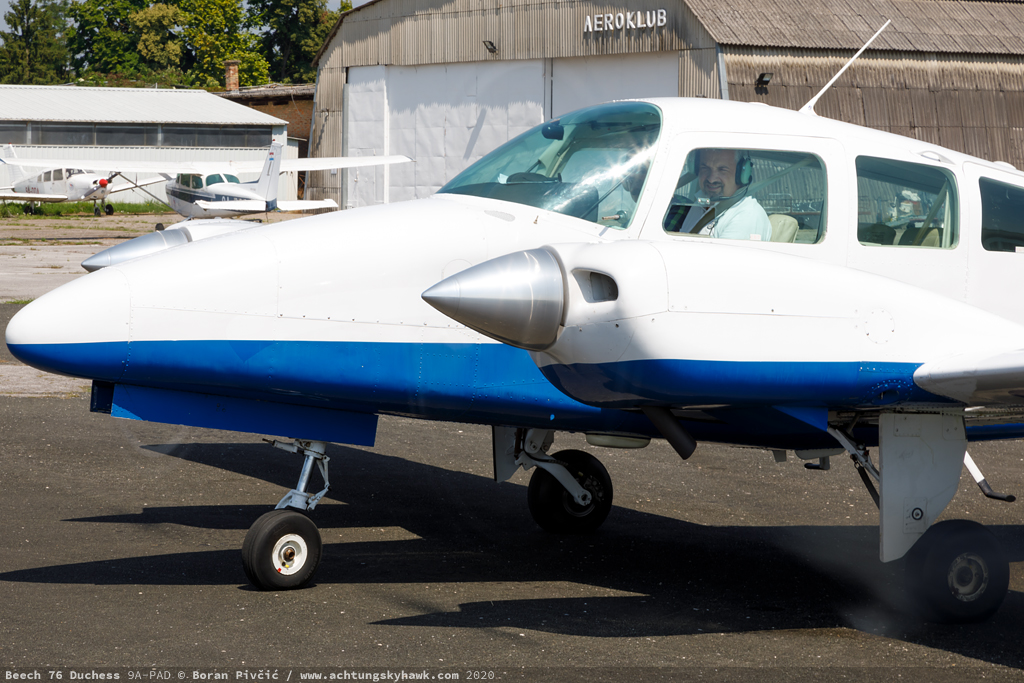
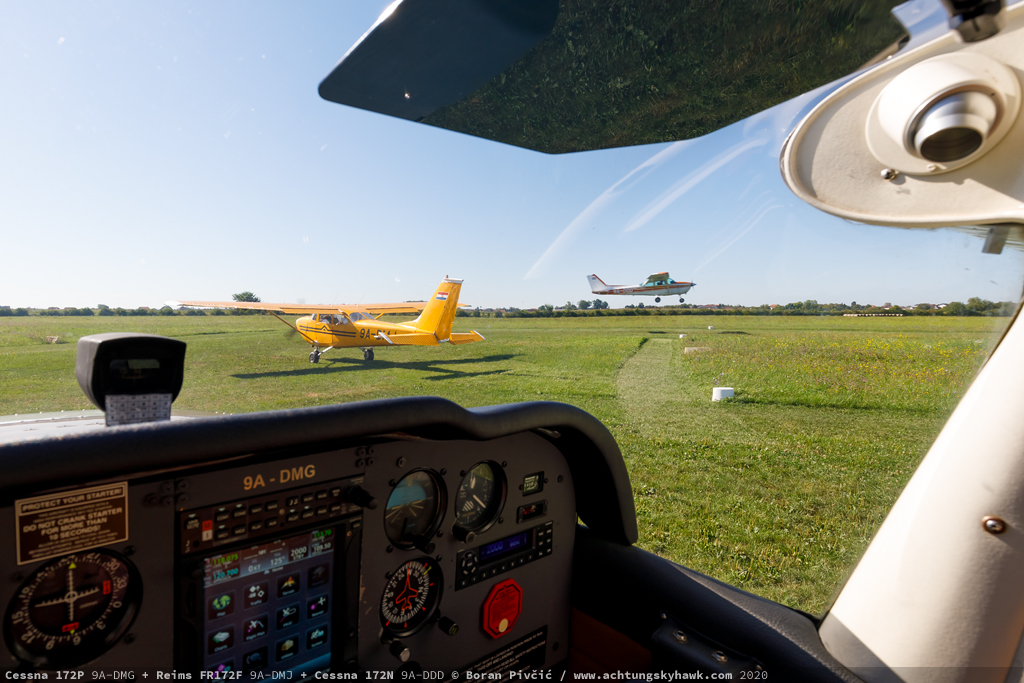
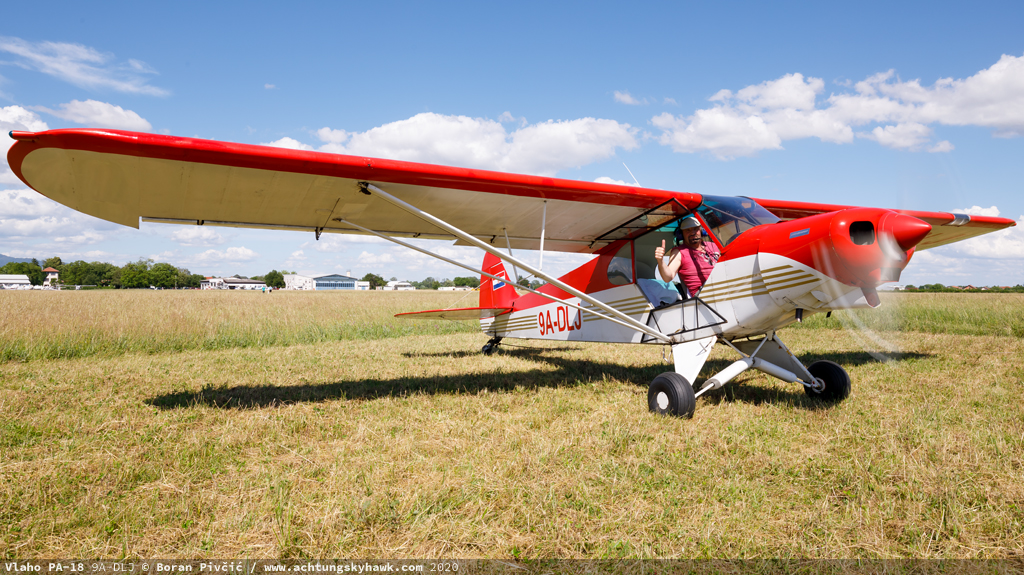
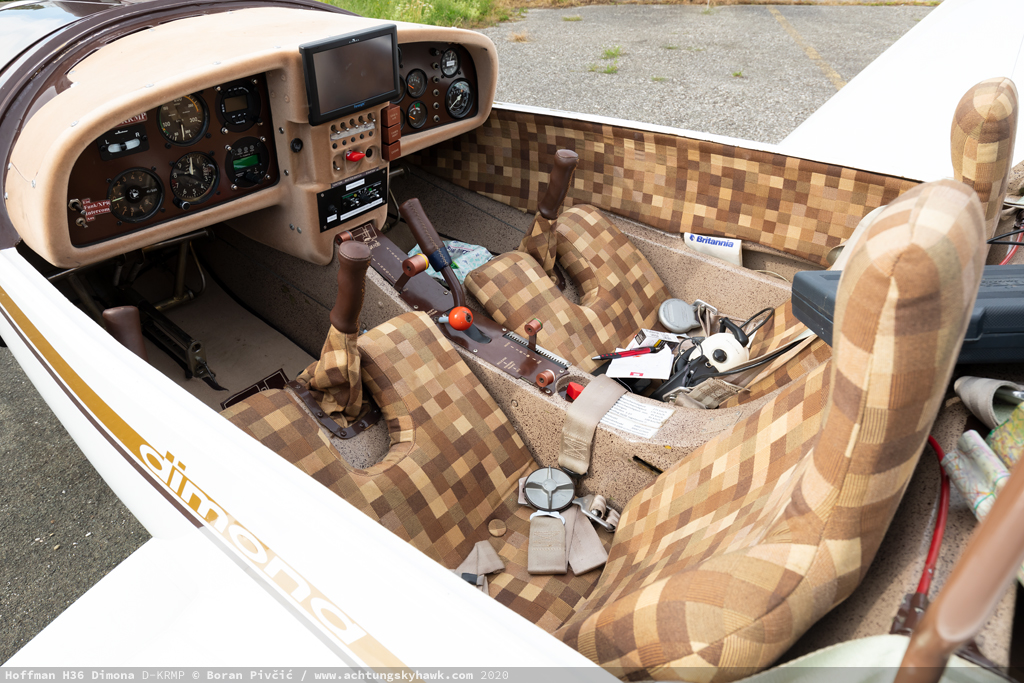
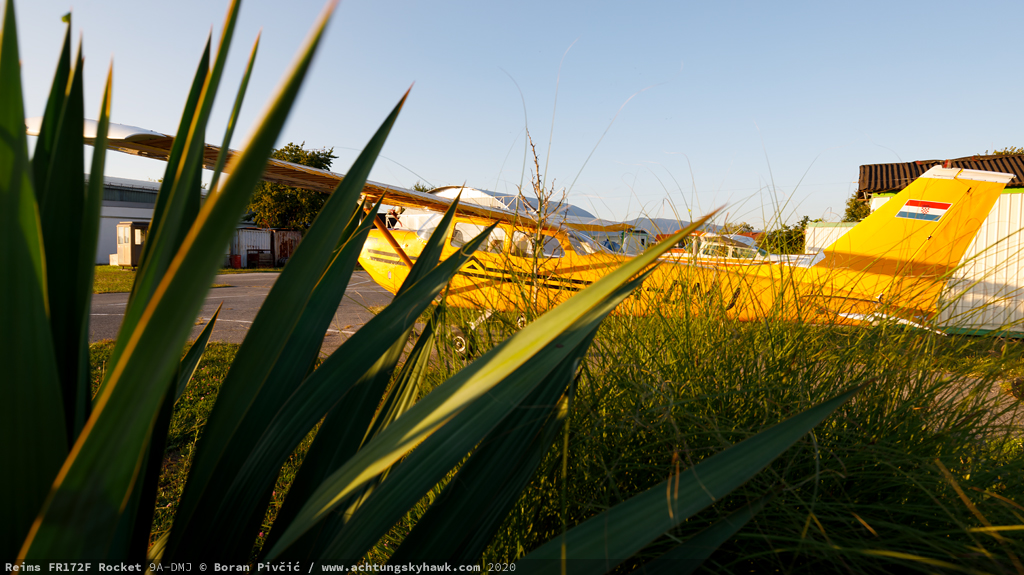


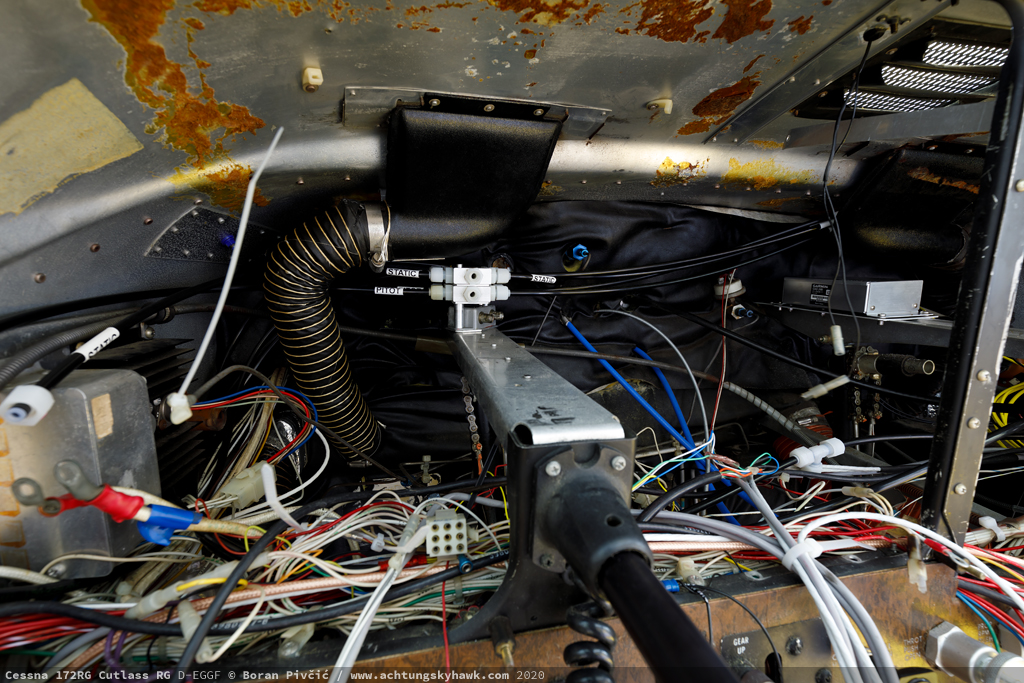
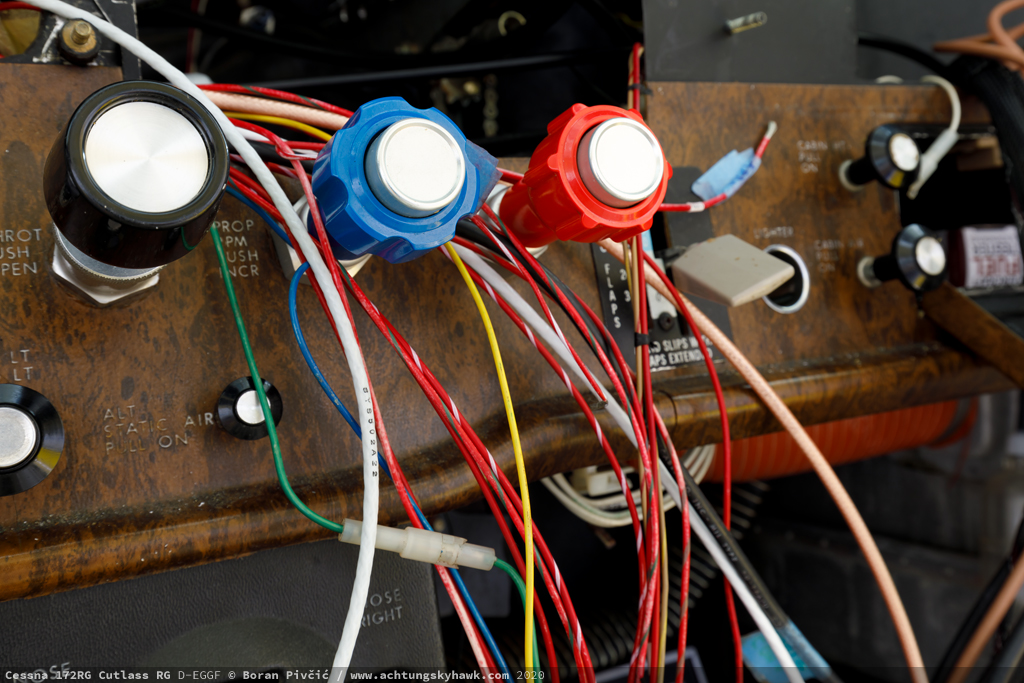

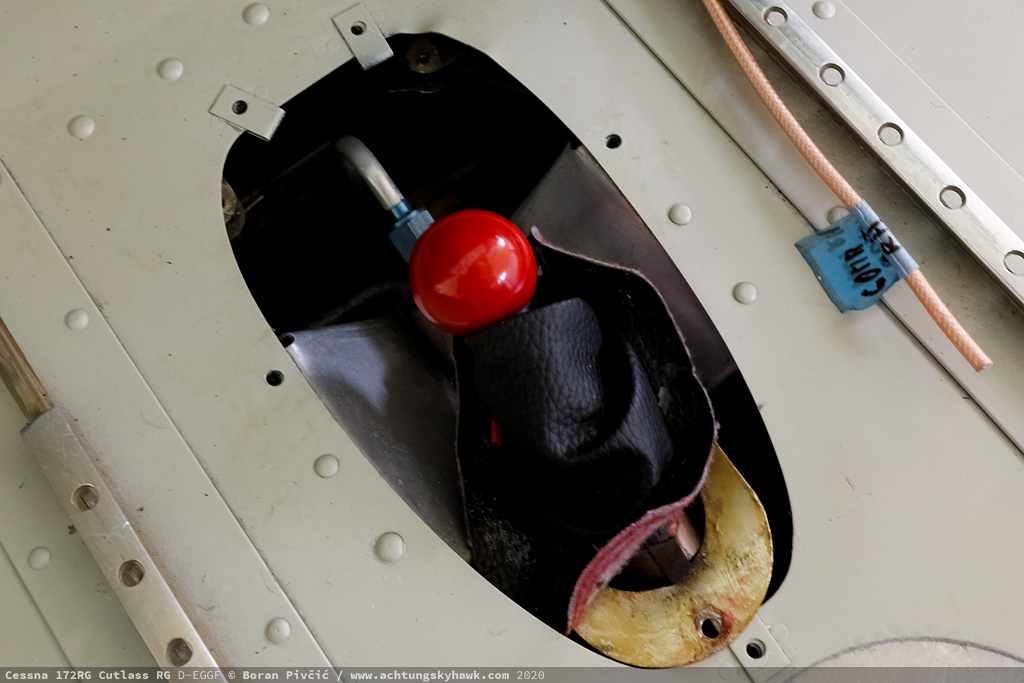
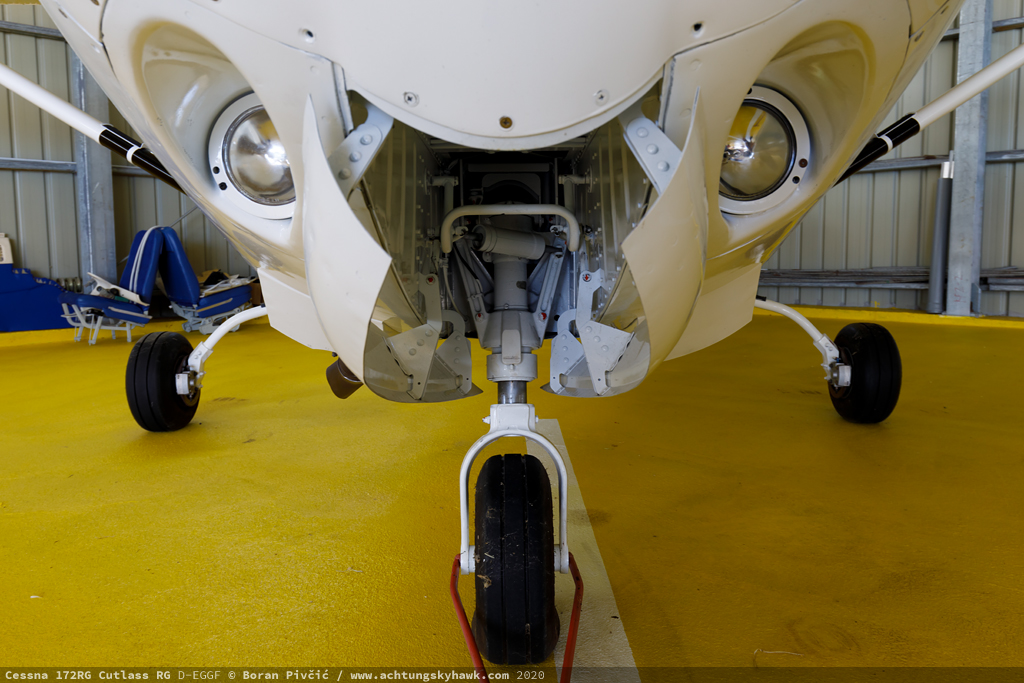


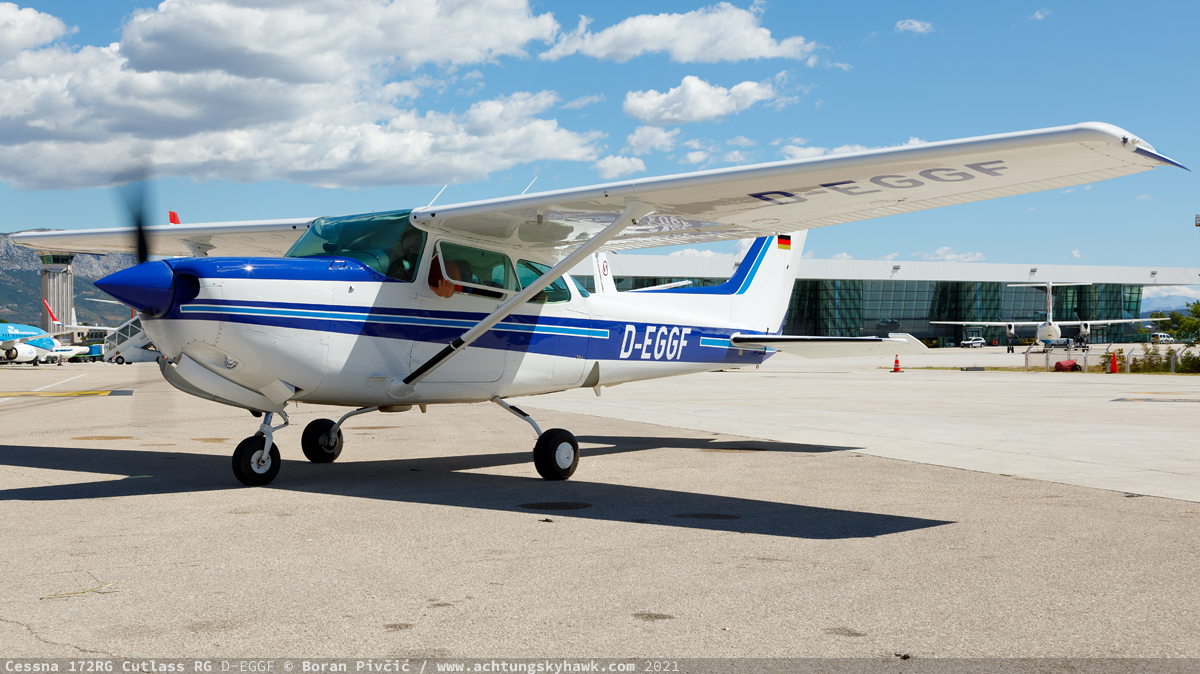


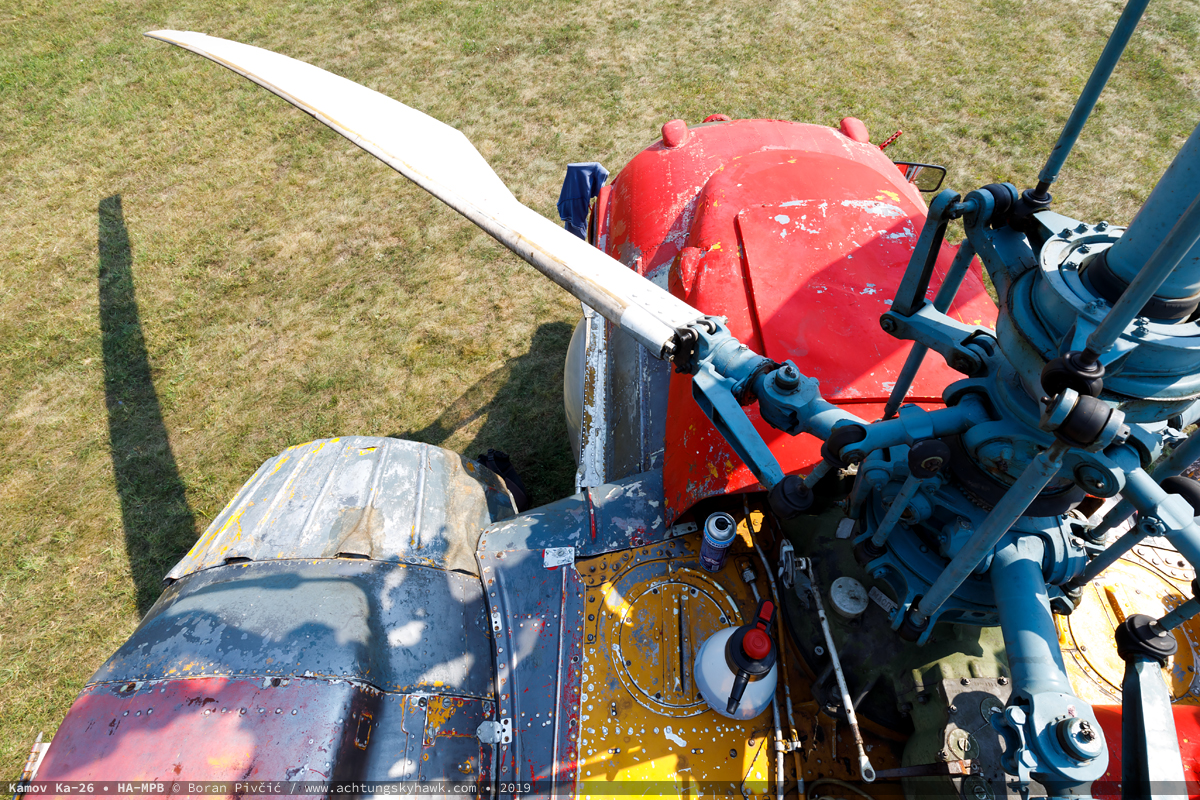
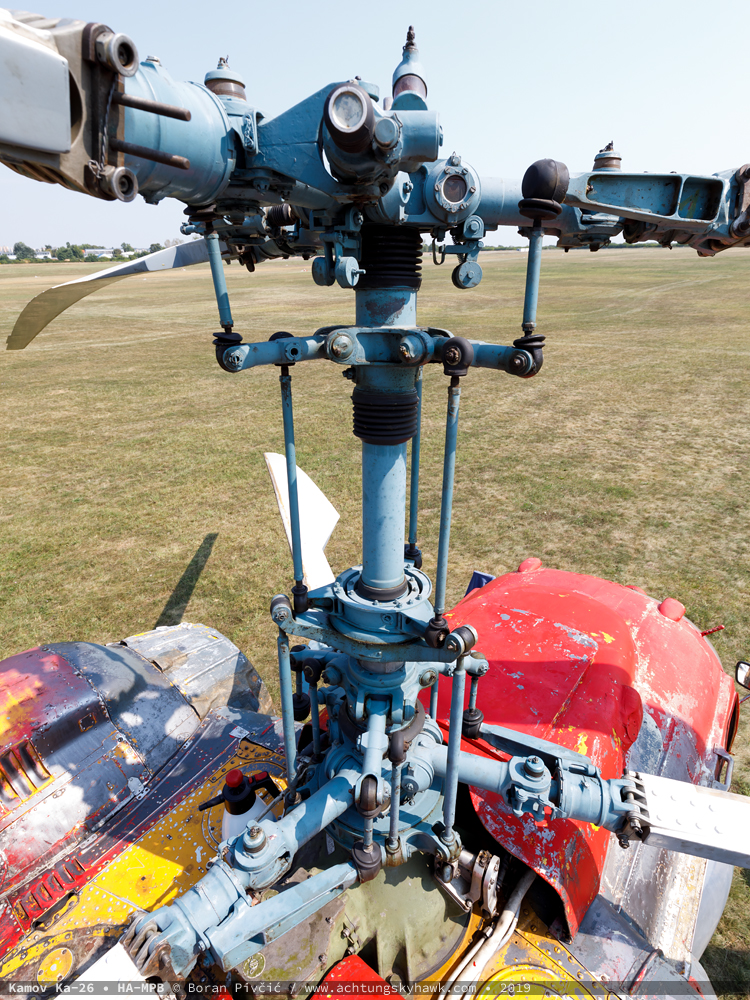


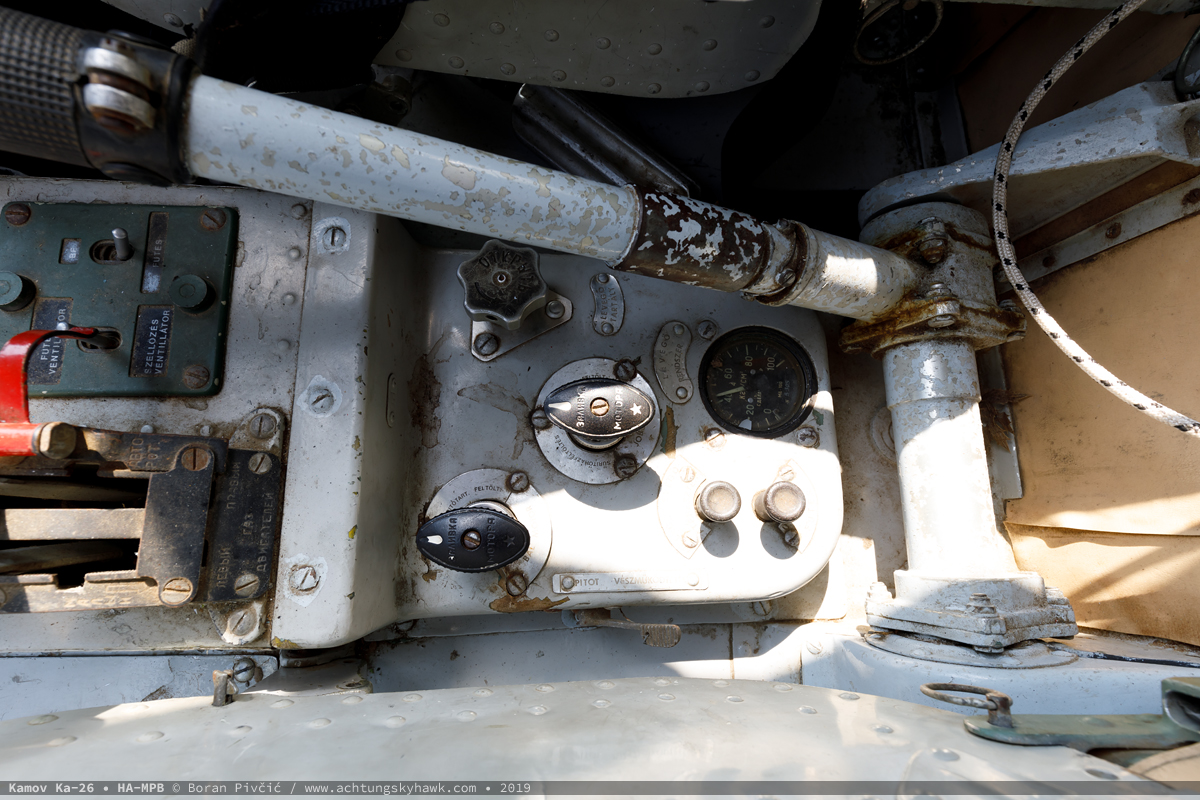

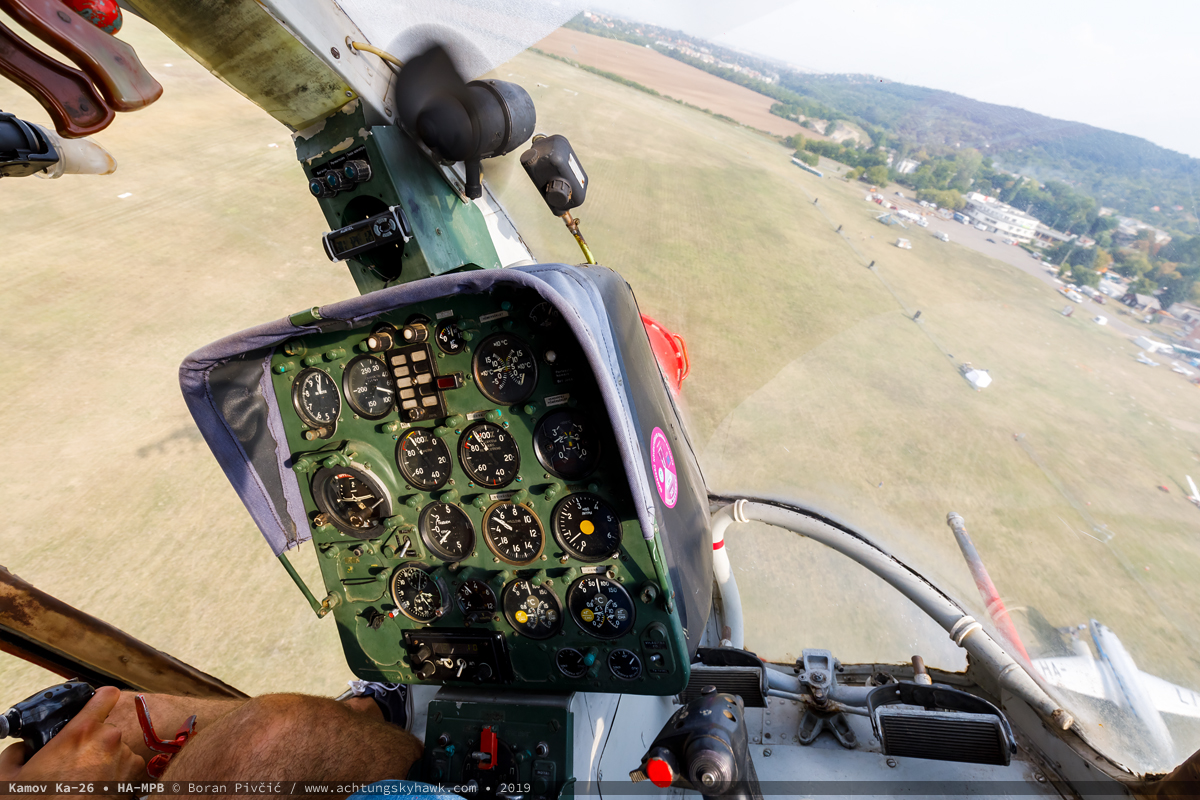
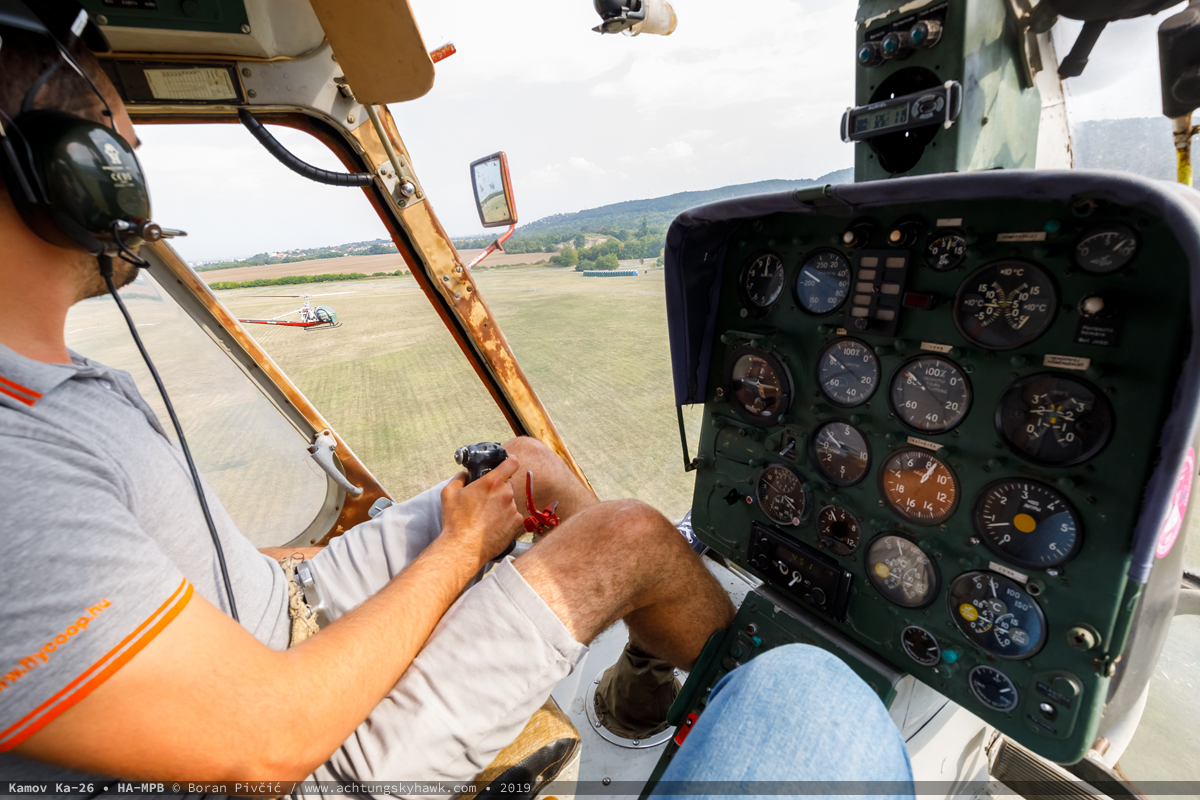


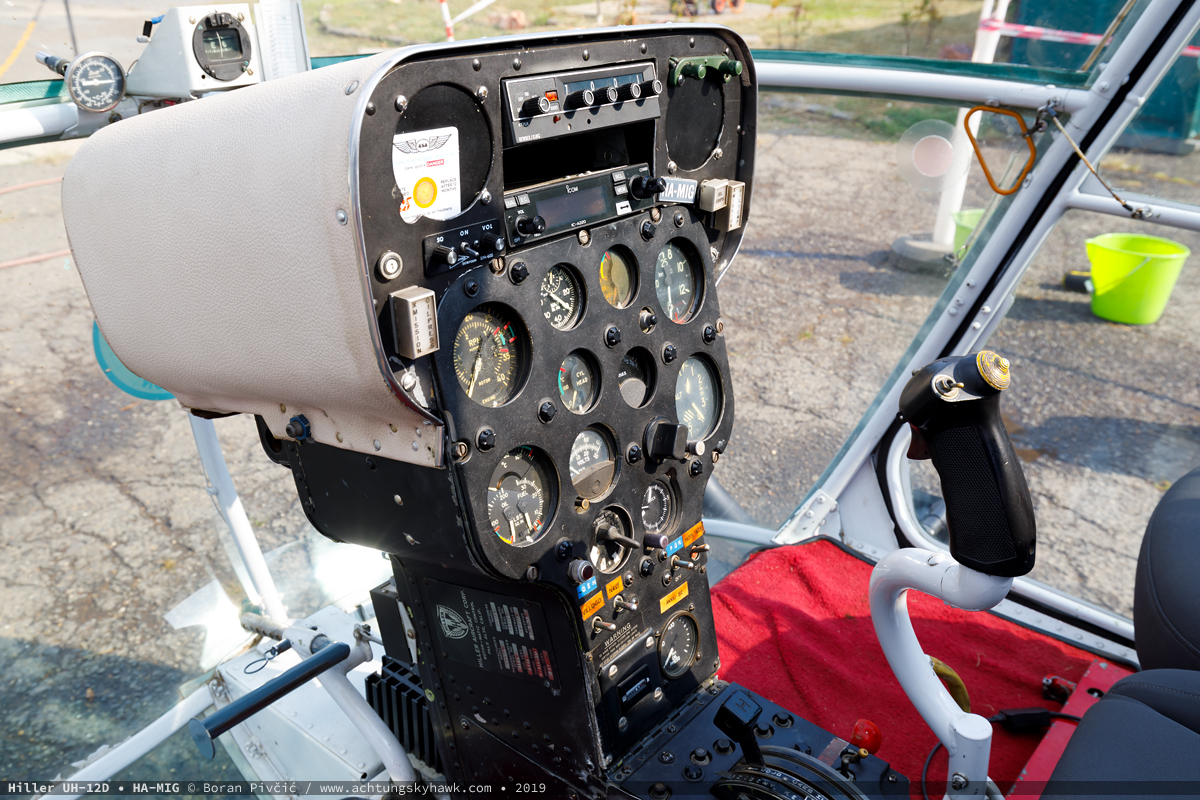


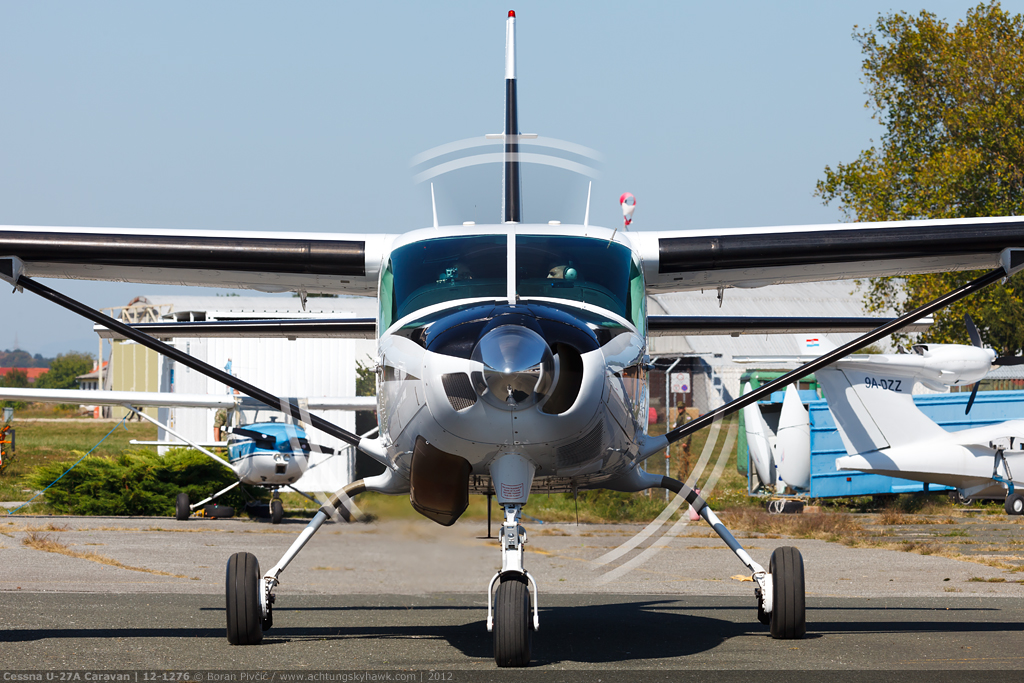


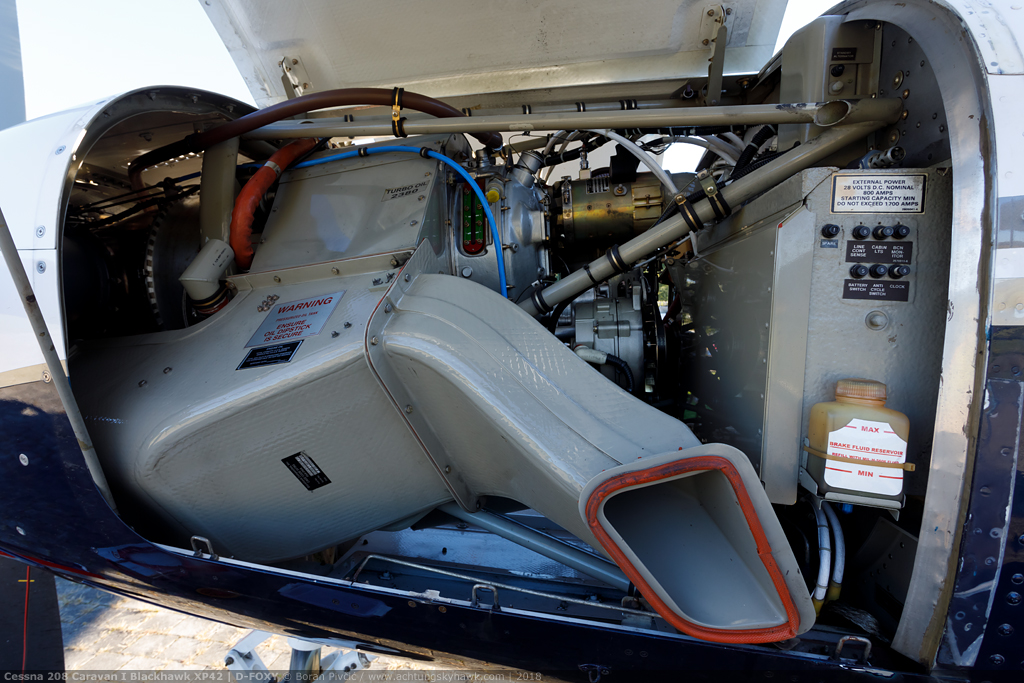


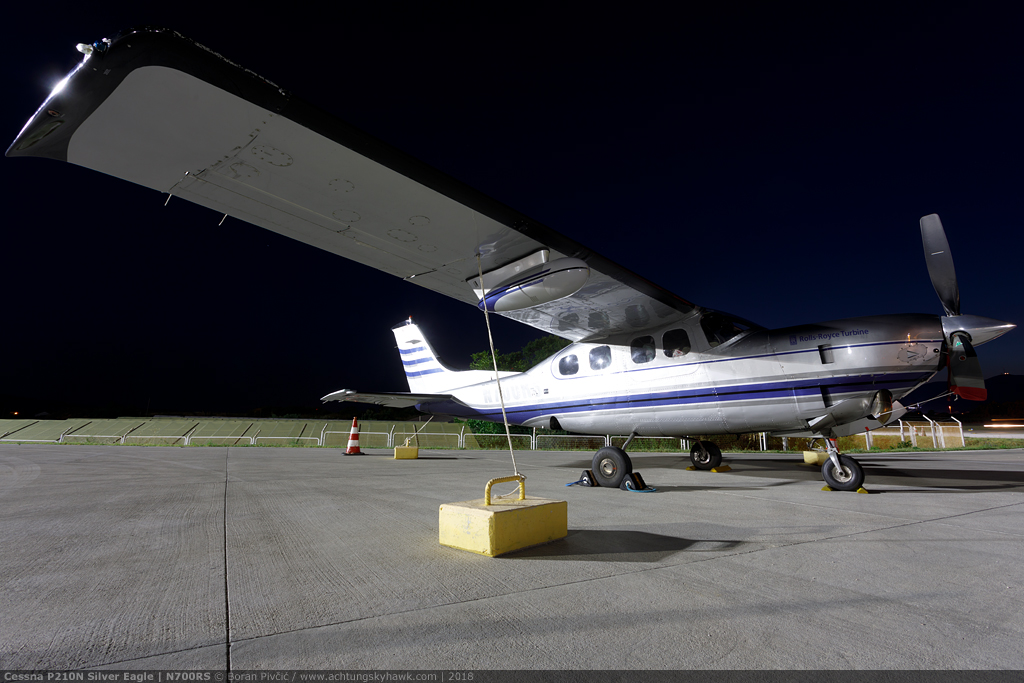


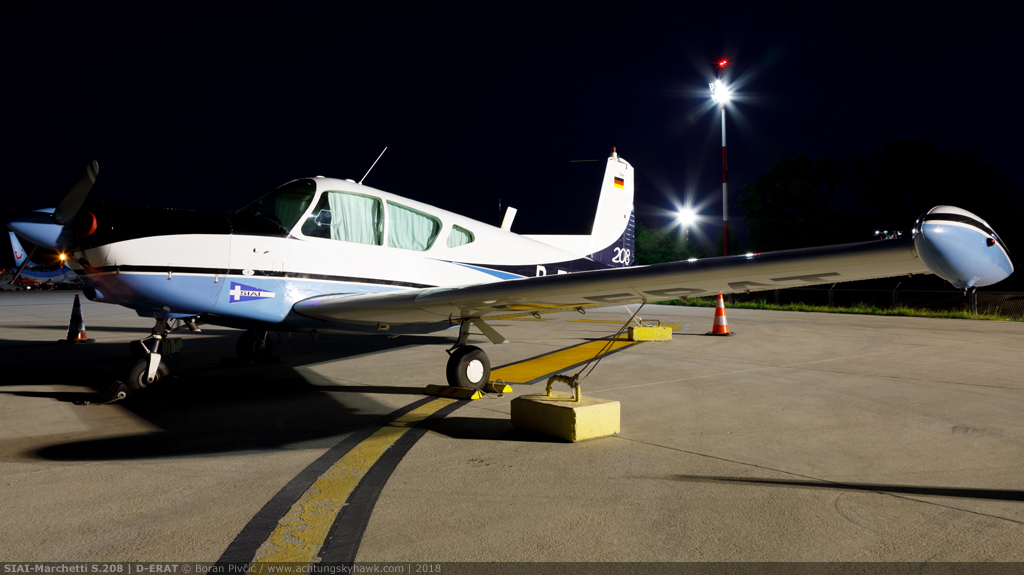
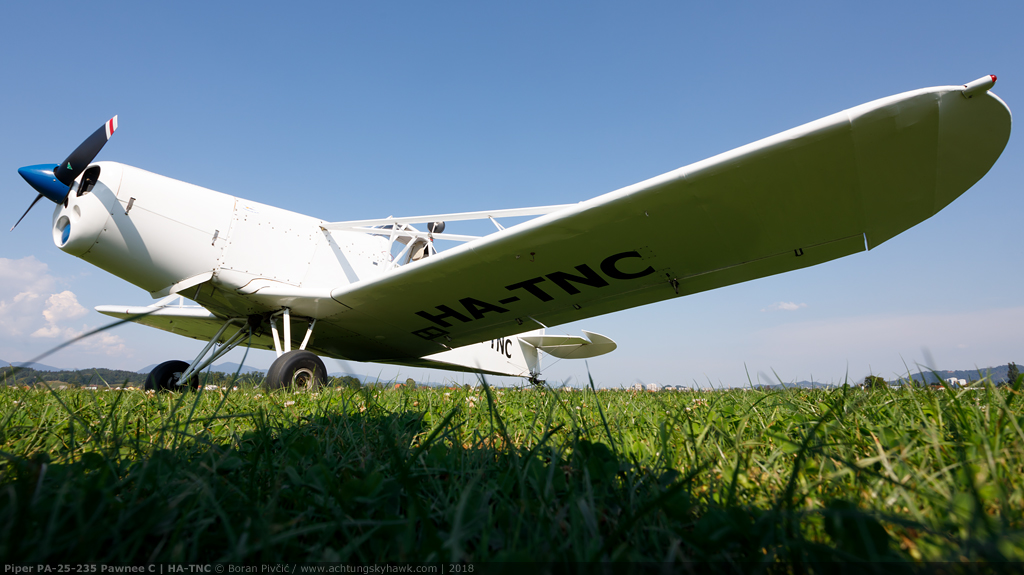
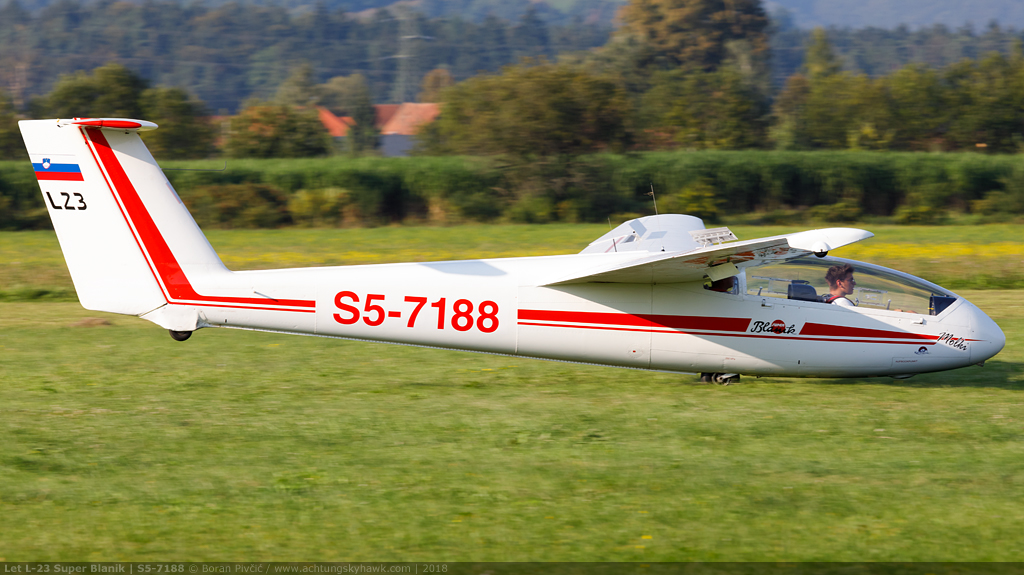
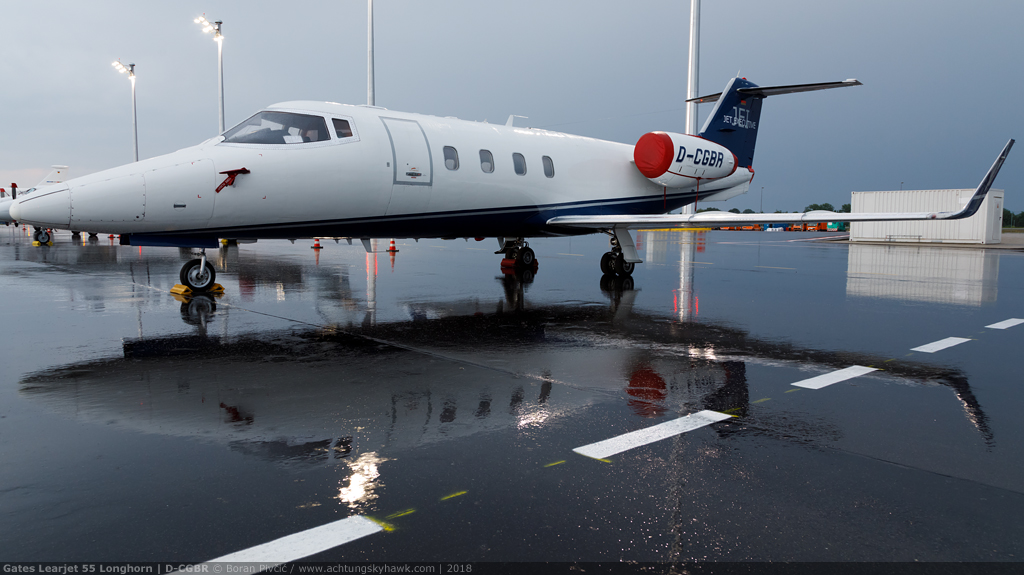
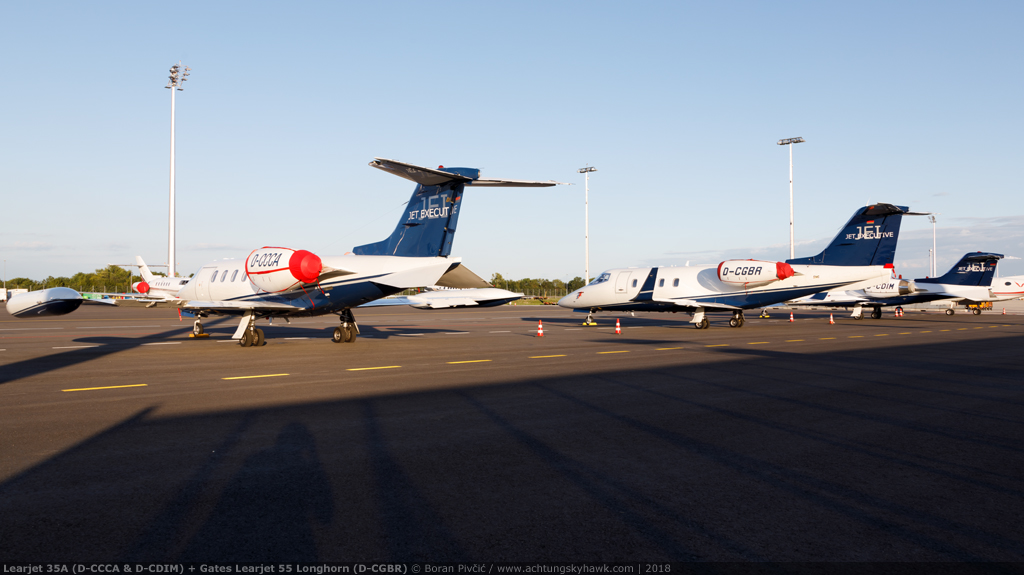


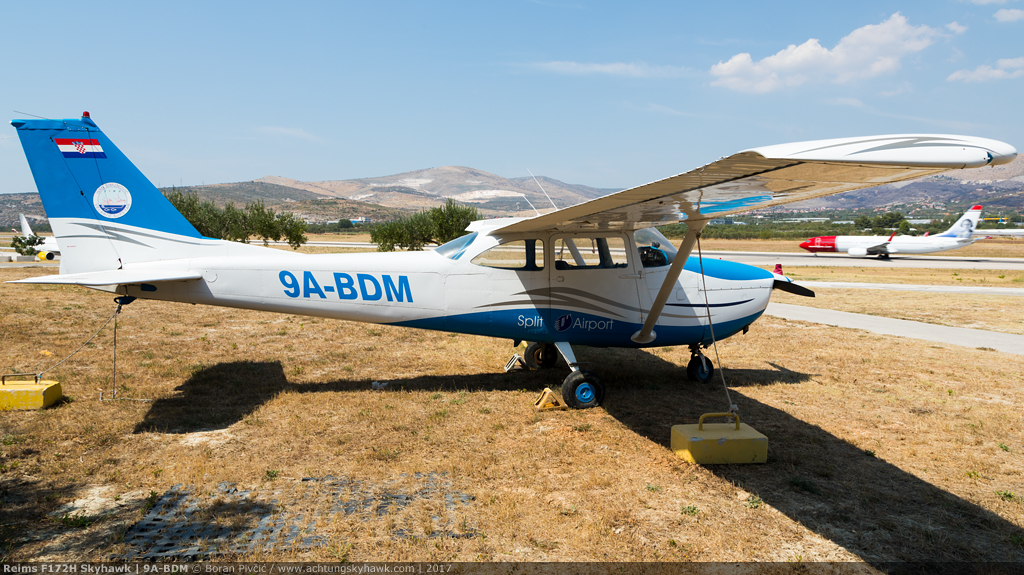


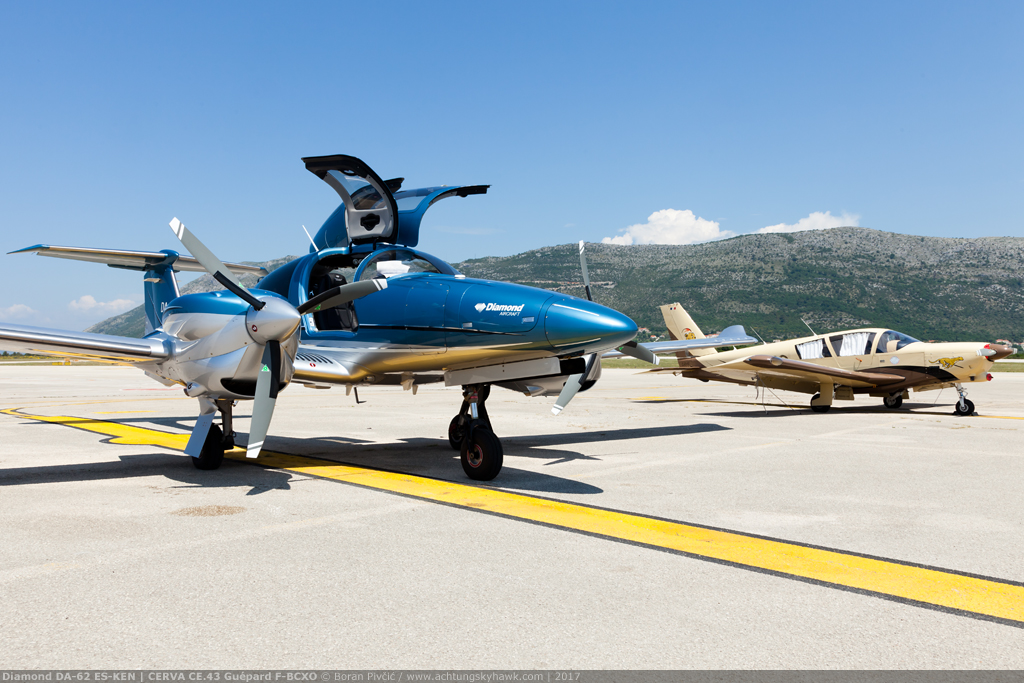


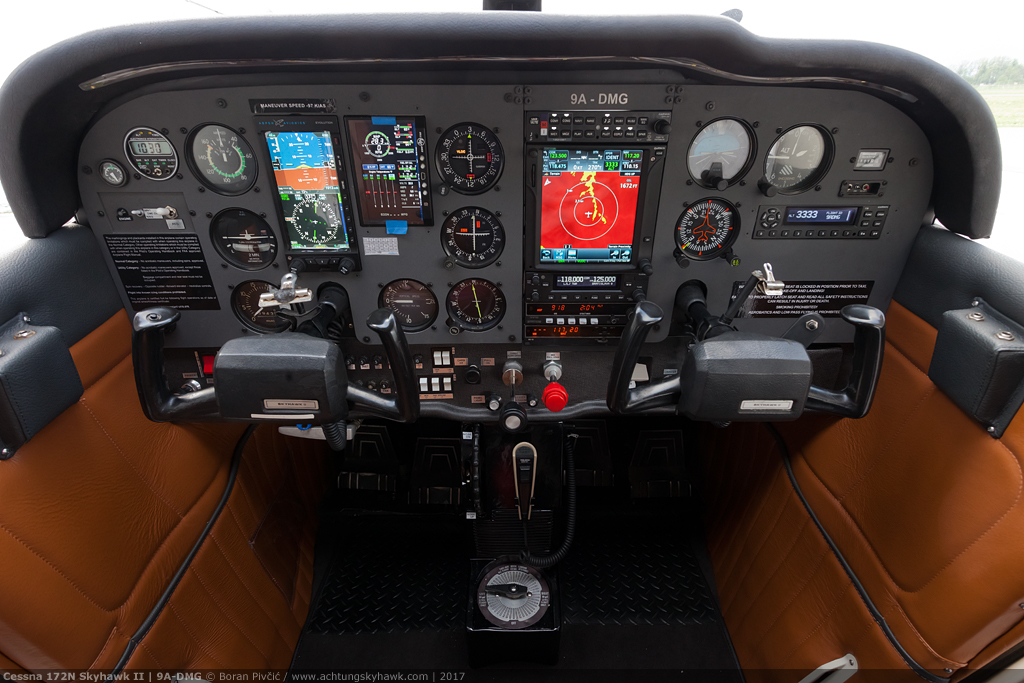
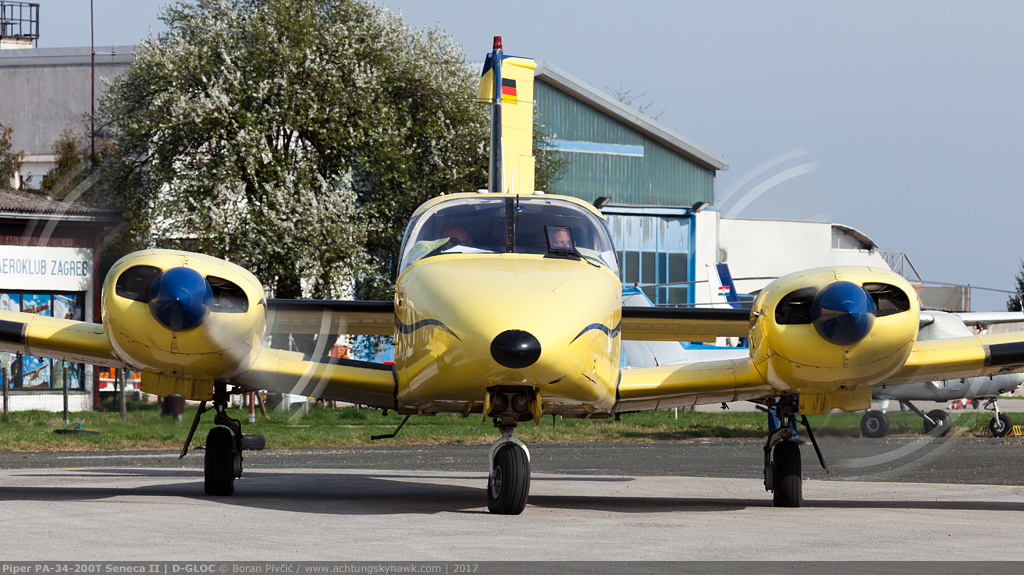
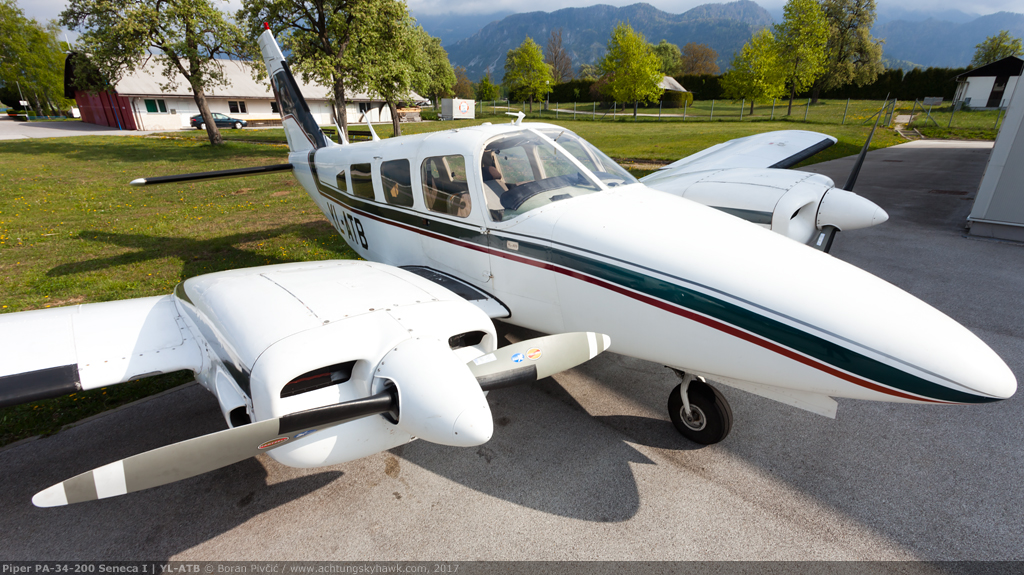
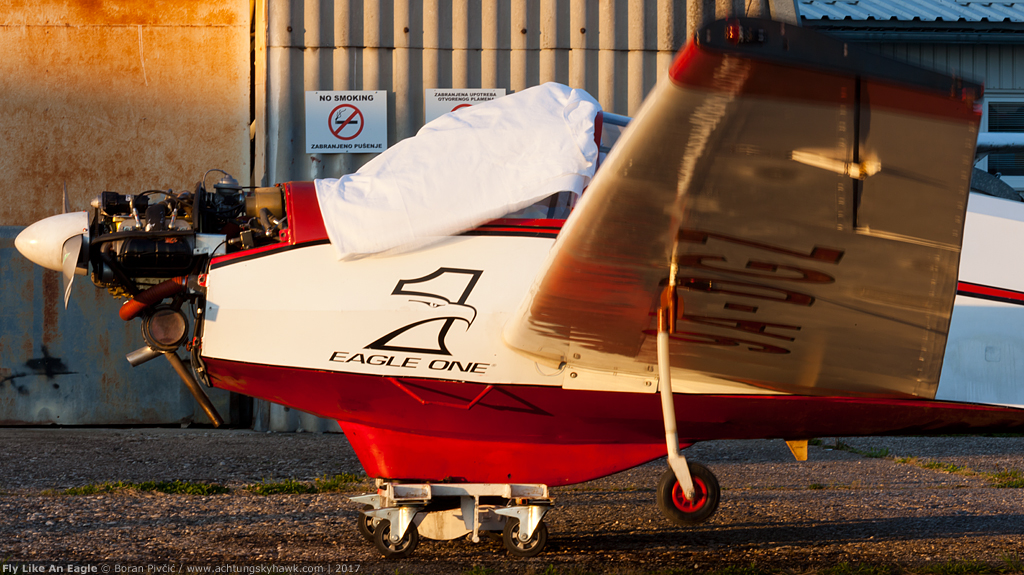
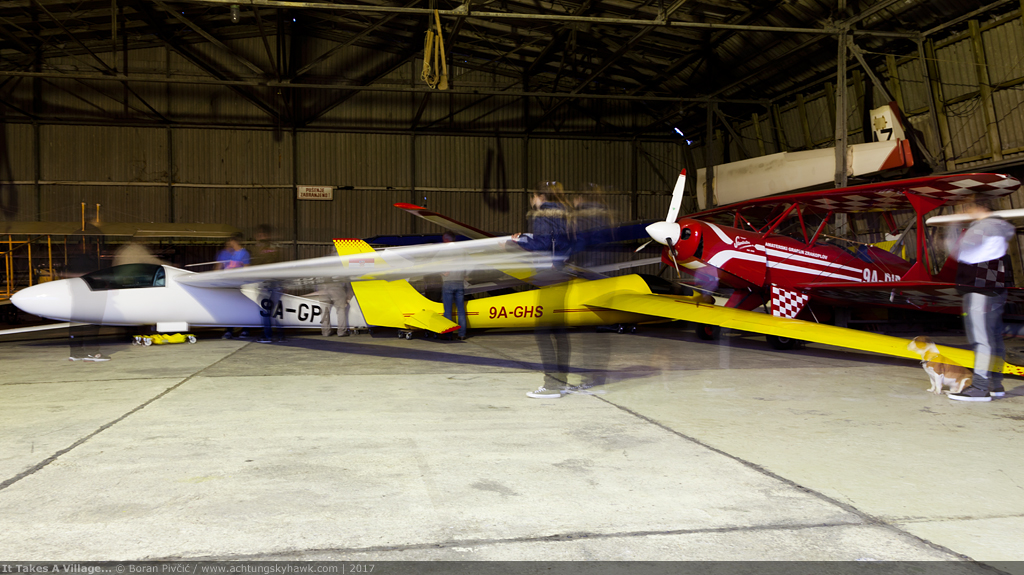
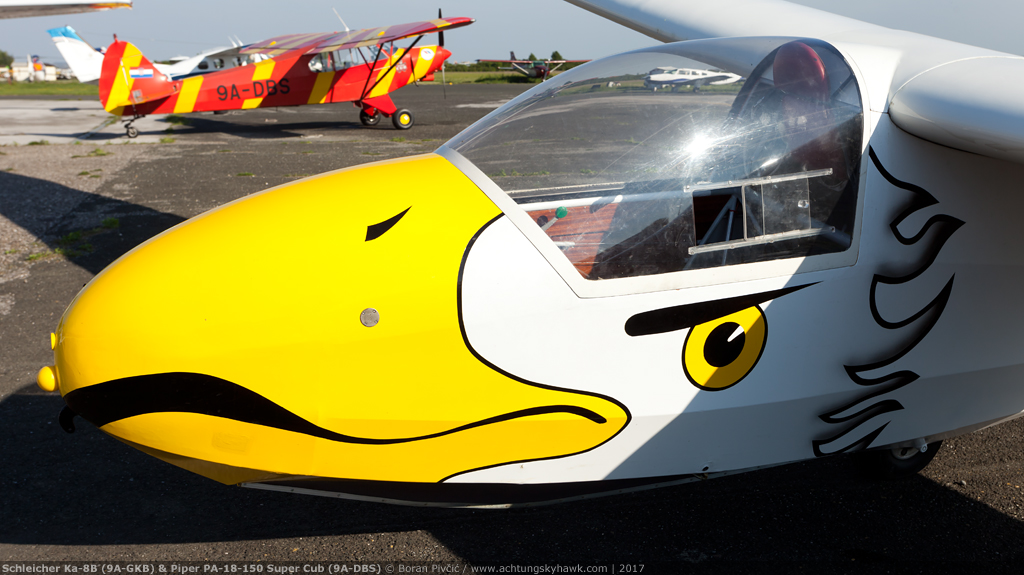
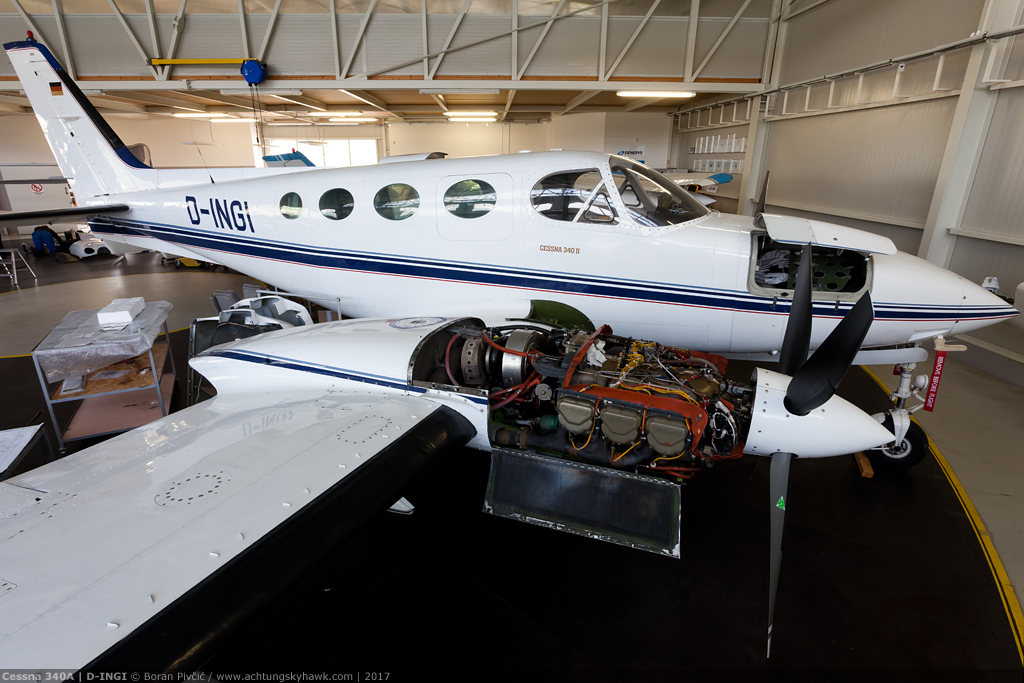
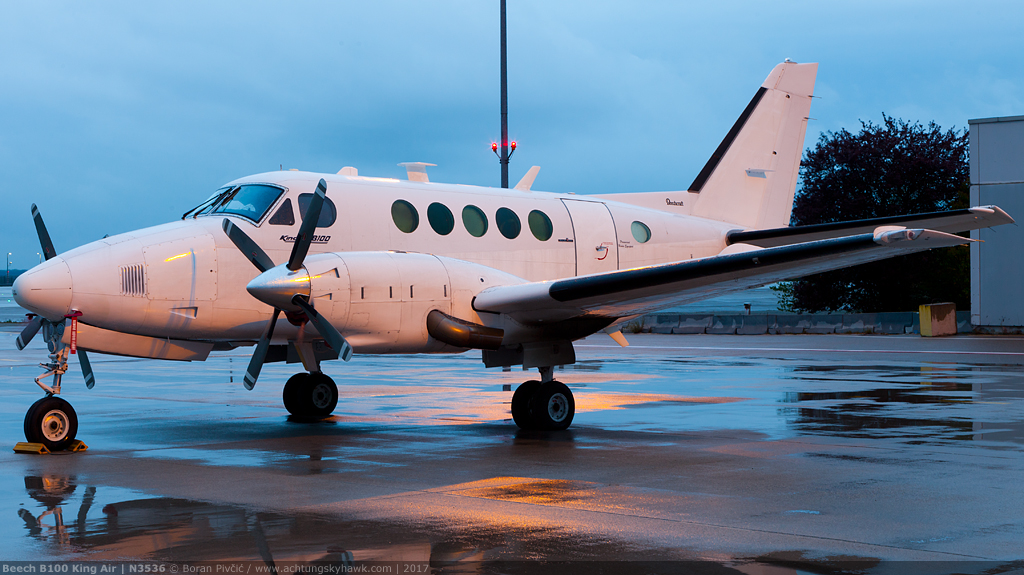


 Achtung, Skyhawk!