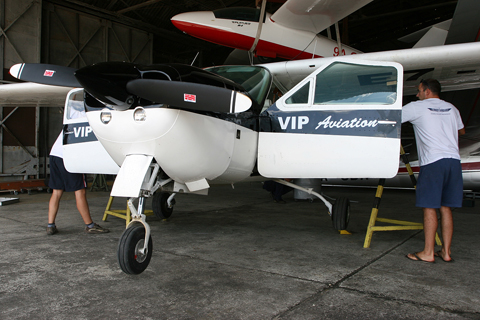
With my luck seeming to hold, I came across another gem at Lučko this week. Alerted by a friend and the most powerfukl person at the field – he operates the fuel pump among other things 🙂 – I found this beauty in the Aeroklub Zagreb hangar undergoing some repairs (the nose gear wouldn’t retract if I got it right). Naturally, I was at the field the next day with my camera to get some preliminary shots before this immaculate aircraft was rolled out of the hangar fully fixed.
The shots aren’t all that good, but I didn’t want to get in the way… Men At Work and all that… and there’ll be plenty of opportunity later for some good photography (the results of which will naturally be posted here 🙂 ).
Jacked up :). Operated by VIP Aviation of Bosnia, E7-VIP - despite an odd paintscheme - was absolutely spotless! Had a peek in the cabin and the panel looks like it came off the line yesterday!Possibly the only thing spoiling the awesome Cardinal is here up front, the IO-360 four-cyl 200 HP engine, driving a two-blade constant speed prop. I've heard and read that many owners would have preferred some more punch...A bit difficult to photograph... a dark fuselage and dark hangar with a while belly and sun glare outside. Packed in with a number of our resident gliders
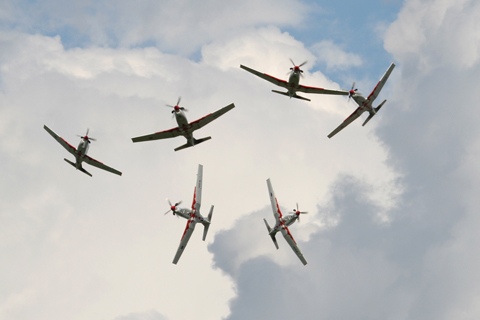
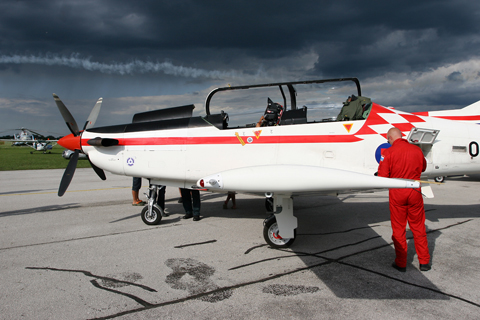
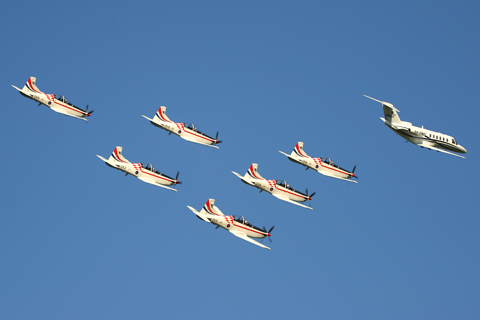
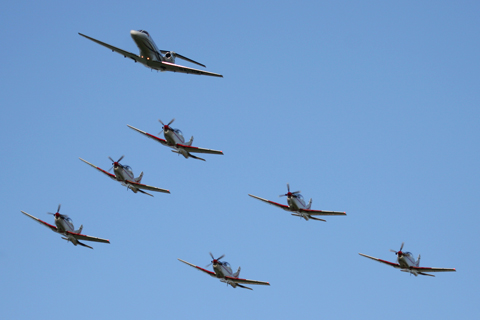
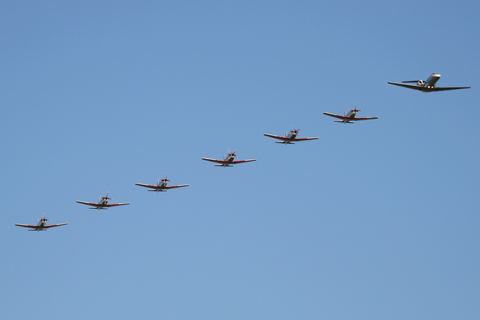
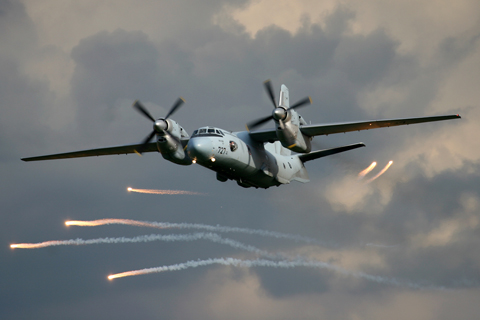
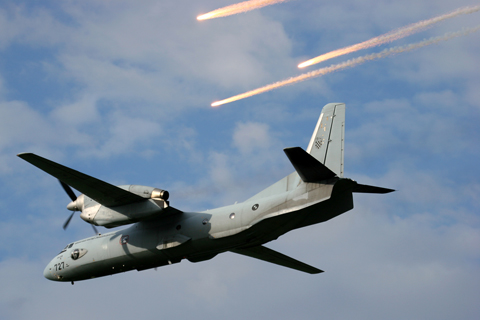
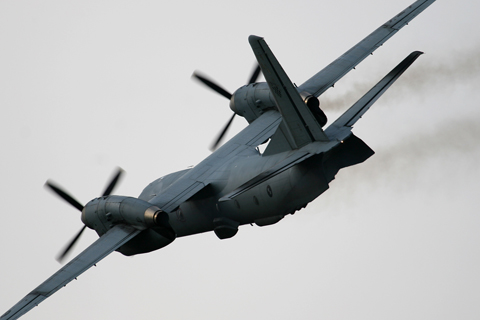
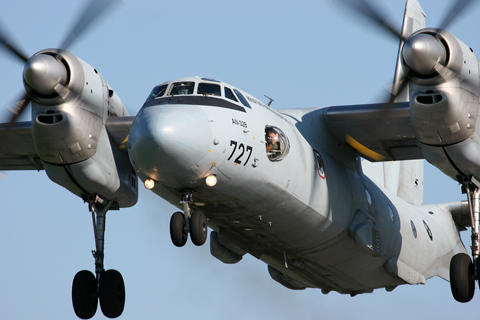
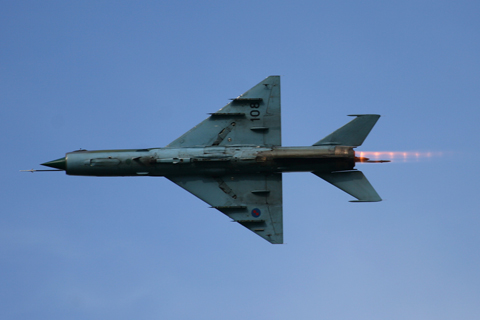
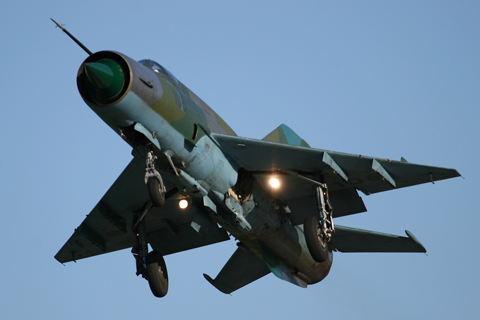
The guys are back! The CroAF aerobatic team - the Krila Oluje - were normally invited and put on an excellent show in their new (several months old) six-ship routineDespite flying "regular" PC-9Ms used for flight training when the team's not flying, the Krila Oluje have quickly risen to become one of the region's best teams. If only the AF would stick a couple of smoke generators on them...The traditional "wow" maneuver, the mirror flight. This one keeps getting tighter and tighter with each show 🙂Flying follow the leader in perfect symmetry. At various points during their mass maneuvers, the aircraft are less than 2 meters apart - which in the propwash from the aircraft in front takes considerable skillAnd the "coup de gras" - the triple mirror!The final break, as attractive as always! Not as glamorous as the jets used by the world's big teams, the PC-9 more than makes up for it in agility at low speeds062 ticks itself cool under a dramatic sky as Damir Barišić, the Krila Oluje lead, packs the plane upThanks to whoever turned on the Sun at that moment! 🙂A special treat at the end of day two - a formation display by the previously pictured CitationJet and the Krila OlujeHeading out for a flyby above the "Radar festival" music event being held nearby. Don't know what was better - listening to Santana or watching this lot fly low overhead 🙂Mother CitationJet leading her flock of PC-9s 🙂One of the stars of the show, the CroAF Antonov An-32B, firing off flares during a low passNormally, flares burn up completely about a dozen or so seconds after they're fired. But given how low the big Anushka came in, one near-expired flare almost hit me in the head 🙂Though not part of the aircraft's standard equipment, flare packs have been retrofitted to the CroAF's two An-32s during maintenance a couple of years backThe two 5110 HP AI-20DM turboprops on the An-32 are very efficient - at turning fuel to smoke :). Honestly, I don't see why the AF bothered painting them in air superiority gray... you can see the smoke trail for miles away!With its high-mounted engines, the An-32 is certainly a powerful sight. The navigator seems to be having fun 🙂Okay, concussion and loss of hearing in 3, 2, 1...The most aggressive -21 display I've ever seen. Usually - given the age of the jets - they fly relatively timid displays of mostly passes with the reheat and landing gear and flaps down. This time, they've outdone themselves - a sprint down the runway on full reheat at 20 meters height, pulling up into the vertical and rolling all the way up to commercial flight levels :). W-O-W108, pictured here, is a frequent guest at airshows. Originally a MiG-21bis, a couple of years ago it was upgraded to the MiG-21bis D standard by Aerostar of Romania
Still under impressions from Paris, I kept viewing the yearly CIAV airshow as something of a “village show” – a small, unambitious country gathering compared to the grandeur of the world’s biggest and oldest airshow. However, sunny weather – and a need to get out of town – saw me attend the show on both of its days, in part also to practice my hand with my new bulky and heavy 100-400 mm lens. In the end, owing to runway-side access I had managed to secure on both days, the show – despite cursed with rickety organisation – turned out to be quite a nice and enjoyable event.
1. The 2009 event:
Despite the a-bit-too pretentious “international” epithet, this year’s show hosted more foreign visitors than before. Among the usual Slovenian and Hungarian participants, there was also a French Air Force AlphaJet trainer, which was – unfortunately – relegated to the static display, despite being scheduled to fly. The rest were oft-seen local aircraft, including half a dozen aerobatic ones.
The flight display itself was a mix of aircraft types, from flexwings and Extras all the way to Citations, Pilatus PC-9s and even an Antonov An-32 and MiG-21. So without further ado…
Note: given that I intend to post quite a few photos, I thought it best to split this report into two parts, with about the same number of photos. This part is – mostly – civil-oriented, while the second will contain the big bad mil stuff.
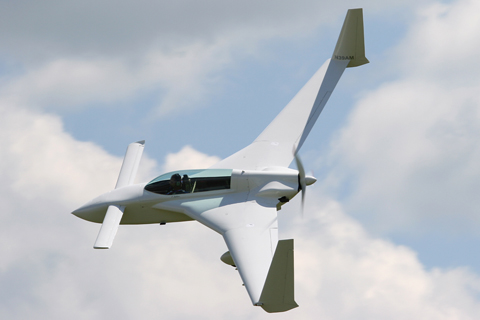
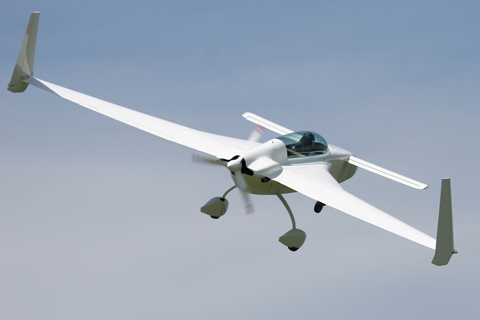
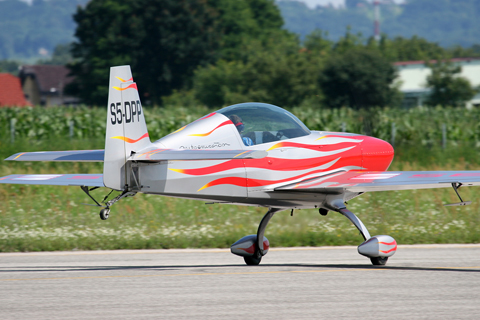
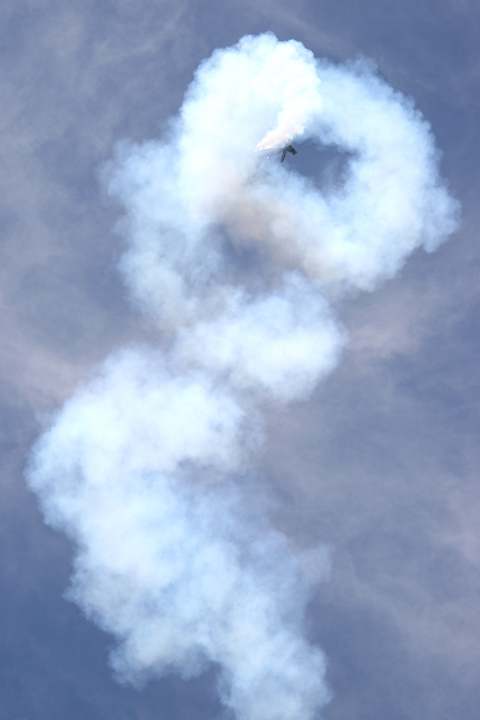
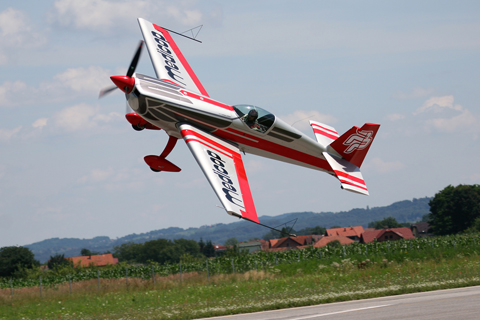
Rutan's "pocket rocket" LongEZ still looks futuristic today, despite being almost a 30-year old design. This model, built by an airline pilot for Croatia Airlines, is the most powerful, 160 HP version.Just one look at the LongEZ and you see how far ahead of the pack Burt Rutan is...An Extra 300L previously owned by Slovene aerobatic champion Peter Podlunšek rolling down Varaždin's RWY 16Though the paint scheme on S5-DPP is a generic factory one, I must say it looks awesome against a blue skyFun is definitely not a straight line!Goooing up!The meaner and more powerful Extra 330SC with Mr. Podlunšek at the controls slicing low above the runwayOur own I-3 was in attendance too 🙂The locally grown (ex-Yugoslavia) Soko G-2 Galeb (Seagull) trainer is a must for every show Closeup of the smoke system. As with most such systems, the smoke is generated by injecting Diesel or paraffin into the exhaust (which can also be tinted to change its color). On the G-2, the exhaust comes from a license-built Rolls-Royce Viper Mk.22 turbojet, developing 11.12 kN of thrust
Owned by Varaždin-based WinAir, this Cessna CitationJet CJ2+ was the only bizjet performer at the show, finishing its display with a few very un-bizjet-like low passesA significantly older, but none the less interesting, Citation II was in the static display (seen here taxiing in after a positioning flight on the second show day)The Man - Peter Besenyei - showing just what an Extra 300 can do 🙂Some impressive flying! The display finished off with Peter's trademark "drunken flight" low above the runway... so low in fact that at one point I thought he'd shear off a wingtip :).The sleek and curvy Dassault-Dornier AlphaJet E. What a beautiful machine!Not much of a motive, but the cockpit isn't all that big and I'm not really the shortest person in the world :). This was about the only angle that worked...
Okay, another departure from the GA norm, but I couldn’t resist but post this here :). In a twist of good aviation fortune, my direct flight from Paris to Zagreb on Croatia Airlines (after the Paris Air Show) had been canceled and I was re-booked on Paris-Split-Zagreb, changing aircraft at Split. What at first was mild annoyance turned into excitement when I opened the flight schedule Croatia Airlines had sent me – 1. it would be my first ever flight connection, and 2. I’d finally get my chance to fly aboard one of the company’s new Bombardier Dash 8 Q400s :).
Normally, still under photographic impressions from Paris, I was determined to make the best of it and already planned all the cabin shots I would upload to Airliners.net (good motivation 🙂 ). However, despite a friend of mine from Lučko being the F/O on this flight, I did not want to ask for cockpit access on such a short 30 minute flight – knowing full well from my own (limited) piloting and air traffic control experience that on this sector I’d just be in the way in the tight cockpit of the Dash 8.
Just to mention, the Q400 is the newest type in Croatia Airlines’ fleet, having replaced our aging ATR-42-300s. Four aircraft have been ordered with three delivered at the time of writing, making the Q400 the first new non-European type to be operated by the company (CA – or rather CTN per IATA – also operates a mix of A319s and A320, with Boeing 737-200Advs and leased BAe 146s having been operated in the past).
Anyways, after a two hour delay at Split – a slight birdstrike on the aircraft’s previous leg from Vienna necessitating some mx – I was aboard my first ever Dash 8 (flight OU6657) and ready for the off :).
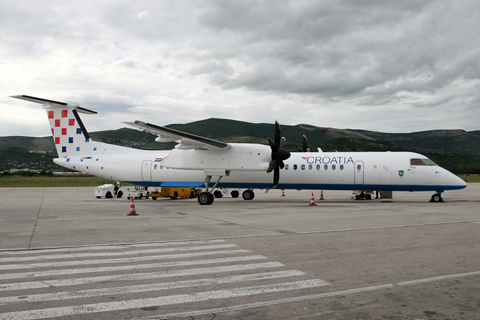
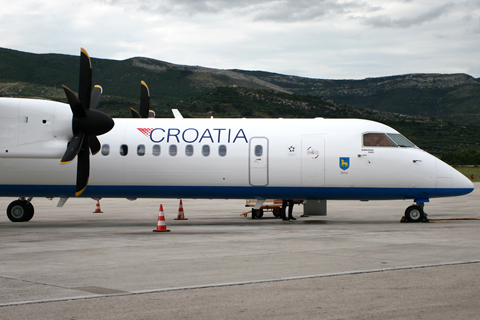
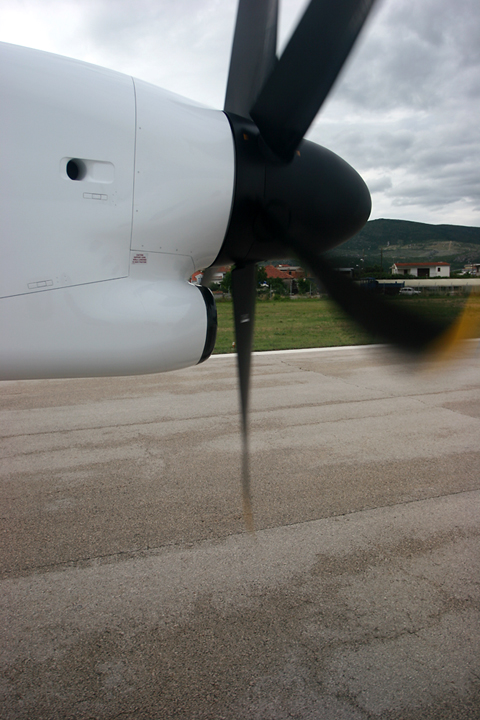
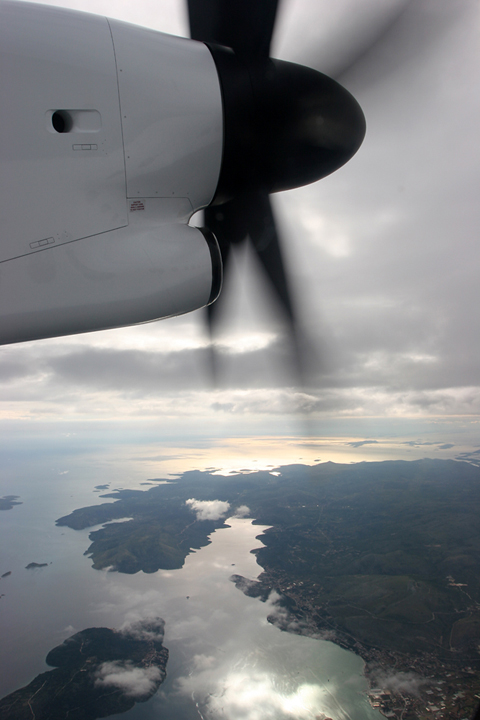
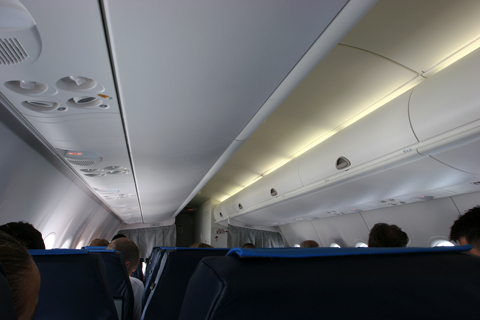
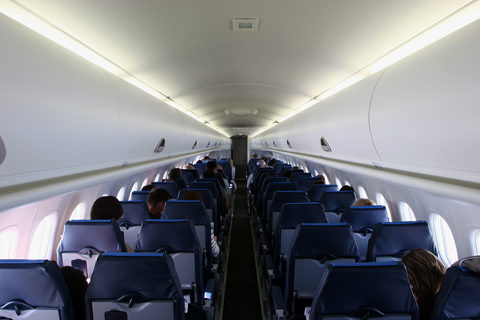
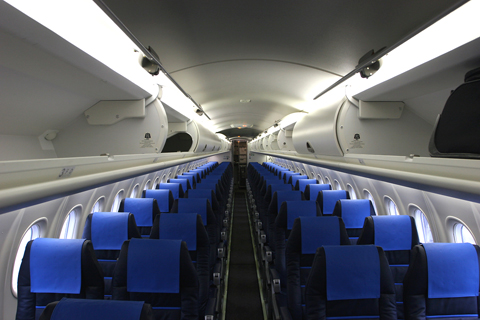
Here she is on the tarmac at Split (who'd have thought that after yawning at two A380 as Paris I'd be exicted by a lowly Dash 8 🙂 ). That damned overcast that had stretched across much of Europe at the end of June didn't spare the coast eitherChristened "Istra" after the Istrian peninsula (and an ATR-42 of the same name), 9A-CQC was at this time the newest Q400 in the inventory (the previous two being 9A-CQA and -CQB)Spooling up the 5,070 HP Pratt & Whitney Canada PW150A on takeoff down Split's RWY 05The city itself visible from a right turn. Due to the surrounding terrain, the Standard Instrument Departure for RWY 05 requires a 270 degree right turn if heading north (where we were going)The Trogir area south of Split as we rocket to our 23,000 ft cruise altitudeBack with my head in the clouds 🙂Breaking through the deck into clear skies above is always a magic feeling 🙂Still climbing, I decided to take the opportunity to snap the view from seat 9A. A very nice ambient - while it's still clean...An ant's view (if they were allowed to travel 🙂 ) of the front cabinBlasting along at 650 km/h, you don't get many opportunities to photograph the cabin between takeoff, drinks service and landingMany thanks to the cabin crew for allowing me a final snap of the cabin once all those walking distractions have left!
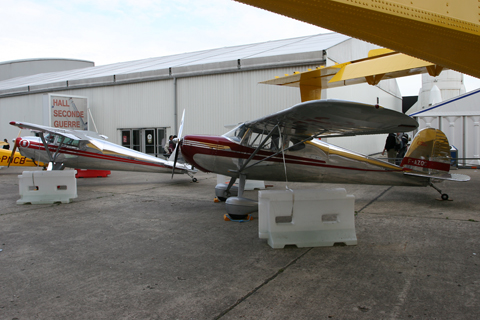
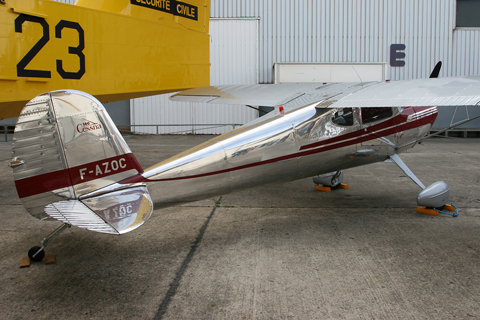
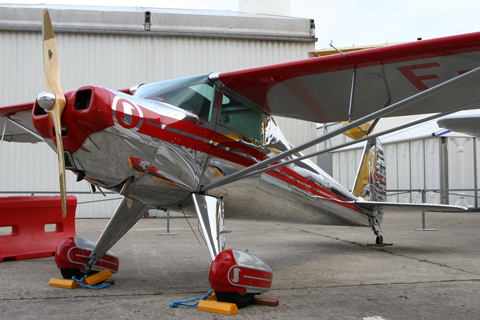
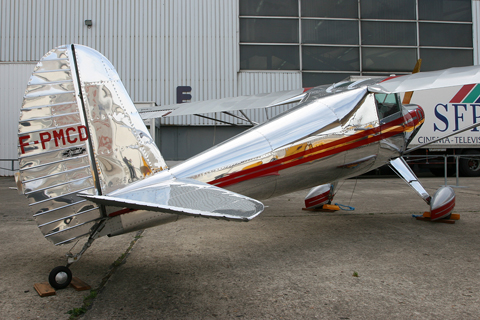
Time again for another update, one which proves I have “a couple of planks missing” as the saying goes – of all the Learjets, the Global Express, Avanti, Dassault Falcons… I was most excited to photograph a Cessna 140 and Luscombe 8! 🙂 Found them by accident when I took a shortcut past the Musée de l’Air et de l’Espace to avoid the crowd on Saturday. Given I have a fancy for bare-metal GA oldies, I couldn’t not stop and take a photo :).
The two gems together behind the Dakota Hall at the museum. The intruding tail on the right belongs to a Canadair CL-415, in a bit of an odd shade of yellowF-AZOC, a Cessna 140, was first in line. I just adore bare-metal singles... if they have polished metal props and red stripes, I'm sold! 🙂Rear quarterview. I've long been waiting to nail a C140... this is the first one I've ever seen in person 🙂 (after narrowly missing one at Lučko)F-PMCD, what at first thought to be a Cessna 120, turned out to be a rare Luscombe 8A Master (of the Silvaire family). Beautiful thing, the bright red really suits itGA taildraggers look so awesome in bare metal!
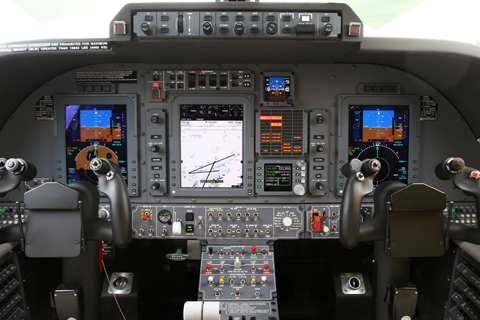
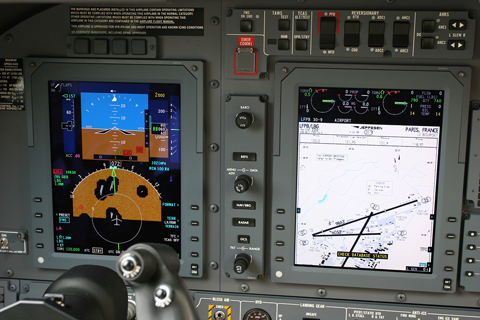
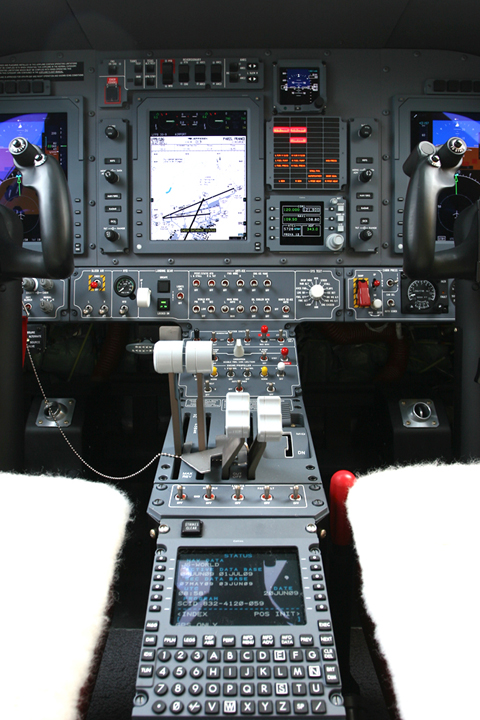
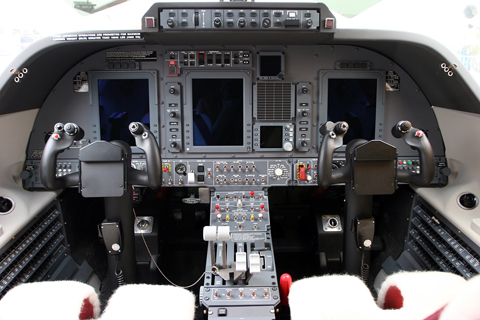
In addition, I managed to beg my way aboard the Avanti II again, this time with the avionics turned on :).
Showing off the Collins Pro Line 21 suite. An increasingly common solution in biz aircraft, the Pro Line 21 is used also in the King Air and CitationJet families, as well as the DeHavilland Canada Dash 8 Q400 regional propCloseup of the pilot's side, showing the PFD (Primary Flight Display) and MFD (Multi-Function Display), showing an airport chart of Le BourgetThe copilot's side, with the other PFD, radios and announciatior panelPedestal view. An FMS (Flight Management System) is also included, giving this amazing prop some serious equipment punch
In another first for my blog, I bring you the “Paris Air Show GA” series – almost live :). Since I hauled my laptop along, I might as well use it and post some photo action from the show. Blessed with press access – and a number of very friendly representatives of several major bizjet manufacturers – I had the opportunity to sneak around the insides of some of the most modern bizjets in the sky. All of the photos in this specific post were taken on Thursday, June 18, the fourth and last trade day (the next three days is the open public part). So here goes…
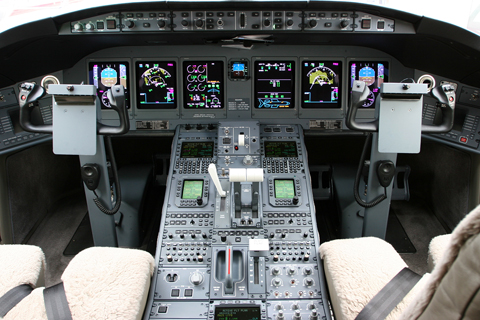
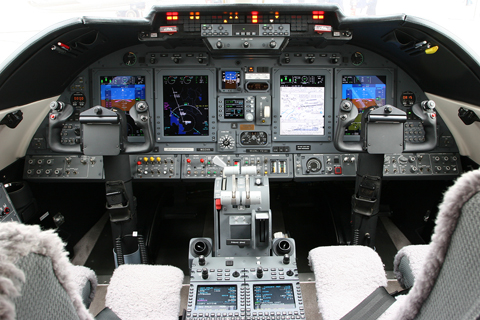
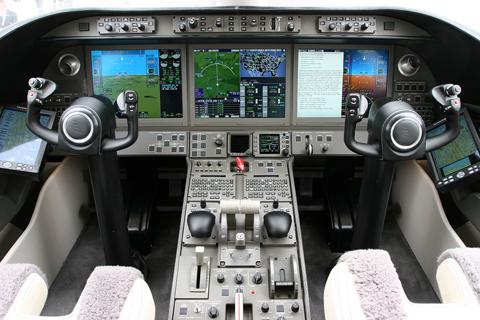
First up is the Italian beauty, the Piaggio P-180 Avanti II. Unfortunately it was not plugged into a GPU when I visited...A lot of glass and class :). The impressive Bombardier GlobalExpress XRS was the largest bizjet at the show (alongside the Falcon 7X)What show would be complete without Learjet's pocket rockets? The 60XR - cockpit pictured - is, according to its pilot, the fastest climbing civil aircraft without afterburner. On a good day, he said they can reach 41,000 ft in 12 minutes! On one flight - with little fuel and no pax - they even managed to reach 13,500 fpm for a brief moment!And I'm proud to bring you an exclusive - the cockpit of the Learjet 85 mockup :). The all-carbon fibre aircraft is nearing completion and is promising to be a world beater. Judging from inside the cockpit, it certainly will be impressive. Many thanks to Bombardier's Mr. John who showed me around!
Unfortunately, neither Gulfstream nor Cessna were in attendance, both dropping out due to the recession and the fact that they had appeared at the EBACE business aviation event in Geneva, Switzerland a couple of weeks back… which was a major letdown as I was looking forward to seeing the Citation X and any big Gulfstream…
Dassault’s Falcon division was also present at the show, but access to their aircraft was “Invitation only” – a marked difference to the “come in and look around” attitude of Piaggio and Bombardier (and Pilatus)…
JUNE 19th UPDATE: not to needlessly open another post, I’ll just continue in this one. Have two more GA cockpits to add today, some more glass :):
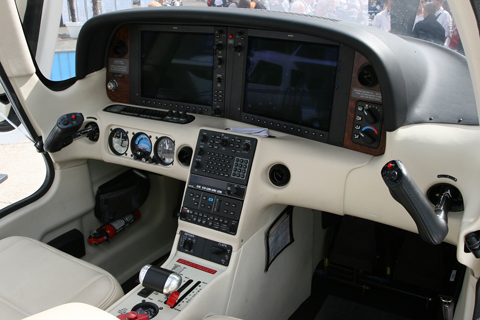
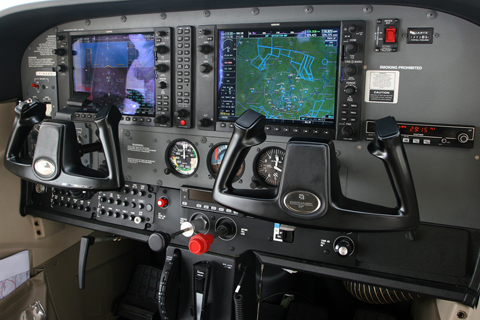
The Cirrus Perspective - by Garmin - suite on this specced-up SR-22 G3 demonstrator. The aircraft was also equipped with the TKS deicing system and ballistic recovery chuteEveryones favourite aircraft fitted with the omnipresent G1000
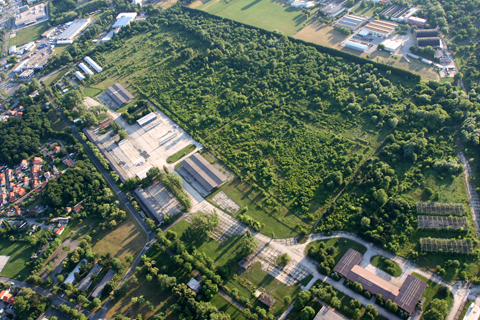
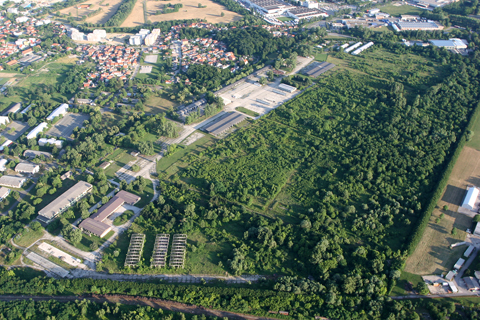
Photo update time! And I’m very happy to be able to bring you this one, as this is something I had wanted to do ever since I snooped around what was left of Borongaj airfield back in March :). And thanks to a free 9A-DDD, some beautiful (pre-storm) weather and my trusty fellow pilot Šime Plepelić I now bring you – Borongaj from the air!
A detail I neglected to mention the last time is that the field lies practically along the standard panorama route – and I’ve been flying by it for the past seven years without noticing (the problem was that before I actually hit upon the idea of using Google Earth, I thought the field was in the center of the Borongaj district, round a tram terminus). Now its location was blindingly obvious, so on yesterday’s flight with the guys, I decided we could just as well do a small detour… 🙂
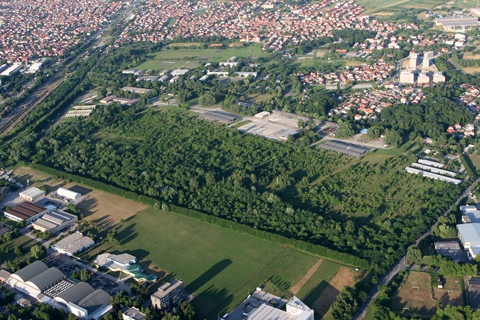
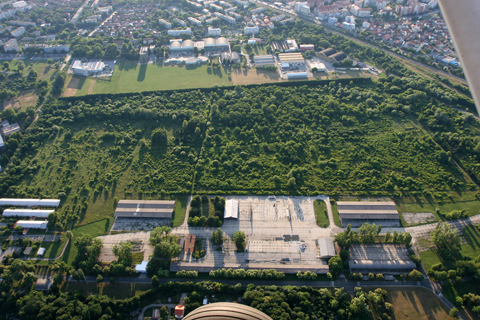
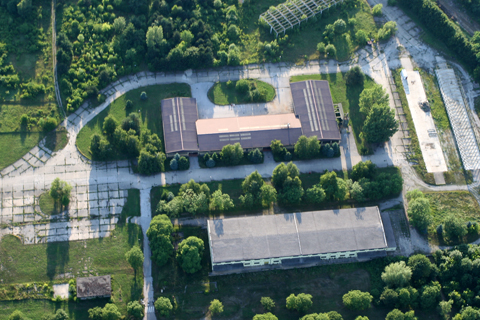
Passing by as we would normally do, just a bit closer. As you can see, Google Earth doesn't lie 🙂Turning round by 180 degrees brought us alongside the main apron, heading north for some photoreconnaissance of our own :). Deviating a bit from the norm, I was taking the photos from the left seat through the open window, while Šime was flying briefly from the rightA wider view of the main apron. From this vantage point, you can appreciate the difficulty of finding the runway...The northern end. The large building at the bottom is what I believe the hangar from WW2 (the one from the G.50 shot)Quarterview showing (almost) the entire taxiway complex. I had first entered the field via the access path visible at the bottom of the shot, right by the blocky apronIMO the best shot of the day :). Turning back to our route, we passed the north of the field, allowing for a full-view shot
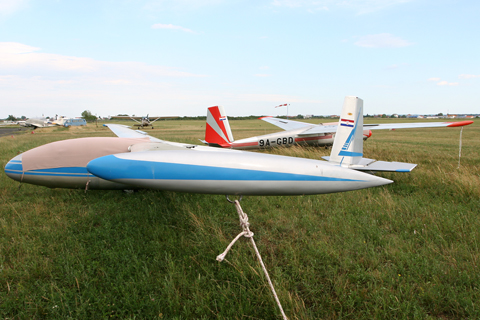
Though the Let L-13 Blanik glider is nothing to shout about – being one of the most produced gliders of all time – the pair I found at Lučko today looked very inviting, so I natrually got the camera out and set to work :). The two machines in question are 9A-GBC and its sistership 9A-GBD, both belonging to Aeroklub Velika Gorica based at Buševec airfield (LDZB) south of Zagreb. As far as I’ve been able to find out, they’re in town for some towing practice, where new tow pilots flying the club’s Piper Super Cub, 9A-DBU, hone their skills (hope to join them soon…).
Gliders galore at Lučko. Both GBC (foreground) and GBD (background) sport attractive liveriesA stiff 12 knot crosswind, with gusts to 16, and impending severe weather coming from the west and north kept our nice visitors grounded the entire day. Though not much of a wind, the orography of Lučko's surroundings causes quite strong rotors on approach and departureGiven the small number of gliders on the Cro register, most have sequential registrationsA shot meant to remind me of the reg (24 and already senile 🙂 ) turned out quite nicely in the end...The typical slender glider fuselage exemplefied on poo-stained GBCA very nice paintscheme with some gloss to boot!Pretty much the same case as with GBC. Looks like a pipe dumped in the grass 🙂
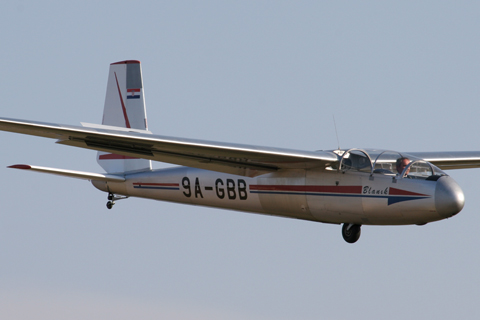
In addition to visitors from the south, I might as well post a couple of photos of two of our resident Blaniks, 9A-GBA and GBB (see the sequence?). Owned by Aeroklub Zagreb, they’re the main training gliders at Lučko.
Just touching down after a long duration sortie above town. The paint scheme is not nearly as attractive as GBD'sGBB in the hangar (the WW2 one from the previoius post 🙂 ), with GBA in the back and a Pilatus B4 hanging from the ceiling
GBB on approach during one of the few times I've seen it in flight personally
By Boran Pivčić All photos author, with assistance from Google Earth
In a slight departure from the usual General Aviation theme, I thought I’d try my hand at some aviation history for a change. Trying to avoid the usual bland history lessons, I chose instead to quickly profile the first “real” airport in Zagreb – Borongaj airfield – and spice it up with some pictures of what’s left of it today (which isn’t much). I had wanted to include some historical imagery, but that either doesn’t exist in the form that I need, or is copyrighted… so you’ll have to extrapolate from my contemporary photos :).
1. Beginnings:
Though not the first airfield in town, Borongaj airfield – located in the Borongaj district to the (then) east of town – was the first purpose-built airport in Zagreb, that is, the first airport meant to serve passengers and what was then emerging to be “scheduled air services” (the first airfield, built in 1910. in Črnomerec on the opposite side of the city, was deemed inadequate and was – as far as I’ve been able to dig up – closed soon afterward).
Opened in 1926., little exact information remains about Borongaj’s specifics. But eyeballing from its heyday in the early 40s, the airport had a single grass runway of a maximum 800 meters in length, stretching on a heading of approximately 020-200 degrees – almost right into the bora, the prevailing wind in Zagreb (which leads to believe that RWY 02 was in use most of the time). Facilities were apparently rather minimal, but enough to open the first scheduled service to Belgrade, Serbia, later the same year using a Potez 25.
A Google Earth image of modern Zagreb, with Borongaj – and the other three Zagreb aerodromes – “pinned down” (the position of Črnomerec being approximate). Six kilometers away from the city center, Borongaj was once well outside of town… also note that – in the order they were built – Zagreb aerodromes seem to follow a zig-zag pattern :). Črnomerec -> Borongaj -> Lučko -> Pleso
Apart from a visit by Charles Lindbergh after his transatlantic crossing in 1927., the airport remained unremarkable throughout the 30s. More services were added, including those to Dubrovnik and Split (Croatia), Ljubljana (Slovenia), Sarajevo (Bosnia), as well as international destinations such as Graz, Klagenfurt and Vienna in Austria, Prague in today’s Czech Republic, Budapest in Hungary and Milan and Trieste in Italy. Apart from the mentioned Potez 25, little information remains about the types operated out of the field.
As with many airfields in Europe, Borongaj’s history would shift into high gear during WW2. Following a spirited, but futile two week resistance, Yugoslavia fell to German and Hungarian forces in April 1941 – though not before making aviation headlines by being the only time in history that Messerschmitt Bf.109s faced Bf.109s in combat, when pilots of the Royal Yugoslav Airforce engaged the Luftwaffe with aircraft bought in 1937-8 (in exchange for strategic resources like metals). The occupation of Croatia – and its subsequent re-emergence as the Independent State of Croatia – effectively meant the end of Borongaj as a civil airfield, though it would prove to be a major influence on the birth of local aviation as we know it today.
Borongaj’s major role now became that of a military airbase, housing some of aircraft of the Ustaška Eskadrila, a squadron named after the nationalist Ustaše movement that controlled the country at the time. In addition to Borongaj, the Wermarcht and the Ustaše developed another airfield, an aerodrome we all know and love today: Lučko :). A larger airport developed just before the war in the late 30s (1937 I think, but don’t quote me on that), Lučko was intended to be able to support newer passenger aircraft up to a weight of 15 tons (meaning some pretty large stuff back then). During occupation, it gained a paved runway for all-weather military operations, the remains of which can still be seen at the field today – even though the actual runway had been shifted about 500 meters to the south decades ago.
In addition to these two existing fields, in 1943. the Wermarcht also built a completely new paved airfield to the south-east of town, what would eventually become – Pleso. Today the country’s main international gateway, Pleso has an interesting anecdote connected with it. Those familiar with the airport of today know of the problems its dense and long-lasting winter fogs – with visibilities not rising above 100 meters for weeks on end – cause to flight operations (indeed, the reason why Pleso was one of the first – if not the first – airport in this part of Europe to introduce a CAT IIIb ILS system for sub-50 meter visibilities). In a testament to German engineering, the WW2 airfield was built in this location specifically to hide it in the fog from Allied bombers… and 65 years on, it’s still regularly hidden :).
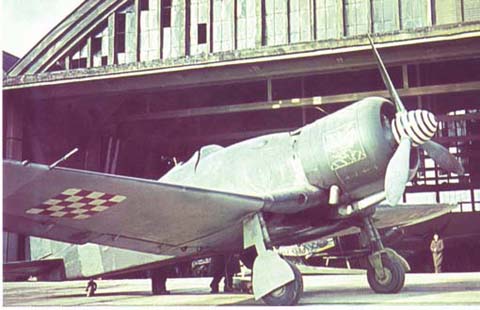
Equipped with a wild mix of Axis types, the main offensive fleet of the Ustaška Eskadrila consisted of Fiat G.50s, Messerschmitt Bf.109Fs and Dornier Do-17 light bombers, supplemented by various liason, communication and transport aircraft of all makes and models – French, Italian, Hungarian, Polish, German, you name it. They were split between the three bases, with – as far as I’ve been able to piece together – Bf.109s and Do-17s based at Lučko and G.50s, with the odd 109, based at Borongaj.
A famous picture of a Fiat G.50bis of the Ustaška Eskadrila in front of a hangar at Borongaj (still standing today at its northern end). Credit for the photo goes out to… whoever photographed it back then 🙂
By 1944. and the Allied advance through Italy, these airfields were slowly coming into range of Allied bombers, including fighter-bombers of the Yugoslav Partisans (who, starting as a guerrilla force in 1941., grew into a regular army by the end of the war). Needless to say Borongaj – and a rail yard at its northern end – were extensively bombed, evidence of which can still be seen at the field today (even more so, WW2 bombs are dug up every now and then in that area, now mostly residential).
In the immediate aftermath of the war, Borongaj increasingly lost its importance as an airbase. The more modern, better equipped and larger Lučko and Pleso were sufficient for both military and – soon to be restarted – civil needs, leaving Borongaj redundant. Soon afterward, the airbase was closed, the runway left to overgrow and what was left of the facilities was converted to an army base and barracks. Interestingly enough, despite the barracks growing into one of the largest in the area – where many young men, including my dad, served their military service – and expanding into a large and elaborate compound, the area around the former runway, as well as the taxiways and aprons, remained mostly untouched.
4. Borongaj today:
About 2-3 years ago, the military decided to leave the Borongaj complex for a better and more suitable location – and given that the rate of Zagreb’s expansion meant that they were now in the middle of a residential district, I can hardly blame them. Rather than level and rezone the massively expensive and vast complex, it was given to the city to turn into an über-campus, able to accomodate all of Zagreb’s scattered universities and dormitories (the total number of which is about 20). Several buildings were being renovated even as the military was moving out, so it wasn’t uncommon to drive to classes past tanks, anti-aircraft artillery and howitzers :).
The success of the project aside (only two universities have so far moved in, including mine), this opened up the possibility of finally exploring what was left of the airfield in peace, without the military police breathing down my neck. The area available is large, since the four-five university buildings occupy around a mere 10% of the entire complex away from the actual field. So, on an oddly suitable gloomy and rainy day, I set out to see what’s what…
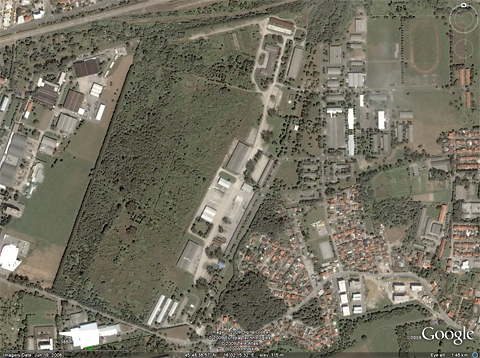
Another Google Earth shot, clearly showing the complex of taxiways and aprons from the WW2 era. The bit sticking out in the reconnaissance photograph is the northernmost point of the field (where that taxiway sticks out into the forest), while the hangars in front of which the G.50 was pictured were on the apron immediately to the south. The hangars from the first photo were most probably around the biggest apron in the middle of the field
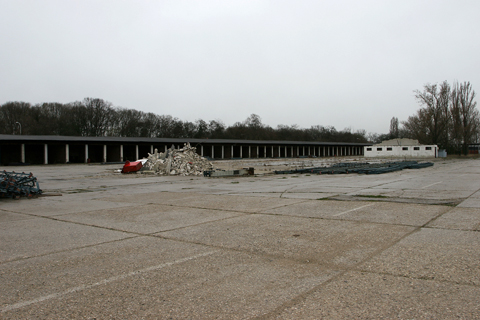
As you can see from the photo, the runway was to the left of the complex. Long overgrown, it is now a miniature forest, making it nigh impossible to actually find any traces of where it began and ended. There are a number of buildings still standing, though some of the more contemporary ones – built during the 60s and later – are being torn down.
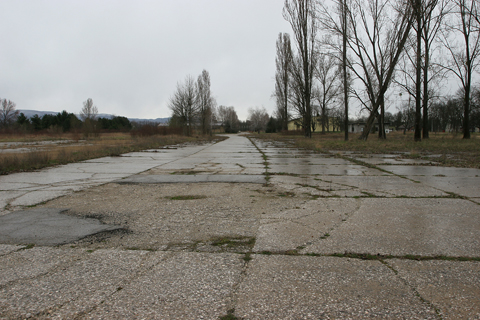
A view south from one of the paths leading to the apron. The pavement is apparently original from WW2 (or even before) though the buildings to the left and in the distance appear to be 60-70s vintageAnother view south from the main taxiway. To think that 60+ years ago Bf.109s and G.50 – and even Lindbergh before – taxied down here…Evidence of the field’s WW2 history. A sealed-in crater, which informed speculation suggest might be from a bomb in the 150 kg range that had failed to explode
As you can see, the field is not in the best of shapes, but it had been neglected for several decades. Upon closer inspection, most, if not all, of the buildings here were meant for vehicles – garages with mechanic pits and signs like “Vehicle Depot #2” being the most obvious signs – which indicates that the field was periodically used right up until the military moved out. The state of the pavement was probably considered a non-issue to tough military vehicles, so was left to fall into disrepair.
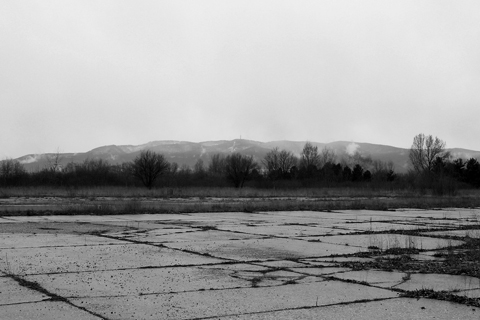
The view from another access path. The weather was perfectly suited to the general feel of abandonment…A view north. The yellow building in the distance is one of the very hangars that G.50 was photographed in front of. Beyond it is the disused rail yard – though trains regularly pass through it without stopping – seen in the reconnaissance photo, as well as the field’s own sidelineThe southern apron. If my sense of direction is correct, this is round about the place where the hangars from the first link were located. Quite possibly this area was the “main terminal”, though the pavement is a later feature
Given that it was a rather cold and rainy day (and I was without a jacket in March), I didn’t spend much time outdoors, instead choosing to look around some of the open buildings (mostly empty. I won’t post any photos since there’s not much to see and they wouldn’t be aviation-related anyway). Unfortunately, I only found out several days later that the northern hangars were indeed WW2 vintage and that I had wrongly dismissed them as something more modern – so I didn’t go and photograph them (an additional issue was that there were some MP cars packed nearby, so I didn’t want to push my luck 🙂 ).
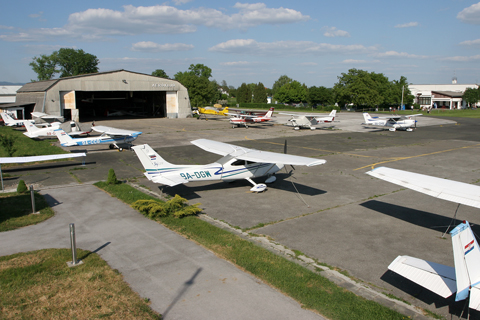
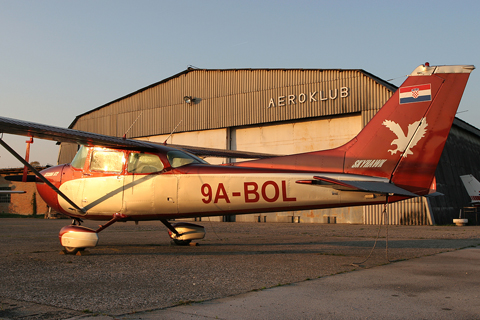
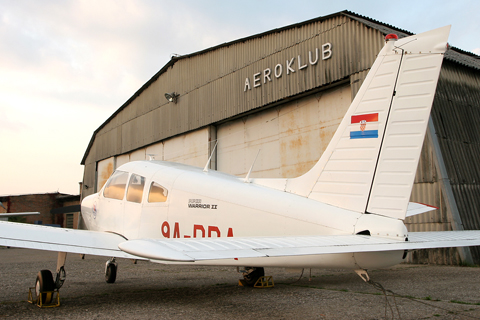
The rain, a biting northern wind, low cloudbase and Medvednica in the distance covered in snow really did leave a bleak, cold and dark feeling when standing there…A part of Borongaj lives on… an overview of the main apron at Lučko reveals some little-known historical tidbits: the hangar to the left is actually a WW2 Borongaj veteran, dismantled and transported to Lučko when the airbase was closed. A gem few people know about, it is kept company by the remains of Lučko’s WW2 runway (the dark stripe running across the apron), also used by Bf.109s and Do-17s…One of my “Aviation Legends” photos, picturing famous aircraft types – all two I ever found parked in front of the hangar 🙂 – against the most distinctive fixture of Lučko. Shot before I even knew that this hangar predates even the first versions of the planes shot 🙂Another atmospheric shot in some excellent lighting. The “Aeroklub” refers to Aeroklub Zagreb, the oldest flying club in Croatia founded way back in 1924. and managing Lučko since 1958. when passenger operations switched to Pleso
Future plans for the airfield are unknown, but given the university’s current rate of expansion, it’ll be safe for a good 10 years :). Hopefully, somebody at some point will place it on a protected monument list, as it is a large open area of prime real estate – very tempting for the increasingly crowded city (witness Tempelhof in Berlin). One can only fantasize of it being turned into an active airfield, where you can park your generic Skyhawk on the same spot once occupied by a Messerschmitt :)…
The I-3 is just one of those birds that so liven up a day at the airfield. An imposing Russian radial aerobatic monoplane, usually in a catchy scheme, is not something you casually glance over – especially when it fires up that big tractor under the hood amidst clouds of white smoke and the stench of engine oil. 9A-DOG is no different, though there is a bit more to it than it seems.
1. The I-3 – a bit of history:
Though outwardly very similar to the Sukhoi Su-29 – almost identical at a glance – the I-3 is a different machine altogether. Known in Russia as the Technoavia SP-91 (the I-3, or sometimes E-3, being the export designation), it was designed by Sergey Estoyan, the same man who did the Su-26/29/31 aerobatic series, after he left Sukhoi to co-found Technoavia. First flown in 1993, the I-3 was intended to be a cheaper, somewhat softer version of the Su-29, but one still capable of successfully competing in Unlimited Class aerobatic competitions. In the event, the aircraft didn’t prove to be much of a sales success and only about 20-ish were ever made (23 springs to mind, but I can’t verify that), of which 10-12 are estimated to survive today.
Like other Russian aerobatic aircraft, the I-3 uses the well proven formula of a strong, survivable taildragger airframe with tandem seats under a one-piece canopy – though interestingly, the I-3 can also be converted to a single-seat configuration, something unique in the aerobatic world. And it even has a small baggage compartment! The power comes from the extremely reliable and much-loved Vedneyev M-14P 9 cyl radial, producing 360 HP in this instance (though the westernised I-3M had the option of a more powerful 400 HP model), usually driving a three-blade constant speed prop.
Performance-wise, you can hit the usual +11/-9 G with two occupants, and I think the pilot of 9A-DOG told me the ultimate limit load is a juicy +/-18 G (but still not as impressive as the Su-31’s insane +/-23 G). Roll rate is not disappointing either, to say the least, at 345 deg/sec – almost a full roll in one second. Fuel consumption – we’ll skip that :). Oil consumption… well, despite the M-14 not being oil-thirsty, the pilot of 9A-DOG – who used to own a Yak-52 with the same engine – told me once the engine uses a liter per hour in aerobatic flight… so judge for yourselves :).
2. 9A-DOG – an overview:
9A-DOG – continuing the animal theme set by the aformentioned Yak-52, 9A-BUG – is an early model I-3, built in 1993, the type’s first production year. It had previously flown in the US where it suffered an accident and was rebuilt before being sold to Croatia in 2006. It is permanently based at Lučko and is a frequent visitor to many local airshows (being the only fully aerobatic – not to mention Unlimited Category – aircraft in the country).
Warming up prior to one of its first flights on the Cro register. Image taken on June 14, 2006., a couple of days after arriving at LučkoA WW2 fighter-ish shape, one could almost mistake it for a Lavochkin La-5 or -7 🙂The I-3 is imposing whichever way you look at it. Note the thin - but strong - main gear legs, needed to provide adequate ground clearance for the large-diameter propPulling out of a loop - still a "wow!" in Croatia - at a local airshowNose detail. The characteristic Russian cooling flaps can be seen here easily. Unlike the shutter versions on the Yak-52, these open radially, a visually cleaner solution. The prop is I think an MTV-9 model
Inside, the seating is typical an aircraft of this type – passenger up front, pilot in the back, to keep the center of gravity well back. This makes the aircraft unstable around all three axes – but since stability is inversely proportional to maneuverability, that’s the point. Interestingly, the panel is quite spartan even for an aerobatic aircraft, as it’s fitted with an innovative MFD screen that shows all flight-relevant data (the panel received an upgrade since the last time I saw in in 2006., but didn’t check out what – yet).
The simple & clean panel includes just a MFD, GPS and backup compass, as well as a basic radio suite
All in all, the I-3’s rarity meant I had to include it here at some point :). More pictures may be forthcoming as soon as I take them, as the airshow season is heating up along with the weather – and combined with my new 100-400 mm lens, you may get to see some actiony shots as well…
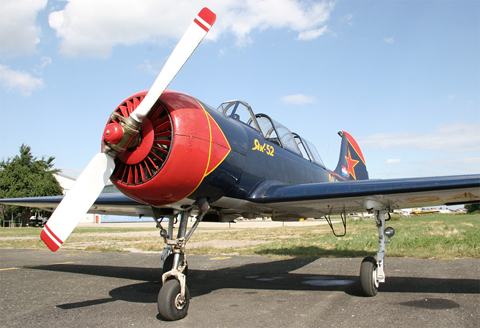
The owner's former Yak-52. Now flying in Portugal as RA-3466K with a four-ship aerobatic teamCloseup of the front. The deep blue really suited this aircraft, one of the best - if not the best - paint scheme I've seen on a -52
The title probably got your attention, didn’t it? 🙂 Though the fact is that Beech has always been known for everything from the ultra-luxurious – like the King Air series – to the ultra-innovative, like the astonishing model 2000 Starship. However, decades ago, Beech also competed in the chaper segment of two seat trainers and four seat tourers, with limited success. While not as famous as their Cessna and Piper counterparts, the three aircraft for Beech’s section here are nonetheless outstanding aircraft, whose quality sticks with the reputation that Beech has so lovingly built.
The three in question this time are all small and simple low-powered aircraft that are surprisingly similar to three Piper products for the same market niche: the 19 Sport/23 Musketeer/24 Sierra range, the 76 Duchess twin and the Piper Tomahawk lookalike, the 77 Skipper.
The first on the list is not a single model, but the whole Beech Musketeer family, which spans everything from the cheap and cheerful 19 Musketeer Sport, the baby of the range, to the more powerful and retractable 24 Sierra – conspicuously similar in lineup to the PA-28 family, from the 140 HP Cherokee Cruiser to the 200 HP Arrow retractable. And like the PA-28s, the first model was the mid-range, fixed gear, 160 HP 23 Musketeer, designed to counter the PA-28-161 Warrior.
Introduced in 1963, the Musketeer was of pretty conventional construction, with a low wing, fixed gear and a cabin for four. Externally, it could be easily differentiated from the rest by the pronounced “hump” of the cabin, which would be turn out to be a defining feature of all the designs mentioned here. Initially powered by a Lycoming O-360, the 23 was later uprated with a Continental IO-346 productng 165 HP, but this engine proved to be problematic and was dumped from the lineup in 1968. Replaced by a different, 180 HP Lycoming O-360, the aircraft was then renamed the B23 Musketeer Custom, followed by the C23 Sundowner in 1972. Interestingly, these two models were approved for limited aerobatics outside the standard envelope of such aircraft, pretty much like the Cessna 150 Aerobat series. Production of the 23 ended in 1983 – 20 years on the dot – by which time 2,331 were produced (probably the highest of all the piston singles mentioned in this Rare Aircraft series).
Following Piper’s lead with the lower-powered Cherokee Cruiser, Beech introduced the model 19 Musketeer Sport in 1966, which remained in production up until 1979, with 922 built all in all. Powered by a Lycoming O-320 producing 150 HP (10 more than the Cherokee), all versions – the A19, B19 and M19 – were approved for limited aerobatics just like their bigger brothers.
Not to be outdone by Piper in the opposite end of the spectrum, Beech came up with the 23-24 Super III, powered by an IO-360 producing 200 HP (an engine very popular with light retractables such as the Rockwell Commander 112, and Piper Arrow). Interestingly enough for an engine of that power, a constant speed propeller was optional (!) and only about a third of the aircraft produced were delivered with it (normally, the lower useful limit for a constant speed prop is about 180 HP, with virtually all 200 HP aircraft in the touring class equipped with it). Produced only between 1966 and 1969, the 23-24 didn’t have a direct Piper equal (the closest would be the later-model Cherokees and Archers sporting 180 HP), but was notable for having one of the highest payloads in the four-seat, four cyl piston single category, from 476 to 490 kg – by standard ICAO norms, four adults and their baggage, with 110-122 kg left over for fuel. With a typical density of 0.7 kg/liter, this would boil down to a respectable 45 gallons – more than a Cessna 172 filled to the brim (though the lower powered Piper Archer had an even greater payload of 510 kg).
Only 369 were built before it was superceeded by the model 24 Sierra. Using the same fuselage and engine, the 24 introduced retractable landing gear that, uniquely, retracted outwards rather than inwards. Like all Musketeers, the 24 had trailing link landing gear, well used to landing on all types of surfaces, allowing the Musketeers to operate without problems even out of bad unpaved strips. Analogous in its intended niche to the PA-28R Arrow series, the 24 was produced from 1970 all the way till 1983 when the whole Musketeer line closed, with a production run of 744 aircraft.
Quite different from the usual exquisite Beech piston twins – the Twin Bonanza, TravelAir, Baron, Duke, Queen Air… – the Duchess is a more humble four seat trainer/tourer, designed for the same small niche as the very similar looking PA-44 Seminole and Grumman GA-5 Cougar. Grown from the Musketeer by adding another engine – hence the cabin hump – the Duchess shares the Seminole’s low wing T-tail layout and is powered by the same counter-rotating 180 HP Lycoming O-360s (LO-360 on the left wing), driving fully-feathering two-blade propellers. The “same problems, same solutions” principle applied yet again.
While the Seminole went one up with engine performance, introducing the Turbo Seminole in 1979, the Duchess went for aerodynamic efficiency. Unlike most light aircraft, the Duchess (all one models built 🙂 ) featured a bonded honeycomb structure, avoiding the need for drag-inducing rivets. Despite this reducing the turbulent boundary layer along the wing – which, though it increases drag, causes the air to stick to the wing more than to a clean one, increasing lift at any given speed – the Duchess still had good and docile low speed handling.
In the end, the Seminole – still in production today, after a pause during the 90s – had the last laugh, with Duchess production ending 1982 after 437 were built. Despite the Duchess’ popularity with flight training schools, the demand slump for twins in the early 80s – the advent of powerful, faster and more economical singles one of the reasons – doomed it along with the GA-8, leaving the Seminole the sole leader of the niche until the arrival of the Diamond Twin Star.
I think I see a pattern here Scully. The last aircraft on the list can from a distance easily be mistaken for a PA-38 Tomahawk – and is again designed for the same function, as a cheap, survivable two-seat trainer that’s a bit more vicious than the forgiving Cessna 150 (like Piper, Beech used the input of flight instructors during the design phase – input that often asked for more spinnable characteristics). Indeed, the 77 is certified for intentional spins, which may have given rise to various nicknames like the “Traumahawk” often pinned to the PA-38.
In a fit of generous harmionisation, the 77 was fitted with the same 115 HP Lycoming O-235 engine as the Cessna 152 and the Tomahawk. Unlike the 152 – and like the Tomahawk, but you guessed that already – its wing was designed around the GA(W)-1 high-lift airfoil, developed by NASA as a new airfoil specifically designed for GA operations. The extensively glazed canopy gave an excellent all-round view, while entering the aircraft was easier than crawling under the wing like in a 150/152.
Originally designed with a standard tail and equipped with a 100 HP O-200 engine, the 77 uses the same bonded honeycomb structure as the Duchess – and, welcomed by its pilots, a very similar cockpit layout to the 76 and the Musketeer series. Built from 1979 till 1981 with just 312 produced, it ended up – despite being a traditionally fine Beech aircraft – the least successful of the three trainers mentioned.
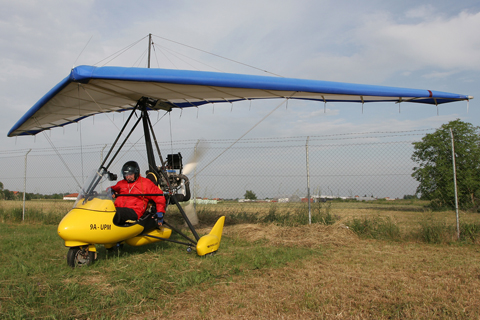
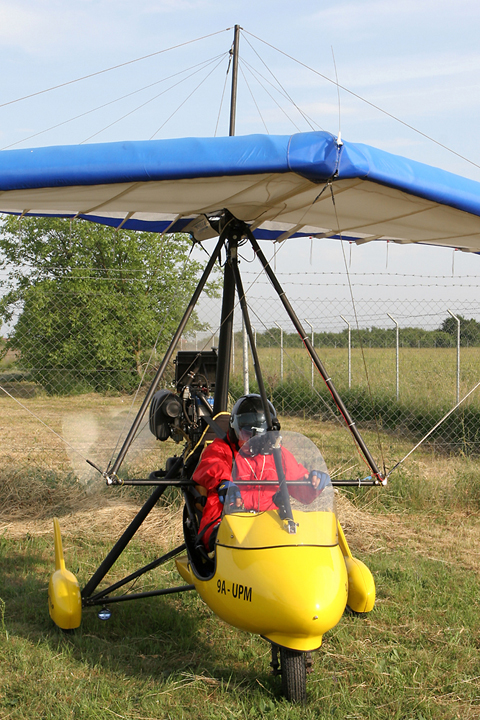
Had the great fortune of running into this sweet little thing at Lučko today. Owned by a member of the aeroclub, it was in town for a visit and parked at our apron – so I couldn’t resist going in for a couple of photos :). Though I must admit that my knowledge of ultra- and microlights has always been sketchy at best, this thing got me interested in the whole deal. An open cockpit, a Rotax banging away behind you, a couple hundred meters above ground… that pretty much shares first place with gliders for the true spirit of flight.
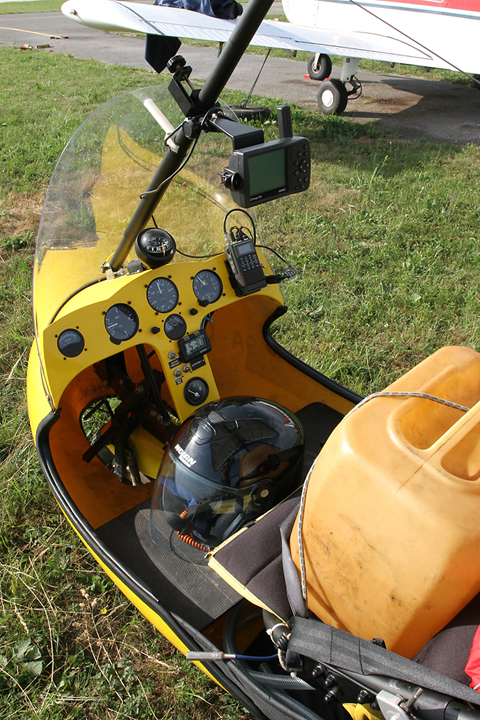
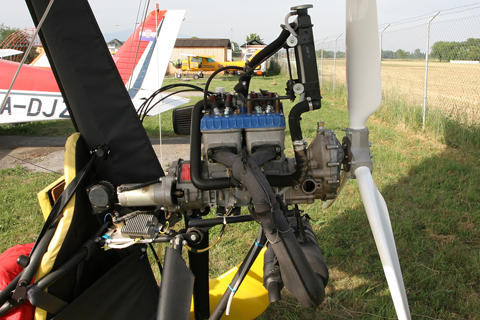
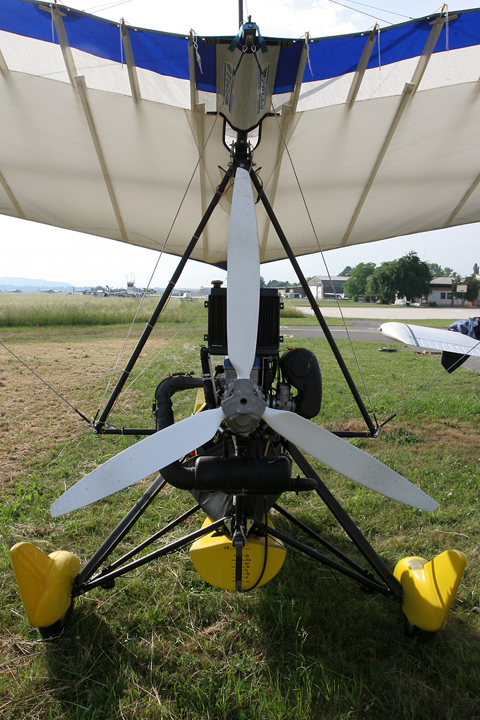
A full-option Apollo Racer GT, 9A-UPM (the U prefix being for ultralights) is a bit more serious than other similar microlights. Equipped with full nav lights, wingtip strobes and twin landing lights – not to mention a comprehensive panel with almost more instruments than the Cessna 150 I got my wings on – UPM costs about €17.000, which is not all that cheap (though I am thinking of selling my €18.000 car now 🙂 ), but you do get a lot of microlight for the money. The only thing missing is a transponder, but I believe that can be arranged as well…
Mr. M firing up UPM for an afternoon flight. I think these are the C-17 model wings (a number of them are on offer)Closeup of the... fuselage. In a nice - and easily visible - yellow scheme, UPM has the optional windscreen, according to the owner very useful on cold daysVertical view just before taxiing out. The manufacturer's webpage states that the Apollo GT can also be equipped with floatsThe cockpit. Everything needed is here - including a handheld Garmin GPS MAP 196 as extra. Unlike a number of local microlights, UPM is also equipped with a hand-held radio station, albeit powered by the engine alternatorThe power comes from the 64 HP (a lot!) Rotax 582. Interestingly for an aircraft engine, the 582 is a two-cylinder, two-stroke water-cooled engine - going pretty much against every conventional piston engine design guideline :). The power is transferred to a (I think) air-adjustable three-blade propRear view. The fuel tank is, unusually, under the fuselage. The engine water cooler can be easily seen here above the engine






































 Achtung, Skyhawk!