My preparation for the arrival of the “super depression” nicknamed Vatroslav – and its associated “heavy” snowstorm Andrea (abrasive sarcasm intended) – last Wednesday pretty much centered around throwing a shovel in the boot of my car and preparing my camera for the “horrors” of snowy weather. As I had to be at Lučko at 7 AM next morning – right after the heaviest snowfall was forecast – for my early-morning IFR simulator run, I though I might as well enjoy a spot of winter photography :).
Expecting Armageddon, Snow – the fifth rider of the Apocalypse – and a complete breakdown in law and order so vehemently prophesied in the media, I set off just before 6 AM. Normally the 11 km journey takes me about 15-20 minutes depending on the traffic – exactly the same time it took me that morning, when all possible communications outlets were blaring warnings about not leaving the house unless it is critically important. At the field I was greeted by not-even-remotely-catastrophic 20-30 centimeters of virgin snow, just perfect for some unusual photography! The only problem was, there was nothing really interesting to photograph and the dull, low overcast didn’t really help with the lighting situation…
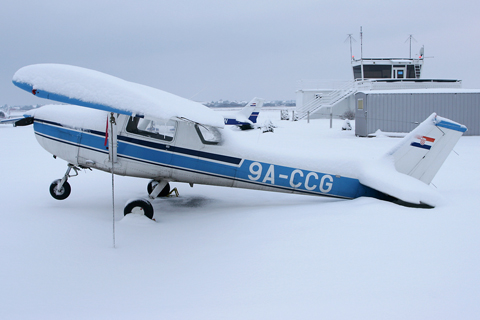
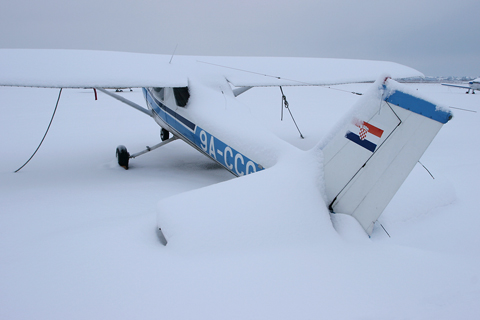
However, all was not lost, because then I just happened to notice that one of our planes was sitting in what could only be described as “unusual attitude” :D…
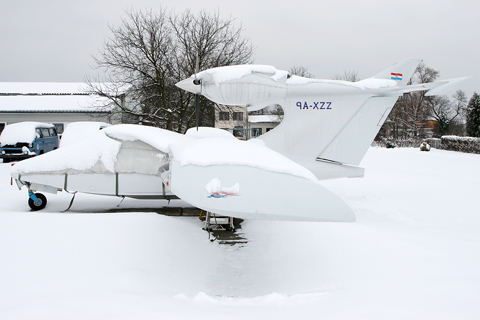
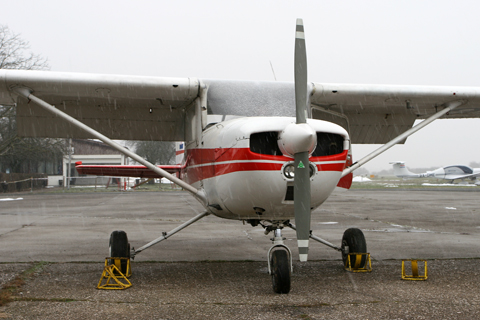
Oooops... after seeing similar photos of big airliners, seeing a small 150 in the same pose was more than a little humorous :). But with their proportionally long tails and light noses, 150s are sometimes prone to this. Even DMM at the other side of the field wasn't spared the same indignity...Thankfully for both 150s parked outside, the strong wind that had accompanied the storm had blown up a lot of snowdrifts, so when the tail did come down, its fall was cushioned, resulting in no material damage. Three hours later, both of them had been cleaned and right way up! 🙂An amphibian surrounded by water - but in the wrong state :). By the time the sim had finished, it was almost noon, so the lighting was much better - unfortunately, there still wasn't anything interesting to photograph...
When the Messerschmitt Bf.108 first appeared on the European general aviation scene in the mid-30s, it had created something of a “Porsche moment”: here was a small and light tourer, astoundingly fast yet relatively low powered, agile but quite docile, so left-field in design that it had shocked in the same measure it had fascinated. More than anything else, it had finally dispelled most of the skepticism and antagonism toward the low-wing monoplane configuration for light aircraft (at least in Germany), showing just what could be done with this novel idea once you’ve put your mind to it.
Pretty soon, this success had kicked off something of a “VW Beetle moment” :D. Seeing that the mentioned configuration does indeed work – and rather well at that – several manufacturers began seeing its potential to replace the lumbering open-cockpit biplanes then used for common day-to-day operations. What was needed here was a simple, cheap, robust and versatile no-frills machine that would efficiently go about its training and liaison duties, while still retaining that quantum leap in performance (and comfort!) over existing aircraft.
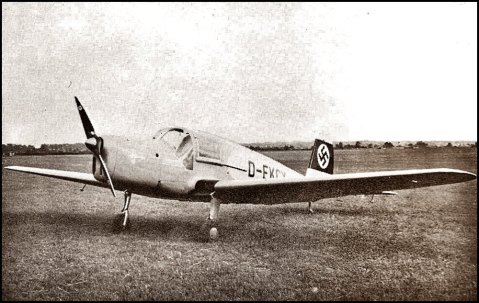
At the Arado works, the engineers, having too caught the bug, had rolled up their sleeves and set to work. The end result, intended like the Bf.108 to combine these new technologies into a single purpose-built design, was the diminutive, unimposing – and today unjustly forgotten – Ar 79…
A rare sight back then as it is today: two Ar 79s in formation shortly before the start of WW2 (photo from: http://www.eichhorn.ws)
1. Willy-nilly:
A very advanced design for its time – just a notch below the technical level of the production-standard Bf.108 – the Ar 79 was somewhat of a logical outcome for Arado. An innovative company that is today much overshadowed by the more famous names of 30s/40s German aviation, it had been around in one form or another since WW1, but rose to prominence as an independent manufacturer in 1924 when it was bought by a Fokker engineer, Mr. Heinrich Lübbe. While you’ll be hard pressed to find someone who’s heard of him, Mr. Lübbe has nevertheless left a lasting mark on military aviation as the inventor of the mechanical interrupter gear that had allowed machine guns to fire harmlessly through the propeller disc without clipping the blades. He had also left a significant mark on Yugoslav aviation, I was amazed to find out, when in the same 1924 he had opened an Arado subsidiary in Yugoslavia called – Ikarus! 😀
Under various design heads, including fellow Fokker veteran Walter Rethel – who would later go on to become the chief engineer on the Bf.109 – the young company had soon gained a solid reputation in Germany for its advanced, mostly metal light biplane fighters and trainers. Indeed, the company’s Ar 64 and Ar 68 were among the first combat aircraft produced in Germany after the Versailles Treaty was… ignored, and were the first front-line fighter aircraft to equip the new Luftwaffe. The majority of its pilots too were already familiar with Arado, having trained – in secrecy, under the guise of civilian aeroclubs – on the widespread civilian Ar 66 biplane trainer.
Despite these successes however, by the time the Luftwaffe was firmly on its feet Arado was already beginning to suffer from a slight case of “Messerschmittitis”. The animosity of several high-ranking German officials (most notably Erhard Milch) towards Willy Messerschmitt is well documented, having been a significant factor in undermining Bayerische Flugzeugwerke during the pre-war years, despite the demonstrated ingenuity – and outright superiority – of several Messerschmitt designs. Heinrich Lübbe’s refusal to join the Nazi Party had had a similar effect, though in the end far more reaching: with the Party’s patience finally running out in 1936, Lübbe was removed from his position and Arado promptly nationalized.
With the constraints of personal vendettas now removed through an unfortunate turn of events, Arado’s designs had finally received a fair fighting chance. This, and the accelerated production and development spurred by WW2, had seen the introduction into service of several notable Arado aircraft, including the Ar 96tandem two-seater (which would very soon become the standard Luftwaffe advanced trainer), the Ar 196 floatplane found virtually on every German ship, the innovative Ar 232 heavy transport, and finally the ground-breaking Ar 234 ‘Blitz’, the world’s first jet bomber. An unorthodox masterpiece of design, it’s legacy and impact are today pretty much the only things keeping the Arado name from sinking into total mainstream obscurity…
Called the ‘Tausendfussler’ – or ‘millipede’ – on account of its odd landing gear, the Ar 232 was in many ways a trendsetting design. What many call the first modern military transporter, it had introduced the easy-to-load square fuselage and rear loading ramp that are today de-rigeur on all serious military transports (photo from: http://www.world-war-2-planes.com)Like the Me-262, the Ar 234 – here in its B twin-engine version – heralded a revolution in aviation as a whole. Despite the fascinating design, it is ironically conventional compared to a number of jet projects Arado had been working on in 1945, including the six-jet E555-1 flying wing bomber and half a dozen single-engine jet fighters (photo from: 1000aircraftphotos.com)
The Arado company however had already been sunk long ago by the decision to nationalize, for with the collapse of German industry at the end of WW2, the company was shot down with it. While a vast majority of companies large and small were able to somehow stay afloat until the mass integration into huge consortiums in the 60s – Messerschmitt for example by producing sewing machines and the odd KE 175/200 bubble car – Arado was immediately declared bankrupt and written off once and for all…
2. A Diet 108:
Back in more successful pre-war times, the Ar 79 had – as mentioned – represented the company’s attempt to design a cheap & cheerful modern light aircraft that would lend itself well to common, non-utility tasks. Unusually, despite it being 1938, it was designed for the civil market only and very few were actually used in military roles – odd given the many aircraft of all types then being pressed into Luftwaffe service (more so when you consider that a majority of early German transports and bombers were designs that had started out as passenger aircraft for Lufthansa).
At a glance from a distance, the Ar 79 looked very much like a Bf.108 – and keeping in mind that there is only a number ways you can design a low-wing monoplane taildragger, we can’t hold that against it. Up close however, there were some notable differences, the biggest being the odd vertical stabilizer. Introduced on the Ar 68 in 1934, it would become the trademark of all subsequent Arado piston singles – however, I’ve not been able to find out exactly what advantages did the design give. But – using a bit of Eyeball Mk.I extrapolation – its near-vertical leading edge reminds me of the stabilizers on Mooneys, which are designed to give better control response in stall and near-stall situations. And given that most Arado singles were trainers likely to be spending quite some time there, it does sound plausible.
The Ar 79V2 (second prototype) showing off its unusual vertical stabilizer and diminutive size (photo from: 1000aircraftphotos.com)
Weighing in at just 760 kg MTOW – round about your average Cessna 150 – the Ar 79 did not really need much power, making do with a 105 HP Hirth HM 504A-2 inverted inline four cyl turning a two-blade fixed pitch prop – noticeably less exciting than the Bf.108’s inverted V8 :D. However, its clean lines and – unusually for such a small aircraft – retractable main gear meant it could squeeze a lot out of the power available, with a respectable cruise speed of 110 kn and a service ceiling of about 18,000 ft – all while burning just 10 l of avgas per 100 km. If we convert that to the more usual gallons per hour, we get a very low 5.2 (US) GPH at 110 kts…
So far, so Bf.108-ish. However, once you look below the skin – or at it for that matter – things start to go awry. Unlike the all-metal 108, the Ar 79 was a somewhat unusual mix of metal, wood and fabric, everything from the modern to the utterly conventional. Starting out back, the rear fuselage was an advanced magnesium alloy (!) (or “electron casting”) monocoque structure. In this type of construction, pioneered during the first decade of flight, the skin itself is the only load-bearing element – it is the only thing making up the structure, without any form of internal support. Contrary to what I had assumed, this had made the Ar 79’s rear end very light, much lighter than it would have been had more commonplace solutions been used. In addition, this type of construction had also paid off in simplicity and strength, with its oval shape spreading the load evenly around the fuselage and the (predominantly) one-piece structure removing the need for rivets, joints, welds or other such structural weak points (in later years, in an effort to reduce weight when applied to larger aircraft, this structure would evolve into what’s known as the semi-monocoque, which combines the load-bearing skin with an internal bracing frame, permitting the metal to be thinner and thus lighter, while still keeping many of the monocoque‘s qualities. In this form it has been used on airliners since the 50s, where it’s load bearing characteristics have been put to good use at battling the stress of pressurization 🙂 ).
EDIT: I would also like to extend my sincere thanks to Mr. Adolf Jaeger for correcting my erroneous assumption that this type of monocoque structure would be slightly heavier than conventional constructions.
Progressing forward however, things were starting to become more agricultural. The forward fuselage was a simple welded steel tube cage covered with fabric, while the wing – single spar, like the 108, but without slats and flaps – was a plywood affair again covered with fabric (and don’t laugh at the plywood! Just ask De Havilland and it’s Mosquito light bomber about what could be done with that fascinating material 🙂 ). The only other bit of metal up front was the cowling covering the engine…
Everything considered, one could deduce that the Ar 79 had quite an interesting weight distribution: almost evenly balanced fore and aft, something rare in most aircraft :). This would have located the center of gravity somewhat more aft than normally found on similar aircraft – not that far aft that it became tricky to fly, but enough to make it stable and maneuverable in equal measure. And being otherwise fully aerobatic – equipped with an aerobatic carburettor, permitting inverted flight – this would have made the Ar 79 quite agile :).
Pretty conventional today, but back in the late 30s this configuration was still a relative rarity on small non-combat aircraft (photo from: alasvirtuales.blogspot.com)
3. Fuel for thought:
While from today’s perspective the performance specs may seem a bit average – they’re hardly better than those of the Cessna 152 Aerobat (apart from the acro carburettor and retractable gear) – in its time the Ar 79 was quite a good performer and, like the Bf.108, was used on its fair share of record-breaking flights. The more “usual” ones were the 1000 and 2000 km solo class speeds records of 229.04 km/h (123.67 kn) and 227.028 km/h (122.58 kn) respectively, both set in 1938. While all very good for a light 105 HP aircraft, they were not nearly in the same league as what was done between 29 and 31 December of the same year…
It had always been said that the true test of an aircraft was a long distance record flight. The Arado team had apparently taken this a bit close to heart, for when they rolled the above pictured D-EHCR back into the hangar, they decided they could just up its fuel capacity a bit… now, I couldn’t find the exact capacity of the standard tanks, but with a range of 553 NM at 110 kn and 5.2 GPH, it works out to 26 gallons, or 99 liters. This was felt to be somewhat inadequate, so what the engineers did was bolt a jettisonable 106 liter fuel tank under the fuselage and screw in a whopping 520 liter tank behind the cabin. In total, this gave 725 liters (!) to burn, which – at avgas’ standard specific gravity of 0.7 kg/l – weighed in at 508 kg and was 48 kg more than the empty weight of the plane :D.
This was deemed enough to give good record-breaking range and was put to good use between 29 and 31 December when a two man crew flew non-stop from Benghazi in Libya to Gaya in India – a distance of 6,303 km (3403 NM)! At an average cruise speed of 160 km/h (86 kn) that would have taken a tad more than 39 hours, quite a feat for an understated two-seat trainer groaning under its own weight in fuel 🙂 (though this fuel to weight ratio would certainly not be unique; the Rutan Voyager, which flew non-stop around the world in 1984 without refuelling, could carry more than 3 times its weight in avgas!).
4. From here to… obscurity?
Apart from its record-breaking flights – flown mostly by the second prototype, which crashed in India about two months into 1939 – the Ar 79’s regular service life was quite uneventful. It’s versions were even scantier than those of the Bf.108, with only the Ar 79B, Ar 79D and Ar79E seeing the light of day – and these differed only in minor equipment changes. Some sources do state that the production models were fitted with Hirth HM 500A1 engines, rated at the same 105 HP, and that the 504 was used on the prototypes only.
But, despite its flying qualities and proven performance over longer distances, in the end the Ar 79 was not really a sales success (though WW2 had much to do with it, the civilian general aviation sector virtually disappearing overnight): not counting the two prototypes, only 48 production models were built when production ceased after just three years, in 1941.
Interestingly though, the basic design was still considered advanced in the 50s, and in East Germany plans were made in 1952 to return the aircraft into production in an all-metal form; however, the 17 July 1953 uprising had put an end to that for good. West Germany too had similar ideas, when in 1957 the Ar 79 was used as the basis for the all-metal Blume Bl 500, designed and built the man behind the original Ar 79, Walter Blume :). It’s high price of DEM 63,000 however meant the entire project never made it beyond the two prototypes…
It’s Ar 79 heritage evident, the Bl 500 was conceived as a stretched, tricycle gear four-seater, powered by a 150 HP Lycoming O-320 engine. Modified and improved to achieve German certification, the prototype became the Bl 502, pictured here, while the generally similar Bl 503 – sporting a more powerful Lycoming O-360 – was the only other aircraft built. With the economy still recovering from WW2, these expensive aircraft were not greeted with open arms… (photo from: http://www.pprune.org)
Today, only one Ar 79 is known to have survived – thanks once more to the sterling efforts of Lufthansa’s historic flight, the Deutsche Lufthansa Berlin Stiftung. D-EMVT – an Ar 79B-1 and the next-to-last Ar 79 built – was meticulously restored in 1996 and kept in flying condition up till 2001, when it was put up as a permanent exhibit in the Deutsches Technikmuseum in Berlin, where it now hangs out for most of its days :).
Looking beautiful during an engine run up (note also the modern propeller). The 47th Ar 79 off the production line, D-EMVT – previously also known as D-ECUV – was one of the busiest of its type, including serving as the personal aircraft of the French High Commissioner to the Saarland province in 1945 (which was in the French occupation zone) (photo from: http://www.dlbs.de)
Given that the Internet is not awash with precise specifications of obscure planes, I naturally had some issues in determining which sets of performance numbers to believe. In the end, I opted for the most reliable source – Lufthansa 🙂 – which gave the specs on the most widespread Ar 79, the B model:
Engine: Hirth HM 500A-1, 105 HP
Stall speed: 78 km/h (42 kn)
Cruise speed: 205 km/h (111 kn)
Maximum speed: 230 km/h (124 kn)
Range: 1024 km (553 NM)
Ceiling: 4,500 m (14,760 ft)**
Length: 7.6 m
Height: 2.1 m
Wingspan: 10 m
Wing area: 14 m²
Empty weight: 526 kg (1,160 lbs)*
Max. take-off weight: 850 kg (1.874 lbs)*
* Note: the biggest disparity in performance numbers I’ve found is in the weights. Most sources dealing with the B model put them at 526/850 kg, while two sources – which mostly covered the prototypes – put them at 460/760 kg. I haven’t found these numbers anywhere else, but it is entirely possible that the prototypes – given their record-breaking nature – were lightened by removal of equipment that was standard on the production versions.
** Similarly, the same two sources put the ceiling at 5,500 m (18,000 ft) as opposed to the B model’s 4,500 m (but this could be due to the engine, even though a 3000 ft increase is nothing to sneeze at)
With the weather having been steadily uncooperative these past few months – going from snow to dull, oppressive overcast and back – the arrival of sunny and clear skies, a light, refreshing wind and springtime temperatures was greeted with enthusiasm among those of us aching to go flying. Wasting little time – believing that, if Mr. Murphy was consistent, it wouldn’t last – a friend and I made arrangements with our instructor to kick the flying year off with a Night VFR refresher flight :).
Not being sure what are the regulations in other countries, I’d better explain – in Croatia, Night VFR is treated as an additional qualification to the standard Day VFR and can be done by anyone holding a stock PPL license. What it amounts to is 5-6 hours dual command time with an instructor, finished off with (usually) five solo circuits. The exact curriculum varies from instructor/FTO to instructor/FTO, but we, for example, had:
standard, fast and ILS approaches
standard and full flap landings at different runway lighting levels
standard rate and 60 degree turns
slow flight
cross-country route using radio navigation
In theory, this then allows you to fly both within the aerodrome control zone and cross-country along designated VFR routes. In practice, we rarely leave the control zone: Croatia is a rather hilly country – with significant mountainous areas – and with few large cities (which at night all look the same), so the prospect of going long distance in a single engine airplane is not really that appealing… should the engine decide to quit, you are faced with complete darkness, few lit roads, few larger cities and even fewer airports where to make your emergency landing – and that’s bound to end in tears. So we leave the night bit to the twins (which then again fly IFR…), sticking to the vicinity of the airport and the occasional panoramic flight above Zagreb. You may ask what’s the point then; the Night VFR qualification is also a requirement for the Instrument Rating, something most of us are aiming for, so while we’re here we might just get that off the list :).
Having last flown at night at the beginning of last year, we decided a few days ago to get our hand back in and finally give our planes a little shakedown…
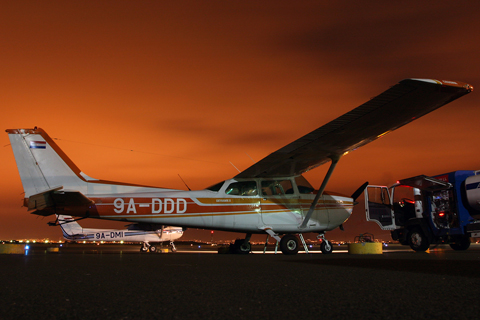
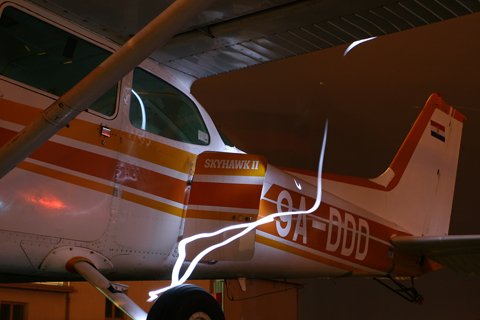
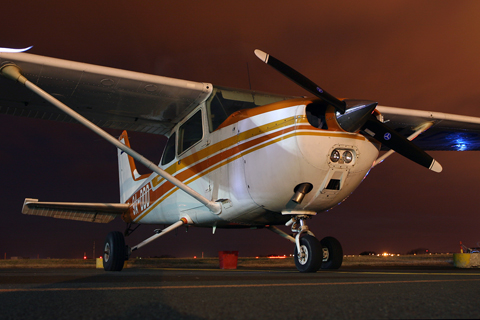
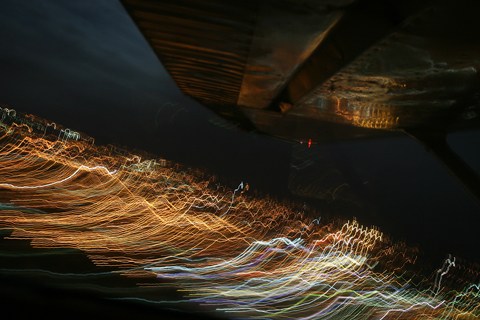
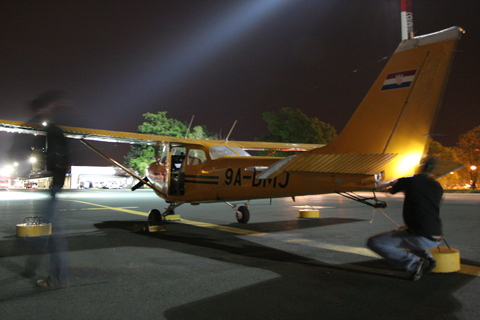
Fill 'er up! Brimming the tanks for our two-hour session - just to be on the safe side - with me flying first and my friend second. The lights of the Zagreb skyline decided to pitch in and provide us with some mood lighting 🙂Thunder and lighting! 😀 (actually my friend doing the preflight with a torch in a 30 second exposure)Ready and willing! (to throw some confusion into the stream of Croatia Airlines rush hour departures 😀 )A (relatively) steep climbout from RWY 23, shot with an 8 second exposure. The weather was brilliant, CAVOK with just a hint of mid-level clouds and some moonlight to help us alongWho says training is dull? 😀 To have us recalibrate our sense of height in the dark, our instructor had us fly a series of successive low passes from the traffic circuit, with the target of a steady 2 meters (6 ft) above the runway right down the centerline lights. I've managed to hit 3 meters and 125 knots, while my friend did 1.5 meters or thereabouts at 100 knots 🙂Something a bit more dated, back from when we started our night training in 2008. To get acquainted with the new perspective in the dark, we had to fly all the normal flight school turns on instruments only, using various points of Zagreb - seen here blurred beyond recognition - as referencePrepping DMJ for another two hour sortie. While a bit more complicated than DDD, we preferred DMJ because of its ample power and a big chunky engine pulling the center of gravity forward (very comforting when flying in slow flight near MTOW)Climbing out to the south-east for some zone work. Sadly, our session would soon be cut short when the alternator packed up... of all times, during the night. And the engine had just been overhauled a few weeks ago...
Not even a full hour had passed from when I came home from my last exam (for this session that is) to when I was back on the road again, heading to Lučko by the straightest path possible :). After spending a good part of the last two months with my head in the books – and passing through all possible forms of stir crazy along the way – I was in desperate need of fresh air, planes and photography; so undaunted by the fact that there wouldn’t be anything interesting left to photograph, I set out for the field, if anything to at least try and find some new angle on the 150’s pitot tube or the Diamond Star’s left winglet :D.
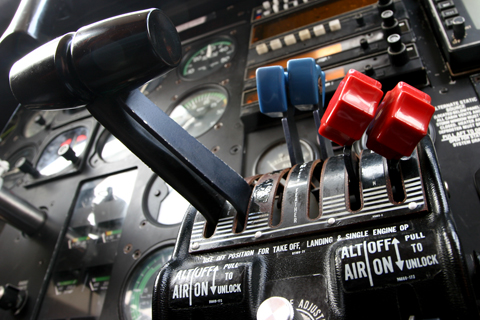
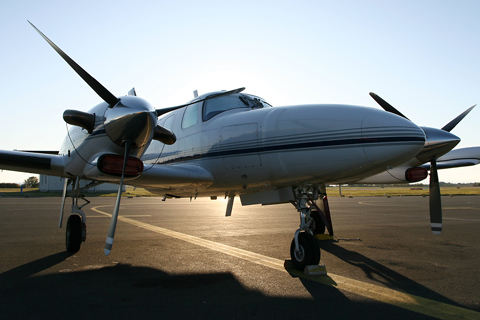
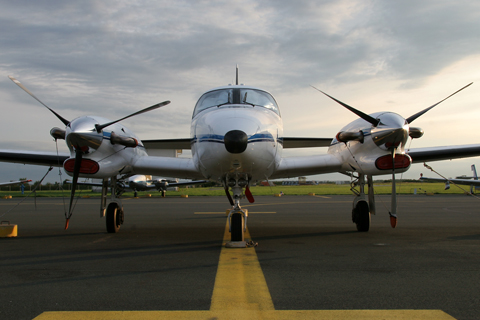
However, before it came to those desperate measures, I had a stroke of good luck. 9A-DMO, ECOS’ Piper Seneca III, was undergoing minor servicing at the time, so I decided to make myself helpful by avoiding manual labor – I’m notoriously accident prone whenever I’m near tools – instead plonking myself in the cockpit and seeing what I could do with my camera in there. I’ve always wanted to catch a good, artsy cockpit shot (reminiscent of the many fine shots of Airliners.net such as this one), so, combining leisure with some badly-needed physical activity, I set about twisting and crawling around the Seneca’s relatively small cockpit…
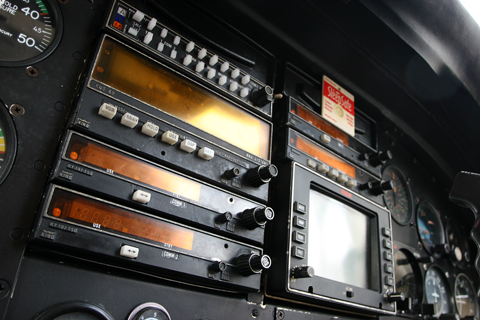
Up close and personal with the fun controls :). Below the usual throttle, prop and mixture levers you have the Alternate Air controls. Should the main air intake on either engine become blocked for whatever reason (often due to ice), operating the Alternate Air will open an alternate intake within the engine cowling which will - hopefully - be unaffected by whatever blocked the primary oneA closer view. In addition to being color coded, the levers are each of different shape, to allow the pilot to identify which is which without looking at themDMO's avionics are a bit dated - but from a photographer's perspective that makes them all the more exciting! This antiquated King KNS 80 unit is one such marvelous gem...
But before we move on, the above photo is just screaming for a long additional explanation – if anything on account of the rarity of the “NAV SYSTEM” :D. In essence, this is not a simple instrument, but an integrated navigation system that was, before the GPS came along, by far one of the most sophisticated navigation units you could get for a small aircraft. What it does is combine VOR, ILS and DME data to provide the aircraft with (among other things) Area Navigation (RNAV) capability. Now, unlike classic radio navigation that relies on flying between radio stations (VOR, NDB), RNAV allows the aircraft to fly between “waypoints”, points whose location is not bound to the physical location of a ground radio station. Today in the fun fun world of GPS, these waypoints are predetermined and defined in navigation computers by their geographic coordinates; in the olden days however, they were defined by their radial and distance from a VOR/DME station (the “rho/theta” system) or by their distance from two DMEs (“rho/rho”), which was more accurate.
This is where the KNS 80 came in. When a pilot wanted to fly to a waypoint, or along a series of waypoints – back then they could also be defined at will (within certain areas) and when linked together were known as “Random RNAV routes” – he/she would input the waypoint’s distance and radial from a VOR/DME station, along with the station’s frequency. In flight, the unit would then continually measure the aircraft’s distance and radial from that station, compare it to that of the waypoint and calculate and numerically display the aircraft’s distance and time from, and the track to, the waypoint – and, if traveling between two waypoints, the aircraft’s displacement from the shortest line between them.
Despite being a very capable device – and one of the first truly modern GA navigation systems – the “NAV system” as a whole quickly fell out of use with the appearance of the first cheap GPS units, which had provided capability and flexibility at an entirely different level. Very, very rare today – this specific unit is the first one I’ve ever seen, despite it staring me in the face for quite awhile now 🙂 – I think it isn’t even approved for any form of serious (IFR) navigation anymore…
A view of the whole avionics stack - equally interesting as from the other side :D. This specific King suite also includes two communication radios (under the NAV system), a second NAV radio at the top of the other stack (the first being integrated into the NAV system), ADF and a rather old weather radar display
And that’s pretty much it :). Some photos didn’t come out well, but this was just an photography exercise in tight spaces that produced some usable results in the end… 😀
With Zagreb stuck in the rut of typical winter weather – 2000 ft cloudbases, marginal visibility at best, temperatures just below freezing, the occasional psychotic heavy snowfall – and still no flying weather on the horizon, it was decided that AK Zagreb should clear out the hangar and give everything with an engine a good run up. The engines having sat idle for more than a month in temperatures only slightly higher than those outside, there was a real worry that something might seize later on if they weren’t given a thorough shakedown, to get their oil flowing :).
And for awhile, on the Sunday morning (17 Jan) chosen for the job, everything looked set to go. The temperature was hovering at around 0 C – which meant no engine preheat was necessary – and the weather, though misty and close, was calm and stable. For awhile…
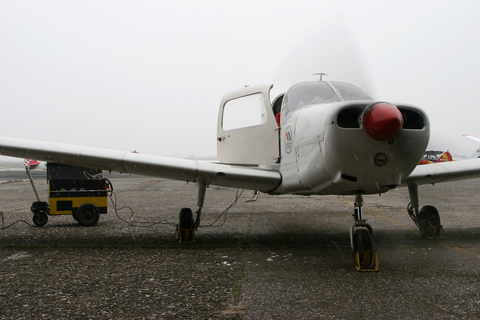
Thankfully it wasn't snowing... 9A-CCH waiting around for the avgas dripping from the cylinders to evaporate after two unsuccessful startup attempts. After pulling the prop through all four compression strokes twice to spread the oil around the cylinders, "pumping" the throttle and adding two primer strokes, the engine wouldn't start beyond an initial cough for love nor money. 7-8 further attempts and 20 minutes later, the engine finally came alive - but not before it was overprimed, leaking fuel through the cylinder valves...9A-DBU was far less of a hassle, seen here roaring at full throttle and giving itself a thorough shakedownPlugged into a Ground Power Unit supplying electrical power for startup (it's battery having been removed and discharged for protection while it was in the hangar), AK Zagreb's rarely-seen Piper Warrior is given a workout at the entrance to the hangar. Quite a loud experience standing there between three walls... 🙂With everything out in the snow, the hangar looked quite commodious :). 9A-DDA is seen (still) flooring it, while part of the "workforce" - that had been recruited for the task of pushing everything out - is just standing there, having dropped all attempts at meaningful conversation in all the noise
In another run through my database (lost count of them all 😀 ), I’ve seen I’ve got quite a few interesting shots from Pleso airport, our big bad international gateway (for our GA expectations anyway 🙂 ). Having often selflessly volunteered to fly there for fuel once our own station at Lučko closes for the day, I’ve had the chance to spend some quality time on the GA apron, snapping a few shots here and there while waiting for the bowser to trundle up. At other times I’ve taken my telephoto lens to the RWY 05 approach path, snapping a few landing photos before the police inevitably shoo me away :). So, while patiently waiting for something new, I’ve decided to compile a little collection of what can be seen operating in and out of our friendly little airport…
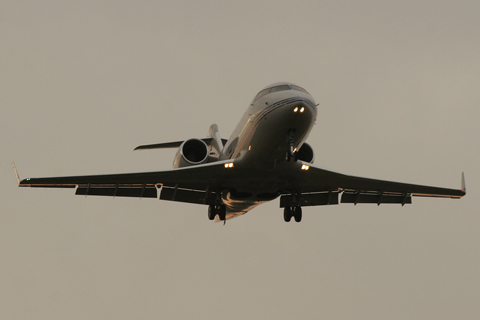
First up is 9A-CHC, a relative newbie to the Croatian register. A nowadays rather rare Cessna 501 Citation I/SP, it is operated by IVA-DOM Aviation, the country's first proper bizjet charter companyShot in some excellent light, 9A-CZG (formerly 9A-BZG) is a Piper PA-31T-500 Cheyenne I operated by Geo-Foto - a very well known local mapping company - in an aerial photography configurationSomewhat of a patriotic moment this as 9A-CRO, the presidential Canadair Challenger 604, glides in for landing on RWY 05My first Hawker 400! 🙂 CS-DMM, a 400XP, is operated by NetJets Europe out of PortugalAnother Cheyenne I, registered in Germany as D-IEMR, but operated privately in Croatia for a whileAnother new one for me here, what I believe is a Cessna 340, registered G-FEBE. Done quite a trip to get here...A prison view (almost! 🙂 ). Not a very good one at that, but my dad told me there was a Caravan at the airport - and I immediately rushed there to see it :D. Turns out it's the 1500th produced, N1276Y, here on an European tourAnd here's a very, very nice treat from Austria - a Piper PA-46-500TP Malibu Mirage (reg OE-KDM) on final for RWY 05The Swedes are bringing up the rear with an even rarer Citation than 9A-CHC, a non-single-pilot Citation 500 registered SE-DEGA view of the Pleso GA apron at night... and not even half full 🙂
As an afterthought, I’ve though I might add something a bit bigger as well :). Though most of the commercial traffic in and out of Pleso consists of boring Airbii, Boeings and Dash 8s, there are a few gems every now and then… big, smoky, Russian ones… 🙂
Lookie, twins! RA-76494 from Russia and UR-78786 from the Ukraine, both Ilyushin Il-76TDs, visiting Zagreb on a rare occasion. Shot with my old camera from the control tower 🙂One of the most graceful airliners ever built rocketing off RWY 23. Though still not all that uncommon, the Tupolev Tu-154 (M model here) is still a rare sight outside the former Eastern BlockNow this had really brightened that cold, windy March day - a very rare Ilyushin Il-86 charter on approach to RWY 05. The first true Soviet widebody, the Il-86 was produced in limited numbers, hampered all the way by a serious lack in power...
With the winter clampdown at the field proceeding as planned despite the unusually warm weather – leading to some serious photo-deprivation – I thought I’d dig through my database and cobble together a short post to keep this blog going until something new happens :). And noticing that they’re strangely under-represented in my previous posts, I’ve decided to concentrate a bit on helicopters.
Despite Lučko being somewhat of a hub for general aviation in this part of Croatia, we don’t often see many civil helicopters. Apart from one local Robinson R-44 – and the five-strong Police squadron – we don’t have much of a choice here, the limiting factor being fuel availability. A vast majority of civil-registered helicopters in the country are turbine-powered, and the lack of Jet A at Lučko (except for military and police use) means we’re not all that interesting :). Nevertheless, I’ve given it my best shot and this is what I’ve come up with…
1. Sud SE.3130 Alouette III, 9A-HAT:
First on the list is a very rare 1961. Alouette III, by far and away the oldest helicopter in Croatia. Operated by Eudora Let Vodice based at Zemunik airbase (LDZD) near Zadar, this fascinating whirlybird is a rare visitor to Lučko, having last been here almost two years ago. Unfortunately, it was damaged about a week ago, when a drunk police officer crashed his car through the Zemunik perimeter fence (a public road crosses one of the taxiways) and caused significant damage among the aircraft on the apron – including totaling AK Zadar‘s C172.
Wearing a simple, all-over army green scheme, HAT looks like something that came out of M*A*S*H 🙂Almost like being serviced out in the field in 'Nam... To conserve the helicopter's limited service life remaining, non essential trips to various airfields are flown on the back of a low trailer :). Assembly/disassembly is relatively quick and painless, as you only need to detach the main rotor blades and you're done
2. Bell 206B JetRanger II, 9A-HBC:
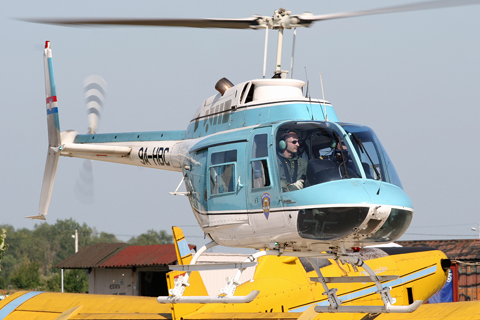
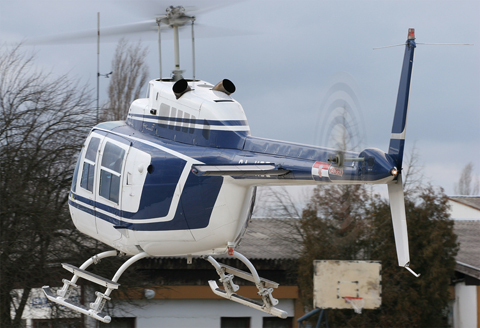
Second up is – what are the odds – the second oldest helicopter in the country, manufactured in 1973 :). A nowadays rather rare JetRanger II, 9A-HBC is operated by the Croatian Police, mostly used for training, personnel and liaison flights. One of my favorite helicopters here, it’s always a joy to catch it flying. It’s a very photogenic thing :).
Sporting a catchy 70s aquamarine scheme, HBC is seen sliding away from the Police helipad. Out back is the Ecos apron, as well as one of the now-sold Air Tractors previously featured herePlugged in and almost ready to fly after a prolonged period in the hangarHow not to get hit by a helicopter... While externally identical to the later JetRanger III, HBC is still somehow more interesting 🙂
3. Agusta-Bell AB.212, 9A-HBM:
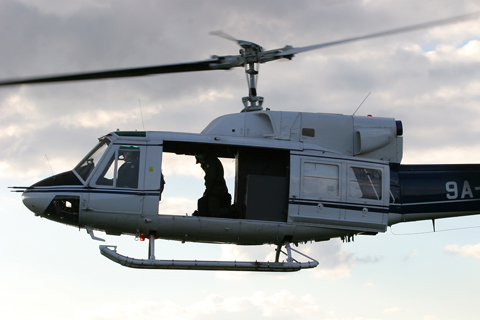
The “heavy” of the non-military helicopter world here, 9A-HBM is and remains the largest helicopter flying in the country, as well as one of only two twins. Produced by Agusta in Italy, HBM is also operated by the Police and is an active participant in SAR, EMS and firefighting missions down at the coast. The only helicopter with some hauling capacity, it is also used by special forces during rappelling missions.
Looking imposing on approach :). A big Huey, but still a Huey, its lines are instantly recognizableOff for some rappelling practice with the Alfas, the Police special unit team. The crew would lower two lines on either side of the helicopter, down which two men could descend at the same time (to maintain balance). In this photo, the Alfas are still not on board and would be picked up at the "drop zone" away from the main runway
4. Bell 206B-3 JetRanger III, 9A-HBZ and 9A-HDB:
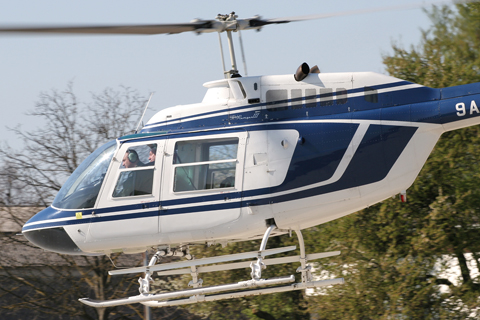
Representing the Police some more are 9A-HBZ and HDB, both JetRanger IIIs. Filling pretty much the same roles as HBC, they’re the most often seen Police helicopters, bearing the brunt of the squadron’s work.
HBZ approaching its pad in lighting I have been hoping for for ages :). Almost looks like there's no crew on boardDespite being cheap to operate (relatively), JetRangers are pretty much confined to transport, training and some utility roles. Lacking a second engine, they're not really suited for very much elseHBZ departing as aerial support and surveillance during a much-publicized local police action in March 2008HDB repositioning from Pleso during the afternoon. Before being finally supplied with their own bowser at Lučko, Police helicopters had to fly the 15 minutes to Pleso to refuelHigh speed low altitude departure after the fixed-wing traffic had quieted downHDB descending vertically down. I'm told that with a full load on a hot day this exercise isn't really fun in a JetRanger...
6. Robinson R-44, 9A-HDM and HWA:
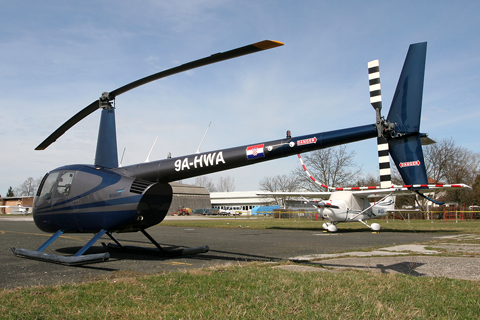
And to finish it all off, some piston power! 🙂 Alphabetically leading is our resident R-44 Clipper II owned by MD Heliko, these last few days happily flying aerial photography missions all afternoon. HWA, a Raven II, is a visitor from Varaždin owned by WinAir, a machine you’ve already had the chance to see in my CIAV airshow report :).
Pretty buttons and dials :). A closeup of HDM's clean and basic panel. Not visible here is a moving map GPS (I think a Bendix unit) mounted on top of the panelRevving up for a late-afternoon thermal imaging mission. Caught the rotor, caught the nav light, caught the crew... caught a cold in the downwash...Face to face on liftoff. The most produced helicopter of all time, the R-44 is becoming an increasingly common sight in Croatia. At one time there were three of them on the register, though one - 9A-HAS, Clipper - had been sold some time agoCaught on a rare visit to Lučko, parked next to HDM. Very nice paint scheme too 🙂Swooping in down RWY 28 for approach to the main apron :). Unlike fixedwings, helicopters normally approach the apron directly, as to avoid interfering with other traffic
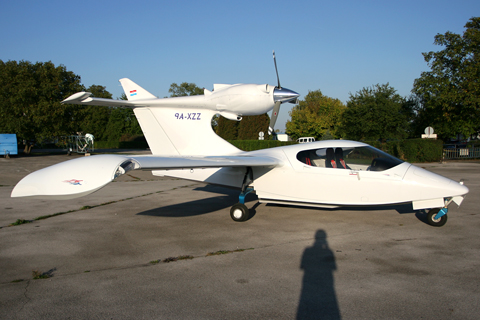
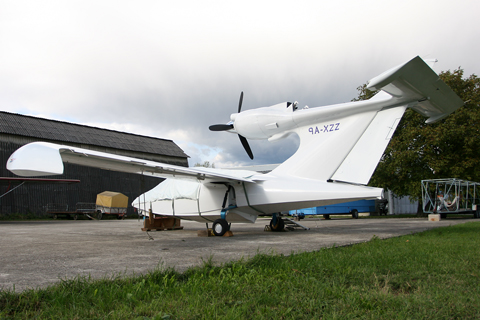
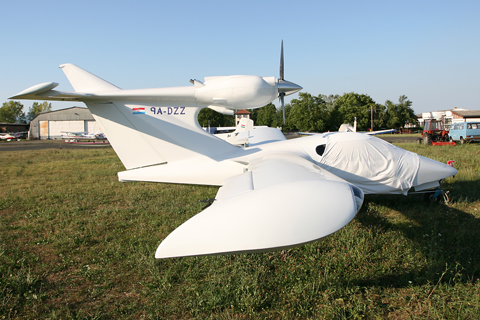
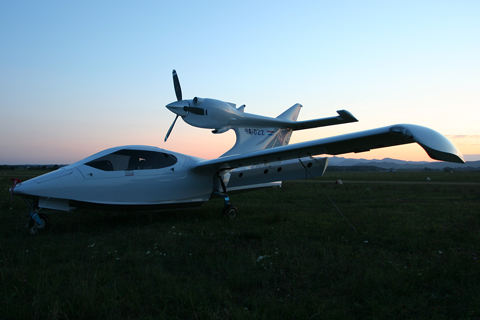
Seeing from my blog stats that the previously featured Seawind 3000 has been attracting a lot of interest (relatively), I’ve decided to put together another small gallery of more recent pictures :). Apart from adopting the experimental “X” registration prefix – a category that seems to appear and disappear on a regular basis – and undertaking a fast taxi run that didn’t end all that well (see captions below), it’s slowly but surely nearing first flight, albeit at a non-spectacular-photo pace :D.
Structurally complete and ready for some taxiing! 🙂 Now this looks more like it, complete with some color!A few days later however, I found it propped up and back under covers. It had transpired that the gear was significantly damaged during the fast taxi run (something or other with the hydraulics), but I was told the repair was relatively straightforward so we may see her move again soon 🙂Quite an oddly-shaped aircraft in profile view :). Try making this out of aluminium...Some night spotting for a change :). Still some way from completion at the time this photo was taken...
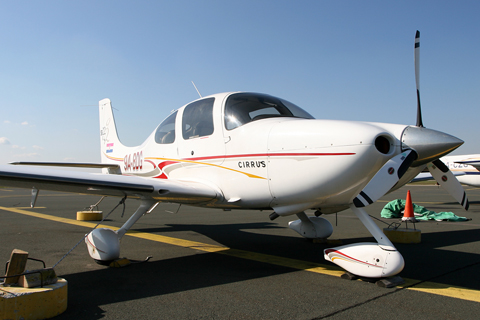
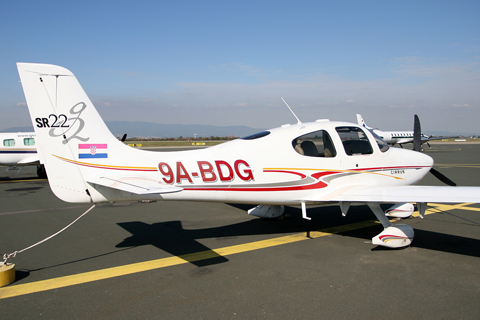
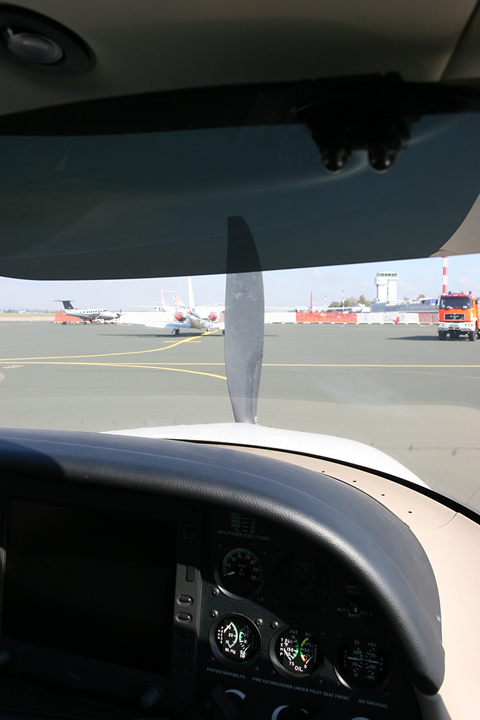
Arriving at the field a few days ago not expecting much to happen – just some quiet and calm flying around – I was pleasantly surprised when my flight instructor (who’d be flying with me for a checkup) informed me that instead of the usual dull circuits and maneuvers, we’d be heading to Zagreb Intl. to fire up a privately-owned Cirrus SR-22 that had been sitting on the ground for a spell and needed to be flown to Germany for maintenance. Having only been in a Cirrus once in my life – in a brand-new SR-22 G3 at the Paris Air Show – I was naturally through the roof, especially it being a beautiful and calm sunny day just begging for some camera work :).
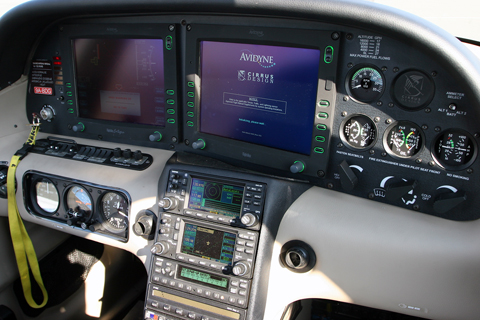
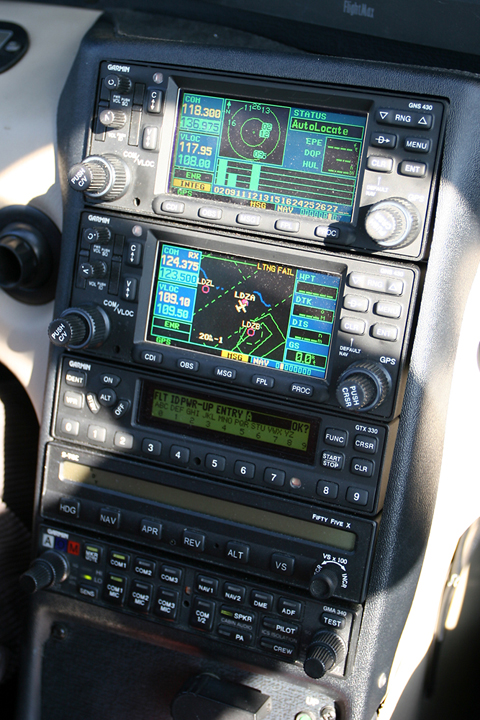
The aircraft in question is a SR-22 G2, registered 9A-BDG, bought new a couple of years ago (and had as such represented a quantum leap for Croatian general aviation :D). Our mission for the day was to fire it up and run the engine for about 10-15 minutes so it could “catch some air”. Not moving from the same spot, it gave us the opportunity to run through its excellent Avidyne Entegra FlightMax glass cockpit system – though, with the aircraft vibrating from the big six pack up front and me totally engrossed in the display, I didn’t take all that many photos…
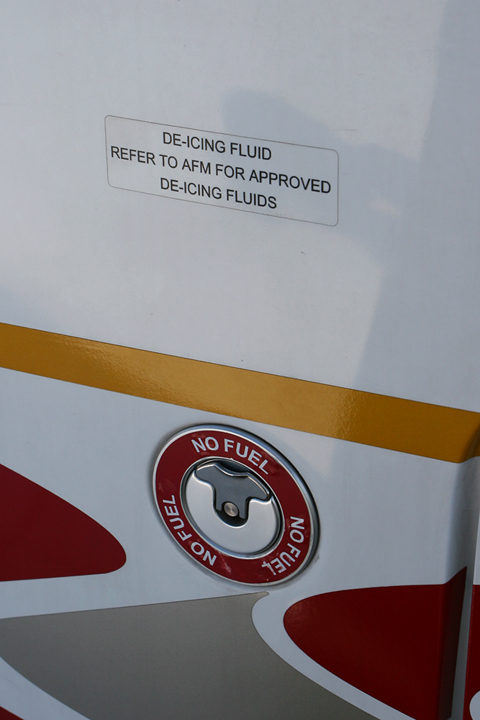
9A-BDG shining proudly in the mid-day sun. Though not as elegant as other similar aircraft - the Lancair ES comes to mind - the SR-22 is still a sight to look at. As you can see, the aircraft is lavishly equipped with deicing systems, including the state-of-the-art TKS fluid-based system on the wing and horizontal stab leading edgesRear quarterview. Completely fascinated by the Cirrus, I had completely failed to notice a much rarer Fairchild Metro in the background 😀The office :). There's a whole farm worth of cow in here :D. Unlike its follow-on, the G2 sports the Avidyne glass cockpit system, as opposed to the G1000-based Cirrus Perspective system on the G3. The sidesticks - which are also the trim controls - give the front seats a lot of roomWarming up the computer :). To feed all the electronics on board, the SR-22 has two alternators and two batteries, though as far as I've seen, Alternator No.2 comes online only at about 1500 RPM... presumably not to overburden the engine when it's running on idle. As you can also see, the G2 comes with a number of backups, including primary flight and complete engine instrumentsUnlike the G1000, the Entegra does not have comms and nav radios integrated into the system. Hence, two Garmin GNS 430 units provide the interface with the system, though which you can also load the flight plan to be followed using GPS. Below it is a juicy Garmin GTX 330 Mode S transponder, with an autopilot and audio selector panel situated belowAn artsy view of the PFD and MFD. Everything's in here - moving map, TCAS, strikefinder/stormscope, comprehensive engine information...A view from the passenger's seat. Firing up the engine for the first time in awhile, we had asked for a fire truck to keep watch nearby, should the 310 HP engine fail to cooperate...An interesting feature - the deicing system refuel valve :). The system has an autonomy of about 4 hours on the G2 I think (and 6 on the G3 if I'm not mistaken)
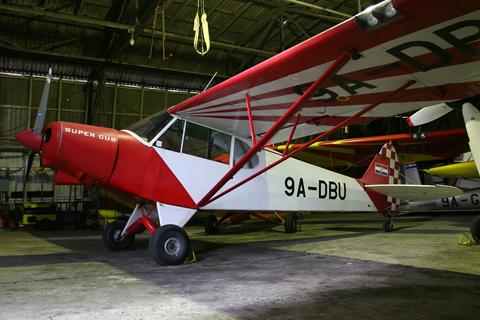
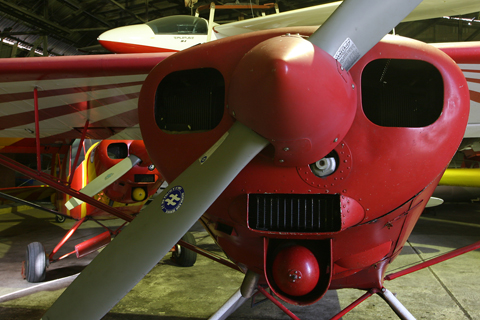
With a strong northern wind pinning everything down at the field for the past two days – and rapidly dropping temperatures killing any will to stand outside – I had decided to sniff though the hangar again in search of some inspiration :). And wouldn’t you know it – the Super Cub population had doubled! 😀 Normally parked outside the hangar – being a visitor while it’s base field of Buševec was undergoing some work – 9A-DBU, AK Velika Gorica’s towplane, took shelter alongside our resident 9A-DBS. So, with nothing better to photograph outside, here are the results!
Despite it still being light outside - plenty of it between the storm clouds - we had lit up the interior as well :). A stock Super Cub, 9A-DBU is one of a number of such aircraft bought and imported at pretty much the same time for towing dutiesFull of natural and sodium light, this family photo shows that Cubs love stripes :). Related by more than just their type, DBU and DBS are twins, coming off the line one after the other :). DBU is serialled 7809169, while DBS 7809170Another shot toward "The Crack" (no rude hidden meaning intended 😀 ), the gap between two hangar door sections. Being quite old - almost 70 years - the hangar is becoming a bit shabby...Lined up and ready to go!
Musing over the previous Mi-6 article today at the airfield, I suddenly remembered another very interesting derelict I had seen and photographed ages ago, one that could also be made into a good story. Oddly misplaced in the western districts of Zagreb – not a hundred meters away from one of the city’s main traffic arteries – but completely forgotten and ignored, it was instant Achtung Skyhawk material :).
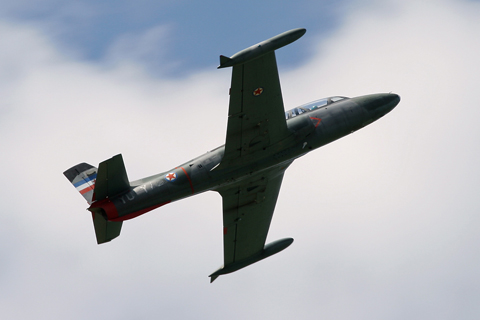
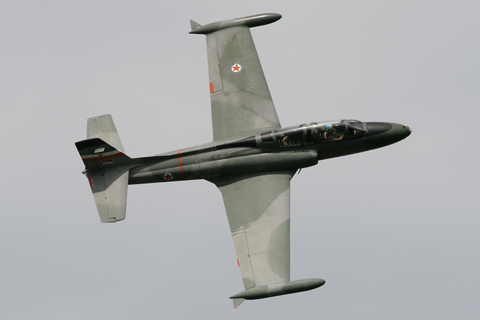
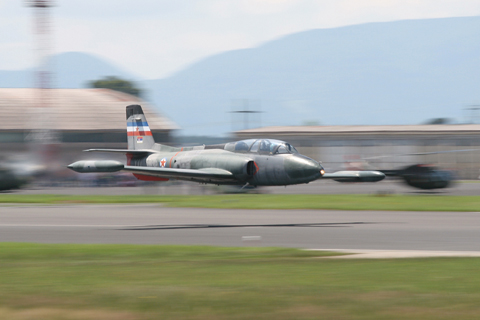
The aircraft in question is a Soko G-2 Galeb jet trainer, former Yugoslavia’s most successful jet aircraft – some would argue it’s most successful aircraft full stop. Produced by the Soko (“hawk”) plant in Mostar, Bosnia and Herzegovina, the Galeb (“seagull”) was conceived as a cheap, simple and robust primary jet trainer, easy and forgiving to fly, but still capable of pulling some serious maneuvers.
A familiar shape and sound in the skies of former Yugoslavia, the G-2 is one of the region's most distinctive aircraft
Outwardly similar to the well-known Aermacchi MB.326 – and the more obscure Chinese Shenyang JJ-1 prototype – the G-2 uses the tried-and-tested straight-wing tandem-seat configuration, powered by a single license-built Rolls-Royce Viper Mk.22 turbojet, rated at 11.12 kN dry. The sound airframe was usually equipped with one or more underwing hardpoints for training rounds, and was later developed into a dedicated single-seat ground attack variant, the J-1 Jastreb (“goshawk”).
Top view. Though not as elegant as many advanced trainers, the G-2 still has an eye-pleasing - and to many student pilots, comforting - design. It just looks right 🙂
The G-2 in its element, in the hands of an experienced pilot :). The big, straight, thick wings just scream excellent low-altitude handling... and down in the ground effect, I'm told the G-2 is a pleasure to fly
First flown in 1961., the G-2 has performance numbers typical for an aircraft of its class and period, with a maximum speed of around 810 km/h – 440 kts – at an altitude of 20,000 ft, a service ceiling of 39,000 ft and a 1240 km range with tip tanks (which were almost always carried). A tough little bird, the G-2 can do anything between +8 and -4 G and is a delight to fly in all flight regimes and at all speeds – a fact underlined by enthusiastic reviews of the USAF and French test pilots that flew it in the 70s and 80s.
As the main training aircraft of the former Jugoslovensko ratno vazduhoplovstvo (JRV, Yugoslav Air Force), G-2s were scattered around Yugoslavia in large numbers, in Croatia being mostly concentrated at Zemunik airbase near Zadar, then one of the JRV’s main training fields. However, with the breakup of Yugoslavia imminent at the beginning of the 90s, they were – like virtually all air force assets – recalled to Serbia. During the ensuing civil war, a number were then again captured by Croatian forces and pressed into service, though their combat histories – if any – remain obscured and ambiguous and vary depending on who you ask.
Be that as it may, today only one G-2 is known to have remained in service with the Croatian Air Force, coded 661 (a famous bird that), though how active it was during this time is also open to speculation. Today it serves pretty much as a showcase piece at air force events and can only rarely be seen by the general public.
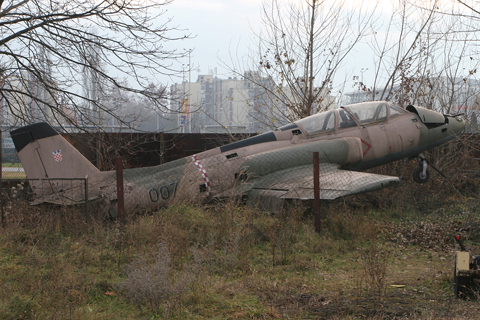
One would have thought “well that’s that then”. But in a turn that demonstrated that truth really is stranger than fiction, a friend of mine came across a near-mint example sitting unnoticed right in the middle of Zagreb’s busiest western district…
Abandoned and unnoticed, but perfectly visible from the road - and not a hundred meters away from the city's main east-west artery!
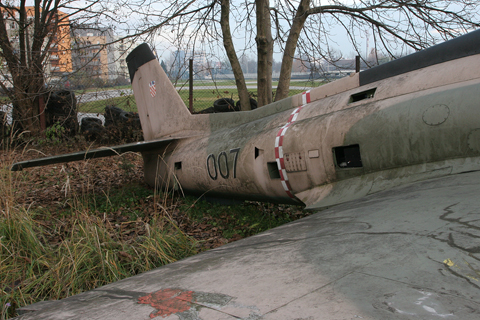
From what we could piece together, this G-2 was all that was left of some military barracks that were torn down more than a dozen years ago to make way for a new housing development (this was in 2008). Quite possibly a former gate guardian, now it was just dumped in the back of a local carting center across the road from the former barracks and left to the elements. Despite that, it was in surprisingly good shape, with only a couple of odd parts missing (on the outside at least).
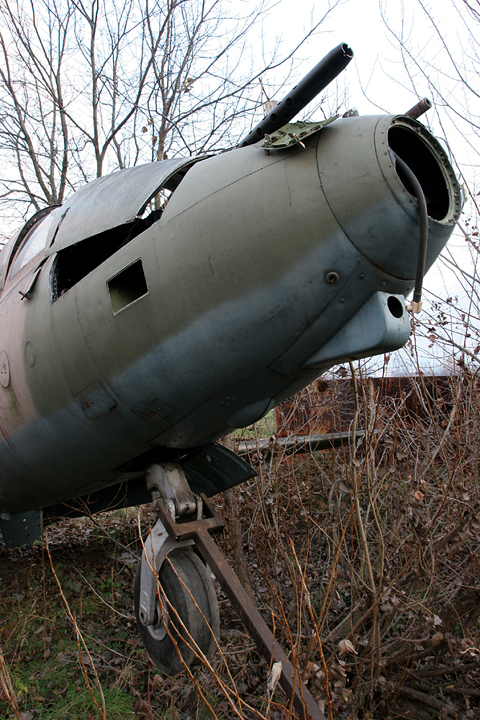
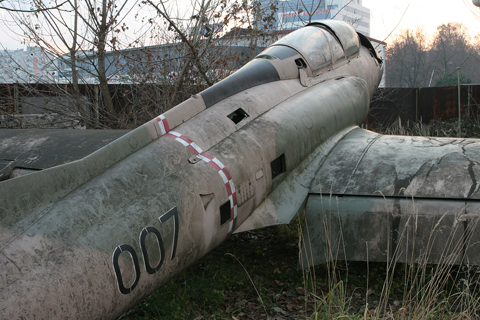
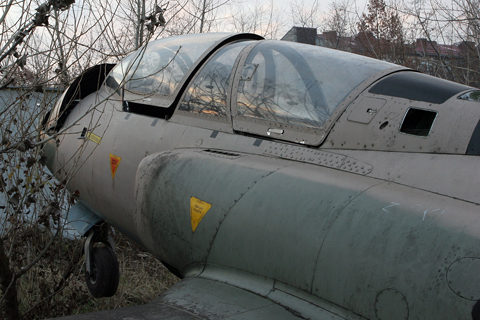
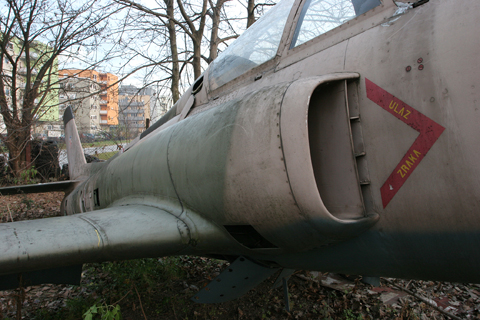
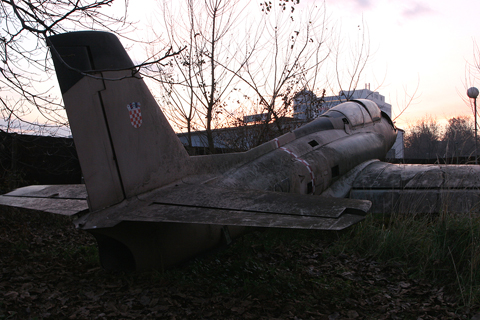
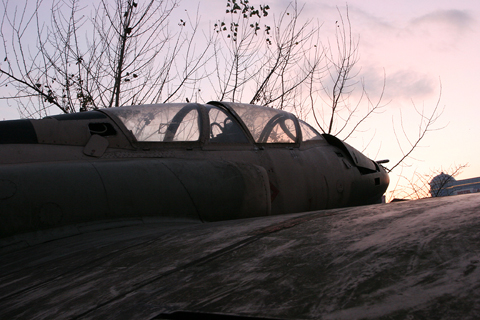
The first time I've seen a G-2 without tiptanks. Though they were detachable, they were almost always carried, providing an additional 170 kg of fuel eachThe code 007 suggest this might be a war veteran. Nowadays that code belongs to an UTVA-75 piston primary trainer (which was at the time of writing probably already withdrawn from service). An interesting tidbit is the checkered stripe running around the fuselage; like on most 50-60s designs, to remove/replace the engine, you'd first have to detach the whole rear fuselage. The joint between that removable section and the rest of the airframe is here - unusually - labeled by that stripeThough nothing heavy appears to have been removed from the front - except the cockpit instruments - 007 had tipped over at some point, probably with some assistance. The two .50 cal Brownings are still on, which suggests this aircraft was spared the usual vandalism and cannibalization. Later investigation - we were seriously toying with the idea of buying and restoring it - showed that 007 was actually privately owned, which would explain why it was relatively unscathedThough in serious need of a wash, the whole aircraft appeared to be structurally intact. Even the engine was still in the fuselage, though the tailpipe was damaged, probably when the aircraft tipped over. A couple of odd access panels were missing, but that would be an easy fix 🙂Up front, even the split canopy appeared to be in good shape - even the lock mechanism workedWith houses this close, one has to wonder how are people so oblivious to the things that go on around them... it's not like you have a jet trainer in front of every house 😀Like almost all such aircraft, the G-2 has two side-mounted air intakes. Being positioned relatively high up meant the G-2 could operate out of second-rate fields without a significant risk of FODNot easily identifiable is one permanent hardpoint outboard of the main landing gear. The large flaps - which could be lowered to more than 45 degrees if I remember correctly - permitted low approach speeds and made the G-2 a dream to land smoothlyA moody February afternoon sky is a perfect backdrop for 007One day she will reach for the skies again (poetic moment :D). The current owner has some plans to restore 007 to flying condition which - given that the G-2 was the aviation equivalent of the VW Beetle - shouldn't be too hard as far as spares and qualified technicians are concerned... as of 2009., 007 has been moved somewhere and rumor has it she's finally being worked on 🙂
By me All photos me too Cleaning, complaning and cursing me and Dean T.
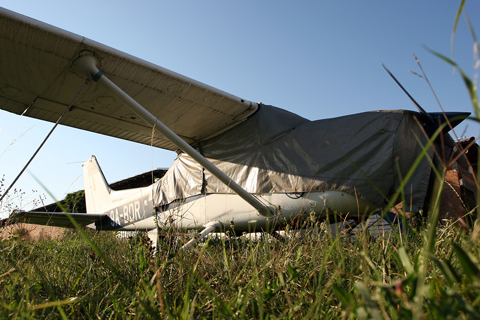
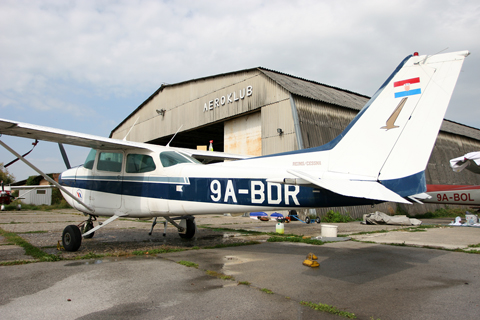
Deciding to be useful for once, I offered Dean T. – who’s always been my man for the job for access round Lučko – to come one day over the weekend and help out with the various odd jobs that inevitably pile up around the field. And sure enough, I had just arrived at 10 AM one Saturday when I saw him pulling an old, neglected Skyhawk out of the tall grass. An odd look and a couple of questions later, it had transpired that the aircraft – on the ground for the past 6+ years – was probably going up for sale and needed to be spruced up as much as possible…
Shot about two months earlier, 9A-BDR - a Reims F172M or N - was a forlorn sight, tucked away in the corner of the apron. With a Certificate of Airworthiness that had expired in 2003., this poor thing hadn't moved from this spot in ages
It was a warm and humid day and, in need of refreshment and fun, we threw ourselves into it. However, a quick survey of equipment showed our total inventory at just three sponges, some detergent and a special wiping cloth. Not much to go on, given the magnitude of the task…
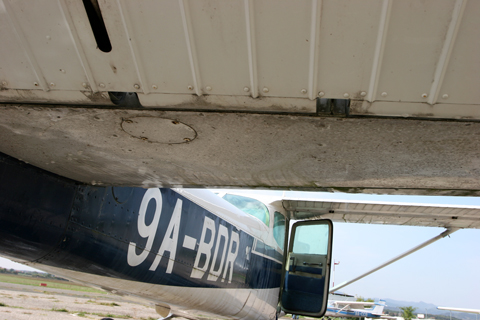
The typical BEFORE shot :). Rolled forward for the first time in years, the first thing on the list was to pump up the tires to make maneuvering on the ground easier. That didn't help much as apparently one of the brakes had locked onNext, we had to remove the covers... something we regretted a moment later. They apparently hadn't been lifted once in the past six years and in the heat all of the dust and dirt under them "baked" onto the fuselage. The wings - thankfully uncovered - were just plain dirty 🙂Exposed to the elements for as long as it was, we were surprised that this was the only paint peeling off
We were curiously optimistic about the task, as it soon transpired that much of the dirt on the wings and fuselage was quite easy to wipe off. A bit of an oddity really, but it made our life considerably easier :). The only problem was that we couldn’t get at all the tiny places and openings normally found around the controls – and lacking a high-pressure water source, we couldn’t even try and wash them out with by brute force…
Contrast; a definition :). While Dean started on the left wing, I got to grips with the cowl and soon got it glowingThe scale of the problem on top. In the long run the covers did more damage than the elements...Cleaning out the control surfaces. Despite appearances, everything down here came off easily in just one pass
The major constraint was that this was basically a cosmetic, outside makeover – which ruled out any possibility of opening a panel or two to check out the structure and control lines underneath. I has also wanted to crank the engine to give it some air and clean out the cylinders, but a quick yank on the prop – which had gone round surprisingly easy despite the magneto switch being off – scratched that as well. Upon further questioning and investigation, I had found out that, aside from a full oil tank, the engine had no alternator, starter, magnetos or battery. While we could have done without the alternator – and even the magnetos – we’d need the starter and battery (an external power supply wouldn’t have helped, as it has to go through the battery itself).
And, if the more eagle-eyed readers noticed, we had to change the position and orientation of the aircraft every once in awhile due to a very short water hose :). Having to manhandle it around the tail and landing gear, we though it simpler just to re-orient the whole aircraft.
A lunch break gave me an opportunity to peek inside while we let the upholstery breathe a bit. The panel was in a surprisingly good state, well equipped and with only the ADF radio and indicator missing. Though this is all academic, the instruments having certainly ran out of service life after having been neglected for six yearsGetting there bit by bit... 🙂 You can still see the remnants of the aircraft's old registration under the current one: YU-BDR. After the breakup of Yugoslavia back in 1991., all aircraft registered in Croatia were re-registered with the country's new prefix, 9A (with a temporary RC prefix in the meantime). On many aircraft this change was hastily done by simply painting the YU over and applying 9ANow this looks more like it :). Cleverly choosing a point of view that hid the paint damage, I could have been fooled into (briefly) thinking this aircraft was actually well maintained 🙂
And five hours, one pizza and two liters of coke later, we reckoned we’d done it! Though the faded paint job was a distraction, we felt it came out beautifully in the end – cleaner at any rate than some of aircraft that fly every day :). And by a twist of irony, half an hour later it was back in the same place it spent the past six years, still waiting for a buyer…









































 Achtung, Skyhawk!