In light of my recent run of law enforcement themes, for this next, short bit I’d decided to draft in the military as well and give their flying forces a bit of screen time too 🙂 . While the Croatian Air Force’s rotary units are featured here on occasion – operating, as they do, from Lučko – most of its fixed-wing assets are generally kept out of sight in the country’s two main air bases, one of which can be found tucked away behind the terminal of Pleso Airport (LDZA).
Even though the AF boasts a number of different airplane types – including the Air Tractor AT-802, Antonov An-32B, Pilatus PC-9 and the Zlin Z-242L – the most interesting of them all have always been the MiG-21s; old, worn and tired beasts that are still the elite of the entire force. The rock stars of the local aviation world, they don’t have much in the way of raw military capability – with all of them already in their late 30s – but their iconic looks, distinctive camouflage schemes and (not least of all) their deep, throaty roar never fail to excite the inner nine-year-old 🙂 . Put simply, they’re like the Rolling Stones: years of hard graft and abuse have taken their toll, and in purely technical terms they’re somewhat past their expiry date… but when you see and hear them in person, you’re as sold as you would have been when they were in their prime!
122 spooling up and preparing to light the reheat for a practice scramble. Along with its sister ship 116, 122 is part of the so-called QRA pair – short for Quick Reaction Alert – on permanent standby to take off within minutes and intercept any stray aircraft within Croatian airspace
However, while their evocative rumble on take-off can often be heard all the way to town, seeing them up close is quite a different story. While I personally do get the odd chance to enjoy them from the apron – as in the shot above – for many the only shot at a close approach is at the (almost) annual Open Day at Pleso, held this year on 13 December. While this may seem an odd date to host an open-air exhibition – with visitors having had to contend with 100 meter visibility, -5 degrees Centigrade and pervasive freezing fog – the event is traditionally tied to the anniversary of the formation of the Air Force, officially created on 12 December 1991 🙂 .
Undaunted though by the increasingly pessimistic forecasts from the airport met office – and eager to test out my new 24-105 lens 😀 – I decided to brave the cold and fog and see just what kind of shot I could pull off this year… 🙂
Weathered and tired – but still infinitely charismatic – 121 is seen quietly sitting around in the background of the official anniversary celebrations, held a day earlier on 12 December. Sadly, this is one of the last times we’ll be able to enjoy the good old camo scheme, with the fleet being progressively repainted into a customized NATO-standard air superiority grey pattern…Fading into white nothingness… while the weather did leave a lot to be desired, it did at least provide me with quite a symbolic shot for what was once Europe’s most widespread fighter. Operated throughout the East, the -21 is today clinging onto the Balkans for dear life, being still flown in front line service in Croatia, Bulgaria and Romania (and relegated to secondary duties in Serbia)Sad and forlorn – but still not forgotten – old 102 defies the fog at the head of the base’s small open-air museum. Named “Osvetnik Dubrovnika” (“Avenger of Dubrovnik”), this machine is actually a distinguished combat veteran, having defected – along with two other bis interceptors and alone recce R model – from the Yugoslav Air Force at the start of the 90s civil war. The three bises – including 101 and 103 (“Osvetnik Vukovara”) – would quickly go on to form the first proper fighter wing fielded by the Croatian Air Force; sadly, only 102 would survive till the end of the war, with the rest having been lost in action with their pilots in 1992 and 1993 respectively
Even though Eurocopter had ultimately emerged as the victor in the recent tender to re-equip the Croatian Police helicopter squadron – managing to dethrone Bell as the county’s de facto default helicopter supplier – I could not in all honesty complete this run of rotary themes without at least casually mentioning Bell’s losing entry 🙂 .
A brand that has been associated locally with law enforcement ever since the late 60s, Bell has sadly been autorotating steadily downwards for years now, devolving into an almost marginal manufacturer living off little more than its former glory. Indeed, even a casual look at the company’s recent production lineup was enough to reduce one to tears, being made up mostly of models my grandparents would have taken for granted 😀 . The civilian division is especially guilty, having become quite comfortable in its rut of periodic refreshes of models way past their prime. The 407GX, for example, is a warmed-over 407 from the mid 90s, itself a development of the LongRanger (still in production as well!), which was created by stretching a JetRanger II back in the 70s. The 412 doesn’t even need an introduction, its family tree sprouting all the way out of the original long-body UH-1D of 1961.
The company’s military arm lags little behind in terms of complacency, offering only the 407GT (a lightly armed 407GX), the OH-58D Kiowa Warrior (a more thoroughly militarized original 407), the UH-1Y Yankee (a shiny 412) and the AH-1Z Cobra, an upgrade of the first proper US attack helicopter.
One Bell, many whistles
When all was said and done then, up until a few years ago, the last all-new civilian helicopter to come out of the Bell works was the elegant 222 – debuting way back in 1976. The military division had fared somewhat better though, having managed to pull off the MV-22 Osprey in 1989 (despite what was a VERY difficult birth). But for the most part, Bell’s pre-2007 catalog was as refreshing and interesting as a week-old salad… *
* however, the rival Eurocopter can’t boast an all-new offering either 🙂 . The AS.350 Ecurueil is an Aerospatiale handover, like the AS.365 Dauphin and the veteran AS.332 Super Puma (their military versions included). The EC-145 had also started out in life as a late 70s design (the BK-117), as had the EC-135 (the on-off Bo-108) – while technically even the Tiger gunship predates the creation of the company (if only by a few years, having been jointly developed by Aerospatiale and Daimler Aerospace/MBB right before their merger into Eurocopter). The only “pure”, new designs on offer are the EC-120, EC-130 (and even that’s a stretch), EC-175 and the NH90, developed together with AgustaWestland. But, unlike Bell’s refreshes, virtually every Eurocopter upgrade is a significant leap forward in all aspects of the aircraft’s design – and not just a few bits of new tech shoehorned into an airframe that hasn’t changed much since its introduction.
In terms of sheer development speed though, even Eurocopter lags behind the aforementioned AgustaWestland – a company that seems to pop out a new model every lunch break, with the majority of its products developed on this side of the year 2000 🙂 (even though it, like Eurocopter, had a crop of existing Agusta and Westland helicopters to choose from at the time of its creation in 2000) .
Some – but not all – of this would change in 2007 with the first flight of the all-new 429 GlobalRanger 🙂 . Bell’s first civilian helicopter designed from the ground up since the old 222, the 429 at first glance doesn’t really suggest that the company’s engineers had fully woken up from their stupor just yet, bearing a startling visual similarity to the unloved (and commercially unsuccessful) 427 twin. The ultimate – if slightly forced – evolution of the JetRanger, the 427 is essentially a thoroughly updated version of the very rare 206LT TwinRanger, itself (as the designation suggests) a LongRanger with an extra engine. Heavy, yet underpowered, with a useless cabin configuration and severe asthma at altitude, the 427 had failed miserably in its quest to become the new standard in HEMS/utility machinery, eventually ending up making the most money (and not much at that) on the private marked (with one example even having made it to Croatia as 9A-HTI 🙂 ).
One of the more pleasing shapes of the light helicopter world (and one of the few things that actually worked on the 427). While it is generally similar to the 429, there are a number of obvious clues that set them apart – notably the 429’s clamshell loading doors under the tail, a first for any Bell design.
Still sore from this debacle, Bell’s engineering teams had finally put their heads together and decided to go all out, no-holds-barred with the new GlobalRanger – agreeing also to future-proof it as much as possible along the way in order to avoid any hassles when they (inevitably) decide to recycle it later on 😀 . To this end, the 429 was conceived around a modular construction concept – called the Multiple Affordable Product Line, or MAPL – in which the design would essentially be made up of three sections (front, fuselage and tail) that could then later be scaled up or down to quickly and cheaply produce new helicopters of different sizes and roles.
However, therein lay the 429’s first stumbling block – a block that continues to haunt it to this day. Being the module that holds the whole helicopter together, the fuselage section would naturally be subjected to the greatest loads in flight, requiring it to be made the toughest and strongest. Now, this wouldn’t be much of an issue if the design would later only be scaled down; the fuselage section could then be designed to fit the 429, with any smaller helicopter – with a lighter nose and tail – benefiting from additional robustness and crash protection.
The original intent though was that the design could also be scaled up, which required the fuselage to be capable of withstanding the greater loads imposed by the new machine’s increased weight. Consequently, the GlobalRanger had ended up with a thoroughly over-engineered fuselage for its size, a fuselage that had added considerably to its (already not insignificant) empty weight.
From a purely engineering standpoint however, this was still not the end of the world – you could simply bolt on more powerful engines and off you went 🙂 . Yes, the resulting machine would burn more fuel and be more expensive to operate, but the added structural strength would (as in the case of a scaled-down machine) make it considerably safer and more durable* – traits particularly useful in the world of HEMS, often noted for its appalling safety record and the need to operate at high loads in almost any weather.
* the fixed-wing world provides ample proof to back this up, especially in the form of the superlative DC-9 🙂 . A singularly tough old bird, the Diesel-9’s longevity needs no special mention, with numerous examples still flying scheduled commercial services all over the world. The legendary Dakota – as well as Bell’s own untearable Huey – also leave little room for doubt.
But, while all of this sounds perfectly reasonable here, in the real world it’s not nearly as straightforward – especially when aviation regulators become involved 😀 . As designed, the GlobalRanger was intended to be certified to FAR Part 27 standards, which specify a maximum take-off mass of 3180 kg/7110 lbs. But, the extra bulk of the one-size-fits-all fuselage had kicked the 429’s empty mass up to 2012 kg/4455 lbs, leaving just 1159 kg/2555 lbs left over for the fuel, crew and whatever/whoever would be crammed into the back. While this too doesn’t sound like a show-stopper, this payload is a whopping 640 kg/1411 lbs (or roughly 45%) lower than that of the design’s main rival – the EC-145 – which was from the outset certified against the much more demanding FAR Part 29, allowing it a higher maximum take-off mass (all the while being 228 kg/503 lbs lighter while empty).
However, the very FAR that taketh had also offered Bell some hope of reprieve 🙂 . Among its myriad stipulations is a paragraph that gives individual Civil Aviation Agencies free hand in approving a 227 kg/502 lbs increase in MTOM within their jurisdictions, bringing the 429’s payload deficit down to a more agreeable 413 kg/911 lbs. Creating thus the 429IGW (Increased Gross Weight), this approval was duly granted by the CAAs of Canada, Brazil and China – but, surprisingly, not by the FAA, denying Bell a competitive place on its traditionally most important market…
While it can then be conclusively stated that MAPL had backfired straight into Bell’s face (leading to its swift abandonment even though it was now forever integrated into the GlobalRanger), other innovations intended to give the design the edge had met with more success 🙂 . One of these is what could best be described as a “brand-neutral” cockpit (officially called the BasiX Pro), in which Bell – and not the manufacturer of the actual equipment – is responsible for systems integration. In simple terms, in a “traditional” cockpit, the aircraft maker selects one avionics manufacturer and then commissions it to put together the entire avionics fit AND then get it to work seamlessly on the actual aircraft. This was always a laborious and time-consuming job – since the avionics maker has to tailor its setup to the specifics of the aircraft and its systems – whose sheer costs and complexities generally perclude it from being repeated with a second avionics brand.
What the BasiX Pro did was leave all that integration to Bell – meaning Bell’s own engineers would now have to do the hard work of connecting the electronic dots 🙂 . The upshot is that each buyer can now request an avionics setup from a different manufacturer, as opposed to just deciding between predefined options from only one maker. For example, one buyer might want a system built entirely out of Garmin blocks, while another might be more partial to Bendix-King; previously one of them would have to choose, but now both can have their cake and eat it 🙂 . The downside though is that this had ended up consuming FAR more time and resources (financial included) than Bell had anticipated, adding yet another item to the list of things the company will not attempt again in the near future 😀 .
But, by far the most successful (and painless!) innovation of them all was the implementation of the advanced MSG-3 maintenance standard, itself short for Maintenance Steering Group 3 and a first for any helicopter to ever go into series production 🙂 . In a traditional maintenance system, the useful life of an aircraft component is defined by a fixed time period known as the Time Between Overhauls – TBO – expressed either in terms of flight hours flown (more common) or “regular” months and years (for components that wear out regardless of the actual “airtime”). The default measure that has been used for ages, TBOs are however often quite conservative and rigid (in the interests of safety) and may not be at all representative of the actual state of the component. For example, a bearing that has a 1000-hour TBO might break in half after just 700 flight hours – but it may also continue to work all the way till 1500 with no issues whatsoever*.
* a real-world example is the engine on the Skyhawk I currently fly. It’s nominal TBO is 2000 flight hours, a pretty standard figure for that type of engine – and a figure that has been shown though experience to usually be on the money 🙂 . However, as 2000 had ticked over on the totalizer, the engine was still as tight as a nut, with all of its parameters showing near-perfect scores. Clearly it could keep going well beyond its TBO with no ill effects – a fact that had enabled us to get a one-time 200 hour extension to the servicing interval, bringing it up to 2200 🙂 . And, 76 and a bit hours into that extension, the engine is still happily droning away.
MSG-3 gets around this issue by introducing specific monitoring procedures for each major component, giving the user unparalleled ability to see and track the ACTUAL state of the aircraft – and not just rely on a predetermined number. The advantage is that if the user notices a component has the potential for weakening before its TBO, he/she can replace it in due time before it starts making trouble. Another benefit is that if the user determines a component is holding its own better than the manufacturer said it would – like the engine in “my” Skyhawk – he/she can retain it in use beyond its normal TBO, reducing expensive replacements and loss of productivity due to aircraft down time (for reference, the overhaul of the O-320 on the N model Skyhawk takes up to two months and drains EUR 20,000 out of your pocket – almost HALF the value of the entire aircraft). Naturally, if the component can be kept going beyond what the papers say, MSG-3 specifies frequent checks and performance tracking more rigorous than a nun in a convent 😀 *.
* actually, the greater, overarching point of MSG-3 is the creation of a revised global maintenance standard, a standard rooted not in theoretical approximations or lab tests, but in actual data collected from real-world operations in real-world conditions.
CroatianRanger
Having finally shook itself out of its sedentary lifestyle, Bell was naturally quite keen to show the 429 off to potential customers from around the globe 🙂 . Somewhere on what would later turn out to be quite a long list was the Croatian Police, at the time still shopping around for something to use once the EU hands it the baton of protecting its borders.
The first of what would be the GlobalRanger’s two visits to Croatia would come in December of 2011, when N10984 – the type’s third prototype – stopped briefly in Zagreb on a promotional tour of the region…
A well traveled bird this… a casual search of the Airliners.net database had shown it had already visited Dubai, Hungary, Australia and Singapore before arriving at LDZL – and would later also pop into Japan, the Czech Republic, Israel, Italy, Belgium, the UK and Switzerland…Taking off for another promo flight (soon it would be my turn as well). As presented, N10984 was sporting a standard passenger interior – seating six in the cabin – and a mixed Garmin/Rogerson Kratos avionics fit.
Once N10984 had moved on – with photo evidence placing it at Nagoya, Japan barely two weeks later – we would have to wait a further 11 months for the type to return to the field, this time in the shape of the earlier second prototype. In town specifically to be presented to the Police and Mountain Rescue Service in great detail, C-FTNB had arrived fitted out with a full HEMS interior, including an appropriate – but hardly exciting – white-blue scheme 🙂 .
Fully set up to be looked over in the warm and dry police hangar. Note also the rear clamshell doors, a first for any Bell design (as previously mentioned). Unlike the models used on Eurocopters, the 429’s doors open upwards to lie flush with the fuselage, making loading and unloading much easier and safer (especially in high-stress HEMS situations).Neither rain, nor wind, nor low cloudbase… with outside conditions typical of those HEMS machines have to endure, the crew of C-FTNB were more than happy to provide a couple of free demo rides for the press.
As could have been expected by my regular readers, all that recent Police Eurocopter business had quickly sent me roving through my photo database in search of more (somewhat) related material to post 😀 . The train of thought that had derailed me this time was the sudden realization that 9A-HBB represents only the fifth Eurocopter ever to be registered in Croatia – quite the anomaly given the country’s proximity to the European heartlands and traditionally strong ties with one of Eurocopter’s biggest (and most forceful) players, Germany.
The primary reason for this discrepancy – a small, but nevertheless painful thorn in the side of the EU’s aviation industry – was the country’s long-standing “marriage” with Bell Helicopters, a relationship Croatia has entertained in one way or another ever since the earliest days of rotary aviation in Yugoslavia. While its strong socialist orientation would have immediately suggested that any flying machinery would, by default, be sourced from the Eastern Block, Yugoslavia’s geographic position – not to mention Tito’s near-violent split with Stalin and the subsequent drift into the non-aligned sphere – had made it a prime target for some economic wooing by the West 🙂 . Aviation was always pretty high on the bargaining list, which had translated into unprecedented liberty in buying Western hardware. The national airline JAT, for example, had throughout its lifetime operated an all-Western fleet (707, 727, 737, DC-9, DC-10, Caravelle, Convair 340/440, ATR-42/72), while the country’s flying clubs were awash with Cessnas bought in huge batches from the company’s dealership in Belgium (many of these are still flying today, with myself having logged time on at least half a dozen of them). The Yugoslav Air Force had too started out* with Spitfires, P-47s, Dakotas, T-33s, Sabres and Thunderjets, as well as a number of indigenous designs built using Western components produced locally under license (most notably the Armstrong Siddeley/Rolls-Royce Viper turbojet) 🙂 .
* while its beginnings were indeed rooted deep in Western hardware (with a few Eastern types inherited from the Partisans), the YuAF would eventually switch to mostly Soviet machinery when relations between the USSR and Yugoslavia thawed in the years following Stalin’s death. While the home-grown G-2 Galeb and G-4 Super Galeb (seagull), J-1 Jastreb (goshawk) and J-22 Orao (eagle) would continue to legally use the Viper engine and select Western components, the bulk of the Air Force would switch to types such as the MiG-21, MiG-29, An-26 and Mi-8.
Interestingly though, throughout all of this, Yugoslavia’s procurement delegations had always shown a clear preference for aircraft designed in the US but – if at all possible – actually produced somewhere in Europe. Consequently, Reims-built 150s, 172s and 182s had become de rigeur, with “original” Cessnas generally chosen only if the sought-after model (or its quantity) was not available in France 🙂 .
This trend was perhaps even more evident in the sizable police and military helicopter fleets. One of the types that will forever be associated with the latter (even though it’s an original European design) is the superlative Sud Gazelle, originally sourced direct from France, but later produced in large numbers at the Soko plant in Mostar, Bosnia and Herzegovina (where it became known as the Soko SA-341/342 Partizan) 🙂 . Soko production would eventually reach such heights that their Gazelles can still be found across the width and breadth of ex-Yugoslavia (and, interestingly, Hungary), with a few having even made it overseas into the UK! Similarly, the military had also briefly flown a handful of Sikorsky piston designs, procured – as expected – from Westland.
The civil government though had gone completely Italian-American, turning to Agusta and its license-built Bells (and whistles) for virtually all its rotary needs. Having been the world’s dominant helicopter maker at the time of Yugoslavia’s rotary expansion in the late 60s – back when Eurocopter’s parents hadn’t even met yet 😀 – Bell was the natural choice, and would continue to furnish the police force all the way into the late 80s. Throughout this period, it would shift a total of 64 helicopters this way – nothing to sneeze at in a country with a peak population of just 23 million! – including 32 JetRangers and a remaining mix of LongRangers, 47s, 212s, 412s and the odd 222. Spread across bases throughout the country, many of these machines would greet the dissolution of Yugoslavia on station, eventually becoming absorbed into the nascent police forces of whichever successor state they were in at the moment. In Croatia’s case, this fleet would include a lone 212 (9A-HBM) and four JetRangers (HBC, HBZ, HCG, HDM) – all of which are still happily flying today, save for HCG which was written off in an accident in the early 2000s.
Welcome to (what used to be) Bell Country! Pictured almost a year before the arrival of the first EC-135s, this is the fleet that had staunchly served the Croatian Police for 22 long years… (a number made even more impressive by the fact that all of these machines are 1978-79 vintage – save for HBC in the back, which had rolled off the line in 1972 – and had been in law enforcement service ever since)
Having thus accumulated almost 20 years of operational experience with 206s and 212s as the late 90s dawned, Croatia was now well and truly deep in Bell territory – so when the Air Force expressed a desire for a light training helicopter, Bell already had its foot very firmly in the door 🙂 *.
* the military helicopter forces had however followed a different “career path” to that of the government fleet. At the time of Yugoslavia’s disintegration, the bulk of the YuAF was composed of the aforementioned Gazelles – filling the light attack and training roles – and heavier Mil Mi-8s performing the day-to-day haulage. With war imminent, the YuAF had withdrawn the lot of its assets back to Serbia, leaving what would become the Croatian AF without any machinery (save for an ex-Police Bell 47 that was plucked from Zagreb’s Technical Museum, restored and sent to the front on MEDEVAC and CASEVAC duties). However, while the helicopters themselves were gone, the people and experience had remained, so it was decided to acquire a fresh batch of Mi-8s, since they were cheap and could be pressed into service the quickest (the first example was, in fact, captured). With the haulers sorted – and the war over – the AF now needed a helicopter to mimic the Gazelle, a role that was eventually fulfilled by – surprise, surprise – a fleet of 10 JetRanger IIIs 🙂 (the CroAF had also operated a small fleet of Mi-24V gunships during the war, but these were retired in the early 2000s due to the prohibitive costs of maintaining them operational).
With the state’s needs and desires now finally sorted out, the newbie Eurocopter – first appearing as a functioning unit only a few years prior in 1992 – was left with no room in which to flex its new-found corporate muscle. Even though it commanded the impressive might of Aerospatiale (itself the successor of Sud) and Daimler-Benz Aerospace (which had absorbed Messerschmitt-Bölkow-Blohm – MBB for short – in 1989), the harsh reality of post-war economics had also denied it any hope of breaching the nascent civilian market, leaving it out in the cold for the remainder of the 20th century 🙂 .
Eurocopters to the rescue?
The brand’s first breakthrough into the Croatian market would come only in 2005 – and then just as a meager two-ship “assault” that faltered and failed barely four years in (though through no fault of Eurocopter itself). At the time, civilian HEMS duties were still being performed exclusively by the CroAF’s increasingly rickety Mi-8 fleet, a fleet composed primarily of machines that had seen their fair share of action during the war. After a few safety scares, it was decided in the corridors of power – with the helpful assistance of the JAA 😀 – that HEMS operations should in future be handed over to a dedicated (and private) civilian operator, flying proper, modern equipment intended outright for the job.
However, while this was all fine and well on paper, in the real world things were somewhat more complicated. While the government’s intention to the above was duly published through official channels – and consequently widely reported in the press – it had still remained just an intent and not a concrete call to action. That needed to take the form of a standard public tender, at which various private operators could submit their bids for the role and then proceed to beat each other senseless with various cost-benefit analyses 🙂 .
The catch, however, was that at the time there was only ONE private helicopter operator in the country, flying a lone 1963 Sud Alouette II (9A-HAT) on leisure and pleasure flights up and down the Adriatic coast – and rumored to not even be interested in the whole HEMS issue. Sensing a very lucrative niche just waiting to be fulfilled – a niche perilously open to well-heeled and established operators from beyond the border – a group of local businessmen soon founded the company Helikopterska kompanija in anticipation of the actual tender (a company that would quickly become known under the cute and easily-pronounced acronym HIKO – despite, or perhaps because of, “hik” being a Croatian onomatopoeic word for an alcohol-induced hiccup 😀 ).
To be able to actually perform the duties the tender was expected to require, the company had immediately acquired two helicopters, later to become famous in song and story as the first Eurocopters on the Croatian register 🙂 . Unsurprisingly, the company went for versions of the tried-and-tested BK-117/EC-145 – still Europe’s default standard in HEMS operations – including a stock EC-145 (registered 9A-HKA) and a BK-117C-1 (registered 9A-HKB)*.
* however, while it does say “Eurocopter” on the tin, the BK-117 is not the consortium’s original design. Tracing its roots back to the late 70s, the 117 had actually come about through cooperation between MBB and Kawasaki of Japan – a cooperation that predated the creation of Eurocopter by almost 15 years. A huge commercial success (especially in offshore and medical circles), the BK-117 was still rolling off the production lines when Eurocopter was born, eventually being absorbed into its product offering. Progressively updated, the design reached its apex with the C-1 version, which would soon – with a few technological, structural and visual tweaks – morph into the EC-145 🙂 (sometimes also dubbed BK-117C-2). So, even though its base design predates Eurocopter, HKB itself does not, warranting its inclusion into this list.
Quite the contrast as HKA and HAT share a fine winter day at Lučko. Sporting the company’s distinctive paint scheme, HKA was kitted out with a full HEMS interior, as opposed to the more spartan HKBThe fleet lounging around at Lučko. Even from this angle, subtle visual cues that differentiate the BK-117 from the EC-145 can easily be spotted
At this point through, the story turned overall Croatian 🙂 (for lack of a suitably descriptive word). Having never experienced smooth sailing in all their time here, both of these machines would spend the subsequent four years leaping from one scandal into another, starting with HIKO’s PR deception about their true ages and histories. Always billed to the public as a 2004 machine, HKB was eventually disclosed to be a 1999 model and – more worryingly – to have been involved in a flying accident in Italy in 2000 that had required it to be virtually rebuilt from the skids up. HKA was not spared either, for it was argued that it too was not the 2005 version it was posing to be, but an earlier 2004 model that had initially served as a FADEC testbed before reverting to the regular EC-145 standard (FADEC would eventually be implemented on the EC-145T-2). While the allegations against HKB would eventually prove to be correct, HKA’s past was never fully and conclusively resolved – especially since the state’s official register had it listed as manufactured in 2005 with no previous registrations to its name (unlike HKB).
The second kick into HIKO’s shin came all the way from Russia (and without any love whatsoever 🙂 ). Faced with the accelerating decay of its Mi-8 fleet – decay that had led directly to the HEMS tender – the Croatian AF had spent the better part of the mid 2000s looking (increasingly frantically) for a replacement type. However, while the intent was there, the funds were not, no matter how hard the government tried to scrape something together (likely much to Eurocopter’s continuing disappointment).
Salvation though was quickly at hand once Russia agreed (quite readily it must be said) to shift some brand new helicopters our way as repayment of its long-standing debt to Croatia. A concept that still tends to amuse the locals – a lion (admittedly with few teeth left) owing money to a mouse 😀 – this debt stems all the way to the heyday of commodity exchange between the USSR and Yugoslavia back in the 70s and 80s. Despite both countries having disappeared almost simultaneously in the early 90s, the debt had remained on the books, to be later passed onto Russia at one end and Yugoslavia’s successor states on the other.
Sixteen and a bit years later, the CroAF was gleefully rubbing its hands together as the first two of the ten brand new Mi-171s ordered touched down at Pleso Airbase… 🙂
Pomp and Circumstance (sort of) as H-220 and H-221 approach the apron for the first time on this suitably dreary and grey day. Still smelling of newness and loaded with a host of options, these machines would quickly become the new backbone of the fleet, relegating the legacy 8s to secondary roles. As evident, they also have the capability to carry and use unguided rocket packs, allowing them to stand in (at least in theory) for the decommissioned Mi-24 fleet
While this would have been quite the occasion under any other circumstances, this acquisition had there and then resolutely sounded the death knoll for HIKO’s HEMS ambitions. Reinvigorated and back on strength – sporting the newest aircraft in the country – the CroAF was now poised and set to resume its former place as the country’s default HEMS provider. Convinced by this show of force, its operating economics – and not least of all by the lack of bidders save for the lackluster HIKO – the government quickly cancelled and shelved the civilian HEMS contract, leaving HIKO up the paddle and without a creek.
With the final nail in the company’s coffin firmly in place, HKA and HKB would spend the next few years flying various odd jobs, struggling to survive until inevitability finally caught up with them. HKA was eventually struck off the register in 2009, becoming D-HDPP of the HSD Luftrettung, while HKB joined Flymed as D-HAOE in 2010…
The meat of the discussion
Even though HIKO’s demise would severely dent its already weak presence on the Croatian market, all was still not black for the Eurocopter brand as the end of the 2000s dawned 🙂 . With the economy beavering away better than ever, the country started to see a sharp increase in the ownership of private aircraft, spanning everything from the humble Skyhawk to the odd Citation. With plains to the east, mountains to the west, islands to the south – and airfields few and far in between wherever you look 🙂 – a significant proportion of these were always going to be light helicopters, a class particularly popular among the country’s few well-off agricultural industrialists, owning large swaths of farmland in often difficult to reach places.
Among them was also the heir of a locally-famous meat delicatessen empire – producing some of the country’s best-known salami and sausages – who in 2009 acquired a mint EC-130B-4 straight from the factory, later to become 9A-HEG. Representing only the second non-US turbine single in the country – 9A-HAT rears its rotorhead again 🙂 – HEG was a frequent visitor at various local air shows, on occasion always being piloted by a former Mi-8 commander who was never shy to put it through its paces.
Putting on a swell performance at the 2009 Croatian International Airshow Varaždin. Weighing in at just 2430 kg – but being lifted by an 850 HP Arriel 2B1 and whirled around by a Fenestron tail rotor – the 130’s performance never fails to invoke images of the legendary Gazelle…A Sud invention, the Fenestron tail rotor has pretty much become the defining characteristic of most Eurocopter designs. Heavier and more complicated than a conventional tail rotor, the Fenestron is also noticeably quieter, while its much higher mass flow does wonders for maneuverability (especially in tight spots)
However, while they are operationally conductive to conditions in Croatia, privately-used helicopters almost invariably fail the acid, corrosive test of outright economic efficiency. While they do allow for unprecedented and easy access to the various out-of-the-way places scattered across the land (of which there are a lot!), their sheer thirst, high maintenance costs and legal hassles associated with off-field operations all conspire to turn financing them into an absolute nightmare. With one notable exception – another industrialist who has successfully been sustaining his own helicopter (initially a Bell 407, nowadays a 427) for years – almost all examples acquired solely for private use became notoriously short-lived. Such was the case with HEG as well, which in 2012 bade farewell to Croatia to become OO-EVL out of Belgium.
I, EU, he, she…
Somewhat unsurprisingly, Eurocopter’s fortunes began to pick up once again with Croatia’s ascension into the EU back in July 2013. Now the proud owners of the EU’s second-longest single border with non-EU lands – standing at 1198 km/745 miles, just 115 km/71 miles short of Finland’s border with Russia – Croatia has by default been given the task of reducing the porosity of this expanse as much as possible in preparation for the eventual implementation of the Schengen Agreement. While still operational and holding its own, the existing Bell fleet was – quite correctly – deemed unfit to cope with the task (through lack of numbers alone), leading to the EU-brokered acquisition of our famous pair of EC-135s 🙂 (but, as if to underscore Croatia’s long relationship with Bell one last time, the 429 GlobalRanger had also made it into the running). The only ones actually ordered at the time, these machines are said to be part of a batch of seven examples that will be progressively introduced into service by 2015 (the earliest date Croatia would be eligible for joining the Schengen Area).
Well, as an old Croatian saying goes, “he who is patient will be saved”… 😀
A family reunion during the official handover ceremony. With their arrival, the Police fleet is now “three all” between twins and singles, through it is likely that the twins – being fully IFR and night ready both on paper an in actual capability – will likely get more air time in the future…
Hot on the tail rotor of my previous post come yet more Eurocopter news from the Croatian Police 🙂 . Not two weeks after 9A-HBA – the service’s first EC-135 – had started active duty has a second example joined the fleet. Christened 9A-HBB, this machine is also an EC-135P-2+, and sports pretty much the same family tree as its predecessor: manufactured in 2008 for Spain’s Guardia Civil (and coded HU.26-14), but never taken up and instead placed in long-term storage until being sold to Croatia late this year. Like HBA, it was also delivered with flight hours in the low dozens – and like HBA it still needs to be fully kitted out before assuming its intended border patrol role.
Thankfully, on the day of its arrival we’d had another of those beautiful, oddball days in the middle of an otherwise dreary month, making for some excellent photographic opportunities… 🙂
Approaching RWY 10S(un). Even though they’d spent most of the day rumbling around and across Southern Europe on HBB’s delivery flight, the crew was still ready, willing and able to fly a few photo passes down the airfield…Cooling down after the delivery ceremony in the company of 9A-HBA. Originally flying under a Spanish flag and temporary reg – EC-030, still partially visible on the tail – HBB was “rebranded” into its Croatian identity within seconds of the rotors stopping.
If any further proof was needed that the weather patterns in Zagreb have a mind of their own – something the author has been shy to mention in the past 😀 – one needs to look no further than Lučko’s annual Zagreb Kup precision landing championship, held this year on 20 October. One of a number of seasonal sporting events at the field (and the only one that manages to get us all together in the same place), the championship is nearly always blessed with sunny skies, moderate temperatures and generally all-round fine flying weather – often a curiosity among the month’s frequent rains, low clouds and general dreariness.
The 2013 event was – unsurprisingly – more of the same, with beautifully clear skies, uncharacteristically high temps and weather more suited to that of September. The odd man out though was a strong, gusting, 15 knot southwestern wind that had been blowing for a better part of the week – and which, coming in nearly perpendicular to Lučko’s runways 28L and R, had promised quite the spectacle 🙂 .
Tall tales of short approaches
However, while said spectacle was a delight for the photographer, for the pilots taking part it had represented a whole different kettle of fish. The more obvious – and more immediate – issue facing them was the heading correction necessary to compensate for the sideways motion of the air. While this is a perfectly straightforward procedure in level flight (especially when using a few neat mental formulas to calculate the exact correction needed), on a “competition” approach it does present a few interesting challenges 🙂 . Chief among these is the need to increase the heading correction as speed is decreased in order to provide the same level of compensation and stop the aircraft drifting away. By default, competition approaches imply low speeds* (to give the pilots time to judge their rate and angle of descent), which in turn translate into relatively large corrections necessary. Indeed, at 60 knots – a good approach speed for a Skyhawk – every knot of crosswind component has to be parried by a heading correction of one degree. At 15 knots then – conditions similar to those prevailing on 20 October – you would be looking at a 15 degree crab angle.
* however, it is not uncommon for contestants to dive into the ground effect and progressively bleed of excess speed there. Floating just a few inches off the ground, this allows them to set the aircraft down suddenly, quickly and precisely – but often requires impeccable timing and a very good feel for the specific aircraft being flown
Angles of this magnitude produce a distinctly visible sideways drift across the ground (especially in the last few hundred feet of the approach), which can play havoc with one’s perception of the aircraft’s true direction, speed and motion. An additional factor – albeit a smaller one – is the reduced forward visibility from the cockpit. With the nose swung over to the side, the pilot no longer has the luxury of staring at the landing spot straight down the nose; depending on the direction of the wind, he/she now has to either look out of the curved windshield side panels (in the case of a wind from the right), or worse, across the diagonal of the cowl with a wind from the left. Both of these effects combine to measurably influence the pilot’s depth perception – consequently affecting his/her ability to correctly judge the aircraft’s height and proper angle of descent.
A more subtle issue is the slight – but still noticeable – increase in the aircraft’s angle of descent. It is important to note here the difference between the angle of descent and the rate of descent. The rate of descent – grouped under the term “vertical speed” in everyday parlance 🙂 – is a measure of how much altitude the aircraft has lost in a unit of time (feet and minutes respectively being used in the West, and meters and seconds in the lands of the former USSR). The angle of descent on the other hand effectively shows the distance the aircraft has covered per unit of height lost.
To complicate matters further, these two measures are never on the same page when wind is concerned 🙂 . Consider an aircraft flying in still air at a constant 60 knots ground speed and descending at 500 feet per minute. Starting out at an altitude of 10,000 ft, it would need 20 minutes to reach the ground, during which time it would cover 20 nautical miles of horizontal distance. Fine. But now let’s set same aircraft flying into a 20 knot headwind, reducing its ground speed to 40 knots. Since it is still descending at 500 ft per minute, it’ll still need 20 minutes to get down; but the horizontal distance it will cover in that time will now be only 6.67 NM. So, while its rate was constant, its angle had increased dramatically 🙂 (to complicate things EVEN further, the “angle” does not refer to the aircraft’s pitch – which is the same in both cases – but rather to its flight path)*.
* when viewed “in reverse”, this also explains why aircraft have two distinct airspeeds for the climb: the best rate of climb speed (Vy) and the best angle of climb speed (Vx). Vy gives you the quickest time to altitude – that is, the highest vertical speed. Vx on the other hand gives you the highest increase in altitude per unit of horizontal distance covered – that is, the greatest flight path angle – and is used immediately after take-off to clear close-in obstacles 🙂 .
The same mechanism is at work during competition approaches. While I may say that the contestants faced “a crosswind” out of pure brevity, very few crosswinds are exactly 90 degrees on – most of the time there’s a headwind component (however small) reducing the aircraft’s ground speed by a few knots. While this hardly sounds like the end of the world (especially knowing you have an engine to compensate), the effect is still there and can be particularly troublesome on the competition’s second and third approaches which prohibit use of the throttle – and consequently decrease room for error in terms of flight path perception and aircraft control. Come in too low or too far out – like you would in still air – and you might not even make the landing zone, let alone the zero mark… 🙂
All of these effects – despite being almost negligible and easily compensated individually – had come together in force on 20 October, culminating in visually the most interesting (but also most exciting and challenging) competition we’d had in years… 🙂
One of our flight instructors using the ground effect to the fullest on his second approach, eventually scoring a perfect zero. The second approach itself allows the use of flaps but prohibits any throttle setting above idle, thus preparing the contestant for the imminent Big One: no flaps and no power.Sadly though, the next contestant had borne the brunt of the effects described above, ending his final approach woefully short of the landing area – and almost outside the runway itself. The main culprit was too long an approach, allowing the increased angle of descent to quickly erode the aircraft’s remaining altitude.Welcome to Little Heathrow! While the separation between contestants would normally be greater, the differing speeds and maneuvering abilities of the aircraft involved had guaranteed that they would bunch up at some point in the competition. Thankfully, the 172 was coming in at a guesstimated 60 knots, while the 150 at a more pedestrian 50-ish, ensuring ample spacing between them. Note also the crab angle…The day’s gusts had also created problems of their own. Having come in with a speed that was sufficient to counter both the current wind and any foreseeable increase, DMG was caught in a sudden calm a second or so before landing – a calm that had immediately turned that excess speed into a liability. Unable to safely shed all that extra lift, the pilot had kept the aircraft rolling on the left main wheel (leaning into the wind) until he was clear of the landing zone, where he was free to perform a proper liftoff and climb-out.
In living proof that the wheels of bureaucracy grind exceedingly slowly, 9A-HBA – the first EC-135 for the Croatian Police – has finally entered active service, more than a month after originally arriving at Lučko 🙂 . The culprit for the delay was, rather unsurprisingly, the mountain of paperwork needed to transfer the machine onto the Croatian register – paperwork that involved cancelling its test reg in Spain, re-registering it in Croatia, sorting out its insurance, airworthiness, maintenance providers, training programs and various other technical and legal procedures (that are, truth be told, common to all aircraft).
Though not yet fully kitted out – an EO/IR (electro-optical/infra red) turret cam being in the works – HBA had nevertheless still played a policing role on its first mission, providing air support for the commemoration of the fall of the city of Vukovar during the 90s civil war 🙂 .
Old meets new as 9A-HBA taxis out past 9A-HDB, one of the three Police JetRangers. Still going strong, HDB was part of a 55-strong batch of Bell helicopters bought by Yugoslavia between 1970 and 1980, a batch that had included a sizable force of 34 JetRangers (of all marks). In law enforcement service since their delivery, these Bell machines have become part of the landscape, making HBA stand out like a sore thumb
While for the most part Zagreb Airport is your stock, average – and flat out uninteresting – regional gateway, every once in awhile it does have a few bright moments 🙂 . As reported previously on several occasions, these usually include visits by rare and interesting cargo and passenger charters, which make use of the airport’s proximity to the country’s capital, its low traffic volume (something the airport management is none too happy about! 😀 ) and generally its favorable strategic position at the entrance to the Balkans.
However, the rulebook on what is interesting had been completely re-written between 8 and 10 November, when Zagreb was host to the world’s most impressive aircraft (bar the Concorde): the fantastic – and fantastically huge! – Antonov An-225 Mriya 🙂 .
The aviation event of the year – which had drawn in over 10,000 visitors according to Police statistics – the 225’s 8 Nov arrival had marked the type’s first visit to Croatian soil, naturally sending the locals into a frenzy 😀 . Making headlines even in the normally-unimpressed mainstream media, the Mriya was in town to pick up a locally-made 140 ton electrical transformer urgently needed on the Philippine island of Cebu. Ironically, at “just” EUR 1.5 million, the transformer itself is significantly cheaper than the EUR 2.2 million bill for flying it there – which says a lot about the urgency of its delivery! (destined for the San Lorenzo powerplant, it is due to replace a previous unit – also made in Croatia – which had been heavily damaged in a flood and then, for that little extra something, struck by lightning)
While news of this fantastic export success did wonders for national morale – and rightfully heaped praise on the engineers of Končar Power Transformers Ltd. who’d built the thing in less than two months – this particular Croat was somewhat more interested in the actual delivery truck 😀 . Thanks to a one-in-a-million stroke of luck, I’d managed to secure free run of the entire aircraft – thanks to its Captain, Dmitry Antonov, as well as fellow aviation photographers Petar M. of Croatia and Tamas M. of Hungary – giving me an amazing insight into the workings of this awe-inspiring machine…
The Beast is finally here! And what a sight she is, all clean and shiny and bathed in the apron floods, while all around the evening fog begins to dampen out the background light…
An aquamarine panel and six throttle levers – no prizes for guessing the aircraft! A fantastic trip back in time, the 225’s flight deck actually employs a six-man crew, including the captain, first officer, navigator, comms officer and two flight engineers – one monitoring the engines, hydraulics and pressurization and the other handling just the electrics. Despite the vastness of the aircraft itself, the cockpit is quite small, dark and cramped, with less headroom than a respectable business jet…
The awe-inducing mass of switches, dials and lights that forms the office of the two flight engineers. Even though many of the smaller An-124s – which share the same cockpit – have received some form of digital avionics upgrade over the years, the Mriya is still as (wonderfully) low-tech as it was when it first flew…
A very rarely seen part of any larger aircraft, the 225’s avionics bay is big enough to cram in several dozen seats. Not a nice place to be for any extended period of time, the bay is constantly kept hot by the aging avionics, with numerous fans fighting a loosing battle to maintain a decent temperature – and instead only adding to the misery with their high pitched whirrs…
Definitely the most impressive part of the 225’s intestines is the cargo hold. At 43 meters/140 feet in length – enough to play several sports! – this cavernous space includes a ceiling hoist (seen at the end of the bay), as well as cables that will be used to haul the cargo in. The blue rails were installed specifically for the transformer, and are generally tailored to meed the needs of the cargo carried.
A slightly different view of the Mriya’s main landing gear. An interesting detail is the uneven wear on the tires; from this perspective of the right main leg, the outer tires on the rearmost wheels are the most worn out, damage identical to that I’ve seen on the left leg (and caused primarily by the nose-up attitude at landing, which means the rear tires suffer the most stress).
Time to shine! With the transformer off the ground and suspended from two cranes, it was time for the day’s most critical maneuver – rotating and setting the thing directly down onto the wooden skids on which it’ll be pulled into the hold. With a mix of Croatian, Ukrainian, English and Hungarian, the guys and gals involved had managed to put the transformer down on the first try, precisely, safely and without drama.
Enjoying a spot of exercise as I attempt to get the 225 fully into the frame. Even though I was using a 17 mm lens on a full frame camera, I’d almost ended up way out on the runway before I got a clean shot. But it was worth it… for while it does look fantastic from all angles, the 225 shows off its best side from this perspective – especially when the tail comes into play. Borne out of necessity when flying external loads, the twin fins encompass 32.6 meters/107 feet of air between them – just 1.5 meters/five feet short of the entire wingspan of the A320 in the back…
A look at things from another angle… from right on top of the control tower. An all-day job, the loading of the transformer – seen on the right – had to progress at a snail’s pace, since the slightest mistake with its 140-ton bulk could have resulted in a world of problems…
While last year’s spectacular run of rotary visitors at Lučko – including two US Chinooks and Knighthawks, a German Super Puma and EC-155, and the second prototype of the Bell 429 GlobalRanger – had raised hopes for an equally eventful 2013, the cold reality had seen the arrival of only one real highlight. But the lack of quantity was made up for with quality, with the highlight in question finding its way even into the mainstream media (without actually having to crash 😀 ). The machine in question is 9A-HBA, the Croatian Police’s first all-new helicopter in over 20 years… 🙂
Approaching its new home for the first time after an all-day ferry flight from distant Spain, still wearing its Spanish test reg
Not really an exciting type per se – with droves upon droves plying the skies of Europe – the EC-135 has nevertheless signaled a small (but significant) shift in the local helicopter community. Having inherited all of its hardware from former Yugoslavia, the Police had ended up being a staunch operator of Bell machines since the early 90s, flying a handful of JetRanger IIs and IIIs – as well as single, and much loved, Twin Huey – till this day. The arrival of HBA – whose acquisiton was sponsored in part by the EU – has broken Bell’s two plus decade long dominance in force, becoming the first Western European helicopter ever to be operated by any Croatian government agency 🙂 (with all the perks and ramifications attached).
While its shiny & clean exterior would suggest a new-build frame, HBA was actually completed back in 2008 and originally intended for service with Spain’s Guardia Civil, where it was briefly known as HU.26-15. However, soon after completing its validation and acceptance flights, it was – for various complicated reasons – mothballed and placed into long term storage. As there was no foreseeable need for it in Spanish service (having stood unused for five years), it was put up for sale, eventually finding its way into Croatian skies :).
Showing the Minister of the Interior – wedged in the cabin – just what the Fenestron tail rotor can do as it swings quickly about for a demonstration flight. Note also the PA system visible under the nose
With just 20-odd hours on the clock – most of which were incurred on the ferry flight from Albacete – HBA will be primarily used in the border patrol role, where it will eventually be joined by two additional examples (one of which is already on the books). Given their twin engine nature and full IFR avionics, these three machines will also likely become a replacement for the aforementioned 212, which is slowly nearing the end of its useful life after several decades of hard graft… 🙂
While the notion of fitting a civilian piston single with retractable gear isn’t exactly new – having been around as long as the retractable gear itself – in the “certified world” it still lends itself mostly just to large and luxurious long-distance tourers, aircraft whose intended performance bracket (and price tag) warrant the addition of another heavy, complicated, expensive and potentially failure-prone system. Aircraft such as the stunning Beech Staggerwing (which had pretty much kicked the whole idea off) and its spiritual successor, the Bonanza, as well as Piper’s PA-46 Malibu line and Cessna’s widespread Centurions… all top-of-the-line cruisers where clean lines and low drag are not just a sales gimmick, but a real performance necessity 🙂 .
Despite this however, every once in awhile some manufacturers – notably those of The Big Three – get into the habit of sticking an RG system into one of their small, cheap-and-cheerful models, creating weighty, complex and not very fast aircraft that seem to make very little operational – and almost no financial – sense. And while there is some method to their madness, the aircraft themselves invariably fail to perform “properly” on the market, eventually ending up relegated to the obscure pages of history…
But, even though they are few in number today, I’d nevertheless managed – with no direct intent on my part 😀 – to spot two of Cessna’s attempts in just one week, aircraft so deliciously rare and interesting that they’d immediately warranted a post on here… 🙂
I’ve Not The Power: the Cutlass RG
The first off the line is the rarer of the two, the nowadays (unjustly) forgotten 172RG Cutlass RG 🙂 . Also the more confusing of the pair, the Cutlass was – for all (sales) intents and purposes – a retractable version of the stock 172, which had the added misfortune of debuting in 1980, just a few years before piston single production at Cessna would go into a decade-long remission…
Another gem from my recent visit to Ljubljana – the first (and so far only) 172RG I’ve seen outside a computer monitor
However, while it did say “Cessna 172” on the back, the Cutlass RG was some way removed from a stock Skyhawk with new legs. Like all high performance 172s – including the Reims Rocket, the Hawk XP and the military T-41 Mescalero – the Cutlass was actually derived from the old 175 Skylark, a posh, high-end version of the late 50s 172A. Powered by a geared GO-300 producing 175 HP (versus the 145 of the 172A) and fitted with a full suite of cockpit and cabin amenities, the Skylark had enjoyed only a brief sales career, having been plagued every step of the way by its frequent engine failures (later determined to have been caused by its owners’ lack of familiarity with the finer nuances of operating geared engines). To try and salvage the situation – not to mention the effort invested – Cessna had eventually decided to drop the Skylark and instead use its platform as a springboard for future high performance aircraft to be marketed under the 172 name 🙂 (to add to the confusion, the name “Cutlass” would also be applied to the 172Q, essentially a 172P re-engined with a 180 HP engine and intended to invoke the (perceived) allure of the RG).
Even though many visual cues of this heritage were blurred out by the time of its debut, the 172RG had nevertheless easily stuck out among the regular Skyhawks, sporting a longer nose that had – in addition to the nose gear when retracted – housed a 180 HP Lycoming O-360 spinning a constant speed prop (usually two-blade). There were changes up in the wing as well, where the fuel capacity was increased from 43 to 66 US gallons, nearly doubling the range to 770 NM from the 172P’s 440.
But, all was not so sunny elsewhere – for despite its cleaner lines, additional power and the efficiency of that prop, the RG could pull out only a 15 knot lead over the 172P. Additionally, the takeoff and landing performance had suffered as well, with the Cutlass needing up to 200 feet more space to lift off or roll to a stop. The main culprit for all of this was the added bulk of the RG system, which had increased the aircraft’s empty weight to 740 kg – 80 up from the 172P. While this was counteracted by the RG’s 110 kg MTOW increase, all that extra mass had eroded most of the advantages of the new engine and prop, resulting in only a marginally faster – but far more expensive – aircraft.
Viewed then as an upscale Skyhawk, the 172RG was pretty much a crock (especially considering the cheaper, 210 HP Reims Rocket could comfortably keep up with it in the cruise), with just 1200-ish examples made before production ended in 1985. But, once outright speed was taken out of the equation, the Cutlass had quickly gained favor in the demanding – and often very specific – world of flight training 🙂 . For many years one of the cheapest retractable singles on the market, the 172RG became a favorite for Commerical Pilot License (CPL) courses, which require some time to be logged on a complex aircraft – any single made complicated enough by the addition flaps, a constant speed prop and retractable gear 😀 . Its humble, proven origins and only four cylinders had made it significantly cheaper to run than a larger “conventional” retractable single, ensuring it has retained its place in the training fleet even to this day… 🙂
By contrast, the second of the two titular aircraft had lead a reasonably quiet life throughout its career, having come about through a straightforward and positively dull design process that had exhibited none of the delightful chaos of the Cutlass 😀 . The machine in question is of course the R182 Skylane RG, one of the lesser known – but also most capable – members of the enduring Skylane family 🙂 .
Unlike the Skyhawk family with its myriad various high-performance versions, the 182RG was the only true upscale Skylane model, seen here in its most sophisticated turbocharged RT182 edition
A simple, straight, no-nonsense conversion of the regular 182, the Skylane RG was intended to provide some of the allure and performance of the more exclusive Centurion, but packed into a smaller and cheaper package – a train of thought not unlike that which had borne the Cutlass. However, unlike the latter, the basic Skylane was a much better platform to start from, in part due to its remarkable payload – but mostly due to its capacity to handle a whopping big engine needed to shift the added bulk around 🙂 .
At first glance though, Cessna had seemingly squandered that capability right at the outset, for the RG had only 235 HP on tap – a pitiful five more than the 182Qs of the period. The resulting cruise speeds were a bigger disappointment than those of the Cutlass, with the R182 managing to touch just 14 knots more than the simpler and cheaper Q…
However, while the power figures were a bit of a letdown, the torque figures were not, since those 235 HP came from a huge Lycoming O-540, sporting 80 cubic inches more capacity that the O-470 of the regular model 🙂 . Coupled with an empty weight increase of just 38 kg (and the same MTOW), this additional grunt had meant the RG could comfortably outpace the regular model in the climb, all while retaining nearly identical takeoff and landing performance and stall and approach speeds.
The apex of the R182 would however come in 1978 with the introduction of the turbocharged RT182, which will eventually become the dominant Skylane RG model. While its sea level power had remained the same as that of the R182, its massive compressor had made it available to a far higher altitude, consequently increasing the cruise speed to a juicy 173 knots – 31 more than the regular 182Q and 16 more than its (very rare) turbocharged cousin, the T182Q.
Coupled with a 585 kg payload – enough to take on four adults and sufficient fuel even for a longer flight – this had made the RT182 an attractive choice for pilots living at higher altitudes, with most of Europe’s fleets nowadays concentrated in countries with a lot of Alps 🙂 .
While the 172RG and R182 were the main focus of this post, one cannot discuss Cessna’s small retractables without at least mentioning the elegant – and slightly outrageous – 177RG Cardinal RG 🙂 . A rare moment of madness from Cessna, the 177 family as a whole sticks out of the lineup like Lancair at an Antonov meet, making it fully worthy of the final chapter of this post 🙂 .
Taking the load of its feet during servicing at Lučko, E7-VIP was only the second 177 I’d ever seen – and had come across quite by accident while browsing my photo database…
Named for the bird rather than the church official, the fixed-gear 177 was originally devised as a mid-60s replacement for the 172, introducing features that were supposed to make the Skyhawk look “sooo yesterday” 😀 . By far and away the biggest of these was the beautiful Centurion-style wing, which finally did away with those pesky bracing struts (an absolute nightmare for inflight photography!). Once past the wings, the eye would immediately be drawn to the broad and airy cabin, flanked on either side by large, wide-opening doors that made entry almost completely hassle free – and, perhaps most important of all, far more dignified than on the 172 😀 . There were some finer, less obvious touches as well, including an “all-flying” Piper-like horizontal stabilizer – quite the novelty for a Cessna single and I believe still unique in the company’s piston lineup.
But despite the new wing (which required more internal structure to maintain rigidity) and the roomier cabin, the 177 was only a feather away from the 172s of the period, weighing in at just 640 kg empty and 1066 kg fully loaded – just 45 and 23 more than the 172K. Powered by the same 150 HP engine, the Cardinal had also exhibited very similar performance, with differences generally down to just two to three knots.
However, while it did indeed sound like a worthy replacement, the 177’s bells and whistles had also made it significantly more expensive to buy than the 172, instantly diminishing its customer appeal and threatening to turn it into another Skylark – expensive to develop, but nearly impossible to sell in the necessary numbers.
But the lessons learned with the 175 would eventually turn out to be the keys to the Cardinal’s survival 🙂 . Realizing that, despite all intents, the 177 is “more aircraft” than the 172 (but still far less than the 182), Cessna had decided to simply slot in a more powerful engine, creating a proper “Skyhawk Deluxe”. The resulting 177A was thus powered by a 180 HP engine driving a fixed-pitch prop, which had managed to increase the cruise speed by just a modest three knots – but had at the same time kicked the MTOW up to 1133 kg (with just an 11 kg empty weight increase), allowing the aircraft to now carry full tanks AND four (period) adults with some meaningful baggage.
In this form – which would later evolve into the 177B fitted with a constant speed prop – the Cardinal had finally found its niche in life, becoming what the Skylark was supposed to have been all along: an aircraft that could boast some of the carrying capabilities of the Skylane mated with operating costs much nearer to those of the Skyhawk. However, this had immediately brought it into firing range of Beech’s model 24 Sierra and Piper’s PA-28R Arrow, both of which could boast the additional (real and perceived) benefits of retractable gear. Cessna’s answer was not long in coming, taking the form of the 1971 177RG Cardinal RG 🙂 .
Powered now by a 200 HP engine – like the Sierra and Arrow – the Cardinal RG could boast a cruise speed of 149 knots, 19 more than the 177B and up to 10 more than either of its rivals. Interestingly, unlike the 172RG, the Cardinal had retained its impressive carrying capability despite the added weight of the RG system, standing at 800 kg empty and 1270 full – actually increasing the payload by 80 kg over the 177B along the way.
But, despite these favorable numbers, Cardinals are (like the 172RG and R182) quite rare today, a turn of events that has – in combination with their sweeping looks and comfort – made them as close as they can be to collector’s classics… 🙂
NOTE TO MY READERS: given that I’ve never had the privilege of flying on any of these aircraft – just marveling at them from the outside – any comments, impressions, stories and trivia from readers with time on them would be most appreciated and a swell way to round their stories up! 🙂
Even though both Lučko and Pleso have their fair share of rare and interesting aircraft for me to snap to my delight, a change of scenery never fails to do wonders for my photography :). Through operational necessity (mostly ferrying the Skyhawk for servicing), this change nearly always involves Brnik Airport, a “Pleso-like” single runway airport that serves the city of Ljubljana in neighboring Slovenia. And while its traffic picture is mostly similar to that of Zagreb, it always redeems itself with its GA apron, service centers and – not least of all – its small but interesting “corrosion corner”. Located conveniently all in one place, these are unavoidable stops on any flight to LJLJ – naturally with predictable results on my part… 😀
Quite far from their (former) base in Russia, these three Atlant-Soyuz Brasilias wait out their uncertain future. Stripped of interior fittings, avionics, systems – and, in the case of RA-02856, even engines – they appear to be sentenced to a slow death by decay as Ljubljana’s sub-Alpine weather takes its toll…
Another rare find was this beautiful Citation I, one of the very few original production Citations still flying in Europe. Clean and tidy (though reportedly mx-intensive), E7-SBA is operated by the government of the Republika Srpska (one of the two entities that make up Bosnia and Herzegovina), and will soon likely become the newest addition to the Croatian GA register
Despite the Isle of Man registration prefix, it’s not that hard to figure out where this imposing Global is from! Increasingly popular in the GA world, the Manx register is the world’s only aviation registry open exclusively to business aircraft, offering easy paperwork, low taxes – and many possibilities for creating witty registrations!
There’s definitely no shortage of CRJs here! An interesting scene as this Turkish VIP-configured CRJ-200ER barely manages to share the hangar with German regional operator Eurowings’ CRJ-900 D-ACNC
A selection for all tastes: a pair of Galebs for fun, a Global 6000 to fly home in… and a former Malev CRJ registered in Sudan and dumped at Ljubljana as a conversation piece in the bar at night. Fully airworthy, the two Galebs belong to local operator Aquila Air Adventures, and will eventually be used for joyrides and promo flights (retaining US regs to avoid the bureaucratic hassles European aviation is known for)
My regular readers will no doubt recall me often going on about the rich and textured history of Lučko Airfield, a small and unassuming grass strip on the edge of town that had over the years produced a good chunk of the country’s pilots – myself included :). Nowadays a quiet place that can send you to sleep within minutes, Lučko nevertheless has a varied and interesting past, having been everything from a commercial airport, to a WW II airbase, to today’s joint sport field/helicopter base since its beginnings back in the mid 30s. But while this roller coaster development had made for some excellent Achtung, Skyhawk! material, most of the time it was wasted on my ground-level perspective, offering only limited ways in which to chronicle and evoke the finer details of the field’s history.
A few weeks ago however I had the great fortune to be taken up for a short hop in an ultralight trike (a fascinating experience I must say!), finally allowing me a proper bird’s eye view, free from the constrains of windows, doors and that incessant necessity of having to continually look where I’m flying :D. So, for a short historical interlude, here’s Lučko’s history as read from the air :).
Only an aerial view can show the hodgepodge of historical influences that make Lučko what it is today…
So, starting from the lower left corner we have:
the old WW II runway, whose remains today make up most of the main apron. Used in some form of military capacity ever since its opening, Lučko was initially home to a squadron of Messerschmitt Bf.108 Taifun liaison aircraft operated by the air force of the Kingdom of Yugoslavia. Following the German invasion of 1941, the airfield was – not unsurprisingly – reformed into a fighter base, becoming home to Bf.109s, Dornier Do-17s and Fiat G.50s of the Ustaše, the Fascist puppet government that came to power in the wake of the invasion. Though it’s hard to be entirely sure – many documents from the period having been either destroyed or classified – this runway was one of two used by these aircraft, stretching roughly in a 31-13 direction over a distance of at least 500 meters…
the current control tower in the top left corner (with the green roof), a cheap-and-cheerful affair that more than adequately serves the field’s needs 🙂 (as well as my own photographic ones when I want an elevated view 😀 )
slightly to the right is the field’s newest hangar, completed only a year or so ago and home to a nice selection of (rather rare) motorgliders
further right and sporting a grey roof is the old WW II hangar, one of two that had originally been located at Borongaj airfield, but moved to Lučko sometime in the 50s when Borongaj had ceased operations. Home to the small fleet of the AK Zagreb flying club, this hangar is pretty much the only piece of 40s aviation infrastructure still in use at the airfield, though its tattered insides and leaky panels definitely show its prime has passed…
dominating the scene next to it is the HZNS hangar, owned by my former University and home to its five-strong air wing (that had seen me through my CPL training 🙂 ). The largest and most modern single facility at the field, it boasts proper all-round heating (!), simulator facilities, offices and a handy classroom for preflight preparation (and post flight bantering). Doesn’t sound like much, but it’s the closest thing we have to a proper training facility in the area…
on the extreme right though is one of the most overlooked buildings at Lučko, its original passenger terminal and control tower :). A leftover from the field’s commercial heyday in the late 40s and 50s, it is nowadays abandoned and pretty much forgotten, having become just another obstacle to bypass when pulling into the parking lot. Up until a few years ago, it had also been home to Aerotel, a sorely missed “watering hole”, and had even included rudimentary sleeping facilities for out-of-town crews wishing to overnight for not much money. While there were several recent attempts to clean the building up, nothing much had come out of them, with the entire building condemned to slow decay..
and finally, at the bottom of the shot is the field’s de facto main operations building, which houses a briefing room, auditorium, offices for the various local flying clubs – and the inevitable storage facilities for everything from parachutes to gliders :). Another oldtimer, this building has been part of Lučko’s cultural identity ever since sport flying kicked off in the 60s, having been the site of pretty much every social event, meeting and award ceremony at the field for half a century… 🙂
With “my” airplane now more-or-less permanently based at Zagreb’s Pleso Airport (LDZA), I’ve by necessity ended up spending as much time there as I did at Lučko back in its heyday. And while I’m not really a fan of the restricted (but understandably necessary) operating policy of larger airports, my relocation is not necessarily a bad thing… for despite the ton of paperwork, lots of security measures and more waiting for the big birds to clear, there’s a bewildering array of interesting aircraft to be seen, at times far eclipsing in size and scope anything possible at a small field 🙂 .
Even though Pleso itself is not a big facility by the standards of the world – most European countries would classify it as a regional airport – it does have a lot of things going for it that are conductive to aviation photography. The first (and foremost) is its status as the main gateway to the country’s capital, which by default implies bizjets and bizprops by the dozen. The other thing in its favor – though the airport management would struggle to agree with me on this 😀 – is its relatively low traffic volume, which lends itself to those aircraft that can’t be bothered to wait in queues or tend to take up too much time and space. Lastly, being the only port of entry in the area – as well as the largest airbase in Croatia – it tends to attract everything from ultralights to combat jets, so you’re never left wanting for something unusual 🙂 .
Since my last post on the topic, the tempo has picked up quite a bit – it being summer and all – so here’s what we’ve been graced with in the past few months… 🙂
A beautiful classic Challenger snapped just a few minutes after landing. Today quite rare, the 601-3A represents the midpoint of the Challenger’s evolution and is considered to be the aircraft that had set the stage for today’s 604s and 605s. Compared to the original model 600, the 601 had introduced more powerful General Electric CF34 engines (replacing the old Lycoming ALF502), winglets, a higher MTOW – and, in the 3A version, an EFIS cockpit that taken the place of the old analogue avionics setup. The later 3R version would introduce larger fuel tanks, after which the design would evolve into the 604, sporting even more powerful engines, higher weights, yet more fuel and a full glass cockpit
As clean and tidy as if it had just rolled off the production line – and not way back in 1987 – the Google Jet is seen in the final moments of its approach to RWY 05. Even though it’s very nice to see a private 767, the aircraft is a bit disappointing… considering its owner, I was expecting it to be pasted full of ads for cameras, safety jackets and spotter days!
A machine that’s as close as it can be to the ideal business turboprop! The only fully certified (and Beech-endorsed) King Air modification, the Blackhawk series of conversions visually differ little from the standard models – but under the hood things are quite different. The top of line option for the model 90, the XP135A conversion seen here entails the replacement of the standard 550 HP PT6A-21s with more modern 750 HP PT6A-135As. In addition to the drastically increased torque – which does wonders in the climb – the new engines predictably also increase cruise speeds, boosting them from 217 to almost 271 knots…
Even though jets and turboprops are de rigeur at Pleso, every once in awhile the airport sees an interesting piston single like this one, usually on its way through immigration. One of the lesser-known members of the famous Aero Commander family, the 100 looks like the bastard child of a Mooney and Cessna 172 – and indeed was essentially designed to compete with the latter. Built in 1967 and powered by the same O-320 160 HP engine used on the Skyhawk, D-ENKU is one of the very few 100s still flying – and I believe one of only three or four in Europe…
However, some of Pleso’s biggest attractions – which never fail to brighten the day – often come in military form. Quite rare by any local measure, “Bartok 25” is seen slowing down to vacate RWY 23 via taxiway C. Flying in from Papa Airbase in Hungary, 08003 is part of the three-strong NATO Strategic Airlift Capability (SAC) fleet, nominally based in Hungary and part of the Hungarian Air Force – but used on a wet lease basis by several countries in the region. A program started to allow small countries access to heavy lift capability without the need for buying their own aircraft, SAC has been quite a success, with even Croatia having its own yearly allotment of flying hours
A perfect profile shot as “Convoy 6161” taxis out for departure down RWY 05. One of the many Herc versions to have visited Zagreb over the years – including the KC-130 tanker and MC-130 “spook” – the T model represents the US Navy’s primary logistics and support aircraft, and serves in this role alongside another veteran, the DC-9-based C-9B Skytrain II. Unlike most Hercs – which simply sweep through the airport on training missions – 164762 had arrived for a cargo pickup and spent almost two and a half hours roasting nicely on the superhated apron
The wail of the classic Diesel 9 and a wave from the commander on a beautiful summer’s afternoon – what more could one ask for? Seeing as how I’d mentioned the C-9 in the previous photo, the US Navy had very kindly sent one example for our convenience, representing the second of the type I’ve seen in person. Using callsign “Convoy 6601”, 161529 is also seen taxiing towards RWY 05 – brought to you courtesy of my sprint across half the apron after landing and (badly) parking my Skyhawk!
Up, up and away! Always the party piece, two of the Croatian Air Force’s few remaining MiG-21s are seen rocketing out of RWY 23 in an unusually tight formation. A good but nowadays outdated design, the MiG-21 has remained in front-line service with just three other European operators – Serbia (on a very limited basis), Romania and Bulgaria – making it quite an attraction and regularly drawing in dozens of foreign photographers
More MiG action as “Knight 01” recovers home after a practice QRA (Quick Reaction Alert) scramble with sistership 116 “Knight 02”, trailing a mile or so behind. In full intercept config, both were armed with two AA-8 short-range heat seeking missiles, as well as the traditional centerline tank. Despite being almost 40 years old, CroAF MiGs still continue to ply the skies, and will soon undergo a life extension program that’ll keep them in front line service for up to 10 more years


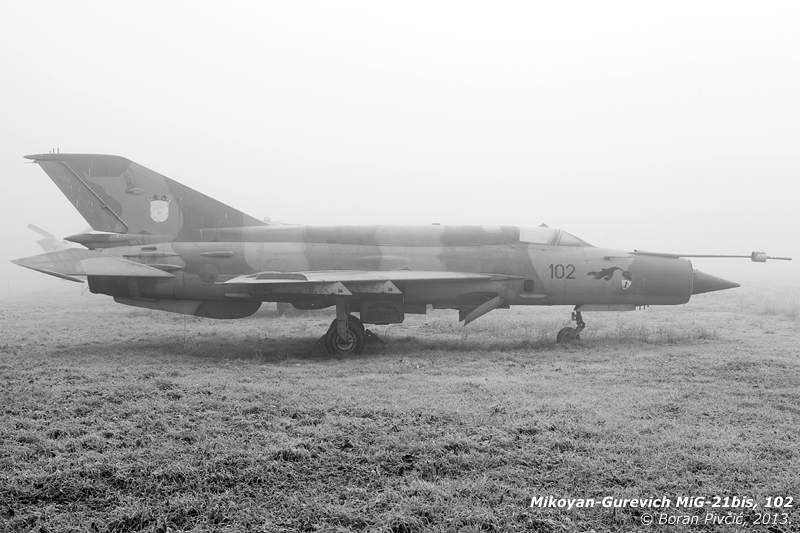


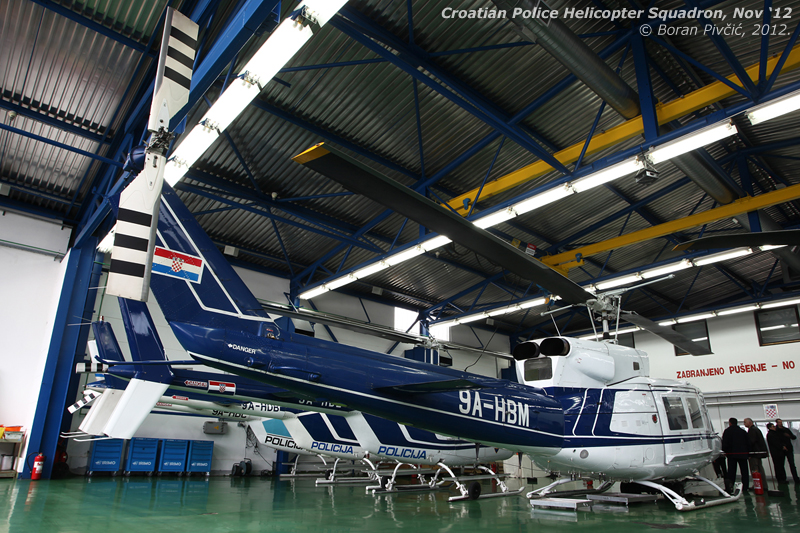
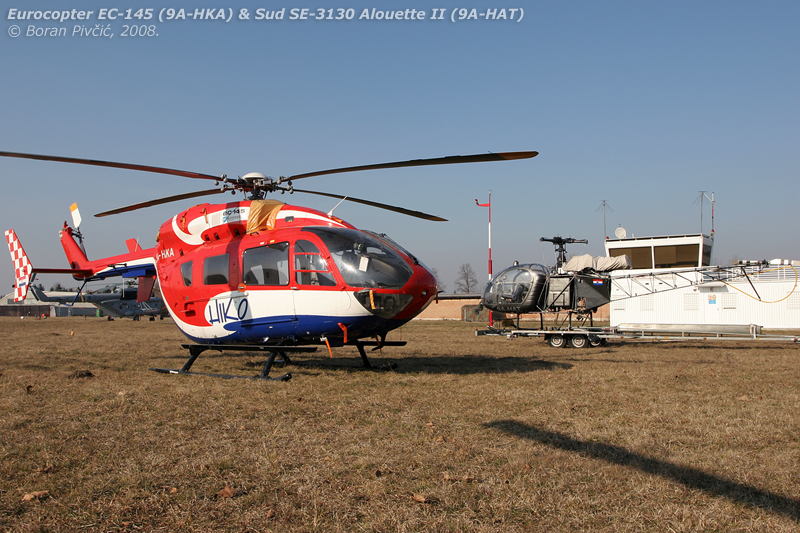
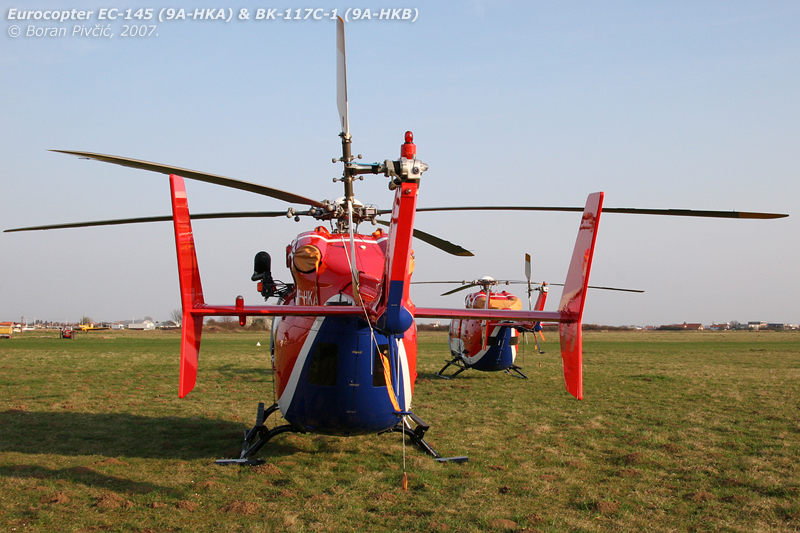
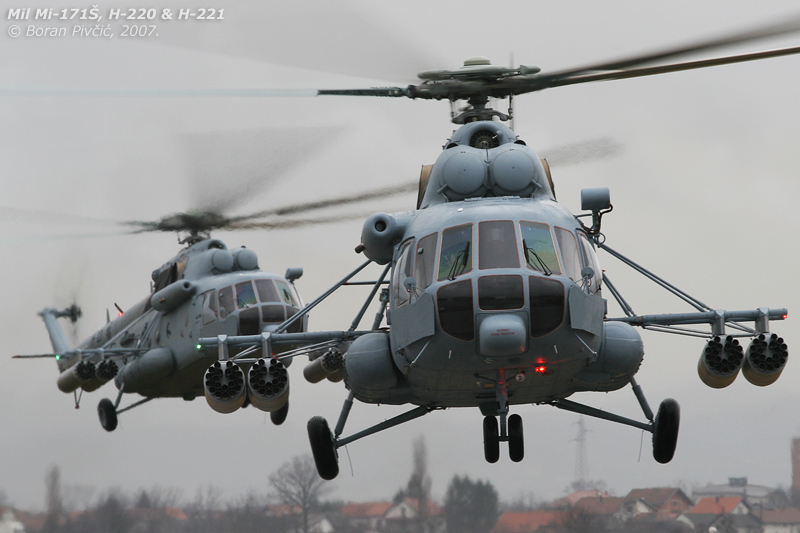
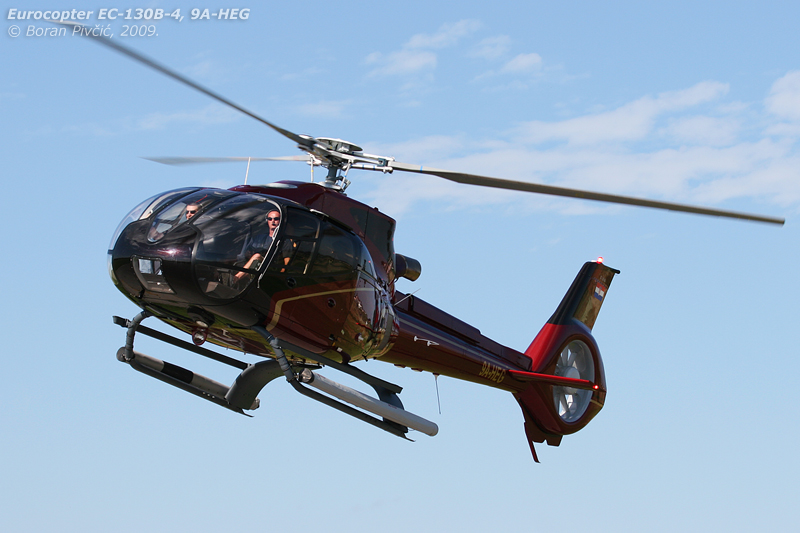
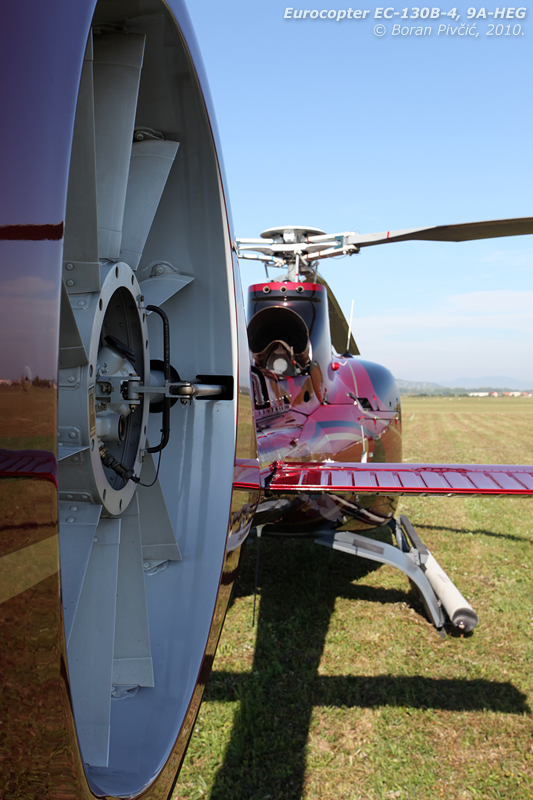
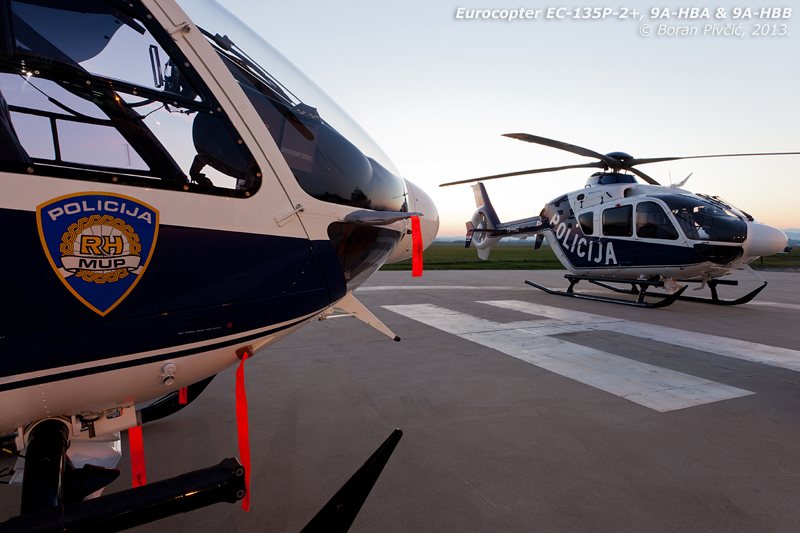

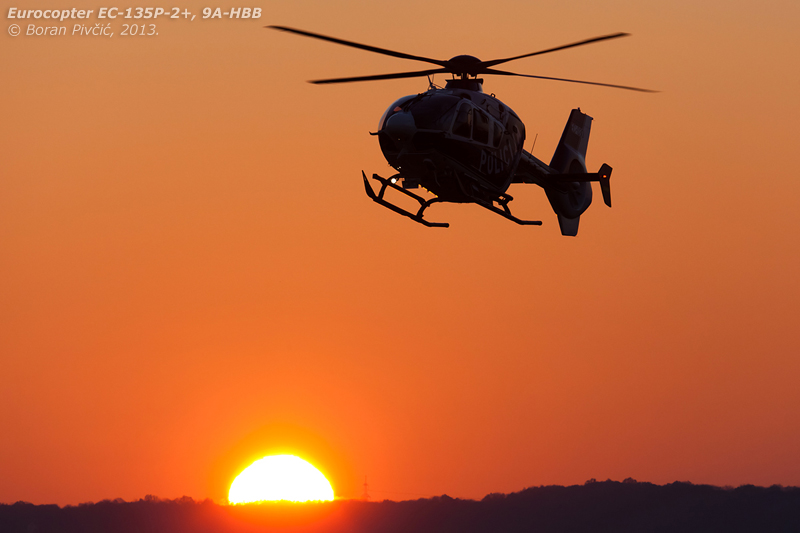
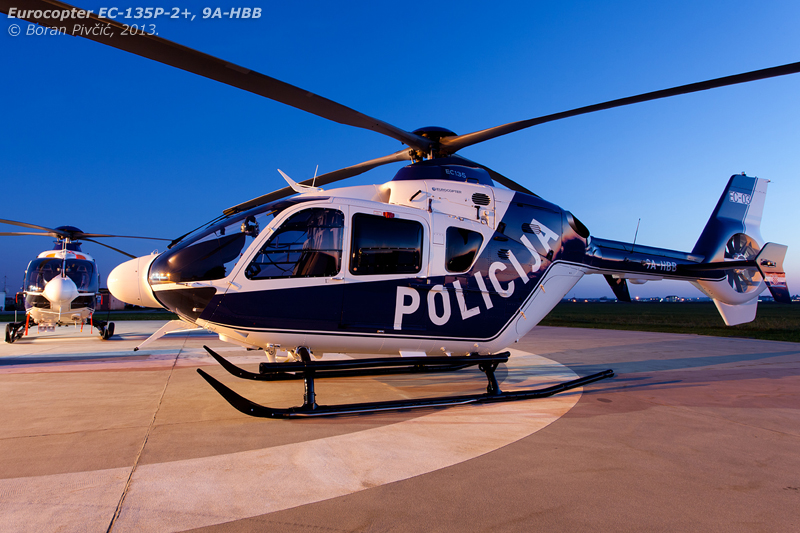


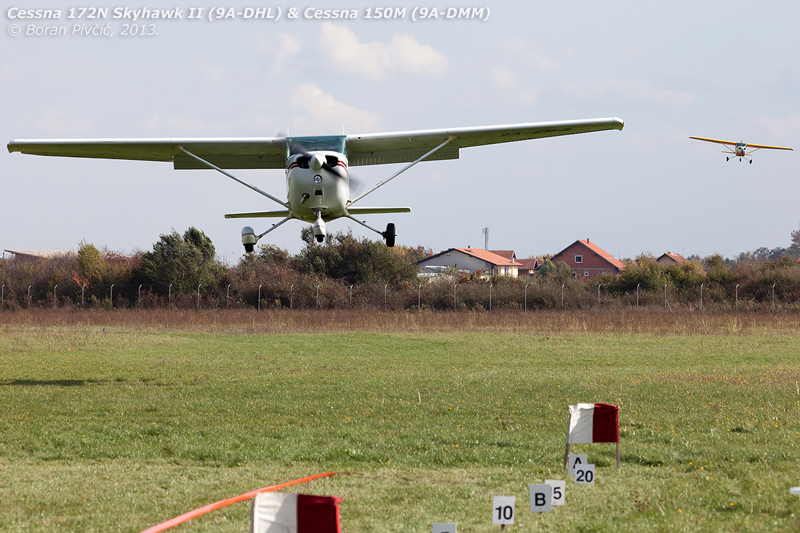
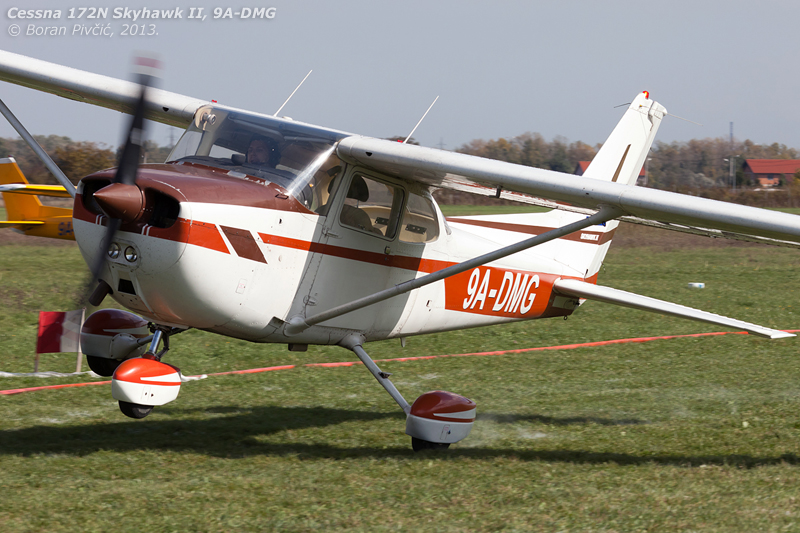


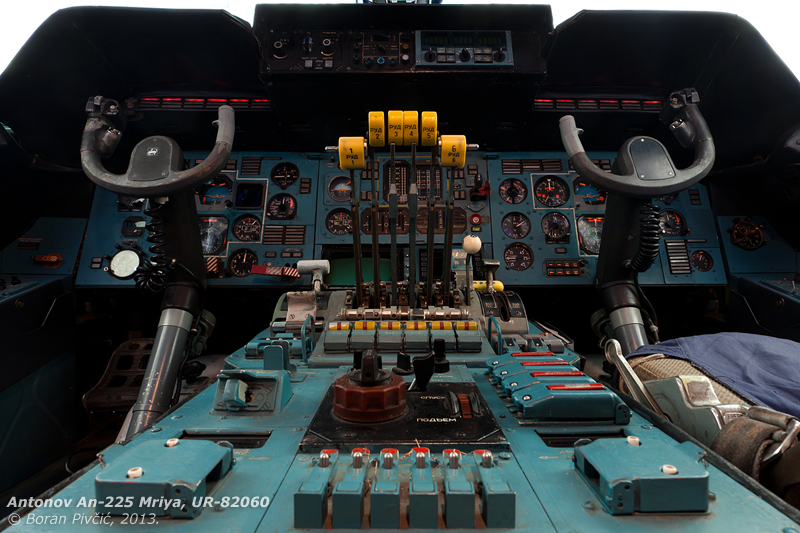

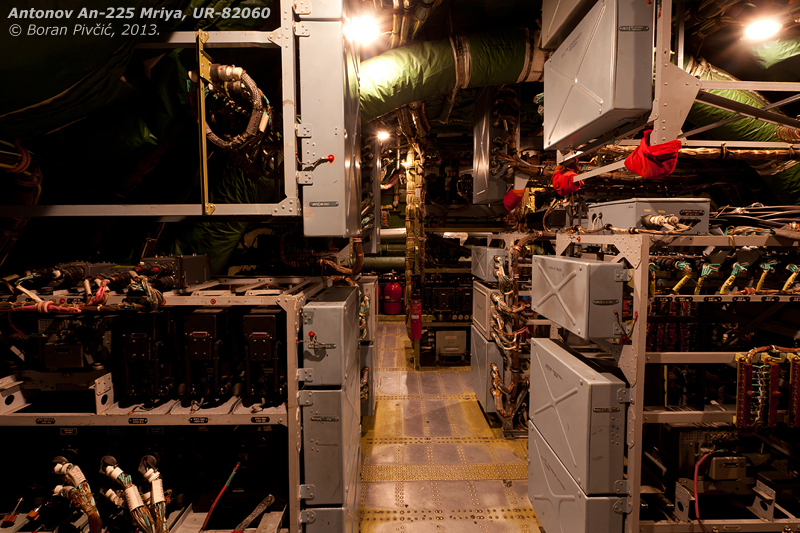


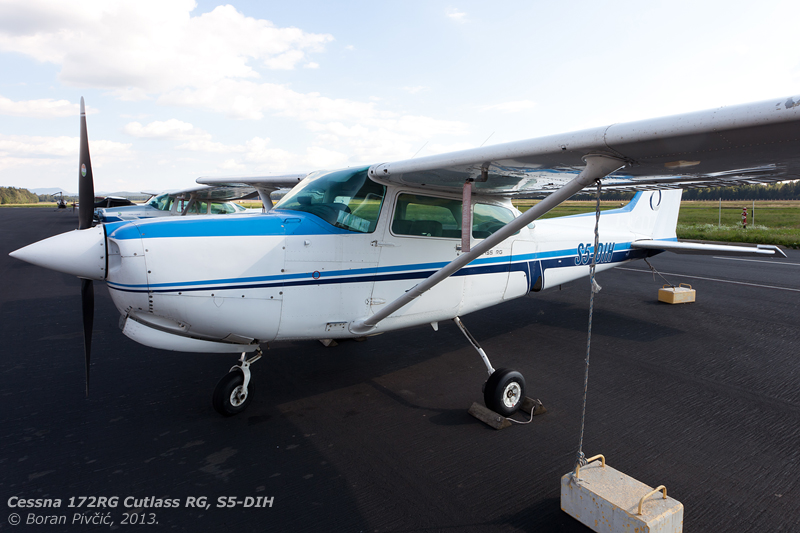
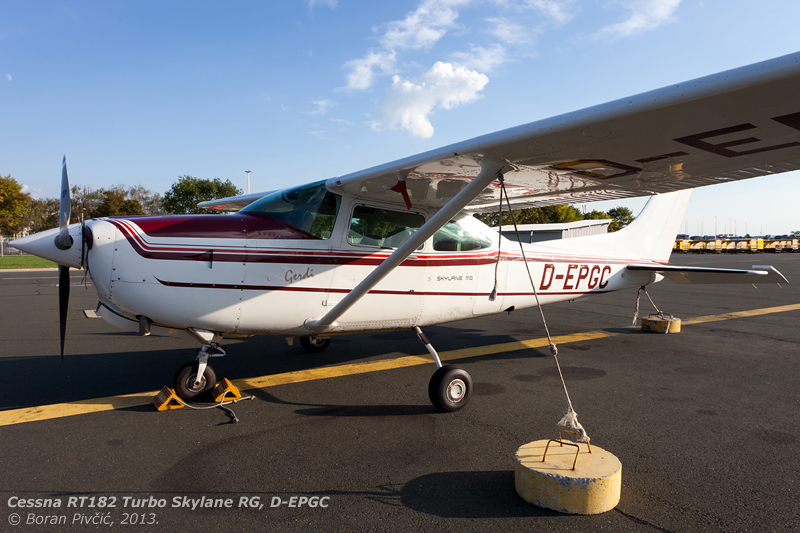


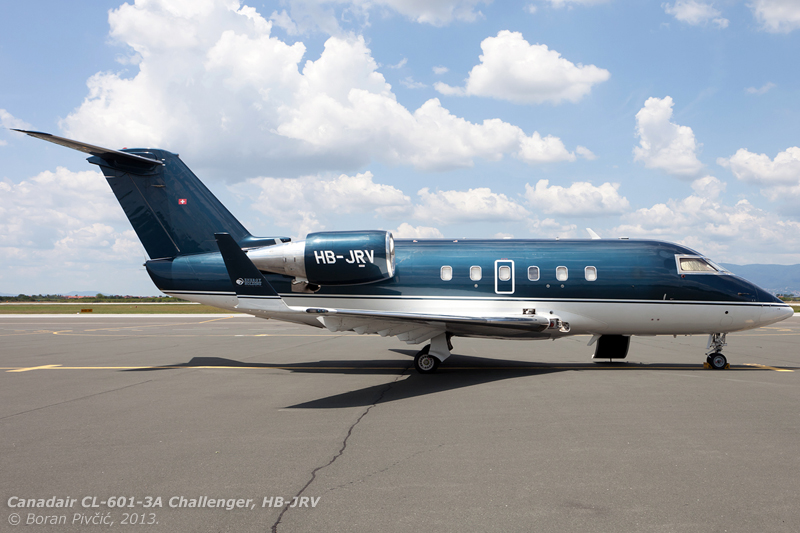

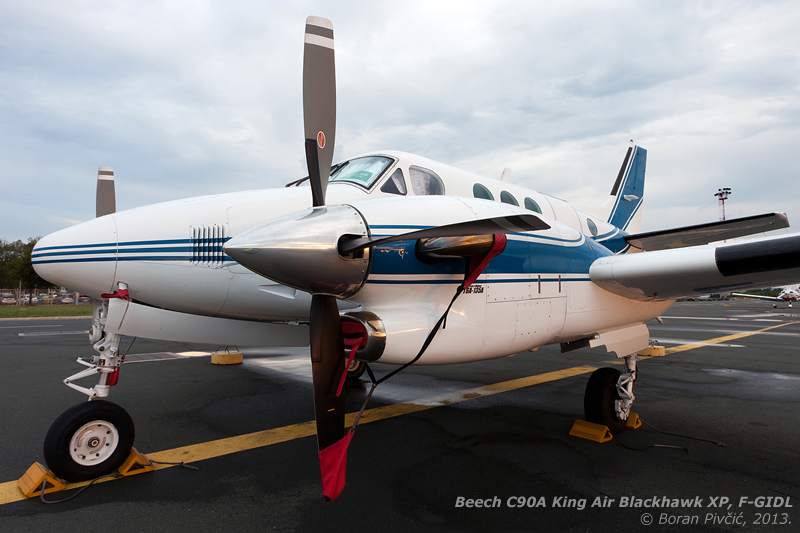
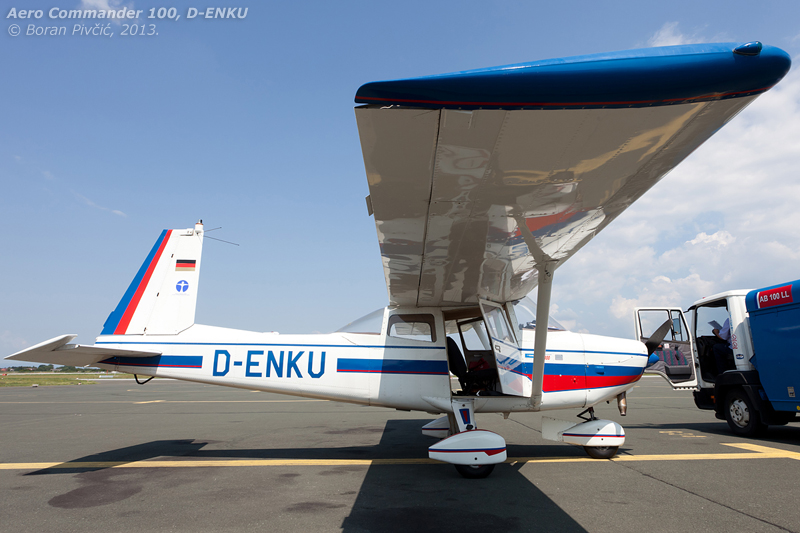
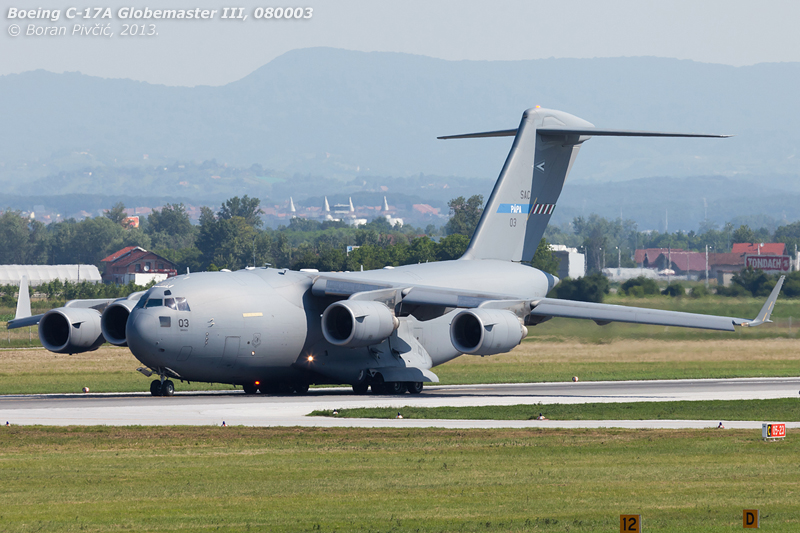

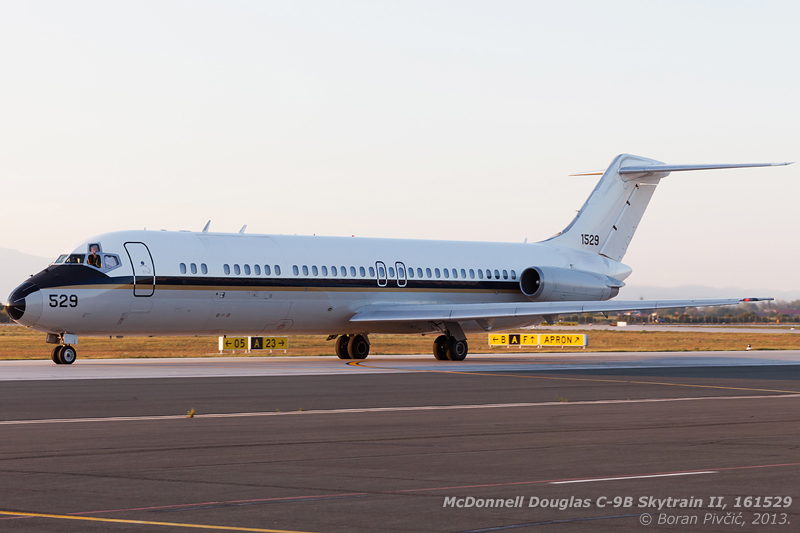


 Achtung, Skyhawk!