When the Messerschmitt Bf.108 first appeared on the European general aviation scene in the mid-30s, it had created something of a “Porsche moment”: here was a small and light tourer, astoundingly fast yet relatively low powered, agile but quite docile, so left-field in design that it had shocked in the same measure it had fascinated. More than anything else, it had finally dispelled most of the skepticism and antagonism toward the low-wing monoplane configuration for light aircraft (at least in Germany), showing just what could be done with this novel idea once you’ve put your mind to it.
Pretty soon, this success had kicked off something of a “VW Beetle moment” :D. Seeing that the mentioned configuration does indeed work – and rather well at that – several manufacturers began seeing its potential to replace the lumbering open-cockpit biplanes then used for common day-to-day operations. What was needed here was a simple, cheap, robust and versatile no-frills machine that would efficiently go about its training and liaison duties, while still retaining that quantum leap in performance (and comfort!) over existing aircraft.
At the Arado works, the engineers, having too caught the bug, had rolled up their sleeves and set to work. The end result, intended like the Bf.108 to combine these new technologies into a single purpose-built design, was the diminutive, unimposing – and today unjustly forgotten – Ar 79…
A rare sight back then as it is today: two Ar 79s in formation shortly before the start of WW2 (photo from: http://www.eichhorn.ws)
1. Willy-nilly:
A very advanced design for its time – just a notch below the technical level of the production-standard Bf.108 – the Ar 79 was somewhat of a logical outcome for Arado. An innovative company that is today much overshadowed by the more famous names of 30s/40s German aviation, it had been around in one form or another since WW1, but rose to prominence as an independent manufacturer in 1924 when it was bought by a Fokker engineer, Mr. Heinrich Lübbe. While you’ll be hard pressed to find someone who’s heard of him, Mr. Lübbe has nevertheless left a lasting mark on military aviation as the inventor of the mechanical interrupter gear that had allowed machine guns to fire harmlessly through the propeller disc without clipping the blades. He had also left a significant mark on Yugoslav aviation, I was amazed to find out, when in the same 1924 he had opened an Arado subsidiary in Yugoslavia called – Ikarus! 😀
Under various design heads, including fellow Fokker veteran Walter Rethel – who would later go on to become the chief engineer on the Bf.109 – the young company had soon gained a solid reputation in Germany for its advanced, mostly metal light biplane fighters and trainers. Indeed, the company’s Ar 64 and Ar 68 were among the first combat aircraft produced in Germany after the Versailles Treaty was… ignored, and were the first front-line fighter aircraft to equip the new Luftwaffe. The majority of its pilots too were already familiar with Arado, having trained – in secrecy, under the guise of civilian aeroclubs – on the widespread civilian Ar 66 biplane trainer.
Despite these successes however, by the time the Luftwaffe was firmly on its feet Arado was already beginning to suffer from a slight case of “Messerschmittitis”. The animosity of several high-ranking German officials (most notably Erhard Milch) towards Willy Messerschmitt is well documented, having been a significant factor in undermining Bayerische Flugzeugwerke during the pre-war years, despite the demonstrated ingenuity – and outright superiority – of several Messerschmitt designs. Heinrich Lübbe’s refusal to join the Nazi Party had had a similar effect, though in the end far more reaching: with the Party’s patience finally running out in 1936, Lübbe was removed from his position and Arado promptly nationalized.
With the constraints of personal vendettas now removed through an unfortunate turn of events, Arado’s designs had finally received a fair fighting chance. This, and the accelerated production and development spurred by WW2, had seen the introduction into service of several notable Arado aircraft, including the Ar 96tandem two-seater (which would very soon become the standard Luftwaffe advanced trainer), the Ar 196 floatplane found virtually on every German ship, the innovative Ar 232 heavy transport, and finally the ground-breaking Ar 234 ‘Blitz’, the world’s first jet bomber. An unorthodox masterpiece of design, it’s legacy and impact are today pretty much the only things keeping the Arado name from sinking into total mainstream obscurity…
Called the ‘Tausendfussler’ – or ‘millipede’ – on account of its odd landing gear, the Ar 232 was in many ways a trendsetting design. What many call the first modern military transporter, it had introduced the easy-to-load square fuselage and rear loading ramp that are today de-rigeur on all serious military transports (photo from: http://www.world-war-2-planes.com)Like the Me-262, the Ar 234 – here in its B twin-engine version – heralded a revolution in aviation as a whole. Despite the fascinating design, it is ironically conventional compared to a number of jet projects Arado had been working on in 1945, including the six-jet E555-1 flying wing bomber and half a dozen single-engine jet fighters (photo from: 1000aircraftphotos.com)
The Arado company however had already been sunk long ago by the decision to nationalize, for with the collapse of German industry at the end of WW2, the company was shot down with it. While a vast majority of companies large and small were able to somehow stay afloat until the mass integration into huge consortiums in the 60s – Messerschmitt for example by producing sewing machines and the odd KE 175/200 bubble car – Arado was immediately declared bankrupt and written off once and for all…
2. A Diet 108:
Back in more successful pre-war times, the Ar 79 had – as mentioned – represented the company’s attempt to design a cheap & cheerful modern light aircraft that would lend itself well to common, non-utility tasks. Unusually, despite it being 1938, it was designed for the civil market only and very few were actually used in military roles – odd given the many aircraft of all types then being pressed into Luftwaffe service (more so when you consider that a majority of early German transports and bombers were designs that had started out as passenger aircraft for Lufthansa).
At a glance from a distance, the Ar 79 looked very much like a Bf.108 – and keeping in mind that there is only a number ways you can design a low-wing monoplane taildragger, we can’t hold that against it. Up close however, there were some notable differences, the biggest being the odd vertical stabilizer. Introduced on the Ar 68 in 1934, it would become the trademark of all subsequent Arado piston singles – however, I’ve not been able to find out exactly what advantages did the design give. But – using a bit of Eyeball Mk.I extrapolation – its near-vertical leading edge reminds me of the stabilizers on Mooneys, which are designed to give better control response in stall and near-stall situations. And given that most Arado singles were trainers likely to be spending quite some time there, it does sound plausible.
The Ar 79V2 (second prototype) showing off its unusual vertical stabilizer and diminutive size (photo from: 1000aircraftphotos.com)
Weighing in at just 760 kg MTOW – round about your average Cessna 150 – the Ar 79 did not really need much power, making do with a 105 HP Hirth HM 504A-2 inverted inline four cyl turning a two-blade fixed pitch prop – noticeably less exciting than the Bf.108’s inverted V8 :D. However, its clean lines and – unusually for such a small aircraft – retractable main gear meant it could squeeze a lot out of the power available, with a respectable cruise speed of 110 kn and a service ceiling of about 18,000 ft – all while burning just 10 l of avgas per 100 km. If we convert that to the more usual gallons per hour, we get a very low 5.2 (US) GPH at 110 kts…
So far, so Bf.108-ish. However, once you look below the skin – or at it for that matter – things start to go awry. Unlike the all-metal 108, the Ar 79 was a somewhat unusual mix of metal, wood and fabric, everything from the modern to the utterly conventional. Starting out back, the rear fuselage was an advanced magnesium alloy (!) (or “electron casting”) monocoque structure. In this type of construction, pioneered during the first decade of flight, the skin itself is the only load-bearing element – it is the only thing making up the structure, without any form of internal support. Contrary to what I had assumed, this had made the Ar 79’s rear end very light, much lighter than it would have been had more commonplace solutions been used. In addition, this type of construction had also paid off in simplicity and strength, with its oval shape spreading the load evenly around the fuselage and the (predominantly) one-piece structure removing the need for rivets, joints, welds or other such structural weak points (in later years, in an effort to reduce weight when applied to larger aircraft, this structure would evolve into what’s known as the semi-monocoque, which combines the load-bearing skin with an internal bracing frame, permitting the metal to be thinner and thus lighter, while still keeping many of the monocoque‘s qualities. In this form it has been used on airliners since the 50s, where it’s load bearing characteristics have been put to good use at battling the stress of pressurization 🙂 ).
EDIT: I would also like to extend my sincere thanks to Mr. Adolf Jaeger for correcting my erroneous assumption that this type of monocoque structure would be slightly heavier than conventional constructions.
Progressing forward however, things were starting to become more agricultural. The forward fuselage was a simple welded steel tube cage covered with fabric, while the wing – single spar, like the 108, but without slats and flaps – was a plywood affair again covered with fabric (and don’t laugh at the plywood! Just ask De Havilland and it’s Mosquito light bomber about what could be done with that fascinating material 🙂 ). The only other bit of metal up front was the cowling covering the engine…
Everything considered, one could deduce that the Ar 79 had quite an interesting weight distribution: almost evenly balanced fore and aft, something rare in most aircraft :). This would have located the center of gravity somewhat more aft than normally found on similar aircraft – not that far aft that it became tricky to fly, but enough to make it stable and maneuverable in equal measure. And being otherwise fully aerobatic – equipped with an aerobatic carburettor, permitting inverted flight – this would have made the Ar 79 quite agile :).
Pretty conventional today, but back in the late 30s this configuration was still a relative rarity on small non-combat aircraft (photo from: alasvirtuales.blogspot.com)
3. Fuel for thought:
While from today’s perspective the performance specs may seem a bit average – they’re hardly better than those of the Cessna 152 Aerobat (apart from the acro carburettor and retractable gear) – in its time the Ar 79 was quite a good performer and, like the Bf.108, was used on its fair share of record-breaking flights. The more “usual” ones were the 1000 and 2000 km solo class speeds records of 229.04 km/h (123.67 kn) and 227.028 km/h (122.58 kn) respectively, both set in 1938. While all very good for a light 105 HP aircraft, they were not nearly in the same league as what was done between 29 and 31 December of the same year…
It had always been said that the true test of an aircraft was a long distance record flight. The Arado team had apparently taken this a bit close to heart, for when they rolled the above pictured D-EHCR back into the hangar, they decided they could just up its fuel capacity a bit… now, I couldn’t find the exact capacity of the standard tanks, but with a range of 553 NM at 110 kn and 5.2 GPH, it works out to 26 gallons, or 99 liters. This was felt to be somewhat inadequate, so what the engineers did was bolt a jettisonable 106 liter fuel tank under the fuselage and screw in a whopping 520 liter tank behind the cabin. In total, this gave 725 liters (!) to burn, which – at avgas’ standard specific gravity of 0.7 kg/l – weighed in at 508 kg and was 48 kg more than the empty weight of the plane :D.
This was deemed enough to give good record-breaking range and was put to good use between 29 and 31 December when a two man crew flew non-stop from Benghazi in Libya to Gaya in India – a distance of 6,303 km (3403 NM)! At an average cruise speed of 160 km/h (86 kn) that would have taken a tad more than 39 hours, quite a feat for an understated two-seat trainer groaning under its own weight in fuel 🙂 (though this fuel to weight ratio would certainly not be unique; the Rutan Voyager, which flew non-stop around the world in 1984 without refuelling, could carry more than 3 times its weight in avgas!).
4. From here to… obscurity?
Apart from its record-breaking flights – flown mostly by the second prototype, which crashed in India about two months into 1939 – the Ar 79’s regular service life was quite uneventful. It’s versions were even scantier than those of the Bf.108, with only the Ar 79B, Ar 79D and Ar79E seeing the light of day – and these differed only in minor equipment changes. Some sources do state that the production models were fitted with Hirth HM 500A1 engines, rated at the same 105 HP, and that the 504 was used on the prototypes only.
But, despite its flying qualities and proven performance over longer distances, in the end the Ar 79 was not really a sales success (though WW2 had much to do with it, the civilian general aviation sector virtually disappearing overnight): not counting the two prototypes, only 48 production models were built when production ceased after just three years, in 1941.
Interestingly though, the basic design was still considered advanced in the 50s, and in East Germany plans were made in 1952 to return the aircraft into production in an all-metal form; however, the 17 July 1953 uprising had put an end to that for good. West Germany too had similar ideas, when in 1957 the Ar 79 was used as the basis for the all-metal Blume Bl 500, designed and built the man behind the original Ar 79, Walter Blume :). It’s high price of DEM 63,000 however meant the entire project never made it beyond the two prototypes…
It’s Ar 79 heritage evident, the Bl 500 was conceived as a stretched, tricycle gear four-seater, powered by a 150 HP Lycoming O-320 engine. Modified and improved to achieve German certification, the prototype became the Bl 502, pictured here, while the generally similar Bl 503 – sporting a more powerful Lycoming O-360 – was the only other aircraft built. With the economy still recovering from WW2, these expensive aircraft were not greeted with open arms… (photo from: http://www.pprune.org)
Today, only one Ar 79 is known to have survived – thanks once more to the sterling efforts of Lufthansa’s historic flight, the Deutsche Lufthansa Berlin Stiftung. D-EMVT – an Ar 79B-1 and the next-to-last Ar 79 built – was meticulously restored in 1996 and kept in flying condition up till 2001, when it was put up as a permanent exhibit in the Deutsches Technikmuseum in Berlin, where it now hangs out for most of its days :).
Looking beautiful during an engine run up (note also the modern propeller). The 47th Ar 79 off the production line, D-EMVT – previously also known as D-ECUV – was one of the busiest of its type, including serving as the personal aircraft of the French High Commissioner to the Saarland province in 1945 (which was in the French occupation zone) (photo from: http://www.dlbs.de)
Given that the Internet is not awash with precise specifications of obscure planes, I naturally had some issues in determining which sets of performance numbers to believe. In the end, I opted for the most reliable source – Lufthansa 🙂 – which gave the specs on the most widespread Ar 79, the B model:
Engine: Hirth HM 500A-1, 105 HP
Stall speed: 78 km/h (42 kn)
Cruise speed: 205 km/h (111 kn)
Maximum speed: 230 km/h (124 kn)
Range: 1024 km (553 NM)
Ceiling: 4,500 m (14,760 ft)**
Length: 7.6 m
Height: 2.1 m
Wingspan: 10 m
Wing area: 14 m²
Empty weight: 526 kg (1,160 lbs)*
Max. take-off weight: 850 kg (1.874 lbs)*
* Note: the biggest disparity in performance numbers I’ve found is in the weights. Most sources dealing with the B model put them at 526/850 kg, while two sources – which mostly covered the prototypes – put them at 460/760 kg. I haven’t found these numbers anywhere else, but it is entirely possible that the prototypes – given their record-breaking nature – were lightened by removal of equipment that was standard on the production versions.
** Similarly, the same two sources put the ceiling at 5,500 m (18,000 ft) as opposed to the B model’s 4,500 m (but this could be due to the engine, even though a 3000 ft increase is nothing to sneeze at)
TEMPORARY NOTICE: I’ve noticed today (16 September ’10) that EADS have apparently redesigned their Company History webpages and removed some of the photos I’ve linked to in this post (which now show up blank). I will try to and dig up where have they been moved to, but it may take awhile…
NOTICE NO.2: Due to my two-year-long failure to finally address the above (it really did take awhile as it turns out 😀 ) – and the new friendlier visual format of this blog – I’ve decided to outright rewrite and refresh the entire post, adding a bit of new information and photos, and correcting the odd mistake. This new & improved version – posted as of 21 September ’12 – can be seen here :).
When the first Bf.109s faced their German rivals in mock dogfights in the mid-30s, few observers – in any country – were left in any doubt about the potential of Messerschmitt’s first complete fighter design. International flying competitions in the years preceding WW2 had further underlined these impressions, while an all-up production run of almost 35,000 examples, spanning more than a decade in one form or another, and an impressive – though in the later stages of the war a bit diluted – combat record removed any doubt remaining.
A very advanced design by contemporary standards, the Bf.109 was not really ground-breaking per se; when all was said and done, it had not really introduced anything completely new into the rapidly advancing world of interwar aviation. What it had done however was combine all the cutting-edge technologies of the time into one airframe – the monoplane configuration with high wing loading; the powerful liquid-cooled V engine and its variable-pitch prop; retractable gear; the enclosed cockpit…
Two more of its immediately apparent trademark features were the automatic leading edge slats and – for a combat aircraft – very low weight, courtesy of a clever design philosophy that made the aircraft simple and cheap to build and quick & easy to service and maintain – not to mention making it tough, durable and reliable out in the real world. And while the big engines and retractable gear could easily be traced to some of the eminent combat aircraft of the time, these two were inherited from a far more unfighterish source – the Bf.108 tourer…
The Messerschmitt Stiftung’s beautiful Bf.108B-1 in some accurate historical colors (photo from: commons.wikimedia.org)
1. When I grow up I want to be a fighter!
The aircraft that would (among other things) lend most of its technical solutions and complete tail unit to the early Bf.109 started out in life as the four-seat* M.37 tourer of 1934. Designed by the young Willy Messerschmitt, Bayerische Flugzeugwerke‘s chief designer, the M.37 was intended to compete in the 4th Challenge de Tourisme Internationale being held that same year. This interesting general aviation competition – wish they held something like this today! – included categories such as “Short Takeoff”, “Short Landing”, “Fuel Consumption”, “Minimum Speed”, “Maximum Speed” and “Technical Trial”, as well as a 9500 km race across Europe and Northern Africa (that had also stopped in Zagreb! :D).
*though intended as a four-seater, the M.37s and the early 108s were operated as two-seaters, with the rear seats permanently removed to provide some storage space (with virtually all pre-Bf.108B versions having been used for races and flying competitions), giving the impression that they were outright designed for just two
Based partly on Messerschmitt’s previous M.29 – designed in a similar vein for the 1933 competition, but never taking part due to a spate of crashes – and the M.35 aerobatic trainer prototype, the M.37 was a sleek low-wing stressed-skin all metal monoplane with retractable gear, an enclosed cockpit, full-length flaps with roll control provided by roll spoilers (!) and a variable-pitch prop – just enough to make it that less inconspicuous among the wood and fabric biplane crowd :). The unorthodoxy continued under the skin as well: the wing was made around only one spar, a design that was made to work by Messerschmitt’s extensive glider building experience gained in the Versailles Treaty-limited post-WW1 period. The famous mechanical leading edge slats could be manually extended to greatly improve the airflow over the outer wing sections – which were likely to stall first – reducing the stall speed to just 61 km/h (33 kt). This in turn significantly shortened the take-off and landing rolls – not quite to STOL levels, but very close – and increased low-speed maneuverability and handling at high angles of attack.
The leading edge slats on the Bf.109. Interestingly though, these were a British innovation, patented by Handley-Page several years before. To be able to use them, Messerschmitt had traded the build rights to his own patented design, the aforementioned single-spar wing (photo from: German Bundesarchiv via Wikipedia)
As with the wing, the whole design philosophy was to make the aircraft as simple as possible, with the fewest realistic number of parts used to create a light and durable airframe. Functional minimalism. And it had worked – compared to other (later) metal aircraft of similar design, the M.37 was indeed among the lightest and best performing. Official flight testing prior to the competition was marked by the general enthusiasm of all the pilots that had flown it, prompting the German aviation ministry – the Reichsluftfahrtministerium, RLM – to give the aircraft a tentative green light as the Bf.108. Of note here is the oft-confused designation: “Bf” obviously stood for the initials of Bayerische Flugzeugwerke; however, when the company was renamed into Messerschmitt Flugzeugwerke in 1938, all subsequent designs were given the “Me” prefix. The designs that had been produced prior to the name change kept their old prefixes – so there never really was an “Me-108” as can be found in some Internet sources.
However, despite all its qualities, one aspect of the aircraft raised doubts among some test pilots – the roll spoilers. With the full length of the trailing edge taken up by the flaps – increasing the wing area by a whopping 8% when extended – there was no space for any ailerons; roll control was then provided by spoilers on each wing that would create a difference in lift between the wings. For example, if you had wanted to turn left, the roll spoiler on the left wing would extend, disrupting the airflow over it and reducing lift. The right wing would now be producing more lift and sort of tip the aircraft around its center of gravity, causing the aircraft to roll to the left. This was fine in theory – and is used on a number of civil and military aircraft today – but back then it was eyed with suspicion and more than its fair share of antagonism. This came to a head when test pilot von Dungern was killed in a 108 while testing the spoilers, presumably somewhere near the edge of the envelope.
With the RLM’s well documented dislike of Messerschmitt threatening to ground the 108 – like it had the M.29 a year before – there was no other option but to revert to a conventional aileron arrangement. “Conventional” should be taken with a grain of salt though, because the resulting arrangement still managed to raise an equal number of eyebrows…
You can see that Messerschmitt was adamant with his high-lift devices: shortening the flaps a bit, he managed to just squeeze in two small 30-cm wide ailerons, lengthened to make up for their lack of span :). Note also the upper tailplane bracing that would be removed on later versions. The aircraft pictured was one of the four intended for the race – and one of three actually competing – and is to that end coded “11” (photo from: http://www.network54.com/forum)
In this form the aircraft became known as the Bf.108A, the designation under which it would be entered in the competition. It’s beautiful handling and avantgarde features did not help its case there though, when the far lighter, nimbler and simpler wooden aircraft wiped the floor with it for most of the competition…
Yet, the Bf.108A did notch up several wins, all of which would steer its later development into the tourer we know today. The top three aircraft in the “Fuel Consumption” category for example were all 108s – with the winner notching up an impressive 10 kg (14 l)/100 km. This number, in many cases exceeded by today’s SUVs, was made even more impressive by the fact that the 108A was not powered by some microscopic fuel-sipping engine, but a 220 HP Hirth HM 8U inverted V8 (how’s that for a GA engine? :D). This had also helped in the “Maximum Speed” event, where the 108s again took the first three places, with the slowest – at 283 km/h – being 30 km/h faster than the next contender. The trans-Europe race was less of a success, with one 108A, flown by Theo Osterkamp, placing fifth – but the result was due more to external influences (weather and navigation) and the scoring system (points being based on the total average cruise speed, including stationary periods, which meant a weather delay for example would cause a decrease in the average) than the aircraft itself. Indeed, when everything fell into place, the 108s had regularly posted the highest flying average speeds – including the leg to and from Zagreb :).
In total, when the competition tally was done, the three 108s were ranked 5th, 6th and 10th (out of 19). But more importantly, their demonstrated low fuel consumption, high speed and beautiful handling – and comfy leather seats! – had lent them well to cross-country touring. A clean, aerodynamic airframe able to go fast on not much power – sounds very much like the Lancairs, Cirruses and Diamonds of today, doesn’t it? 🙂
Another quarter view of “11”. The early pre-series production 108s were the only members of the family to sport VDM three-bladed props (photo from: http://www.eads.net)
This did not slip past the then cash-strapped BFW, where Messerschmitt had decided to capitalize on the type’s success by adapting it for series production. To this end, a batch of pre-production Bf.108B-0 models was made (though they were still commonly known as the Bf.108A) with each successive aircraft representing a slight move toward the production standard.
In 1935, these had also started making a name for themselves – quite literally. The fastest light tourer in the sky, it was chosen by famous German aviatrix Elly Beinhorn for her record-breaking flight from Berlin to Constantinopole (now Istanbul, Turkey) and back. Her little 108B-0 had more than lived up to its Taifun nickname, taking just 13 and a half hours to cover the 3,470 km trip, flying along at a respectable average groundspeed of 257 km/h (139 knots).
Ms. Beinhorn and “Taifun” posing after their long flight. Easily seen here is the A/B-0 model’s “bathtub” cowling for the Hirth engine (photo from: http://www.luftarchiv.de)The simple gloss white paint scheme worn by “Taifun” for its record flight (picture from: http://www.aviation-ancienne.fr)
Success like this had opened the floodgates and the 108’s already considerable popularity skyrocketed (as much as it could have in the general aviation scene of the 30s). The full potential of the design had immediately become obvious at the BFW works, where Messerschmitt set about turning the 108B-0 into the definite four-seater, a true cross-country airplane. The result was the Bf.108B-1, now adopting Taifun as its official name :).
Ms. Beinhorn posing in a production Bf.108B-1, sporting the type’s distinctive “Messerschmitt Taifun” logo (photo from: http://www.ctie.monash.edu.au)
The idea behind this version was to make the aircraft more production- and consumer-friendly, so first to go was the A model’s powerplant. The expensive and hard-to-come-by VDM variable pitch propeller was replaced with a simpler and cheaper two-blade fixed pitch prop (though an Me P7 two-blade variable-pitch unit was offered as an option), while the HM 8U engine was swapped for the readily available 240 HP Argus Ar 10C inverted V8. The wing too was made a bit duller by the reversion to a fully conventional aileron/flap arrangement – though it had also gained a wing folding mechanism (at the root) for easier transport by road or rail. The slats were now made automatic, extending at a certain speed by air pressure. Additional minor changes included the removal of the upper tailplane bracing mentioned previously, the replacement of the next-to-useless tailskid with a tailwheel, and the shortening of the glazed canopy over the rear seats.
In this role and form, the 108B-1 had continued to participate in international competitions, rallies and fairs – most notably the 1936 Olympic Games held in Berlin – but this time under the increasingly ominous banner of Nazi propaganda. Indeed, even before WW2, the fast-growing Luftwaffe had been eying the 108 as a liaison and communications aircraft to replace the obsolete and lumbering biplanes then being used.
A later Bf.108B-2 in a pre-war civil scheme, showing off some of the changes from the A model. Note the shallower and more oval cowling, the less-extensively glazed canopy and the tall tailwheel (photo from: http://www.network54.com/forum)
However, the 108’s biggest contribution to the Wermarcht’s war effort was as the basis – the parts donor if you will – for the amazing Bf.109. In a fascinating display of lateral thinking, in 1934 Messerschmitt simply took the plans for the 108A and modified them into a single-seater with a narrower fuselage, a big V12 up front – a Rolls-Royce Kestrel for the first prototype, proving that irony was alive and well back then – and some boom booms in the slightly modified wings. Apart from the changes needed to fit all of these together, the rest was all 108 :).
The fourth prototype of the Bf.109, the Bf.109V4 (which served as the model for the first production B series). When you remove the deeper and narrower fuselage, you can see many elements of the 108’s design – including the tail unit. Even the pilot’s seat was in the same place as the rear seats on the 108 (photo from: http://www.tgplanes.com)A production Bf.109B of the Legion Condor during the Spanish Civil War. The early versions’ radiator was – as is visible here – mounted below the nose as opposed under the wings in E and later models, giving this version a clearer Bf.108 lineage (photo from: http://www.hrvatski-vojnik.hr)
While the wildly differing roles of these two aircraft may have raised some doubts, the 108’s base design turned out to be just the thing for the new fighter. It’s simple construction meant the 109 was light and maneuverable – and we all know how that turned out in the early stages of the war – and it’s relatively low parts count meant it was simple to maintain and repair out in the field with facilities and tools at hand. Lacking complicated whizz-bang construction elements meant it was far more tolerant of combat damage and the chances of a disastrous “lucky” shot disabling the entire aircraft were greatly reduced. At the same time, the clean airframe did not want for performance, so the 109 could do with less power than a similar aircraft – quite a welcome feature given its notoriously short range.
2. Oh, the irony!
Having had the (mis)fortune of being the most advanced light aircraft in the world during a period of turbulent political changes, the 108B-1 had quickly accumulated its fair share of odd operators. Apart from the “usual” ones such as Bulgaria, China and Japan, there were a couple of… unexpected ones to say the least, including the Royal Yugoslav Air Force. The dozen or so examples bought in 1939 were part of a larger batch that had also included approximately 60 Bf.109Es and quantities of spare parts – all paid for not with actual money, but in strategic materials such as iron, aluminium, copper and coal, materials abundant in the lands of former Yugoslavia, but scarce and badly needed for the war buildup in Germany. While the 108s were to lead relatively uneventful lives in the training and communications roles, the 109s would enter the history books during the German invasion of 1941 as the only time Bf.109s would ever face Bf.109s in outright aerial combat :).
Š-08 (“Š” for “školski”, literally meaning “schooling type”) at a field that could even be Borongaj 🙂 (photo from: http://www.network54.com/forum)Yugoslav 108s were well known for their interesting paint schemes, with camouflage ones like the above behing the most prevalent (picture from: http://www.network54.com/forum)
Next on the scale of improbable is the – the US military :D. While it wasn’t uncommon for the USAAF to fly and test captured Axis aircraft, the single Bf.108B-1 – bought by the US Military attaché to Berlin in 1939 – had never left Germany and was used as a high-speed staff transport. Designated the XC-44, this aircraft was flown all the way until 1941 when it was repossessed by the German government following the US’ formal declaration of war on the Axis powers following Pearl Harbor.
Quite possibly one the rarest paint job ever to be applied to a Messerschmitt 🙂 (picture from: http://www.network54.com/forum)
But by far the most interesting 108s were the Messerschmitt Aldons, the designation of four examples impounded by the RAF at the beginning of WW2. Used in the communications role, the 108 had proved to be the fastest type for that purpose in the UK, though its close semblance to the Bf.109 was to cause some worrying “identification problems” among defending RAF fighters…
(and for those of you who think “How can the 108 possibly be mistaken for a 109?”: the first of the long-nose RR Griffon-engined Spitfires – the Mk XIIs – were delivered with clipped wingtips, intended to improve roll rate and increase speed at low altitudes, a feature well known and seen on a number of previous marks. On the ground, the Spitfire’s famous elliptic wing planform was still more than obvious in spite of the change. Up in the air however, on their first few sorties, only their new-found speed advantage kept them from being shot out of the sky by patrolling Hawker Typhoons which had mistaken them for attacking 109s… and these are Spitfires, well removed – on the ground – in shape, form and color from any version of the 109).
One of the four Aldons painted in standard RAF camo colors (photo from: Wikipedia)I must say, the 108 looks quite handsome in this scheme :). But despite the big RAF roundel, they were sometimes mistaken for 109s in the confusion or air combat (picture from: http://www.network54.com/forum)Another catchy scheme, which again didn’t help in matters of identification… (picture from: http://www.network54.com/forum)
The post-war period too saw its share of odd 108 operators, including Czechoslovakia (where the type was known as the K-70), Poland and the Soviet Union, all of which had flown a few aircraft captured during the final days of WW2. For the full photo history of the 108’s civilian and military service around the world, you can visit these two excellent pages, a goldmine from which I’ve linked many of the above photos:
Unlike its armed cousin, the 108 did not go through new versions like pairs of socks. Apart from the Bs, there was only one other major production version; and aside from that there were curiously few experimental models as well. But what they lacked in quantity they had certainly made up in quality…
By far and away the most normal of these was the C-1, an ungainly looking 1936 modification that had seen the standard B airframe fitted with a Siemens Sh 14A-4 7 cylinder radial, churning out just 160 HP. Combined with the radial’s large cross-section – which necessitates more power to overcome drag – and 80 HP (33%!) less power than the Argus engine, you can imagine why this was a one-of model…
Used solely for propaganda purposes during the 1936 Olympic Games, the C-1 had managed to clock up 21.600 km without incident, shuttling film rolls of the games between Berlin and Stockholm. Abysmally underpowered, it was later re-engined back to the standard Argus V8 (photo from: http://www.network54.com/forum)
At the other end of the spectrum was a never-built version that some sources also label as a C-1 (it could entirely be possible that the designation was re-used). Diametrically opposed to the Siemens model, this C-1 was to have been a high-speed version, fitted with a Hirth HM 512 inverted V12 that would have developed a whopping 400 HP on takeoff! 🙂 Ground testing in 1938 had shown that the airframe started experiencing noticeable vibration above 325 km/h, which progressively became so severe that it had threatened to tear the airframe apart. Given the scope of engineering changes that would have been necessary to make this work, the project was quietly dropped…
That the only way was up – literally – was demonstrated in 1939 by a specially modified high-altitude 108B-1, built to capture the altitude record for its class. Fitted with a turbocharged Hirth HM 508 inverted V8 producing 270 HP (and also providing bleed to a pressurized cabin), it had reached an impressive 9,125 m (29,930 ft) of altitude in the hands of Hirth’s boss, Hermann Illg.
The series production models were less exciting however – and were suffering from an acute case of Cessna Skyhawk-itis as well :D. If you took 10 random Skyhawks of the same model and same production year and lined them up, I guarantee that you’d be able to find at least one unique feature or option on each of them… a double landing light here, the static port moved to there, an instrument layout just that little bit tweaked… The Bf.108 was no different, with options from one version sometimes being used on another, which made sorting them by model numbers a bit difficult – but after roving the Internet far and wide I think I managed to nail it (at least in general terms):
B-1 – the already described base model
B-2 – generally similar, but with the wing fold system removed and the variable pitch Me P7 prop fitted as standard. These versions could easily be recognized by the thinner metal prop blades connecting within the spinner hub
D-1 – produced from 1941, this was the first model intended outright for military use and featured a modified vertical stabilizer, improved fuel feed system, a more powerful electric system, vertical speed indicator, windscreen wiper and a constant speed propeller (whose crowned spinner became the model’s distinctive outside feature) being turned by an As 10R engine of the same output as the C model. It should be noted here that “variable pitch” and “constant speed” propellers are not quite the same thing: a constant speed propeller will automatically regulate the pitch of the propeller blades to maintain the same RPM regardless of throttle setting. The variable pitch system however will only change the pitch to a preset setting (sort of like shifting up a gear in a car), with the RPM still regulated by the throttle
A beautiful lineup of what I believe are B-1s. The source of the photo, http://www.eads.net, says these are D-1s, but the fixed pitch props (note how the props are single piece and go around the spinner) raise some doubts…Despite the Bf.108 not being the best-looking tourer the world has ever seen, it does have an elegant and purposeful appearance (photo from: http://www.eads.net)A Bf.108B-2 (by the looks of the prop) inflight. Though not as fast as today’s high-end piston singles, the 108 has much more class :). You’d attract far more looks with this than with any Cirrus… (photo from: http://www.eads.net)The only photo of the original D-1 I could find… (photo from: http://www.preservedaxisaircraft.com, taken by: Alexander Hurrle)For visual recognition: the same type of spinner as on the D-1 as seen on a Pilatus P2 (photo from: http://www.pilatus-p2.de)
The D-1 would also be the last Bf.108 version produced in Germany before production was transferred to France at the beginning of 1942. In a bid to free up domestic production capacity for badly needed Bf.109s, the Bf.108B-2 and D-1 were allotted to the Société Nationale de Constructions Aéronautique du Nord, SNCAN, just outside Paris, where they would remain till the end of the war – with interesting consequences.
Following the liberation of France, SNCAN – having produced just 170 aircraft in two years, out of the original type’s total run of about 880 – was left with a significant number of uncompleted airframes and engines. Deciding it’d be a waste to throw them all away – and desperate to gain a foothold in the country’s recovering economy – the top brass at SNCAN had decided to restart production of the aircraft, but this time as the Nord Pingouin (what an insult – demoted from a typhoon to a cute polar animal :D). The base model, the Nord 1000, was virtually identical to the Bf.108B-2, using the same German engines and systems up till now standing around in the company’s warehouses.
Apart from French colors, there was very little to distinguish the 1000 from the Bf.108B-2 – except for the provision of the B-1’s wing fold mechanism (picture from: http://www.network54.com/forum)
Once these were exhausted, it was a relatively simple matter to remanufacture the aircraft from the original plans, the production tooling being already set up and waiting. However, the engines had proved to be a bigger problem, having been imported from Germany (where the Argus factory was leveled in the mean time). To get around this, SNCAN had decided for the easiest method – using a locally built engine of similar power. The only one available was the 233 HP Renault 6Q-11 6 cylinder inverted inline, giving the new Nord 1001 Pingouin I a significantly pointier nose than the Bf.108’s. A generally similar Nord 1002 Pingouin II – the most common variant – differed only in having a slightly more powerful (and right-turning) 240 HP 6Q-10 engine, bringing the power rating up to Bf.108 levels (not that the 7 HP mattered much). In total, 286 Pingouins were produced, bringing the overall 108 total to above 1,100 examples (unfortunately I could not find the year French production ended – but with the aircraft remaining in service till the early 60s, and their low production volume, I’d wager a guess that 1950 or thereabouts could be the year).
A Nord 1002 in early Bf.109A colors. Note the deeper and longer nose for the taller (but narrower) 6Q engine (photo from: http://www.airventure.de)
Note: some of the surviving aircraft had later been retrofitted with “normal” Lycoming and Continental piston engines and have a shorter, broader and more oval cowling. For the sake of simplicity, I decided to represent only the original Renault engine models here…
4. A (third) leg to stand on:
In the meantime, back during 1943, SNCAN – under guidance from Messerschmitt – was working on modifying the Bf.108B-2 with tricycle gear, which was coming into vogue at the time. The two prototypes converted as such were designated the Me-208 – in line with the designation issue mentioned previously – but only one had survived the war intact, to be renamed the Nord 1100 Noralpha. Like with the base 108, SNCAN had decided to finish the design and market it – having already done 90% of the work – with the result being the Renault 6Q-10-engined Nord 1101 (known as the Ramier in French Air Force service) whose production ran to the 205 example mark.
One of the surviving Noralphas during a tipsy landing. Though very similar to the Me-208, the Noralpha was already starting to significantly depart visually from the Bf.108 (photo from: http://www.flugzezginfo.com, taken by Mr. Karsten Palt)
Like the 108, the Noralpha had a knack for testing out different engines :). Along with the planned, but never built, Renault 6Q-11-engined 1102 Noralpha II, the 1104 was a one-of model equipped with a Spanish Potez 6Dba engine of identical 6 cyl configuration and the same 240 HP as the 6Q-10.
But the ultimate expression of power – indeed of the entire 108 design – were the two 1959 Nord 1110s, re-engined with not a puny piston, but a 550 HP Turbomeca Astazou II turboshaft (lifted from a helicopter)! One of the two, registered F-AZNR, is still alive and flying today :).
A beautiful atmospheric shot of the sole surviving 1110 by Mr. Eric Hennequin (photo from: Mr. Hennequin’s Flickr gallery, click on the photo for the link)
Today, it is estimated that there are 25-30 flying Bf.108s remaining worldwide (though I’m not sure whether that includes the Nords as well), a number being operated – naturally – in Germany, and by no less than Lufthansa’s and Messerschmitt’s “history flights” (the Deutsche Lufthansa Berlin Stiftung, www.dlbs.de, and Messerschmitt Stiftung respectively). Lufthansa’s example, D-EBEI – quite possibly the most famous 108 today – also proves that there is some humor left in today’s straight-face corporate world: for irony doesn’t quite cover a Bf.108 Taifun named Elly Beinhorn… 😀
While virtually all survivors were retrofitted with modern constant-speed prop units, one great-looking B-1 model, D-EBFW, is still proudly sporting its fixed pitch prop :).
For more modern photos – there are some beautiful ones and it wouldn’t make sense to cram them all in here – you can visit these Airliners.net “galleries” I’ve linked below, sorted by type:
A table view of the specs for various production Bf.108s (B-1, B-2 and D-1). Click the image to for the bigger version. Pingouin numbers were broadly similar (taken from: http://www.network54.com/forum – or simply click on the Aeronet Aviacion Part 1 link)
7. Version overview:
Reading through this prior to posting it, I’ve decided it’d be a prudent move to sum up all the Bf.108/Nord versions in one place, as trying to keep track of all of them was giving me a headache :). This is only a quick list with some distinguishing features, for reference:
M.37 – the first prototypes, used for initial flight testing, equipped with roll spoilers
Bf.108 – the designation adopted during tests, structural identical to the M.37
Bf.108A – 1934 competition aircraft modified with ailerons
Bf.108B-0 – pre-production versions
Bf.108B-1 – the first production version, with folding wings, Argus Ar 10C and fixed pitch prop
Bf.108B-2 – B-1 with the folding wings removed and the Me P7 variable-pitch prop fitted as standard
Bf.108C-1 – the Siemens radial model and/or the proposed HM 502 V12 model
Bf.108D-1 – final German production version fitted with a constant-speed prop, As 10R engine, more powerful electrics and miscellaneous small changes, produced mostly in France
Me-208 – two prototypes of the Bf.108B-2 modified with tricycle gear
Nord 1000 Pingouin – post-liberation Bf.108B-2s produced by SNCAN from existing fuselages and Argus engines
Nord 1001 Pingouin I – 1000s fitted with the Renault 6Q-11 233 HP engine
Nord 1002 Pingouin II – 1000s fitted with the 240 HP, right-turning 6Q-10 engine
Nord 1100 Noralpha – the surviving Me-208 prototype
Nord 1101 Noralpha I/Ramier – production-standard 1100s fitted with the 6Q-10 engine
Nord 1102 Noralpha II – 6Q-11 engine model, never built
Nord 1104 Noralpha – Potez 6Dba testbed
Nord 1110 – two 1101s re-engined with 550 HP Turbomeca Astazou II turboprop engines
With a growing fascination for the Technical Museum and the few – but fine – aviation exhibits within, today I was back there yet again, camera ready to cover anything I had missed in my previous report :). A definite case of I-need-a-life-ism, but my research for the first post on the topic had revealed that the Museum had definitely traded quantity for quality (or rather rarity), so I was naturally keen to see what else was I missing out on…
This odd-looking little thing is an ex-Yu UTVA BC-3, popularly known as the "Trojka" ("Three"). Developed shortly after WW2 by Boris Cijan - hence BC - for Ikarus as the model 251, and later produced by UTVA, only 80-ish of these this fabric-covered trainer/tourers were ever madeWhile not the most beautiful aircraft ever designed, the BC-3 did apparently provide excellent visibility from the cockpit. Weighing only 600 kg, a 65 HP Walter Mikron engine provided sufficient powerOddly suitable against all the wood, YU-30-15 (also referred to as YU-3015) is an ex-Yu UTVA Jastreb ("Hawk") glider. Couldn't find out much about it except that it had been operated by AK Ljubljana in SloveniaFor those who don't find open cockpits exciting enough, we have the UTVA Čavka ("Jackdraw") :). Designed by Ivan Šoštarić back in 1939, gliders of this type were in use all the way to till the 70s, proving easy to fly (contrary to the way they look) and easy to maintain (precisely the way they look)Pretty much the only aircraft in contemporary Croatian colors in the Museum, this Albatros AE-209 ultralight is also the newest - and feels decidedly out of place among the biplanes and early gliders 🙂Something a little bit different now :). The tail section of what my friends in the know say is a Hurricane. The donor was probably one of the Hurricane Mk.IVs operated by the YuAF in the years following WW2 (being passed down from either the Partisan Air Force or the RAF's Balkan Air Force)The previously featured YU-HAL from a more flattering perspective :). I'm not sure it will be visible, but this helicopter has the entire control panel moved to the side of the cockpit, rather than in front of the pilot. Don't know if this is a standard feature on the whole type though... note also the exposed tail rotor pitch control mechanism running on top of the tail boomAn artsy difference in size :). The DAR-9's 160 HP 7-cyl radial against the Thunderbolt's monstrous 2500 HP twin row 18 cylinder volcanoA small, noisy engine, an open cockpit and a view full of wing and bracing wires... I must admit I envy the people who get to fly my two favorite German biplanes 🙂Biplanes galore! Too bad they're just museum pieces...
Suck, Squeeze, Bang, Blow:
Having said in the original post that I had only photographed the engines I thought interesting – and given my post-visit realization that EVERYTHING in the Museum is interesting 😀 – I decided to go back there and properly finish the job. And I’m glad I did, because quite a few gems had managed to sneak by me that first time…
First up is the Italian Alfa Romeo 115-I. Produced in 1937 (when the design - based on the de Havilland Gypsy Six - was just a year old), this specific engine produced 195 HP out of six inverted inline cylinders. It's rather diminutive size and power meant it was suitable for training, liaison and reconnassance aircraftAlso from Italy is the Alfa Romeo 126-RC-34 of 1935. Based on the British Bristol Pegasus, this 9 cyl 750 HP engine saw use on a number of famous Italian aircraft - such as the Savoia-Marchetti SM.81 Pipistrelo transport and the curvy SM.79 Sparviero three-engine medium bomber - as well as some Junkers Ju-52 transportsOut back. With 11,000 built, the 125/126/128 family powered virtually all Italian three-engined aircraft (the different sub-types being based on different versions of either the mentioned Bristol Pegasus or the company's Jupiter engine)A legend I cannot believe I had missed - the Wright GR-1820 Cyclone 9, here in its 760 HP F-56 variant. One of the great radial engines of WW2, in all variants it had powered dozens of aircraft, including the B-17 Flying Fortress, the original DC-2 and -3, the legendary Douglas Dauntless divebomber, the FM-2 Wildcat (a Grumman F4F produced under licence by General Motors), the Grumman HU-16 Albatross amphibian and the Lockheed Hudson, one of the first American contemporary aircraft to see combat in WW2Something from Austria for a change :). One of the oldest engines on display, this 214 HP six-cyl was produced in Vienna in 1912! A search on the net gives indication that this could be a Hiero 6 or a Hiero E, designed by Otto Hieronimus, used on a number of WW1 reconnassance aircraftLabeled simply as a "Jupiter" and produced in Belgrade in 1935 (in the then Kingdom of Yugoslavia), I believe this 500 HP engine is a licence-built version of the British Bristol Jupiter. Produced widely under licence in more than a dozen countries worldwide, the original Jupiter - one of the most reliable radials of all time - had naturally evolved into a number of different designs; some of the more interesting ones are the Bramo 323 Fafnir - powering (ironically) Germany's Focke-Wulf Fw.200 martime patrol aircraft and the superlative Dornier Do-17 light bomber (as well as the experimental Focke-Angelis Fa.223 helicopter!) - the Alfa Romeo 126-RC-35 (a close relation of the -34 featured several photos up), as well as the Soviet Union's Shvetsov M-22, powering the famous Polikarpov I-16 fighterAnd now, an oddity... a inline 6-cyl labelled as the French Lorraine-Dietrich 12Eb. However, all sources on the net state that the 12Eb was a W12 - of similar configuration to the Benz Bz.DV featured in the previous post - so I've no idea what to make of this. The plaque says the engine was built in 1928 and produced 450 KS, which sounds a bit much for a 6-cyl...More Lorraine-Dietrich confusion (it's becoming obvious they're French, no? :D) with the LD13. A V12 from 1924 (according to the plaque), this engine produces 400 HP - but I couldn't find any trace of it on the net, so it too is left open to interpretation 🙂Another - less controversial - legend: the Bristol Mercury :). During its rather long lifetime, it had powered a number of notable designs including the Blenheim light bomber and the Gloster Gladiator - one of the world's last biplane fighters - as well as the relatively successful Polish PZL.11 fighter and Sweden's SAAB 17 fighter-bomber. This specific engine was produced in 1935 and developed 850 HPAn interesting little structural tidbit - the Mercury's reduction gearbox :). This permitted the engine to run at a high number of RPM, while keeping the prop at a lower number to keep its tips below the speed of soundAnother small, unobtrusive, but very interesting gem :). The plaque identifies this as a "Salmson", produced by GAZ in Russia in 1918. Salmson, a French engineering company, is noted - not widely unfortunately - for being one of the first companies to make purpose-built aircraft engines. This engine, stated as producing 120 HP, is I believe a Salmson 9, though my internet search noted that that model used to produce significantly more power...And to finish this report off, a very rarely seen part of the aircraft engine - the crankshaft :). This particular one is from an Alfa Romeo engine, but it didn't say which one - a 6 cyl (probably inline) by the looks of it...
While the Lockheed JetStar may have been the only bizjet quad to see service, it certainly wasn’t the only such type built (thankfully for us aero-obscurists :D). At about the same time in the mid 50s, McDonnell – then still not associated with Douglas – started work on a design of their own, the little-known, but quite interesting (and in retrospect unjustly unlucky) Model 119.
What a handsome and striking thing! The one and only Model 119 back in happier days at the beginning of the program. If the JetStar was your own private VC-10, this is definitely your own private DC-8 🙂 (photo from: http://www.boeing.com/history)
1. A fish on dry land:
The genesis of the 119 – not “MD-119” as is sometimes thought – bears some striking parallels to that of the JetStar. Quite apart from the fact that both were aiming for the same USAF Utility Cargo Experimental (UCX) tender, the 119 was as much of a “shot out of the blue” for McDonnell as the JetStar was for Lockeed. An already-famed manufacturer of carrier-borne combat jets (and the occasional odd land-based fighter), McDonnell was as much of a first choice for the personnel transport UCX as the then all-civilian Lockheed had been for the fast-climbing P-38 Lighting interceptor. Yet the P-38 worked – in no small part due to Lockheed’s outside-the-box approach – so there was no reason or basis to discount the innovative McDonnell just yet…
Far from it in fact, for McDonnell’s pluckiness and appetite for unorthodox solutions had already put the company on the proverbial map. Though today much overshadowed by its merger with Douglas in 1967, McDonnell had notched up several achievements by the time of the 119, including:
the XP-67 Bat (or Moonbat according to some sources), McDonnell’s first aircraft which was pretty much one of the few aircraft to actually live up to it’s name :). A very advanced twin-engine interceptor, the XP-67 had attempted to blend everything on the airframe into the wing, trying to create the most aerodynamically-perfect aircraft at the time…
Promising to be able to outrun anything in the skies, the XP-67 was - like the XP-55 Ascender mentioned in the Starship article - too an advanced a design for the technology available at the time...
the FH Phantom, the first American jet aircraft to land on a carrier, and – with Lockheed’s P-80, the only American jet to be developed to something near operational status before the end of WW2
the F2H Banshee, the follow-up to the Phantom and one of the key jet fighters of the Korean War (and arguably, alongside Grumman’s F9F Panther, the most important Navy jet)
and the F-101 Voodoo, after some teething troubles the USAF’s premier high-speed reconnaissance aircraft – and the proving point for the configuration and technologies used on one of the world’s most prolific and famous fighters to be, the F-4 Phantom II
Despite these not being quite the exact references needed for the UCX tender, McDonnell’s team – strengthened now by designers with transport aircraft experience – went ahead with the Model 119 design undaunted. Hey, if Lockheed could do it – whose entry wasn’t even designed outright for the role! – so could they…
2. Great minds think alike…
While McDonnell and Douglas hadn’t started cooperation before the merger talks of 1963, when the prototype 119 was rolled out in 1958 it had definitely warranted an “Any similarity to the DC-8 is purely accidental” sticker :). And while the 707 and DC-8 – flying in 1957 and mid-1958 respectively – were aesthetically pleasing designs, according to many the 119 took their layout to a new level…
Though some say it looks like a mini-707, to me the 119 looks more like a short-body DC-8, the -10 to -50 versions, with the wings, sleek and slim fuselage and pointy vertical stabilizer...
Indisputably fine aesthetics aside, the design was also quite intelligent and very well thought out (for its intended mission). The classic – and today unique – layout meant the engines could be easily accessed for repair and removal, while their separation into individual pods meant that a catastrophic failure of one engine wasn’t likely to affect the other, as would be the case on the JetStar. The pods and pylons themselves were strengthened to support the aircraft and protect the wing fuel tanks and fuselage from damage during a wheels-up landing; indeed, being considerably below the fuselage and right on the aircraft’s center of gravity meant they could act as pretty good skids in an emergency.
Operationally this yielded another advantage: with the engines below the wing and not out back, the cabin could be roomier; and not having a huge mass of exotic metals yanking the tail down all the time meant more flexibility with distributing the payload inside. This in turn meant that if you had wanted to equip yer 119 in a “cattle class” configuration, you could comfortably squeeze 26 people inside!
The low-slung engines meant that sucking in foreign objects - debris, dirt, ground crews 🙂 - was a very real possibility. To reduce this as much as possible, the engines were fitted with special square intakes that prevented the formation of vortices that could suck up objects from the runway (photo from: n303wr Flick gallery)
Being built with McDonnell’s customary sturdiness – brought to you by a manufacturer constantly watching their planes being crashed onto ships – the 119 was normally a tad heavier than the JetStar, tipping the scales at 20.5 tons at maximum takeoff weight versus the JetStar’s 19.4. To propel this not at all insignificant mass, the 119 was to be powered by the same Pratt & Whitney JT12 turbojets as the JetStar – but as these were unavailable for some reason, the decision was made to use the slightly less powerful Westinghouse J34s (quite an ironic choice, given the problems the company’s unreliable J40 afterburning turbojet was giving McDonnell’s F3H Demon carrier-based fighter).
Despite the somewhat lower power, the 119 had promised to be quite a performer, with a 45,000 ft ceiling, 840 km/h cruise speed and 3700 km range against a 70 knot headwind – an impressive set of numbers any way you put it. Thinking ahead as to how could this be improved with the new engine technologies then appearing on the horizon, the design team was also working in parallel on a trust reverse-equipped version, powered by General Electric CF700 turbofans, that would be able to operate in and out of 1,500 meter runways – a tremendous achievement for a rough-and-tough ’50s transporter that could now cruise at 900 km/h at the same time.
Back in the present, the sole Model 119 prototype – registered N119M – had made its maiden 49-minute flight on 11 February 1959. All that was left was to hand it over to the USAF and see what their test pilots would make of it… 🙂
3. Want a jet? Anyone?
With a design as good as this, the design team felt that they had produced an aircraft more than adequate for the role. Backed by enthusiastic comments from the air force test pilots that flew it, morale within McDonnell was high – right up until August 1959, when the UCX contract was suddenly awarded to Lockheed…
The blow, when it came, had put McDonnell in an unenviable position, with a one-of – and consequently quite expensive – blue-white albatross sitting on their hands. Rather than chop it up, and hoping to salvage the situation, McDonnell again offered the 119 to the USAF, this time rebranding it as a multipurpose high speed platform capable of filling the roles of a bombardier and navigation trainer, electronic countermeasures trainer, air communications service aircraft (a role eventually taken up by the military JetStar, the C-140A), interception radar trainer, flying electronics testbed, high-speed bulk cargo hauler, EMS aircraft… you name it and it was probably somewhere on the list :).
Imagine what impression this must have made taxiing around the airport... even today, this would turn a lot of heads 🙂
However, the answer was still a firm “no”, which again left McDonnell desperate for some way to sell the 119 and recover at least some of the funds invested in its development. Following the same path as Lockheed – which had from the start intended the JetStar to be of two worlds, serving as both a military transport and civil business jet – McDonnell quickly sought to market the 119 to civilian customers; in fact, low key negotiations with Pan Am for a 170 aircraft lease had already started even before the final UCX decision.
Given the rotten luck this aircraft has had with marketing so far, it almost wasn’t a surprise when the deal fell though… Despite 170 aircraft sounding like a lot – if you line them all up on the apron – it was nowhere near enough to cover all the costs the program would incur if it had started series production (the greatest being the production tooling) – and with no civil orders forthcoming to take up the rest, the negotiations were dropped as quietly as they had started.
4. When it rains, it pours:
To try and drum up some civil interest – the options list by now running dangerously short – it was decided to shift into high gear and turn fully to the world of business aviation, marketing the 119 as a high-end business jet to rival its eternal thorn in the eye, the JetStar. To this end, and at the suggestion of Jim McDonnell – Ol’ Man McD 🙂 – the 119 became the McDonnell 220 (still without the MD prefix), a designation commemorating the company’s entry into its second 20 years of existence. Re-registered as N4AZ, and repainted into a duller version of its original prototype colors (no dayglo orange anymore :(), the aircraft was then refitted with a custom deluxe 10-seat interior, including a galley and lavatory (still considered pretty posh amenities at the time).
But given that the God of Aviation – Murphy 😀 – has some bright moments every now and then, the 220 finally caught some tailwind when it became the first non-airline type to receive an FAA Class I provisional type certificate for air transport operations – in effect making this the first certified business jet :). A fact much used during 1963 by McDonnell salesmen, dispatched to the 750 (!) biggest corporations, agencies, airlines, leasing companies and businessmen in the world in an attempt to sell the “new” 220 by the hundreds. In the face of stiff competition though – the Rockwell Sabreliner and Dassault Falcon 20 having joined the fray in the mean time – their efforts didn’t gain much headway.
By the end of the year, McDonnell was back at square one and down to desperation with Plan Z – selling the actual prototype, the existing production tooling and design rights to the whole type, all for next to nothing.
Incredibly, there were no takers.
At that point, McDonnell gave up. Accepting that they were stuck with the 220 for good, the design team turned the aircraft into a company shuttle, to at least make some use of it. Its service was short-lived though, with the aircraft being retired in 1965 with just short of 230 hours on the clock…
5. Whoop, whoop! Pull up!
The “for good” in the end turned out to be just one year, for after being retired the aircraft was donated – DONATED – to the Flight Safety Foundation. This successful international non-profit organization had made a name for itself with its work on improving worldwide air safety, often going experimental to point out critical areas in need of improvement. One of their more famous experiments was running a specially-instrumented and remotely-piloted Douglas DC-7C into a hill to test the survivability of American aircraft. And that’s all fine and dandy, safety being important and all – but thankfully, common sense prevailed and the 220 was spared the same fate (which was already on the cards) :).
Instead, it was sold – for the first time! 😀 – to an aircraft retail company, which began its long physical and even longer legal odyssey around the US… the full story of which can be read on this very detailed and informative page: http://www.anav8r.com/page03.htm (too much to cram into this post 🙂 ).
Today, restored almost to airworthy condition, the 220 is parked at El Paso airport (ICAO: KELP) in Texas waiting out its fate. As of the end of 2009 it is up for sale for a bargain price of $800.000, which is – considering its rarity – not really all that much; less than half the price of a new Cessna Caravan or about the same as three moderately equipped Cessna 182s. So readers of Achtung, Skyhawk!, what are we all waiting for? 🙂
Looking well-kept and cared for... and with its restoration almost complete and engines remanufactured, we may yet see her flying! 🙂 (photo from: http://www.abpic.co.uk/photo/1169919/, taken by: Andrew Martin)
SPECIFICATIONS (some projected):
Takeoff weight: 20,560 kg Empty weight: 10,530 kg Wingspan: 17.55 m Length: 20.27 m Height: 7.21 m Wing area: 51.10 sq m Max. speed: 901 km/h / 487 kt Cruise speed: 837 km/h / 452 kt Ceiling: 13,685 m / 45,000 ft Range: 3,765 km / 2,032 NM
While not exactly a GA manufacturer – having produced only two designs fitting this category – Lockheed is nevertheless quite an interesting company to work with here, a company that’s had as many “hickups” as it had great aircraft. Never able to be classified into a single category, they’ve produced everything from ground breaking propliners like the Model 7 Vega, 8 Orion, 9 Sirius and the 10 Electra, to the incredible SR-71 Blackbird and the high-flying U-2 reconnaissance jets. And along the way, they’ve taken on the habit of proving one oft-neglected point: that you don’t have to have a legacy stretching back to the Wright Brothers to be able to produce something amazing…
Like with Burt Rutan at Scaled Composites, the driving force behind most of Lockheed’s designs from the 30s onward was a brilliant engineer, the famous Clarence “Kelly” Johnson. A man well versed in thinking outside the box, he was quick to adapt to any requirement put before him, a skill that earned him one of the most fascinating design lists in the history of aviation:
the model 10 Electra and 12 Electra Junior
the PV-1 Ventura light bomber based on the L-18 Lodestar transport (itself derived from the Electras) which was the mainstay of the UK’s maritime air defense at the beginning of WW2
the highly-innovative P-38 Lightning
the stunning Constellation airliner, one of the most graceful propliners to ever fly
the P-80 (later F-80) Shooting Star, America’s first combat-capable jet fighter, and it’s trainer version, the popular T-33
the pocket-rocket F-104 Starfighter
the still-speed-record-holding SR-71 Blackbird
the high-flying U-2
a plane that needs no introduction, the C-130 Hercules, still holding the record for the longest uninterrupted production run, coming up to 57 years!
the pioneering F-117 Nighthawk
and the now-mostly-forgotten L-1329 JetStar
1. Change of priorities ahead…
The first to get the ball rolling on Lockheed’s reputation was the P-38. Up until the late 30s, Lockheed had been mostly known for its civilian aircraft – or rather the records they set in the hands of pilots such as Amelia Earhart and Wiley Post. The closest they came to making a military aircraft was the Ventura, which was still a tried-and-tested civil design converted – in very little time – into a light bomber and coastal patrol aircraft. So when the USAAF in 1937 invited Lockheed to submit a proposal for a fast-climbing interceptor, many observers were not very optimistic – especially since the inexperienced company would be going up against companies such as Curtiss, Douglas and North American which had far more experience in the field.
However, that very inexperience is probably what gave Lockheed the edge. Unencumbured by the muscle-memory of years of building fighters, the team led by H.L. Hibbard – of which Johnson was a member – was able to take a more objective look at the requirement and think outside the box. The result left no one cold; the P-38 was a stunner any way you looked at it. Among all of its achievements, it was also the first US tricycle fighter, and the first US aircraft to down an enemy plane during WW2, a German Focke-Wulf FW.200 Condor patrolling off Iceland. Aggregated at the end of the war, it was one of the most successful – if not THE most successful – twin-engined fighter and became famous as the aircraft flown by Antoine de Saint-Exupery on his last flight off the coast of Sicily.
The most famous P-38 today, “Glacier Girl”. From every angle, everything on it screams Kelly Johnson
2. 4 engines 4 long haul?
Despite the fact that by war’s end the needs of the moment had turned Lockheed – like many other companies – into a purely military manufacturer (with even the nascent Constellation being hurriedly pressed into military service as the C-69), there were a number of farsighted people who were still keeping tabs on what was going on behind their backs in the civil world. And soon enough, when the post-war economy recovered in the mid 50s, Kelly Johnson’s team at the celebrated Skunk Works came to the conclusion that the time was right to try out their luck in the emerging business aviation segment.
Up until that time, the serious “transcontinental businessman” had very few suitable aircraft to choose from – indeed, most where whirling about in converted medium bombers such as the North American B-25 Mitchell or the Douglas A-26 Invaider (an even larger stuff like the Douglas B-23 Dragon), dirt cheap and dumped en masse onto the civil market after the hostilities had ended. The light tourer sector didn’t offer much hope either – even a high-end piston twin would be arduous on a flight across the US, with frequent fuel stops and all the associated hassle; not to mention lumbering down low in the worst of the weather.
No, what was needed was something new, something modern, something specifically tailored for the role. A fast, high-flying jet. Drawing on their extensive early experience with the P-80 – the Korean War having just finished – Johnson’s team decided on an aircraft that would become the template for the modern business jet: a twin-engined 10 seater turbojet with swept wings, christened the JetStar :).
The man and the plane, the first JetStar prototype. In this configuration it would make its first flight on 4 September 1957.Though lacking the substantial stance of the production versions, the first prototype was certainly a looker when it first flew. From this angle it could be easily mistaken for a Dassault Falcon 20 (photo from: http://rbogash.com/jetstarhistory.html)
Powered by two British Bristol-Siddeley Orpheus turbojets, the JetStar was almost a revolution. The first pure bizjet, designed and built as such, it had represented a giant leap from the civilianized bombers that were plowing the medium flight levels at the time. With a swept-back wing (at 30 degrees), it had promised to be fast and it’s metallic, pointy appearance was just screaming “progress”.
The first prototype refitted with the optional slipper tanks which would become one of the JetStar’s defining features. In this form it was used by Johnson as his personal aircraft for some time (photo from: http://rbogash.com/jetstarhistory.html)The first (foreground) and second (background) JetStar prototypes in flight – flying all the Orpheus engines ever produced 🙂 (photo from: http://rbogash.com/jetstarhistory.html)
Inevitably though, there was a problem. To simplify production and keep costs down, Lockheed had tried negotiating with Bristol-Siddeley to license-produce the Orpheus in the US, much like Allison did with the Rolls-Royce Merlin during WW2. The negotiations had failed however, which left Lockheed with only two pairs of engines powering the two prototypes – the only four Oprheus engines ever made at that point – which wasn’t really enough to make progress. There was no engine yet available in the US with the Orpheus’ combination of size and power, so Johnson – in his typical display of lateral thinking – decided he’d simply have stick more engines on. How hard could it be? 😀
Apparently not very 🙂 – the second prototype soon flew again with four Pratt & Whitney JT12 turbojets, grouped in the back in a configuration that would be adopted – and made famous – by the much more well known Vickers VC.10 and Ilyushin Il-62 airliners five and six years later respectively.
While not technologically as advanced as the previously-featured Starship (in relative terms), the JetStar did take non-commercial aircraft to a whole new level. The design included backups of every major system analogous to those found on commercial airliners – a huge novelty in the simple and uncomplicated world of light aviation – while it’s cockpit was a meeting place for the most advanced navigation and instrumentation technologies available at the time, far, far removed from even the best tourers. Indeed, some reports indicate that it took six months to train pilots to think and act fast enough for the speedy and complex JetStar!
The JetStar did have one other claim to fame that made up for it’s relatively conventional design: it was the first, and so far only, four-engine bizjet to see production (but not the only one designed as such, with the abortive McDonnell 119/220 – to be featured here soon 🙂 – flying in prototype form only), and was for a long time the largest bizjet available on the market. Coupled with its hefty weight – 19.2 tons – and four thirsty engines, it naturally drank a lot of fuel, so the optional slipper tanks were quietly added as standard equipment. Despite the high consumption, it could do 4500 km in a stretch, which was nearly intercontinental range – quite a rarity among bizjets for some time to come.
As well as aiming for the business market, during the design phase Lockheed was also eying a potentially-lucrative USAF contract for a Utility Transport Category aircraft under the Utility Cargo Experimental (UCX) program. To this end they developed the C-140, generally similar to the basic civilian JetStar, which they pitched to the USAF as a multipurpose fast jet transport (probably with a “four engined safety for your bureaucrats” tag line). All was fine and well – right up until the contract was canceled due to budget cuts after just 16 examples were delivered…
A “Flight Check” C-140A – used for instrument calibration – easily distinguishable by its camouflage colors for operations in Vietnam (photo from: http://www.scottfieldairpark.org/c140.html)
Though few in numbers, the C-140’s Vietnam service record – including auxiliary communications roles back home – was further augmented by the VC-140B. Like all V-prefixed aircraft in the USAF, the VC-140B was a VVIP version, several times also acting as the famous “Air Force One” when transporting the President and his entourage on shorter distances.
One of the smallest Air Force Ones to have served with the USAF 🙂
However, while the C-140s were transporting the President, a civilian JetStar had the honor of transporting the King! 🙂 “Hound Dog II” was one of the two aircraft owned by Elvis Presley, along with his prized Convair CV-880 “Lisa Marie”. Bought for nearly $900.000 – at the time, quite a lot! – while waiting for the CV-880 to be delivered (which had in turn cost less), N777EP apparently didn’t have a long service life and is today beautifully preserved as part of an exhibit at Graceland (more photos here).
Yet, the JetStar’s range and hauling capacity came at a – for the then 70s – great price. The oil crisis meant that filling the thirsty jet up was becoming quite expensive, especially now that more modern twin- and tri-jets like the Canadair Challenger and Dassault Falcon 50 were only inches away from first flight. While some wealthier owners could live with this until the crisis had ended, the nail in the original JetStar’s coffin was – noise. Four small whining turbojets did little to make the JetStar a neighbour-friendly aircraft, so in the face of operational restrictions, a decision was made in the mid-70s to re-engine it with quieter and more economical turbofans.
The engine chosen was the then-new Garrett TFE731 introduced in 1972, which would go on to power a number of highly-successful business jets – including the Falcon 50, the nearest thing the JetStar had to an equal competitor at the time.
Unusually – what was usual about the JetStar anyway? – the first step was not to produce a “new and improved” version, but retrofit existing JetStars, which then became known as the 731 JetStar to differentiate them from the unmodified – and renamed – JetStar I aircraft.
The larger-diameter turbofans gave the 731 JetStar an even more imposing presence. The refit also included redesigned wing tanks which were moved down onto the wing’s lower surface (much like on the first prototypes), which returned a bit of purposefulness to an already imposing design (photo from: http://www.flug-revue.rotor.com/Frtypen/FRhist.htm)
As is to be expected, the new engines breathed new life into the design, giving significantly better performance (especially at lower altitudes) and maximum takeoff weight, greatly reduced noise – and of a less-irritating pitch as well – and increased range; with maximum payload (a full cabin) the 731 could do 4800 km in a stretch, while sacrificing some passengers for full fuel tanks, it would be touching 5200 km, a 15% increase over the old model. This translated into some interesting operational capabilities – even with a full cabin, the 731 could comfortably hop over the Pond between destinations such as Gander in Canada and Shannon in Ireland; and its four engines meant it could go there along shorter routes, not hugging Greenland and Iceland for fear of losing an engine (which could all in all – according to the Great Circle Mapper – save almost 1000 km!).
A very welcome upgrade for JetStar owners, the 731 mod was a great success and – the 731s being retrofits and not new-built aircraft – inevitably ended up being integrated into the production line, creating the brand-new JetStar II, of which only 40 were ever produced.
With a shape like this, it was very easy to dominate any ramp the JetStar II appeared at 🙂 (photo from: http://www.airportjournals.com)
5. Headin’ south over the border…
Despite the increased grunt that gave the JetStar II comparable performance to most modern business jets in its class, the end for this fascinating design was in sight even before the decade was out. In the end it wasn’t age that killed it, but to an extent, I’m inclined to believe Kelly Johnson’s, own outside-the-box methods. Conceived in the gas-guzzling late 50s, when jet engines were just getting into their stride, the JetStar was becoming rapidly outdated in the late 70s. Jet engine technology, already increasing by leaps and bounds, had started producing engines that had more output than the two TFE731s combined, burned less fuel and were easier to service, with longer service lives. In this environment, the JetStar’s four maintenance-intensive engines were starting to become over-redundant. The end didn’t take long to come and in 1979, after the 40 JetStar IIs were produced – for a grand total of 204 (206 according to some sources, probably including the two prototypes) – Lockheed pulled the plug on this design…
Thankfully though, like the Starship, the JetStar did not go out quietly. A number are still happily flying, with the majority operating in the Mecca of vintage bizjets – Mexico :). This country is fascinating as a whole, but when aviation is concerned, it is completely off the scale! A country where Sabreliners, 20 series Learjets, Starships, early Candair Challengers and Dassault Falcons are the order of the day is, you must admit, the perfect home for the JetStar… it could almost be lost in the variety :D. With the country’s relatively lax noise rules permitting more-or-less regular operations of turbojets, Mexico is home to all three variants of the JetStar, including:
JetStar I of the Mexico Government (classy!): photo 1 and photo 2 @ Airliners.net
731 JetStar in not the most flattering state (the only photo I could find) @ Airliners.net
The remainder – all JetStar IIs, Is being banned from many noise-sensitive airports – are mostly registered in the US, while there are also quite a few interesting ones out in the big wide world :)…
(with nothing still happening in the wonderful world of Croatian aviation, I thought I’d restart my Rare Aircraft series by profiling the incredible Starship… I’m a huge fan and it was only a matter of time before it made it here… :D)
Of all the big GA manufacturers, Beech can be classified – stereotyped if you will – the most easily, most often put into the blanket category of “the Rolls-Royce of the air”. And usually its aircraft fit the description perfectly: elegant, classy and timeless design, superior workmanship, comfort equal to none and not a hint of compromise at any level.
And sure enough, like the Rolls-Royce, when you peel away the glitter, you end up with a beautifully engineered aircraft, built to a specification and not a price. But – again like the Rolls-Royce – when you take a closer look you see the technology is rather commonplace, nothing fancy, nothing revolutionary… for the most part conservative, tried-and-tested technology wrapped into a high-performing – but on the face of it technologically rather dull – product. Bonanza, Baron, King Air, even my favorite twin, the Duke… all excellent aircraft, but none pushing any boundaries – or conventions.
However, every now and then each manufacturer suffers a hickup somewhere along the line, something to break the established pattern. Cessna had one in the form of the ground-breaking Citation bizjet in the 70s; Piper’s high-power pistons – the Cherokee 400 and Pressurized Navajo – raised more than one eyebrow when they were introduced ’round the same time. But Beech seemed pretty consistent and, apart from a foray into the low cost market, remained true to it’s name and brand. That is until they – in a fit of creativity – hired one of aviation’s greatest innovators: Burt Rutan.
Contracted to design a successor to the King Air 200, I like to think that the first thing he’d done was take all of the King Air’s plans and throw them into the shredder :). And then proceed to design something that broke all the rules of the biz-prop world (and a handful of others): the incredible, stunning and revolutionary Starship.
1. A rich man’s LongEZ:
Beginning life as the PD (Preliminary Design) 330 of the early ’80s, the Starship was intended to become the new cutting edge of the bizprop world, a space-age combination of advanced aerodynamics, radical materials and high-tech cockpit systems. This was a significant leap, for while there were a number of conceptually-similar aircraft flying at the time – including Rutan’s own VariEze and LongEZ piston singles – no one had attempted to design something similar on such a large scale.
Despite the world of difference between a homebuilt piston two-seater and a high-flying executive bizprop, the LongEZ seemed a good place to start looking for the basic aerodynamic solution. And while the Starship is not simply a scaled-up LongEZ, the latter’s proven performance – up to 170-180 knots out of just 100 HP – promised a lot for the new Starship.
The Starship's eventual similarity to the LongEZ was everything but unintentional (photo: author)Even the basic shape of the wing owes a lot to the experience gained building and flying the VariEze and LongEZ (photo: author)
However, translating that shape into the PD330 – a larger and far more complex aircraft – was still uncharted territory, so to have a stab at it and see what problems could/would be encountered, Burt Rutan’s Scaled Composites designed the proof-of-concept Model 115. Not a true prototype as such, the Model 115 was an 85% scale PD330 look-alike with a somewhat different fuselage design and materials, no pressurization and just the basic systems needed needed to get it into the air (an approach also used by SAAB when designing their revolutionary J-35 Draken double-delta interceptor back in the mid ’50s, using the Lilldraken, a 70% – I think – scale demonstrator, to test out the double-delta wing).
And it's a good job they built it - because the last time somebody had attempted to design something similar straight out of the box, it'd didn't go all that well: the Curtiss-Wright XP-55 Ascender from 1941. Sharing much of the configuration - but little of the technology - the XP-55 was inherently unstable and very difficult to fly
Unlike the Lilldraken which has survived to this day, the Model 115 was scrapped soon after its work was completed.
2. Back to the future:
Finally satisfied that the future Starship wouldn’t fall out of the sky, the design team set to work on PD330. Much of the design was done on an emerging, very powerful tool – CATIA. While commonplace today, this Computer Aided Design (CAD) program was developed by Dassault for use with later members of it’s Mirage interceptor family, and at the time presented a quantum leap in aircraft design and production.
Not that PD330 – soon to be renamed the Model 2000 Starship – was lagging much behind. By the time it first flew on February 15 1986, it was the hottest-looking thing in the sky… and suddenly yer King Air started to look just that much inadequate :D.
Imagine the impression this shape made back in 1986... and it still keeps turning heads 13 years later 🙂In my mind the Starship managed to pull off what only the Concorde before it did - get that perfect blend of form and function
But, true to Rutan’s form, the real treats lay below the skin – and on it for that matter :). Built entirely of graphite composites – carbon fiber in today’s speak – the Starship was the first civil production aircraft (as opposed to homebuilts) to have used composite materials to such an extent. Indeed, I think I’m right in saying that the Starship was the first composite aircraft to feature full pressurization, undoubtedly yielding a ton of information about carbon fiber under differential pressure in realistic, practical conditions.
An interesting design bit, inherited from the LongEZ, is the Starship’s virtual inability to stall. A well known phenomenon to EZ drivers, in any high Angle of Attack situation the canards – being aerodynamic surfaces in their own right – would stall well before the wing and drop the nose, keeping the aircraft in full control all the way till it returns to a normal AoA. Given that the Starship was Rutan’s child, I wouldn’t be half surprised to find out it could easily be maneuvered up to that attitude in the first place :).
Another benefit of its novel configuration was a smoother and quieter ride – at least on the inside :). Its pusher configuration meant that the spiraling propwash of the twin 1200 HP PT6 turboprops would at all times be clear of the wing – and any control surfaces it could buffet. However, while it also allowed the props to be deiced by engine exhaust, it too meant that they would be riding in the turbulent downwash from the wing, which gave the Starship the pusher prop’s characteristic, buzzing square-wave sound when heard from the outside. From the piloting point of view though, all the negative bits were offset by – for a twin – excellent engine-out characteristics. You may have noted from the photos above that the engines sit very closely together, with no fuselage in the way… in the case of an engine failure, the remaining one would not produce all that much yaw as in a conventional twin, yaw which could easily be counteracted by the relatively large surface areas of the twin rudders.
But for me one of the most interesting features of the Starship was its cockpit :). Back in the day when EFIS cockpits were getting into their stride in general aviation, Collins had gotten a bit carried away with their ProLine 4 AMS-850 suite – it featured no less than 16 CRT screens! I think a photo and a video will tell you far more than I could, but keep in mind this is the first certified glass cockpit system for general aviation use.
So many CRTs you could fry a chicken on a longer flight. The two screens with the keyboards are the FMS system, another first on light aircraft (photo from: http://www.bobscherer.com/Pages/Starship.htm)
3. Meanwhile, in the real world…
Sadly though, the Starship also shared one trait with all pioneering aircraft – it was too far ahead of its time. While everything it introduced we now take for granted – witness the successful Piaggio P-180 Avanti – back in the late ’80s that technology was pushing the envelope as far as practical use, and especially production, were concerned. In the end, the all-composite airframe was the Starship’s undoing…
The primary problem was, interestingly, weight, which had set into motion a cascade of issues that made the Starship a commercial failure. At 6758 kg, the production 2000A Starship 1 was 1125 kg heavier than originally planned. This hefty increase in weight – nearly 20%! – was due to frequent trips to the drawing board at the insistence of the FAA, the US Federal Aviation Administration. Being the first certified all-composite civil aircraft, the FAA was – understandably – not all that confident in the Starship’s structural integrity, repeatedly requesting the airframe be strengthened in order to receive certification. Beech had no choice but to comply, which set into motion the dreaded weight curve, with each structural modification requiring some sort of change somewhere else, adding weight and complexity. In the end, the result was predictable…
From a high-flying swan, the Starship had turned into somewhat of a goose. With all the added weight, performance figures inevitably went down, to the point where – at 295 knots in economical cruise – it could be outrun by the “lowly”, half as powerful Piper Cheyenne (though, in the Starship’s defense, the Cheyenne had nowhere near its FL410 ceiling). To add insult to performance injury, Starships were notoriously expensive to produce – despite the prototypes being built on production tooling to keep the costs down. Retailing at a minimum $3.9 million in 1989, the Starship had cost almost as much as the Cessna Citation V or Learjet 31, which were 89 and 124 knots faster respectively. The aforementioned Cheyenne had cost almost $1 million less…
The eventual fate of most pioneers... most of the Starships produced stored at Pinal Airpark
As a result, only 53 examples – including the three prototypes – were built before production ceased in 1995 due to a lack of buyer interest. Many were in fact not sold at all, but leased, hoping to try and raise their popularity and get back some of the $300 million invested in the aircraft’s development. However, inevitably, faced with the mounting costs of supporting a small and complex fleet, Raytheon – Beech’s parent company – decided in 2003 to pull the plug on one of the most innovative light aircraft in history, recalling all the leased aircraft for scrapping…
Because people who have the money to buy one of these tend to be a stubborn lot, there are still a few – five to be exact – Starships still flying today. All of them are privately owned, being the aircraft that Raytheon could not buy back – despite their continuing efforts to do so – and represent mostly the mid- and end-production machines of the ’90s:
NC-51, manufactured in 1994, currently flying as N514RS, and the greatest of the lot!
A Starship for a starship... can it get any more fitting? 🙂 Arguably one of the most famous Starships today, N514RS has the chase plane for a number of Scaled Composites aircraft (photo from: http://www.bobscherer.com)Which one looks more advanced? 🙂 (photo from: http://www.bobscherer.com)
By the looks of things – and by the passion their owners have for them – we may see Starships flying for some time to come :). So when you see Virgin Galactic proudly flying the SpaceShipTwo on the telly, look in the back… and you’ll see something far, far more charismatic… 🙂
NC-6 over San FranciscoJust another day at work for NC-51NC-29, the oldest Starship flying...
Some very helpful websites which were a great help in writing this:
www.bobscherer.com– a very informative website apparently maintained by NC-51’s pilot (and an excellent job sir!)
Just a quick update from today’s visit to the field :). With 9A-DOG out of the way and happily flying around, I got the chance to take a closer look at 9A-UJB – though I still ended up not all that wiser :D. What I did find out though was it’s old Polish registration, SP-1998, but a quick search on the net didn’t really turn up much info. Apart from that – and three photos more – all was quiet on the AK Zagreb hangar front…
Still looks quite odd without wings and horizontal stabilizer :). A plaque in the cockpit reads "Aircraft restored and modified privately", which could mean this thing has had an interesting history...Apparently not destined to fly before the weather clears next year, UJB will probably be based at Zvekovac, a private field some 20 minutes flight away from LučkoA structural detail of the main landing gear
With the winter fast approaching and all our birds traditionally migrating south to the paved runways of Pleso and the ZTZ Zmaj maintenance facility, I had not expected to find anything new or interesting on today’s visit to Lučko. To be honest I hadn’t expected to find anything full stop – however I struck Achtung, Skyhawk! gold when, quite by accident, I peeked into the AK Zagreb hangar and found me a new and very interesting glider… 🙂
At first I couldn’t figure out what it was, thinking it may have been a homebuilt (it certainly looked like one), but my interest peaked when I saw SZD-12A written on the vertical stab, recognizing it as one of PZL-Bielsko’s early gliders. A Google search back home revealed it to be a very, very rare Mucha 100A, of which only a bit more than a 100 were built. This one was even more interesting as it had been turned into a motorglider, so I naturally got out the camera and went to work :).
You see my dilemma :). When I first saw it, with a stuck-on engine and no wings, I couldn't really make heads nor tails of it 🙂Out back, it all became clear :). A very, very rare wood & fabric glider, this one is apparently new to the Croatian register. The wings, lying to the side, still sport a numerical registration and though I couldn't see which, I presume it's from the Polish glider register (ex. SP-1234)Emerging into the sun with its odd engine and even odder installation. Don't know if it's visible in this shot, but the nose gear is equipped with an external disk brake, much like the one you can find on modern bicyclesThe color is pretty nice, suits it well :). Despite being a glider, which would have meant a G-prefixed registration, the engine installation - neither a factory mod nor certified - meant the aircraft had to be registered in the U-prefixed ultralight register (factory motorgliders are registered in the "normal" category D register)But the most interesting thing about 9A-UJB is the odd little engine, with it's two cylinders - and virtually everything else - on one side. I presume it's a two-stroke as well, but don't know about the power, guesstimating it at maybe 40-50 HPAnother side view :). The installation is pretty basic, but then again it needs to haul little weight. Looks like it might even be an antiquated car engine... maybe from a Trabant 🙂
Just a quick update from my new enclosed spotting location :). Was very lucky to catch some excellent lighting conditions – again courtesy of Dean T. – during closing time and just couldn’t resist taking a few photos, despite having photographed this subject more than a dozen times. But shiny and clean after a thorough wash, it was just perfect!
A single florescent bulb quickly transformed our ancient and crowded hangar into a museum :). Fresh and clean after a four-hour wash, 9A-DOG simply looked awesome in this settingCould easily be mistaken for a Lavochkin in some quiet war museum 🙂Ready for the scramble 🙂
UPDATE: Some more eye candy from today’s visit :):
Very happy with this one :). Looking poised and set for its next flightAK Zagreb's faithful Super Cub towplane with some of its charges
The village show is back in town again! 🙂 The Septemberly Lučko airshow has returned again this year, though – as is apparently the norm – in a weaker and bleaker showing than former years. Despite visitor attendance being significantly higher than last year (guesstimate using the Mk. I eyeball), the aircraft lineup had left a lot to be desired. The mix of resident Cessnas and Pipers – with the occasional gems like the Seawind 3000 and Cessna 177RG mentioned here earlier – wasn’t overly exciting, but one visitor from neighboring Slovenia saved the day for me. Yesterday, I saw my first Dornier Do-27! 🙂
The Do-27 was the first German civil aircraft to be produced after WW2, with the design first flying in 1955. Nowadays, they are very, very rare and airworthy examples number in the low dozens. Designed as a pure STOL hauler – it’s written all over the thing – the Do-27 immediately leaves a firm impression of quality, solidity and purposefulness. Renowned for being able to get in anywhere anytime, in modern times they’re mostly used for skydive flights, having been replaced in their bush and military roles by more modern aircraft such as the Cessna 206 and 208 and the PC-6 (itself, ironically, starting life in a similar piston form as the Do-27).
Our example here, D-EFSC, is an early A-4 model, manufactured in 1961 – though after a detailed inspection in and out, I was ready to believe it could have been made in 2001. The thing is beautifully maintained and works and sounds like a true Made in Germany product. Though wearing a German registration, the aircraft is permanently based at Cerklje airbase, a stone’s throw from Zagreb across the border (must visit there sometimes). Running the reg through the Airliners.net database, the last photos show it at a German airfield (forgot which) way back in 2002, so clearly some catching up was in order :).
Imposing. Shot in B&W for that period feeling (48 years old this this is)Got ground clearance? 🙂The Do-27 looks awesome from any angle, but from down here it's just wicked!No runway? No problem! A fixed slat running along the entire leading edge considerably cuts the takeoff and landing rollsOut back we have split slotted ailerons which droop along with the flaps. This thing is really an oversized Fiesler Storch 🙂The rough-'n-tough main landing gear. Primarily intended to give the prop adequate ground clearance, like in the Storch it produces significant drag, which in turn allows steep descent ratesYour M5 can now go and cower in the corner :). Actually a licence built version of Lycoming's geared GO-485 engine, this hefty bundle produces 275 HP for takeoff and 245 continuousThe prop - not spinning here 🙂 - is a two-blade constant speed unit. Given that is being spun by an engine running at 3000-3400 RPM, most Do-27s are fitted with dual mufflers, which are really effectiveThe cockpit is relatively simple - with a number of original gauges - but incredibly spacious and airy. And, because you sit quite high up, you have an enviable and commanding viewA view from the back seat. D-EFSC was configured in a four-seat club arrangement which, in combination with the extensively glazed rear doors, would make this a fantastic aircraft for panoramic and photographic flights (indeed, the pilots told me that you can actually lift the floor covers and install a downward facing camera)Firing up for its display. Like the PC-6, the Do-27 is most impressive when flying near minimum speed. You could almost overtake it on a bicycle 🙂Having a cantilever wing, the Do-27 does away with draggy wing struts. However, this requries a robust centre wing structure, hence the "hump" above the cabinThough not the most elegant aircraft ever made, the Do-27's purposefulness and no-nonsense design give it a strong visual appealTransitioning into slow flight. Note the progressively lowering droop of the trailing edge surfaces toward the wingtip. This gives the maximum lift over the entire wing without the danger of stalling the tipsRolling back home. One of the Do-27's interesting features is the tight cowling and bulging canopy sides that allow forward visibility to be maintained on the ground despite the high nose (avoiding the need to do excessive S turns which are a pain on an aircraft with a freely castoring rear wheel)Out back. Another interesting feature - though I'm not sure if it is specific to this Do-27 - is the beacon light which, unlike standard ones that blink, actually rotates much like a police beaconIt definitely is hard to mistake the Do-27 for any other aircraft!
The I-3 is just one of those birds that so liven up a day at the airfield. An imposing Russian radial aerobatic monoplane, usually in a catchy scheme, is not something you casually glance over – especially when it fires up that big tractor under the hood amidst clouds of white smoke and the stench of engine oil. 9A-DOG is no different, though there is a bit more to it than it seems.
1. The I-3 – a bit of history:
Though outwardly very similar to the Sukhoi Su-29 – almost identical at a glance – the I-3 is a different machine altogether. Known in Russia as the Technoavia SP-91 (the I-3, or sometimes E-3, being the export designation), it was designed by Sergey Estoyan, the same man who did the Su-26/29/31 aerobatic series, after he left Sukhoi to co-found Technoavia. First flown in 1993, the I-3 was intended to be a cheaper, somewhat softer version of the Su-29, but one still capable of successfully competing in Unlimited Class aerobatic competitions. In the event, the aircraft didn’t prove to be much of a sales success and only about 20-ish were ever made (23 springs to mind, but I can’t verify that), of which 10-12 are estimated to survive today.
Like other Russian aerobatic aircraft, the I-3 uses the well proven formula of a strong, survivable taildragger airframe with tandem seats under a one-piece canopy – though interestingly, the I-3 can also be converted to a single-seat configuration, something unique in the aerobatic world. And it even has a small baggage compartment! The power comes from the extremely reliable and much-loved Vedneyev M-14P 9 cyl radial, producing 360 HP in this instance (though the westernised I-3M had the option of a more powerful 400 HP model), usually driving a three-blade constant speed prop.
Performance-wise, you can hit the usual +11/-9 G with two occupants, and I think the pilot of 9A-DOG told me the ultimate limit load is a juicy +/-18 G (but still not as impressive as the Su-31’s insane +/-23 G). Roll rate is not disappointing either, to say the least, at 345 deg/sec – almost a full roll in one second. Fuel consumption – we’ll skip that :). Oil consumption… well, despite the M-14 not being oil-thirsty, the pilot of 9A-DOG – who used to own a Yak-52 with the same engine – told me once the engine uses a liter per hour in aerobatic flight… so judge for yourselves :).
2. 9A-DOG – an overview:
9A-DOG – continuing the animal theme set by the aformentioned Yak-52, 9A-BUG – is an early model I-3, built in 1993, the type’s first production year. It had previously flown in the US where it suffered an accident and was rebuilt before being sold to Croatia in 2006. It is permanently based at Lučko and is a frequent visitor to many local airshows (being the only fully aerobatic – not to mention Unlimited Category – aircraft in the country).
Warming up prior to one of its first flights on the Cro register. Image taken on June 14, 2006., a couple of days after arriving at LučkoA WW2 fighter-ish shape, one could almost mistake it for a Lavochkin La-5 or -7 🙂The I-3 is imposing whichever way you look at it. Note the thin - but strong - main gear legs, needed to provide adequate ground clearance for the large-diameter propPulling out of a loop - still a "wow!" in Croatia - at a local airshowNose detail. The characteristic Russian cooling flaps can be seen here easily. Unlike the shutter versions on the Yak-52, these open radially, a visually cleaner solution. The prop is I think an MTV-9 model
Inside, the seating is typical an aircraft of this type – passenger up front, pilot in the back, to keep the center of gravity well back. This makes the aircraft unstable around all three axes – but since stability is inversely proportional to maneuverability, that’s the point. Interestingly, the panel is quite spartan even for an aerobatic aircraft, as it’s fitted with an innovative MFD screen that shows all flight-relevant data (the panel received an upgrade since the last time I saw in in 2006., but didn’t check out what – yet).
The simple & clean panel includes just a MFD, GPS and backup compass, as well as a basic radio suite
All in all, the I-3’s rarity meant I had to include it here at some point :). More pictures may be forthcoming as soon as I take them, as the airshow season is heating up along with the weather – and combined with my new 100-400 mm lens, you may get to see some actiony shots as well…
The owner's former Yak-52. Now flying in Portugal as RA-3466K with a four-ship aerobatic teamCloseup of the front. The deep blue really suited this aircraft, one of the best - if not the best - paint scheme I've seen on a -52
The title probably got your attention, didn’t it? 🙂 Though the fact is that Beech has always been known for everything from the ultra-luxurious – like the King Air series – to the ultra-innovative, like the astonishing model 2000 Starship. However, decades ago, Beech also competed in the chaper segment of two seat trainers and four seat tourers, with limited success. While not as famous as their Cessna and Piper counterparts, the three aircraft for Beech’s section here are nonetheless outstanding aircraft, whose quality sticks with the reputation that Beech has so lovingly built.
The three in question this time are all small and simple low-powered aircraft that are surprisingly similar to three Piper products for the same market niche: the 19 Sport/23 Musketeer/24 Sierra range, the 76 Duchess twin and the Piper Tomahawk lookalike, the 77 Skipper.
The first on the list is not a single model, but the whole Beech Musketeer family, which spans everything from the cheap and cheerful 19 Musketeer Sport, the baby of the range, to the more powerful and retractable 24 Sierra – conspicuously similar in lineup to the PA-28 family, from the 140 HP Cherokee Cruiser to the 200 HP Arrow retractable. And like the PA-28s, the first model was the mid-range, fixed gear, 160 HP 23 Musketeer, designed to counter the PA-28-161 Warrior.
Introduced in 1963, the Musketeer was of pretty conventional construction, with a low wing, fixed gear and a cabin for four. Externally, it could be easily differentiated from the rest by the pronounced “hump” of the cabin, which would be turn out to be a defining feature of all the designs mentioned here. Initially powered by a Lycoming O-360, the 23 was later uprated with a Continental IO-346 productng 165 HP, but this engine proved to be problematic and was dumped from the lineup in 1968. Replaced by a different, 180 HP Lycoming O-360, the aircraft was then renamed the B23 Musketeer Custom, followed by the C23 Sundowner in 1972. Interestingly, these two models were approved for limited aerobatics outside the standard envelope of such aircraft, pretty much like the Cessna 150 Aerobat series. Production of the 23 ended in 1983 – 20 years on the dot – by which time 2,331 were produced (probably the highest of all the piston singles mentioned in this Rare Aircraft series).
Following Piper’s lead with the lower-powered Cherokee Cruiser, Beech introduced the model 19 Musketeer Sport in 1966, which remained in production up until 1979, with 922 built all in all. Powered by a Lycoming O-320 producing 150 HP (10 more than the Cherokee), all versions – the A19, B19 and M19 – were approved for limited aerobatics just like their bigger brothers.
Not to be outdone by Piper in the opposite end of the spectrum, Beech came up with the 23-24 Super III, powered by an IO-360 producing 200 HP (an engine very popular with light retractables such as the Rockwell Commander 112, and Piper Arrow). Interestingly enough for an engine of that power, a constant speed propeller was optional (!) and only about a third of the aircraft produced were delivered with it (normally, the lower useful limit for a constant speed prop is about 180 HP, with virtually all 200 HP aircraft in the touring class equipped with it). Produced only between 1966 and 1969, the 23-24 didn’t have a direct Piper equal (the closest would be the later-model Cherokees and Archers sporting 180 HP), but was notable for having one of the highest payloads in the four-seat, four cyl piston single category, from 476 to 490 kg – by standard ICAO norms, four adults and their baggage, with 110-122 kg left over for fuel. With a typical density of 0.7 kg/liter, this would boil down to a respectable 45 gallons – more than a Cessna 172 filled to the brim (though the lower powered Piper Archer had an even greater payload of 510 kg).
Only 369 were built before it was superceeded by the model 24 Sierra. Using the same fuselage and engine, the 24 introduced retractable landing gear that, uniquely, retracted outwards rather than inwards. Like all Musketeers, the 24 had trailing link landing gear, well used to landing on all types of surfaces, allowing the Musketeers to operate without problems even out of bad unpaved strips. Analogous in its intended niche to the PA-28R Arrow series, the 24 was produced from 1970 all the way till 1983 when the whole Musketeer line closed, with a production run of 744 aircraft.
Quite different from the usual exquisite Beech piston twins – the Twin Bonanza, TravelAir, Baron, Duke, Queen Air… – the Duchess is a more humble four seat trainer/tourer, designed for the same small niche as the very similar looking PA-44 Seminole and Grumman GA-5 Cougar. Grown from the Musketeer by adding another engine – hence the cabin hump – the Duchess shares the Seminole’s low wing T-tail layout and is powered by the same counter-rotating 180 HP Lycoming O-360s (LO-360 on the left wing), driving fully-feathering two-blade propellers. The “same problems, same solutions” principle applied yet again.
While the Seminole went one up with engine performance, introducing the Turbo Seminole in 1979, the Duchess went for aerodynamic efficiency. Unlike most light aircraft, the Duchess (all one models built 🙂 ) featured a bonded honeycomb structure, avoiding the need for drag-inducing rivets. Despite this reducing the turbulent boundary layer along the wing – which, though it increases drag, causes the air to stick to the wing more than to a clean one, increasing lift at any given speed – the Duchess still had good and docile low speed handling.
In the end, the Seminole – still in production today, after a pause during the 90s – had the last laugh, with Duchess production ending 1982 after 437 were built. Despite the Duchess’ popularity with flight training schools, the demand slump for twins in the early 80s – the advent of powerful, faster and more economical singles one of the reasons – doomed it along with the GA-8, leaving the Seminole the sole leader of the niche until the arrival of the Diamond Twin Star.
I think I see a pattern here Scully. The last aircraft on the list can from a distance easily be mistaken for a PA-38 Tomahawk – and is again designed for the same function, as a cheap, survivable two-seat trainer that’s a bit more vicious than the forgiving Cessna 150 (like Piper, Beech used the input of flight instructors during the design phase – input that often asked for more spinnable characteristics). Indeed, the 77 is certified for intentional spins, which may have given rise to various nicknames like the “Traumahawk” often pinned to the PA-38.
In a fit of generous harmionisation, the 77 was fitted with the same 115 HP Lycoming O-235 engine as the Cessna 152 and the Tomahawk. Unlike the 152 – and like the Tomahawk, but you guessed that already – its wing was designed around the GA(W)-1 high-lift airfoil, developed by NASA as a new airfoil specifically designed for GA operations. The extensively glazed canopy gave an excellent all-round view, while entering the aircraft was easier than crawling under the wing like in a 150/152.
Originally designed with a standard tail and equipped with a 100 HP O-200 engine, the 77 uses the same bonded honeycomb structure as the Duchess – and, welcomed by its pilots, a very similar cockpit layout to the 76 and the Musketeer series. Built from 1979 till 1981 with just 312 produced, it ended up – despite being a traditionally fine Beech aircraft – the least successful of the three trainers mentioned.


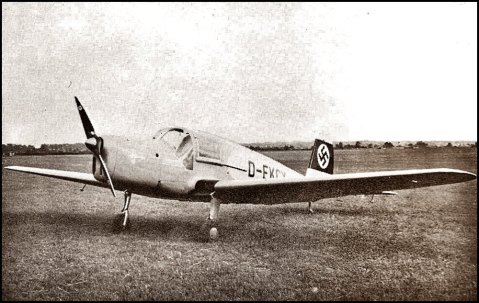


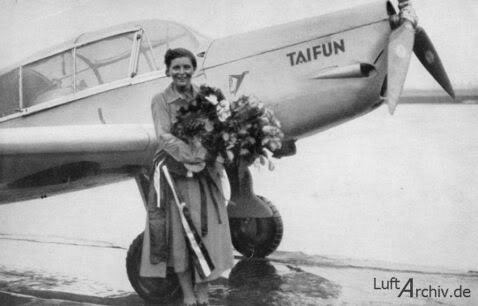


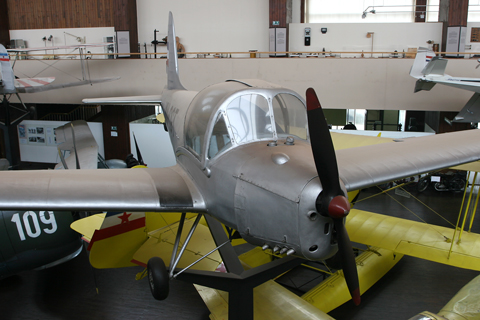
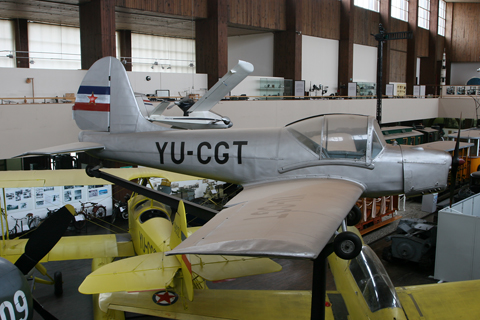
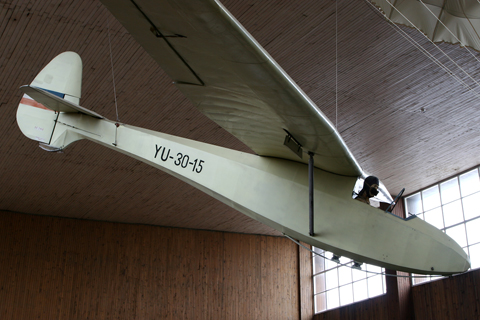

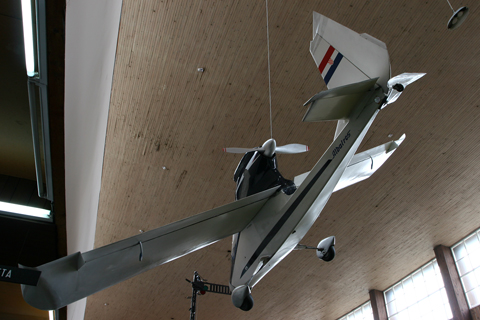


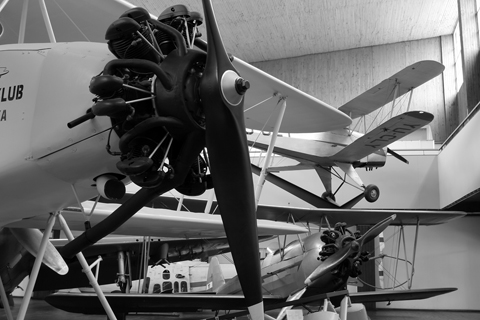


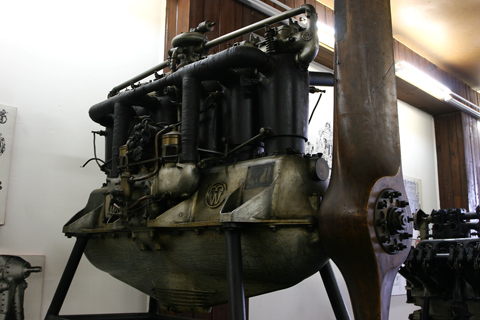


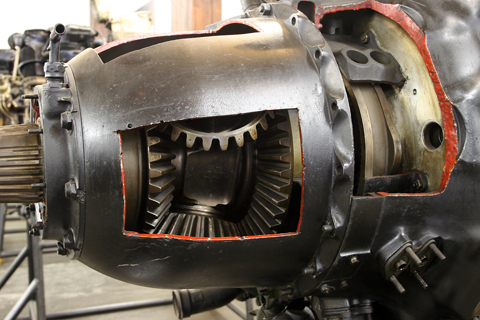
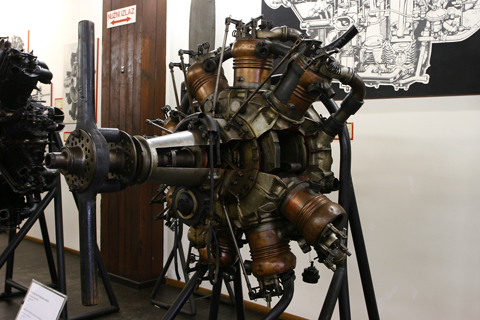


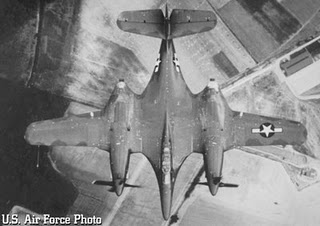


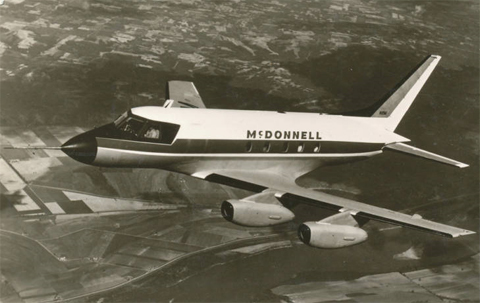


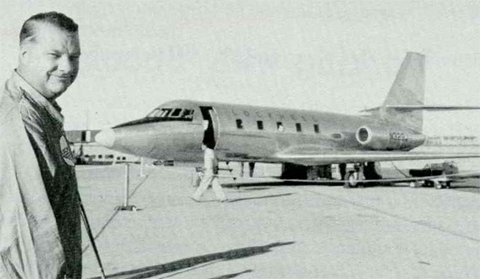


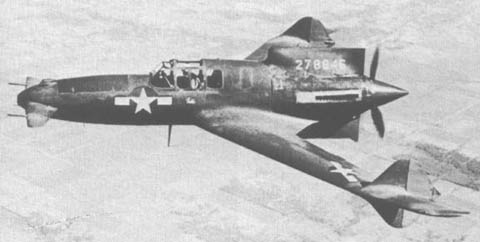
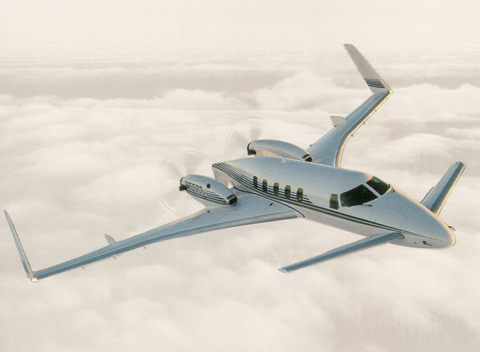


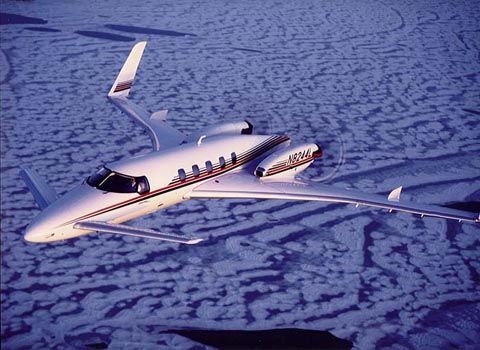

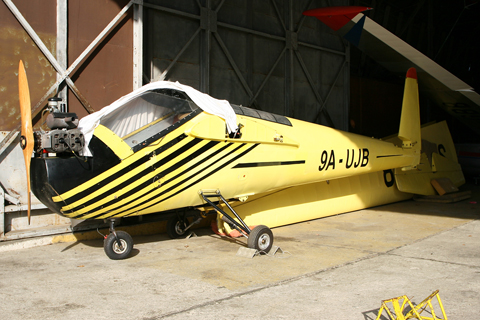

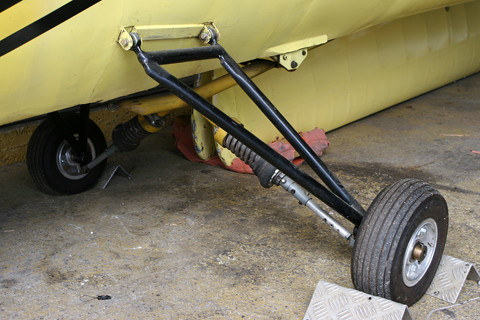

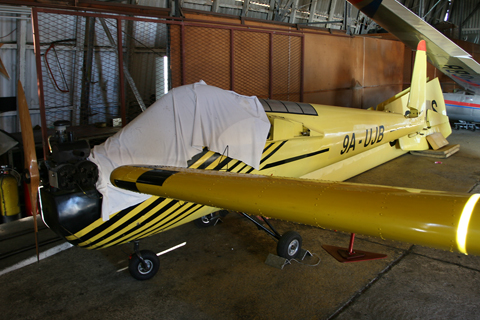



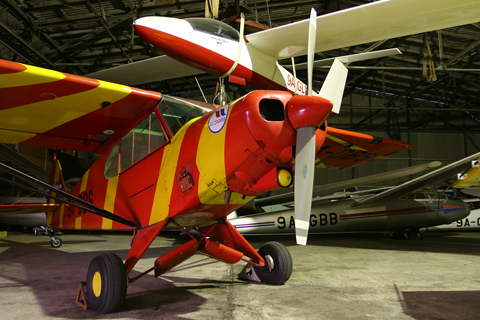

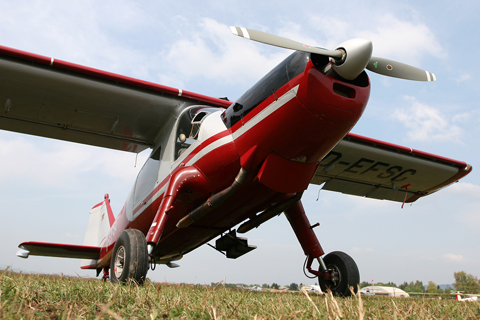
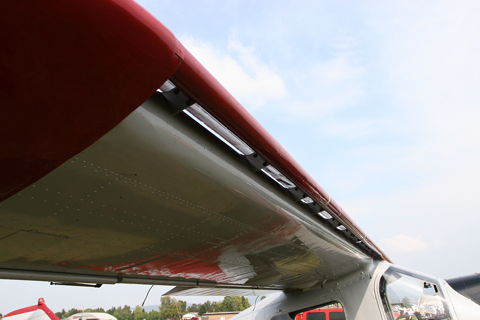
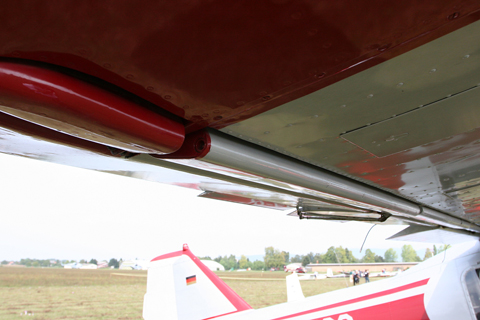
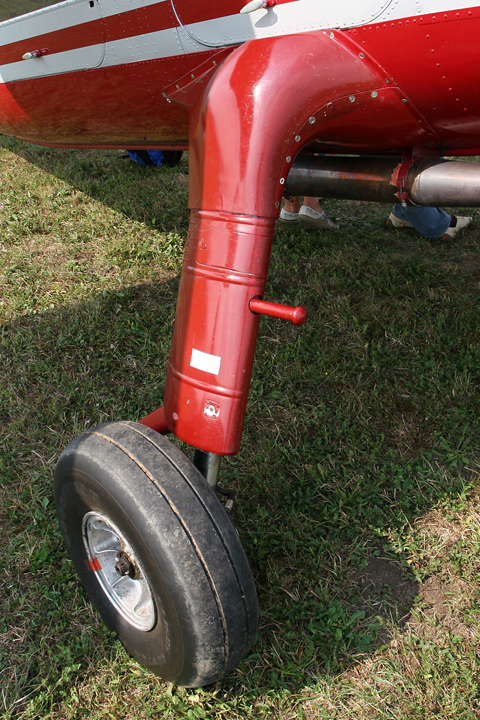
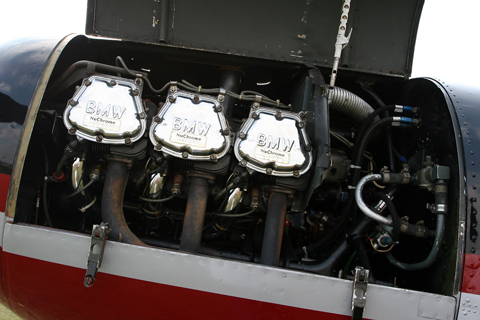
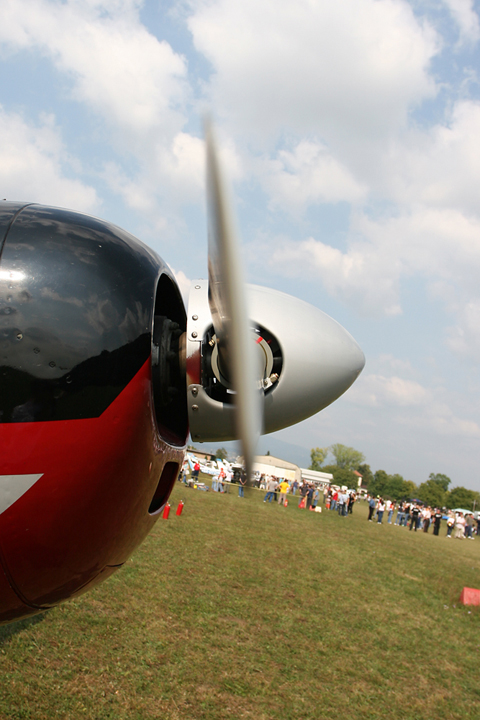
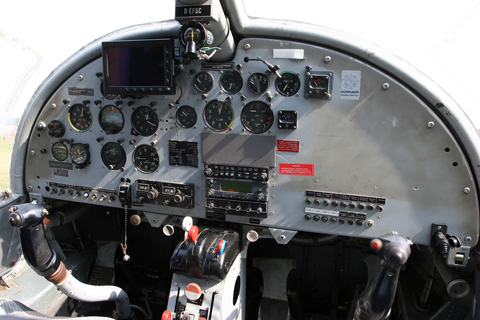
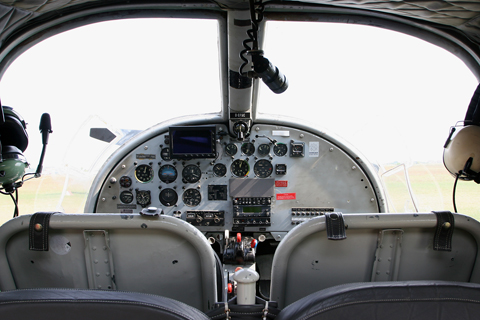

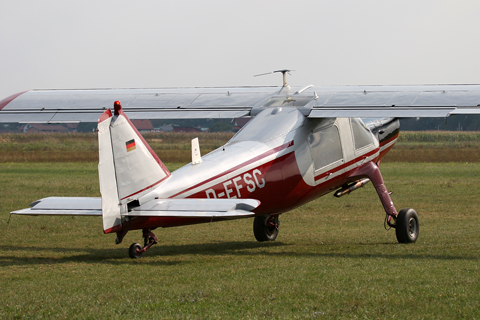



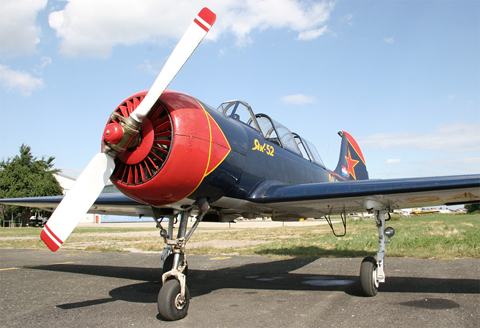

 Achtung, Skyhawk!