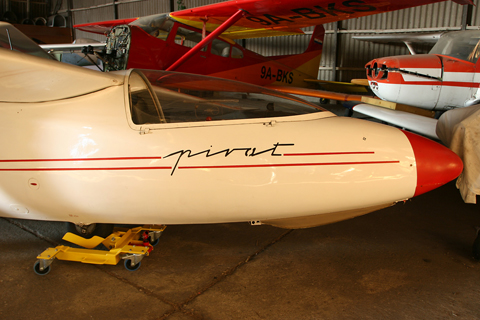
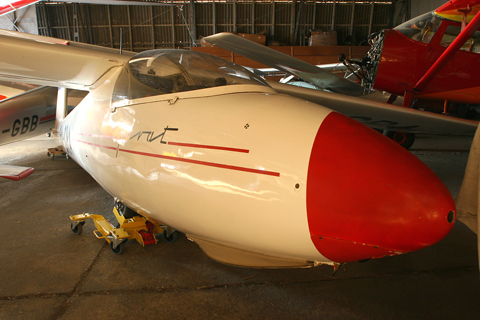
Having been quite productive during my last few visits to the field, I managed to snap some more photos of some of our rare gliders – including a gem I’ve missed before, having only seen it under cover and dismissing it as “just another” Pirat. All of these are the previously mentioned “eastern” and “local” varieties, which I think are more interesting than the ubiquitous Blanik… 🙂
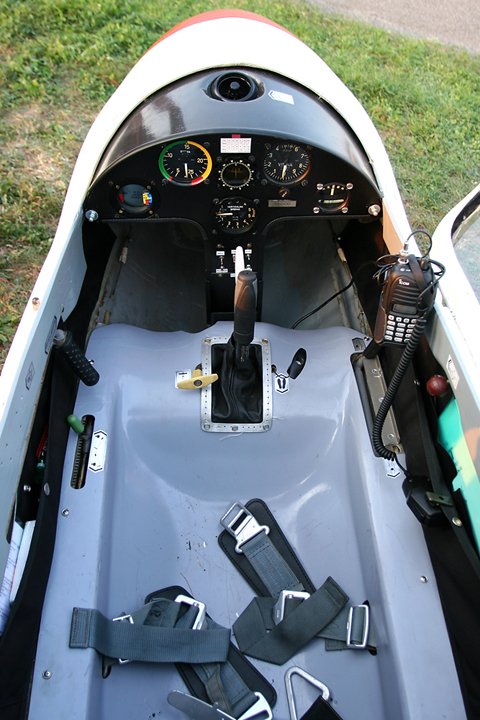
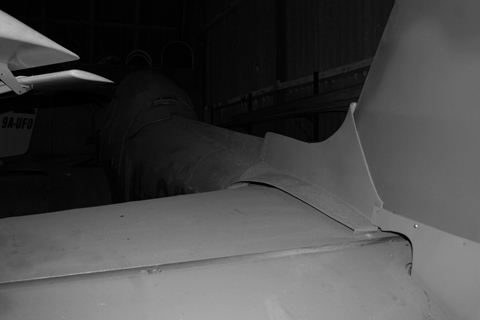
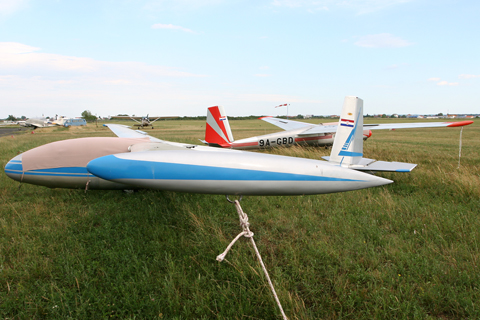
GJA enjoying a day out in the traffic circuit. A very hot and sunny day with calm winds meant that everything with wings and no engine was out and about. At one time I've seen four gliders in the circuit. Being a SZD-41A Jantar Standard, GJA is one of the most "advanced" gliders at Lučko, incorporating water ballast in addition to the usual Standard class goodiesA real beaut I couldn't believe I had overlooked - a very rare VTC-Vršac Vuk-T, Made in Ex-Yu. This 15 meter glider is one of only a few on the Cro register and wears a very interesting registration ("vuk" in Serbian/Croatian means "wolf", and since 9A-DOG was taken and gliders are on the G register - presto, 9A-GOD 🙂 )Looking very similar to other 15 meter gliders, the Vuk-T can often pass undetected in the glider crowdWaiting for its turn to be put to bed after a busy day of flying :). Unlike most other gliders at the field, GOD spends its time outside the hangar under protective coversThe very clean and tidy cockpit of GOD. Actually this is one of the cleanest cockpits of any sort I've seen in a long time. In addition to the standard analogue variometer, GOD is equipped with a digital one as well, which appears to have an additional function or two. And despite the yaw string you may have seen on the canopy, this Vuk-T is equipped with an electrical turn coordinator in the bottom right of the panelI'm just waiting for someone to ask where's the Meteor, so I can answer "Right next to the radiator" 🙂Not really a dignified storage location, but given the Meteor 57's rarity - only two built, only GSO flying - it's better to be safe than sorry with the cramped conditions in the hangarLike with most (all?) metal gliders, the Meteor's wings can be detached for transport relatively easily and simply. No electrics, no fuel tanks and not much mechanics mean that the wingroot is clean and unclutteredAnother shot of our now famous Pirat, back under cover and sodium light 🙂
Just a quick update from my new enclosed spotting location :). Was very lucky to catch some excellent lighting conditions – again courtesy of Dean T. – during closing time and just couldn’t resist taking a few photos, despite having photographed this subject more than a dozen times. But shiny and clean after a thorough wash, it was just perfect!
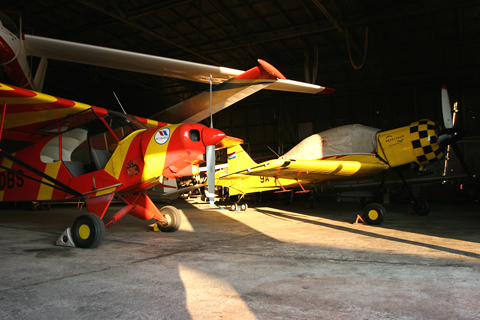
A single florescent bulb quickly transformed our ancient and crowded hangar into a museum :). Fresh and clean after a four-hour wash, 9A-DOG simply looked awesome in this settingCould easily be mistaken for a Lavochkin in some quiet war museum 🙂Ready for the scramble 🙂
UPDATE: Some more eye candy from today’s visit :):
Very happy with this one :). Looking poised and set for its next flightAK Zagreb's faithful Super Cub towplane with some of its charges
Here’s another photo report from your favorite airfield :). After a successful – and stressful – week of ATPL exams, I decided to head out again and catch some air, hoping to get some flying in as well. Though that eventually fell through, it was made up by a great photo opportunity – snooping around the Aeroklub Zagreb hangar, an as yet untapped photo resource :). While we don’t really have anything all that rare or very much exciting, there are some out-of-the-ordinary aircraft inside and – with some help of Dean T. and cooperative weather – I decided to see what I could make out of it all…
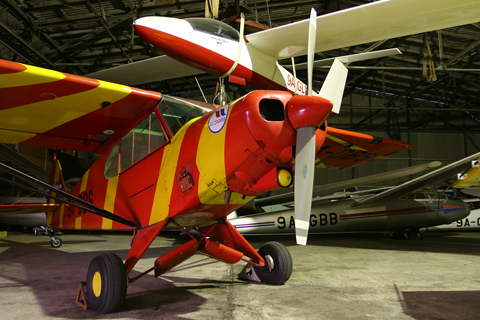
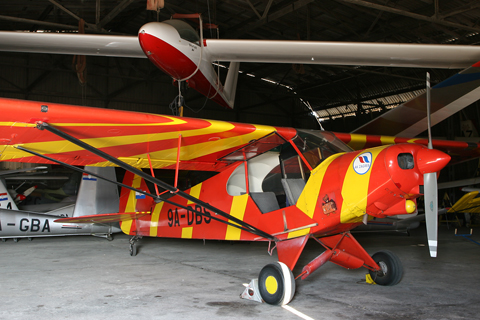
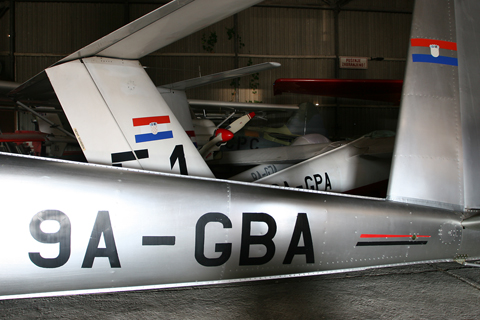
First out, last in is 9A-DBS, the subtle Super Cub of AK Zagreb. Used exclusively for towing gliders, DBS has seen hundreds - if not thousands - of landingsGilders and taildraggers galore. The more imposing I-3 9A-DOG, previously featured on this blog (I think), is the only one of its type in this part of EuropeThe Maze. Crowded to the point of bursting, the hangar is mainly home to Lučko's glider fleet. GBA is instantly recognisable as a Blanik, while GPA in the back is less easily identifiable as the field's second Pilatus B4. Out back with have 9A-GJA, the SZD Jantar mentioned in the previous postA close up of GPA and GJA. The intruding wing to the the right is of the field's hi-vis Cessna 185 9A-BKS, grounded for ages now while waiting for a new engine following a prop strikeA more exciting view of the hangar's Pilatus ceiling ornament 🙂Another more exiting view of 9A-GRA. I'm really beginning to like these Pirats 🙂Looking at it, who'd have thought it's made of wood?Now this is a real gem - an old Yugoslav Aero 3 primary trainer. It's old reg - YU-CPC - would suggest that it's been here for quite awhile. There were some plans to restore it to flying condition - essentially nothing's missing - but that doesn't appear to have gone very far...Like buried deep in an underground tunnel... and given how many aircraft were crammed into the hangar, the tunnel would have been easier to reach...
Discovering a sudden and very strong interest in gliders and gliding, I thought I’d compile a short feature featuring some of the other-type, non-Blanik gliders I’ve spotted around. Let Blaniks – being the most produced gliders of all time – are rather common and in larger numbers they tend to obscure some of the rarer and more interesting (predominantly Eastern European) types. Given my former lack of detailed knowledge of the sailplane world – translating into a lack of photos – I decided, for a start, to cobble together what I had in a short run through of what can be seen in my neck of the woods.
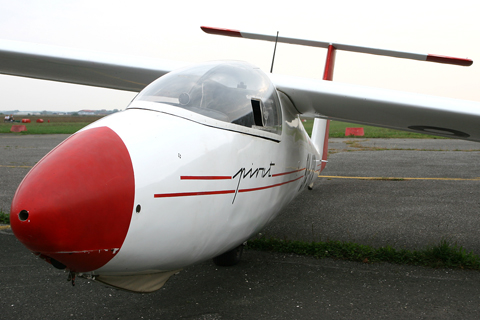
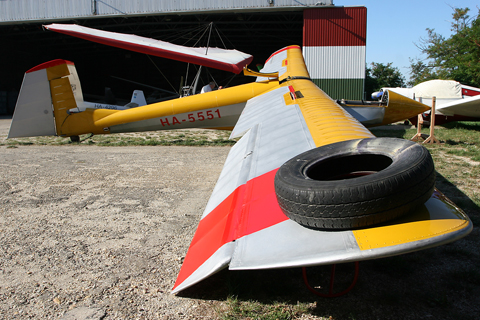
One of the locals hanging about. 9A-GLM is a Pilatus B4-PC11AF, built by the same company famous for its turboprop trainers and utility aircraft, but designed by Firma Rheintalwerke G. Baste in the early 60s. An all-metal glider, it is designed to Standard Class specs, with 15 meter wings, no flaps and no water ballastAnother Lučko resident (I think) is 9A-GPA. There are quite a few B4-PC11s on the Cro register, but I've only seen these two... the interesting type designation is a combination of the original B-4 and PC-11 adopted by Pilatus when they took over productionFrom the long line of (underrated) Polish gliders is this PZL-Bielsko SZD-30 Pirat. A simple and stable Club Class model, featuring neither flaps, retractable gear not ballast, the Pirat is made of wood, something rare in today's fiberglass and composite worldNot overly aerodynamic, the Pirat is none-the-less light and a good performer for its class. My interest in this one peaked when I found an excellent rendering of it for Microsofts FSX... 🙂9A-GRA, another Lučko resident, swoops down over my head on approach to the main taxiway. Must have been practicing emergency crosswind landings...Of not a very good quality, this photo was too rare to pass over. The subject is an Ikarus Meteor 57 glider from former Yugoslavia, one of only two built and the only one in an airworthy state. 9A-GSO is a premanent resident here, so I hope to catch more of it soonDesigned to what would best be described as Open Class standards, the Meteor 57 has 20 meter span wings fitted with negative flaps (usually seen only on high-performance gliders). 9A-GSO was formerly used for materials testing for the G-2 Galeb jet trainer and is - in common with a number of Eastern European gliders - equipped with an electric turn coordinator, replacing the traditional yaw string on the canopyPolish domination at Lučko :). Two Pirats, 9A-GRA and GZA, in the company of a SZD-41A Jantar Standard, aptly registered 9A-GJA. Their trusty towplane, Super Cub 9A-DBS, is just arriving down RWY 10Something foreign for a change, taken at Farkashegy airfield just outside Budapest, Hungary. HA-5551 is a very rare Rubik R-26 Gobe, a type I think not seen outside Hungary. Seen here undergoing maintenance, the R-26 is one of the designs to come out of the pen of Erno Rubik Sr., father of the much more famous Erno Rubik Jr., inventor of the Rubik Cube
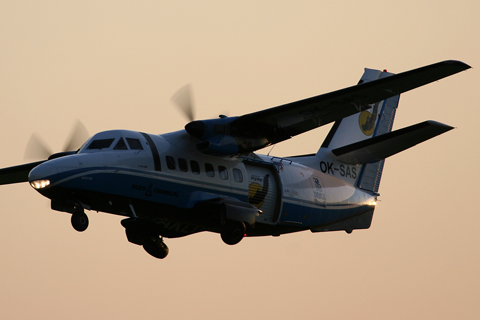
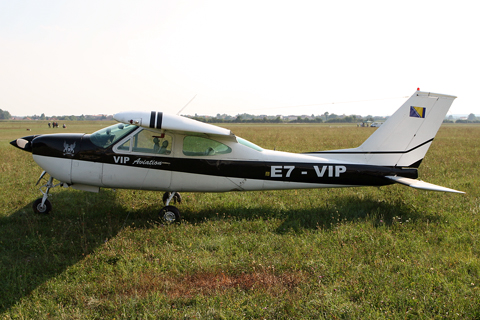
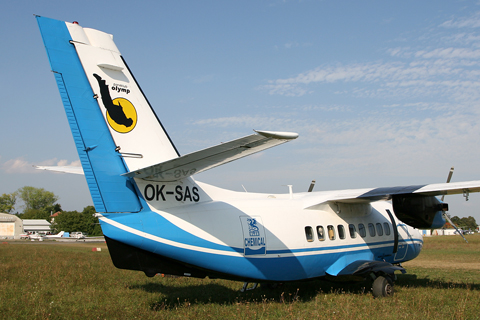
For a 2-in-1 feature, here’s a short photo update on two of our more recent foreign visitors, L-410UVP OK-SAS from the Czech Republic and the retractable Cardinal E7-VIP from neighboring Bosnia and Herzegovina.
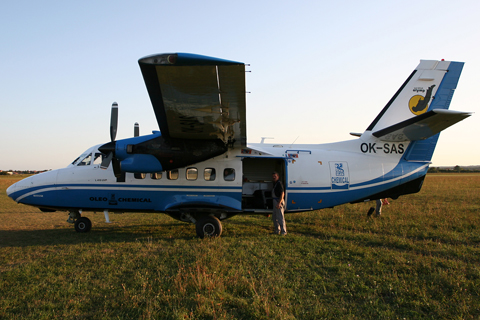
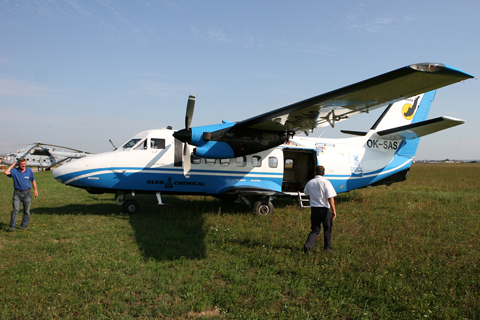
First in line is OK-SAS, as far as I’ve been able to find out only the second or third Turbolet to visit Lučko in the past several years. Fortunately for me, I managed to also catch it on the day it flew back to Czechia and in some pretty good weather conditions (at last!).
The crew preparing for the flight home on 30.08. As we do not have - in practice - anything resembling a customs station at Lučko, all foreign visitors leaving the country must first stop at Pleso (LDZA)Shot into the sun from quite a long distance away. I had installed myself on our ECOS taxiway near the runway - intending nail it during takeoff - so I spent the time taking random snapsOur equivalent of the 747 climbing out of RWY 10 toward LDZA, a couple of minutes away
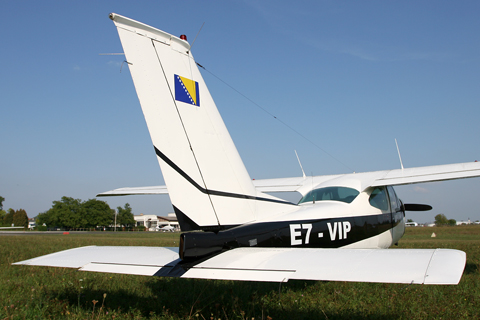
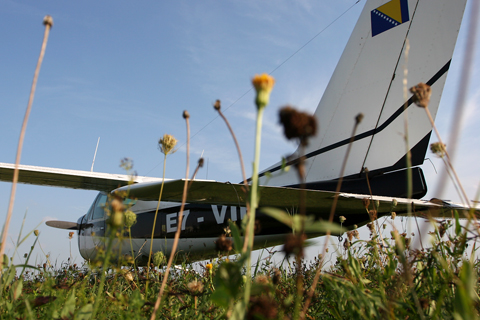
Our other foreign visitor is spending more time at the field, about two weeks apparently. Having been (presumably) repaired in the hangar, it was towed out and has been sitting for a week or so by the taxiway. Given that there’s nothing but grass around there, giving few good photo opportunities, the resulting pictures were not really to my liking, but what the heck. Also, I have mislabeled E7-VIP as a Reims F177RG when it’s in fact an even rarer Wichita-built 177RG (checked the serial number plate).
Looking less than dignified out in the fields...An oddity among smaller Cessna singles, the Cardinal has - in addition to the Centurion-style strutless wing - an all moving tailplaneNot quite an environment for the less-robust Cessna RG singles...
By another stroke of incredibly good luck, I had popped down to the field yesterday to get some flying done – and clear my head of all the ATPL meteorology – thinking it’d be another “nothing special” day. Initial impressions proved be right, for beside a horde of skydivers preparing for a jump – nothing unusual – all was quiet. But about half an hour later, sitting on our apron waiting for the nosewheel to be changed on our club C150, a friend of mine who works the fuel pump – among us commonly referred to as “The Sheriff” – came round and asked me had I come to see the Turbolet that was coming to town. One had been scheduled to appear more than a two weeks earlier, but for some reason didn’t. On my feet in an instant, I soon found out it was the same aircraft I had waited to catch before – and imagine my delight 🙂 (no comment 😀 ).
And due to a breakdown in communications, The Sheriff was left all alone as the ground crew, tasked with leading the aircraft round the field, parking, fuel, you name it. So while I was around, I decided to help, which later turned out to offer quite an interesting photo opportunity…
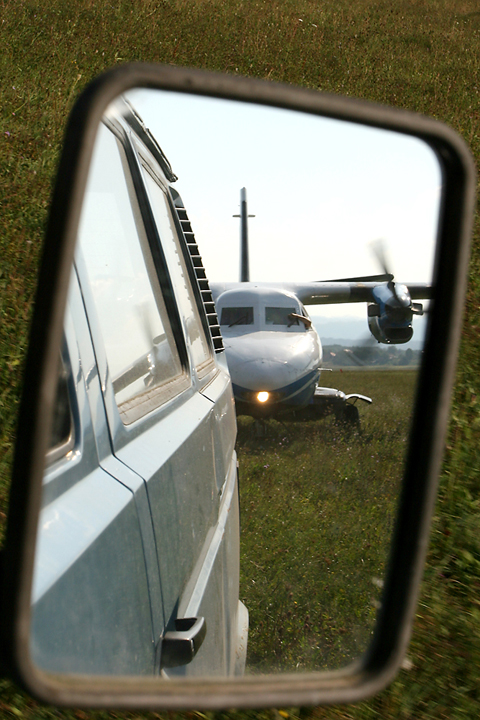
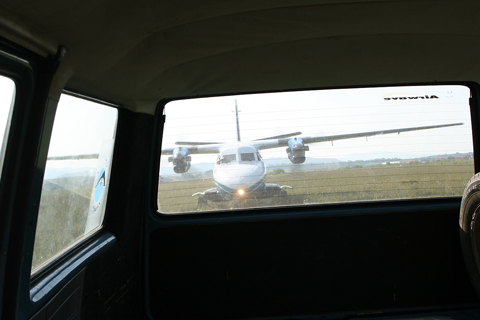
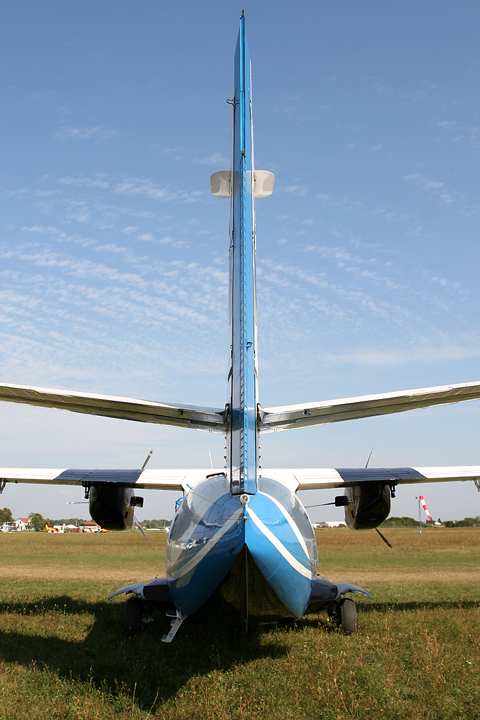
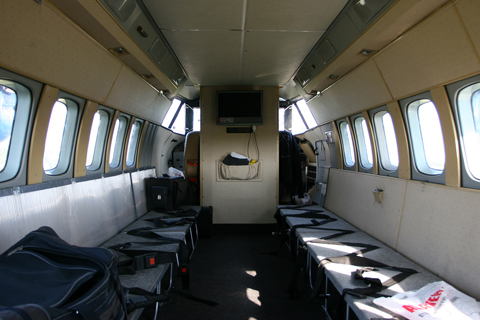
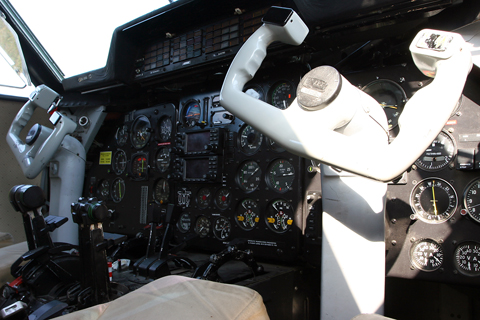
Speed limit enforced by aircraft :D. Playing the Follow Me van as we guide the Slovak crew around the field in our beat up 1980s VW TransporterDamn these tourists, always getting lost in the most unlikely places... 🙂A less than auspicious start to the OK-SAS' visit - a miscommunication from the control tower saw us leading the aircraft to the military helicopter apron, where it was due to refuel with Jet A. However, once on one of the helicopter stands - and finding out that they didn't mean to refuel right away - they couldn't turn round due to some apron obstacles, so the four crew, us two from the van and two mil helo pilots were forced to employ a classic manual "pushback" onto the grassThe somewhat stubby, but still good looking, shape of the Turbolet. The most popular 19-seat turboprop ever built, the L-410 has spawned dozens of sub-versions and is in use around the globeBeing an UVP version, OK-SAS doesn't have the distinctive tip tanks of the most common UVP-E versionIn town for some skydive ops, the aircraft's interior was stripped out of every bit of unnecessary kitThe tight - but well equipped - cockpit of the Turbolet. The center pillar you saw in the previous photo is a bit limiting for photography though...
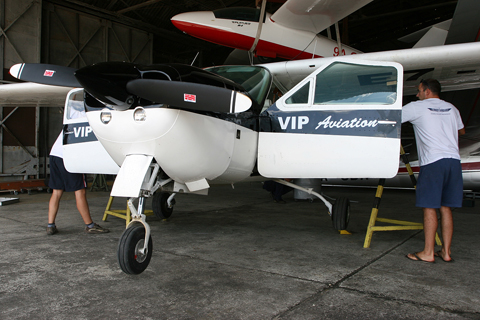
With my luck seeming to hold, I came across another gem at Lučko this week. Alerted by a friend and the most powerfukl person at the field – he operates the fuel pump among other things 🙂 – I found this beauty in the Aeroklub Zagreb hangar undergoing some repairs (the nose gear wouldn’t retract if I got it right). Naturally, I was at the field the next day with my camera to get some preliminary shots before this immaculate aircraft was rolled out of the hangar fully fixed.
The shots aren’t all that good, but I didn’t want to get in the way… Men At Work and all that… and there’ll be plenty of opportunity later for some good photography (the results of which will naturally be posted here 🙂 ).
Jacked up :). Operated by VIP Aviation of Bosnia, E7-VIP - despite an odd paintscheme - was absolutely spotless! Had a peek in the cabin and the panel looks like it came off the line yesterday!Possibly the only thing spoiling the awesome Cardinal is here up front, the IO-360 four-cyl 200 HP engine, driving a two-blade constant speed prop. I've heard and read that many owners would have preferred some more punch...A bit difficult to photograph... a dark fuselage and dark hangar with a while belly and sun glare outside. Packed in with a number of our resident gliders
Though the Let L-13 Blanik glider is nothing to shout about – being one of the most produced gliders of all time – the pair I found at Lučko today looked very inviting, so I natrually got the camera out and set to work :). The two machines in question are 9A-GBC and its sistership 9A-GBD, both belonging to Aeroklub Velika Gorica based at Buševec airfield (LDZB) south of Zagreb. As far as I’ve been able to find out, they’re in town for some towing practice, where new tow pilots flying the club’s Piper Super Cub, 9A-DBU, hone their skills (hope to join them soon…).
Gliders galore at Lučko. Both GBC (foreground) and GBD (background) sport attractive liveriesA stiff 12 knot crosswind, with gusts to 16, and impending severe weather coming from the west and north kept our nice visitors grounded the entire day. Though not much of a wind, the orography of Lučko's surroundings causes quite strong rotors on approach and departureGiven the small number of gliders on the Cro register, most have sequential registrationsA shot meant to remind me of the reg (24 and already senile 🙂 ) turned out quite nicely in the end...The typical slender glider fuselage exemplefied on poo-stained GBCA very nice paintscheme with some gloss to boot!Pretty much the same case as with GBC. Looks like a pipe dumped in the grass 🙂
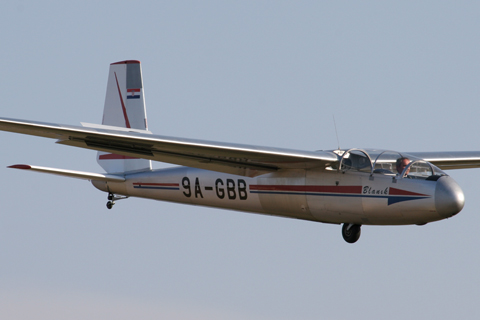
In addition to visitors from the south, I might as well post a couple of photos of two of our resident Blaniks, 9A-GBA and GBB (see the sequence?). Owned by Aeroklub Zagreb, they’re the main training gliders at Lučko.
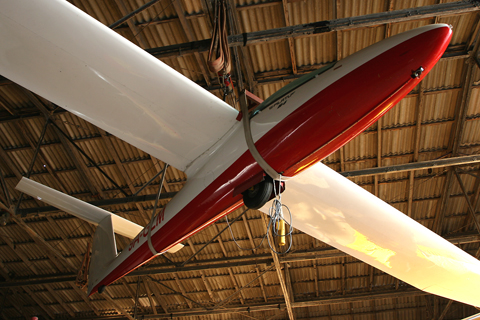
Just touching down after a long duration sortie above town. The paint scheme is not nearly as attractive as GBD'sGBB in the hangar (the WW2 one from the previoius post 🙂 ), with GBA in the back and a Pilatus B4 hanging from the ceiling
GBB on approach during one of the few times I've seen it in flight personally
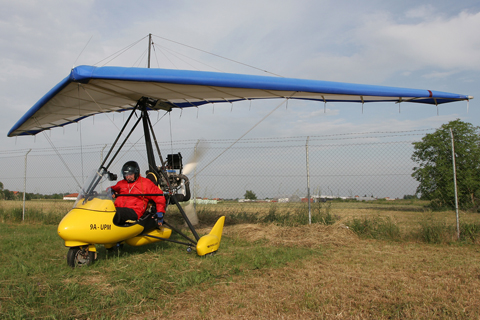
Had the great fortune of running into this sweet little thing at Lučko today. Owned by a member of the aeroclub, it was in town for a visit and parked at our apron – so I couldn’t resist going in for a couple of photos :). Though I must admit that my knowledge of ultra- and microlights has always been sketchy at best, this thing got me interested in the whole deal. An open cockpit, a Rotax banging away behind you, a couple hundred meters above ground… that pretty much shares first place with gliders for the true spirit of flight.
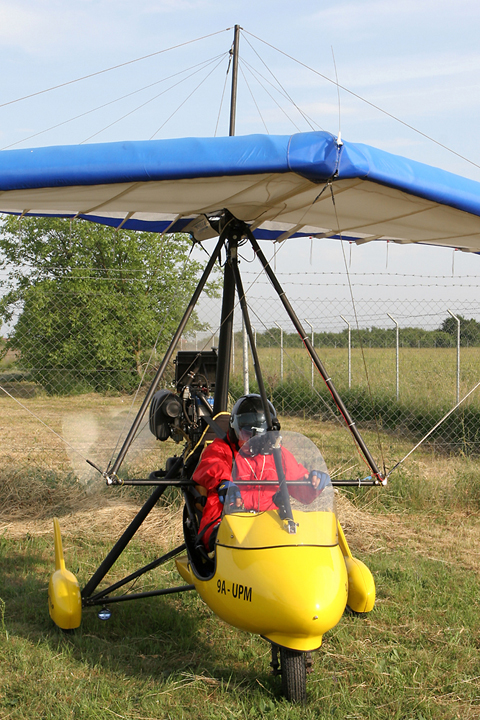
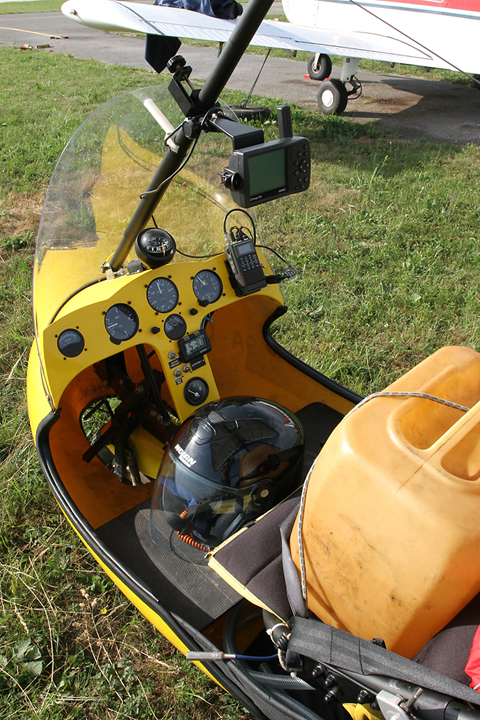
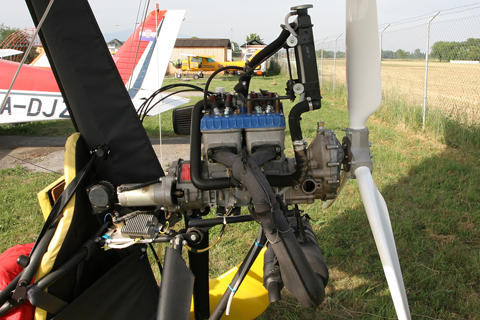
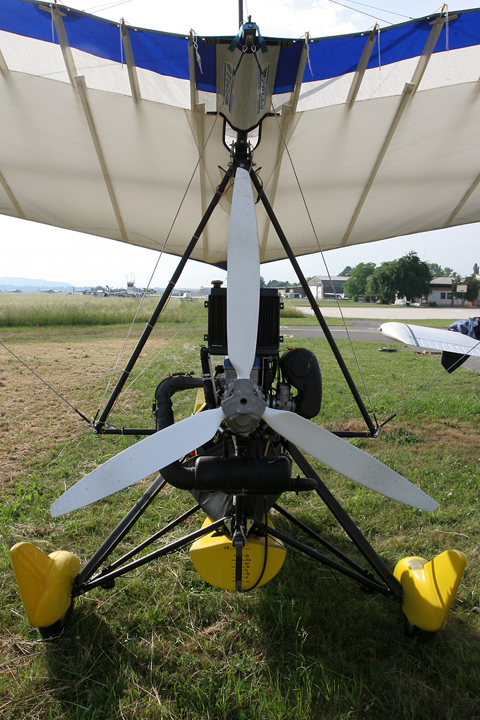
A full-option Apollo Racer GT, 9A-UPM (the U prefix being for ultralights) is a bit more serious than other similar microlights. Equipped with full nav lights, wingtip strobes and twin landing lights – not to mention a comprehensive panel with almost more instruments than the Cessna 150 I got my wings on – UPM costs about €17.000, which is not all that cheap (though I am thinking of selling my €18.000 car now 🙂 ), but you do get a lot of microlight for the money. The only thing missing is a transponder, but I believe that can be arranged as well…
Mr. M firing up UPM for an afternoon flight. I think these are the C-17 model wings (a number of them are on offer)Closeup of the... fuselage. In a nice - and easily visible - yellow scheme, UPM has the optional windscreen, according to the owner very useful on cold daysVertical view just before taxiing out. The manufacturer's webpage states that the Apollo GT can also be equipped with floatsThe cockpit. Everything needed is here - including a handheld Garmin GPS MAP 196 as extra. Unlike a number of local microlights, UPM is also equipped with a hand-held radio station, albeit powered by the engine alternatorThe power comes from the 64 HP (a lot!) Rotax 582. Interestingly for an aircraft engine, the 582 is a two-cylinder, two-stroke water-cooled engine - going pretty much against every conventional piston engine design guideline :). The power is transferred to a (I think) air-adjustable three-blade propRear view. The fuel tank is, unusually, under the fuselage. The engine water cooler can be easily seen here above the engine
Digging through my photo database – as well as Airliners.net – I stumbled across this idea for an informative series of articles about aircraft that aren’t all that famous anymore.
You’ve already seen the first installment – Cessna’s Oddballs – and there’s more coming! So far, apart from this one, there’ll be three other articles, one published every second day. If it works, I may turn it into a regular thing, especially if I have the photos to spice it all up :).
I’ve been out and about at the field today and I’m happy to report (to those one or two interested) that I’ve managed to nail 9A-DJZ with my big bad Canon during its visit to Zagreb, so now I have some quality photos to go with the article. They’re not very artsy, but then it was a very hot and humid day and jumping around the grass in sweat-soaked clothes was not high on my priorities list :). So here goes…
Classic front quarterview. Like the last time I shot it, DJZ had seen better days...Note the difference in gloss between the paint on the fuselage and vertical stabRear quarterview. Like almost all (if not all) light Pipers, the PA-28 has an all-moving horizontal stabiliserFull profile viewNote that the prop is canted a bit to the right. A pretty common solution on high-power aircraft (to offset a bit the P factor), this is the first time I noticed this on a PA-28
Going through my photo database – a Herculean task I must say – I’ve noticed that there are quite a few old model Cessnas and Pipers in Croatia, pre-1970s vintage. Though somewhere else they might be considered normal and ordinary – Australia and New Zealand spring to mind – here they’re a bit of a rarity. So, in a an obvious lack of inspiration to write anything else, here’s a short run through a couple of these odd-balls :).
(unfortunately, I’ve not been able to find out the manufacture year for most of these aircraft. Their data plaques were most uninformative, while serial number searches on the net turned up little useful info. This list is then primarily based on their version letters)
1. 9A-DAH, Reims (Cessna) F150K
Serial No.: F150-0631 Operated by: Aeroklub Krila Kvarnera
Based at Grobnik airfield (LDRG) just outside of Rijeka on the coast, this early model 150 – French-built no less – is the oldest 150 model I’ve seen in Croatia. Most others are either L or M versions (both Wichita- and Reims-built) so catching this one on a surprise visit was of relatively high priority :).
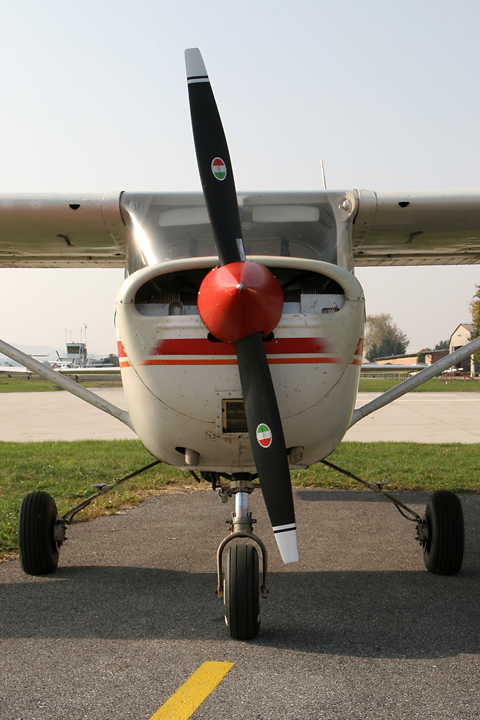
Preparing to fire up for an afternoon departure back to Grobnik. The plane had seen better days, but I was told - through feedback from a different photo on Airliners.net - that it got a new coat of paint not soon after this was takenRear quarterview. From this angle, the K version can be distinguished from the much more numerous L and M models by the short dorsal fin connecting the vertical stab with the fuselageFrom the front, recognition is even easier. The K model was the last to have the relatively flat nose and assymetrical cooling ducts (don't even know how to call those in English...)
2. 9A-DNG, Reims (Cessna) F172F Skyhawk
Serial No.: 0111 Operated by: Air Mravinac
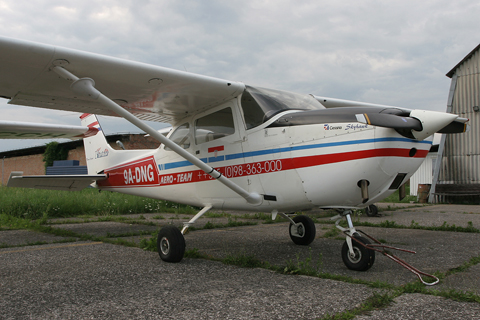
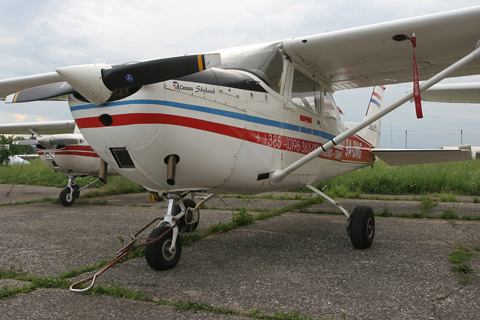
Our second oldie is what I believe to be the oldest Skyhawk in Croatia. Based at Čepin airfield (LDOC) near Osijek in eastern Croatia, this gem still has the early – and nowadays very rare – 6 cylinder O-300 engine of 145 HP (with a fixed pitch prop), in more modern Skyhawks replaced by the 160 HP 4 cyl O-320 or 180 HP IO-360. Was very excited to catch this one, didn’t know we even had one on the register…
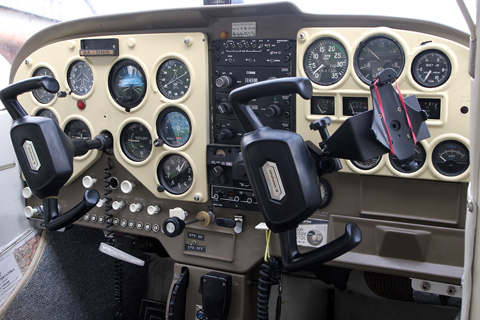
Finally a real oldie :). The longish nose gives away the 6 cyl O-300 underneath. To my additional good fortune, it's not the stock Lycoming or Continental, but a Rolls-Royce licence built model. Despite the engines being identical, having the R-R on the engine is a thing of prestige 🙂She's in pretty good shape for her age :). In town for some light servicing. Note also the different nose profile, common on early model SkyhawksAnd a very nice cockpit to round it up. The "place 'em where you can" instrument layout is also typical of early Cessna singles in general. An interesting addition is the German WW2-style manifold pressure gauge to the right of the tachometer. Like its counterparts on Messerschmitts and Focke-Wulfs of old - from whom it may even come - the gauge measures in atmospheres, rather than inches of mercury. Takes some getting used to, but it's very simple: 29.92 inHg = 1013.25 hPa = 1 atmosphere
3. 9A-DJZ, Piper PA-28-140 Cherokee Cruiser
Serial No.: 28-7425212 Operated by: private
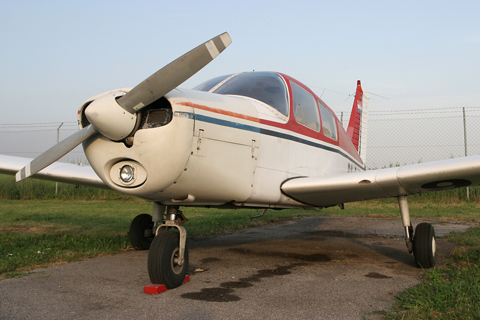
Third on the list is the precursor to the very popular Piper Warrior – the small and simple Cherokee. Sharing the same family tree, the Cherokee was the smallest of the PA-28 line, powered by a 140 HP engine (in contrast to the 160 HP on later Cherokee models and the 180 HP on the Warrior). Based at Dubrovnik in the extreme south of the country, DJZ rarely ventures here to the north – who would with 140 HP and 3+ hours of flight time – so the only photos I have of it were taken back in 2005 with my old Fuji S5000 camera.
Though small and relatively underpowered, the early Cherokees are classics today. This is the only one in Croatia as far as I'm informedFrom any angle, the Cherokee Cruiser is a diminutive aircraft. At my height, I wonder how would I fit in it 🙂The typical Piper cockpit. Though not much of a looker from the outside, in here DJZ was equipped rather nicely. You had a transponder, VOR and ADF, pretty much everything you needed for any form of VFR flying
4. 9A-DTD, Cessna 182K Skylane
Serial No.: 182-57946 Operated by: private
The last on the list for this post is a relative newcomer, first spotted by me in October 2008. A mid-model Skylane, DTD was configured in a skydive configuration with an upward opening door modification I’ve frequently seen on dedicated-but-not-built-as-such skydive aircraft (including HA-SVH, the Cessna 185 featured a couple of posts back). Bought for that purpose, DTD is one of the few Skylanes of any model in the country.
Parked away from the main apron on a beautiful autumn afternoon. Easily recognisable as an mid model by the oldie cowl, from the firewall back it generally looks like any other SkylaneShowing off its right hand door mod. Like most Skylanes, DTD has a presence when viewed from the front, the large three-blade prop certainly helping matters. The aperture you see in the right cooling duct is the oil coolerAn artsy perspective of the panel. Though a bit vintage, it has everything you need - and skydive ops are hardly avionics-intensive 🙂



























 Achtung, Skyhawk!