(Another) Photo Dossier – Some GA Oldies Spotted At Lučko

By Boran Pivčić
All photos author

Going through my photo database – a Herculean task I must say – I’ve noticed that there are quite a few old model Cessnas and Pipers in Croatia, pre-1970s vintage. Though somewhere else they might be considered normal and ordinary – Australia and New Zealand spring to mind – here they’re a bit of a rarity. So, in a an obvious lack of inspiration to write anything else, here’s a short run through a couple of these odd-balls :).

(unfortunately, I’ve not been able to find out the manufacture year for most of these aircraft. Their data plaques were most uninformative, while serial number searches on the net turned up little useful info. This list is then primarily based on their version letters)

1. 9A-DAH, Reims (Cessna) F150K

Serial No.: F150-0631
Operated by: Aeroklub Krila Kvarnera

Based at Grobnik airfield (LDRG) just outside of Rijeka on the coast, this early model 150 – French-built no less – is the oldest 150 model I’ve seen in Croatia. Most others are either L or M versions (both Wichita- and Reims-built) so catching this one on a surprise visit was of relatively high priority :).

Preparing to fire up for an afternoon departure back to Grobnik. The plane had seen better days, but I was told - through feedback from a different photo on Airliners.net - that it got a new coat of paint not soon after this was taken
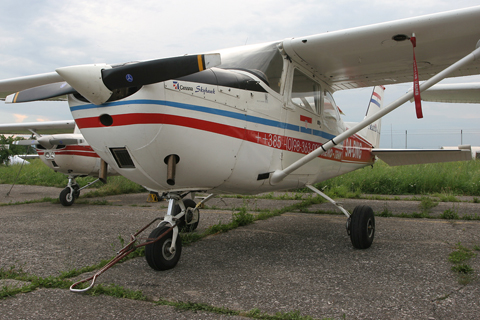
Rear quarterview. From this angle, the K version can be distinguished from the much more numerous L and M models by the short dorsal fin connecting the vertical stab with the fuselage
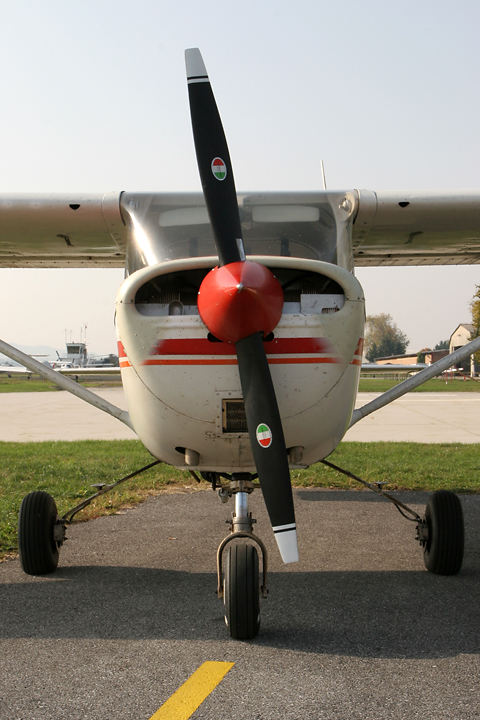
From the front, recognition is even easier. The K model was the last to have the relatively flat nose and assymetrical cooling ducts (don't even know how to call those in English...)

2. 9A-DNG, Reims (Cessna) F172F Skyhawk

Serial No.: 0111
Operated by: Air Mravinac

Our second oldie is what I believe to be the oldest Skyhawk in Croatia. Based at Čepin airfield (LDOC) near Osijek in eastern Croatia, this gem still has the early – and nowadays very rare – 6 cylinder O-300 engine of 145 HP (with a fixed pitch prop), in more modern Skyhawks replaced by the 160 HP 4 cyl O-320 or 180 HP IO-360.  Was very excited to catch this one, didn’t know we even had one on the register…
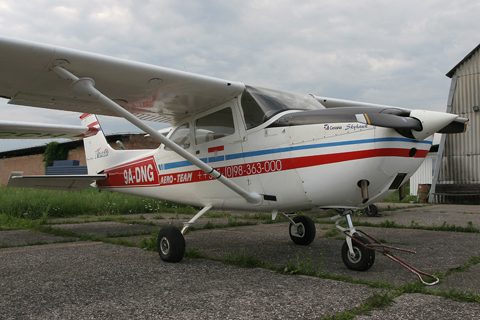
Finally a real oldie :). The longish nose gives away the 6 cyl O-300 underneath. To my additional good fortune, it's not the stock Lycoming or Continental, but a Rolls-Royce licence built model. Despite the engines being identical, having the R-R on the engine is a thing of prestige :)
Finally a real oldie :). The longish nose gives away the 6 cyl O-300 underneath. To my additional good fortune, it's not the stock Lycoming or Continental, but a Rolls-Royce licence built model. Despite the engines being identical, having the R-R on the engine is a thing of prestige 🙂
She's in pretty good shape for her age :). In town for some light servicing. Note also the different nose profile, common on early model Skyhawks
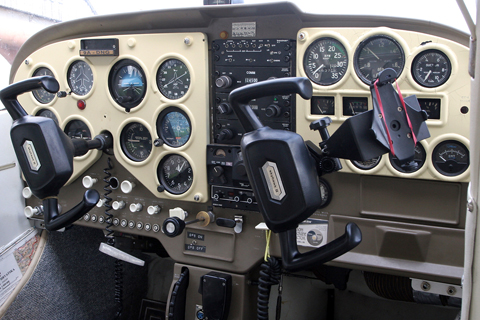
And a very nice cockpit to round it up. The "place 'em where you can" instrument layout is also typical of early Cessna singles in general. An interesting addition is the German WW2-style manifold pressure gauge to the right of the tachometer. Like its counterparts on Messerschmitts and Focke-Wulfs of old - from whom it may even come - the gauge measures in atmospheres, rather than inches of mercury. Takes some getting used to, but it's very simple: 29.92 inHg = 1013.25 hPa = 1 atmosphere

3. 9A-DJZ, Piper PA-28-140 Cherokee Cruiser

Serial No.: 28-7425212
Operated by: private

Third on the list is the precursor to the very popular Piper Warrior – the small and simple Cherokee. Sharing the same family tree, the Cherokee was the smallest of the PA-28 line, powered by a 140 HP engine (in contrast to the 160 HP on later Cherokee models and the 180 HP on the Warrior). Based at Dubrovnik in the extreme south of the country, DJZ rarely ventures here to the north – who would with 140 HP and 3+ hours of flight time – so the only photos I have of it were taken back in 2005 with my old Fuji S5000 camera.
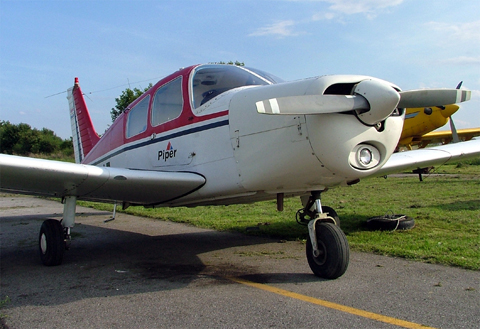
Though small and relatively underpowered, the early Cherokees are classics today. This is the only one in Croatia as far as I'm informed
From any angle, the Cherokee Cruiser is a diminutive aircraft. At my height, I wonder how would I fit in it :)
From any angle, the Cherokee Cruiser is a diminutive aircraft. At my height, I wonder how would I fit in it 🙂
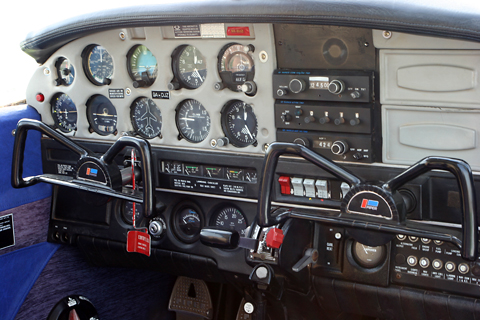
The typical Piper cockpit. Though not much of a looker from the outside, in here DJZ was equipped rather nicely. You had a transponder, VOR and ADF, pretty much everything you needed for any form of VFR flying

4. 9A-DTD, Cessna 182K Skylane

Serial No.: 182-57946
Operated by: private

The last on the list for this post is a relative newcomer, first spotted by me in October 2008. A mid-model Skylane, DTD was configured in a skydive configuration with an upward opening door modification I’ve frequently seen on dedicated-but-not-built-as-such skydive aircraft (including HA-SVH, the Cessna 185 featured a couple of posts back).  Bought for that purpose, DTD is one of the few Skylanes of any model in the country.

Parked away from the main apron on a beautiful autumn afternoon. Easily recognisable as an mid model by the oldie cowl, from the firewall back it generally looks like any other Skylane
Showing off its right hand door mod. Like most Skylanes, DTD has a presence when viewed from the front, the large three-blade prop certainly helping matters. The aperture you see in the right cooling duct is the oil cooler
An artsy perspective of the panel. Though a bit vintage, it has everything you need - and skydive ops are hardly avionics-intensive :)
An artsy perspective of the panel. Though a bit vintage, it has everything you need - and skydive ops are hardly avionics-intensive 🙂

(Short) Photo Dossier – Bell 427, 9A-HTI

By Boran Pivčić
All photos author

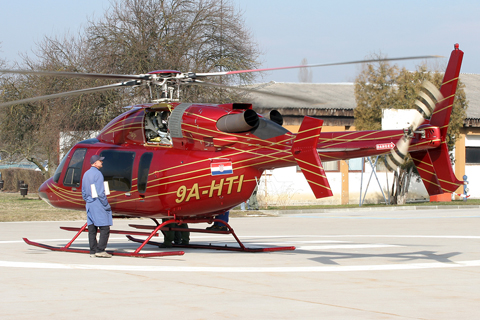
Here is some living proof that the early bird catches the worm – or in this case, helicopter. I’ve been wanting to nail this thing for awhile now, ever since it came on the Cro register about a year or two back. Owned by a prominent local industrialist who had traded it in for his former Bell 407 (recession? Is that something you eat? 🙂 ), it happened to be at the field on a February 2009 (early) morning when I was present at an inspection of the two AT-402s featured a couple of stories back. Normally it operates from a private helipad in eastern Zagreb, but on this occasion it was at Lučko – probably undergoing light maintenance with the Police squadron, which operates an almost all-Bell fleet (the odd helicopter out being a Robinson R.22) and has experience with Bell types.

Unfortunately, being otherwise engaged with a screwdriver and a rusted bolt, I failed to take any photos of it while it was being rolled out from the hangar (where I’m told it sometimes spends some time – but not on drunk flying charges 🙂 ). When I saw that they indeed meant to go flying soon, I dropped my tools and picked up the camera just in time to catch it after startup – and here are the results:

Serial number: 56056
Former reg: N8010J (Bell factory test registration)

What do all the tube thingies do?
What do all the tube thingies do? Mechanics checking the engines out - with them running - before departure. Despite its 2x 710 HP, pilots on the type say the 427 sometimes runs out of breath in hot and high conditions
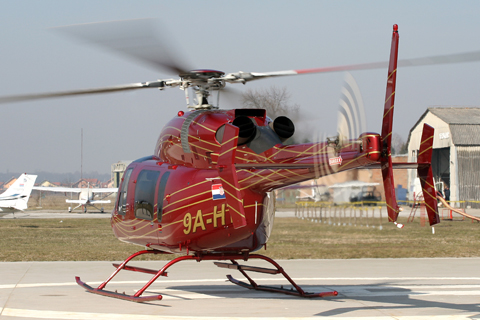
Despite being large and relatively intimidating, you can still trace the 427's JetRanger heritage
Though large and relatively intimidating, you can still trace the 427's JetRanger (or rather LongRanger) heritage underneath all the exhausts and stabilizers
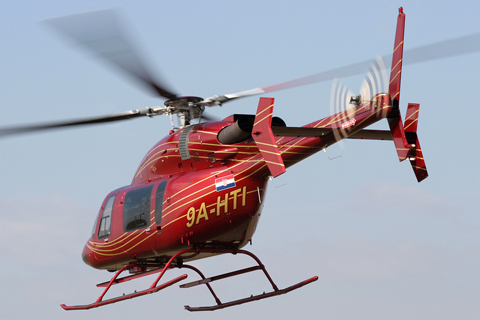
Gently lifting off from the Police helipad
Gently lifting off from the Police helipad. Strangely enough, apart from the Police Agusta-Bell AB.212, this is the only twin-engined civil helicopter in the country
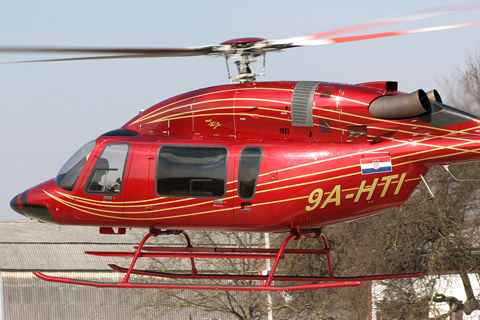
And the paintscheme is subtle too :)
And the paintscheme is subtle too 🙂
Departing to the west rather quickly at low level
Departing the field rather quickly at low level
The aforementioned Bell 407. Notice the similar reg - HIT vs HTI, T and I being the initials of the owner, while H is the generic prefix for civil helicopters
The aforementioned Bell 407, 9A-HIT. Notice the similar reg - HIT vs HTI, T and I being the initials of the owner, while H is the generic prefix for civil helicopters

Photo Dossier – Hu, Hu, Hu! Hungarian Skydive Aircraft at Lučko

By Boran Pivčić
All photos author

A bit of an odd topic, but prompted by yet another Hungarian skydive plane I saw at the field a few days back. Given the relative lack of suitable skydive planes native to the field – except our Cessna Skywagon, 9A-BKS, currently undergoing repairs following a propstrike – and the rich, varied and relatively cheap general aviation scene in neighbouring Hungary, it’s not unusual to see some of their aircraft chartered for a few days during intensive skydive ops. This gave me the idea to make a small photo compilation of all the aircraft (all three 🙂 ) in this category I’ve seen and photographed.

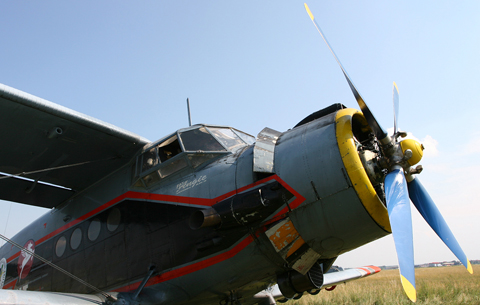
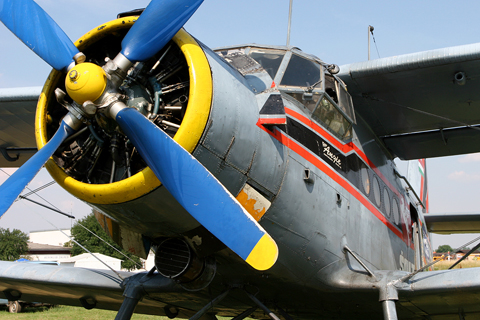
1. Antonov An-2 (late model), HA-MKK “Fat Angie”

The first one I’ve spotted, back in June 2007. Flew a lot together with another Croatian example, 9A-DIZ, but was sadly lost on January 11th, 2008., when it hit a mountainside in Slovenia in poor visibility. Of the crew of two, one died, while the other suffered severe injuries.

Some handbrake cornering :).
Nose detail. Note the differently-painted lower cowl flaps.
More nose detail :). At least the prop is nice and shiny.
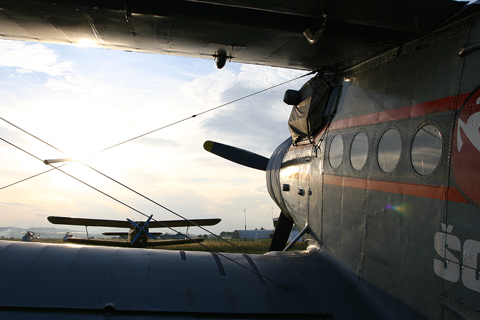
Looking across to DIZ after a busy flying day. Despite looking far better on the exterior than MKK, for the duration of its stay at Lučko DIZ was continually plagued by engine problems

2. Cessna A185F Skywagon, HA-SVH

Mfd.: 1975
Serial No.: 185-02644

The newest addition to the list was first seen (by me) at Lučko on April 18th, 2009. Not much info about it is avilable and even the ultimate resource – Airliners.net – had only one previous photo of it. And to add insult to ignorance, it taxied out right under my nose when I had arrived at the field and was later grounded as well when its tailwheel tire burst, denying me a photo of it inflight… grrr.

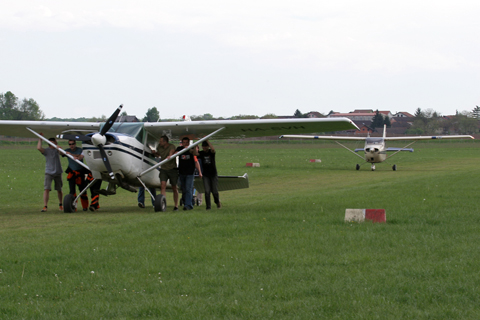
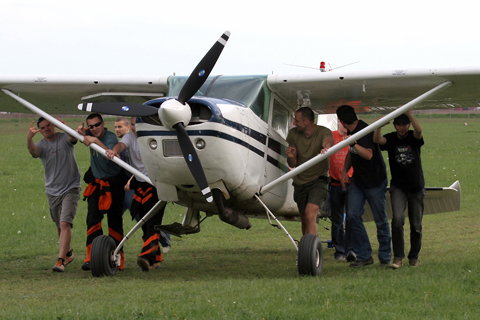
You up front, move it! Taxiway hogs... :). A cheerful group of skydivers pushing their plane back to the hangar all the way from the RWY 10 threshold - more than a kilometer away.
You up front, move it! Taxiway hogs... 🙂 A cheerful group of skydivers pushing their plane back to the hangar all the way from the RWY 10 threshold - more than a kilometer away.
Most photographers would have been content with just a smile or a wave, but I hit the jackpot here! :) Dedicated to all the guys and gals who like to jump out of perfectly serviceable airplanes :)
Most photographers would have been content with just a smile or a wave, but I hit the jackpot here! 🙂 Dedicated to all the guys and gals who like to jump out of perfectly serviceable airplanes 🙂
The brave men of Aeroklub Zagreb lifting the tail to place supports under the fuselage. These would hold the tail up without human intervention and allow the wheel to be changed (which the guys tell me is a 15 minute job, since that often happens on our local Skywagon)

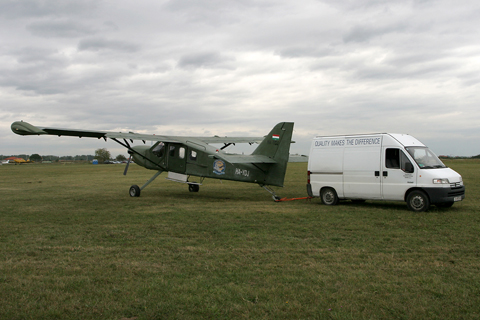
3. Technoavia SMG-92 Turbo Finist, HA-YDJ

Mfd.: 2004.
Serial No.: 02-001

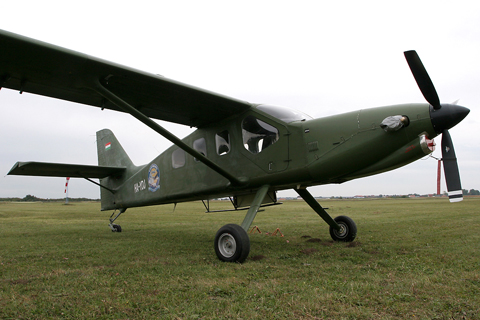
An aircraft built in Russia, with a Czech engine, registered in Hungary, flown by a Slovak pilot and operating in Croatia… can it get any more complicated? 🙂 Seen this handsome thing for the first time at the 2008 Lučko Airshow on September 20th. Powered by a Walter M-601 turboprop engine delivering 540 HP, this thing packs some serious punch for its size! Visited Lučko courtesy of the boss of our Croatian Aviation Forum association.

Blending in nicely there...
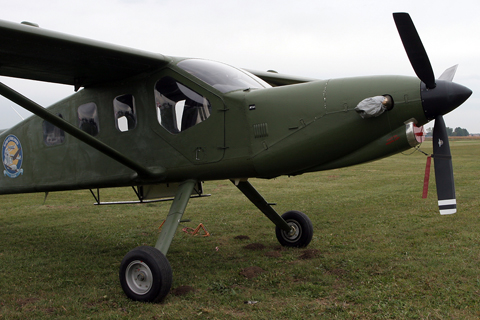
Another nose detail, though there's not much to see. The original Russian Finist, the SM-92, had the tough and durable VOKBM M-14 9-cyl radial engine, but somewhere along the line someone in Hungary decided to stick a turbine in it. And voila!
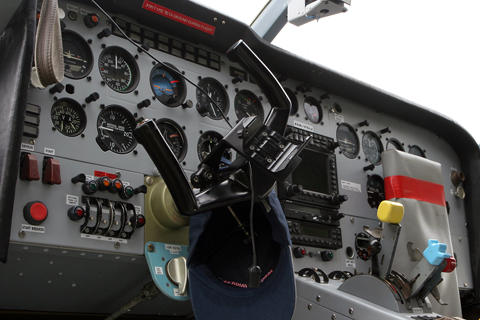
Despite the aircraft's rather agricultural appearance, it has an excellent panel equipment package. Everything's here - moving map GPS, Mode S transponder and a full IFR suite of instruments.
I'll have one to go as well!