
By me
All photos me too, copyrighted
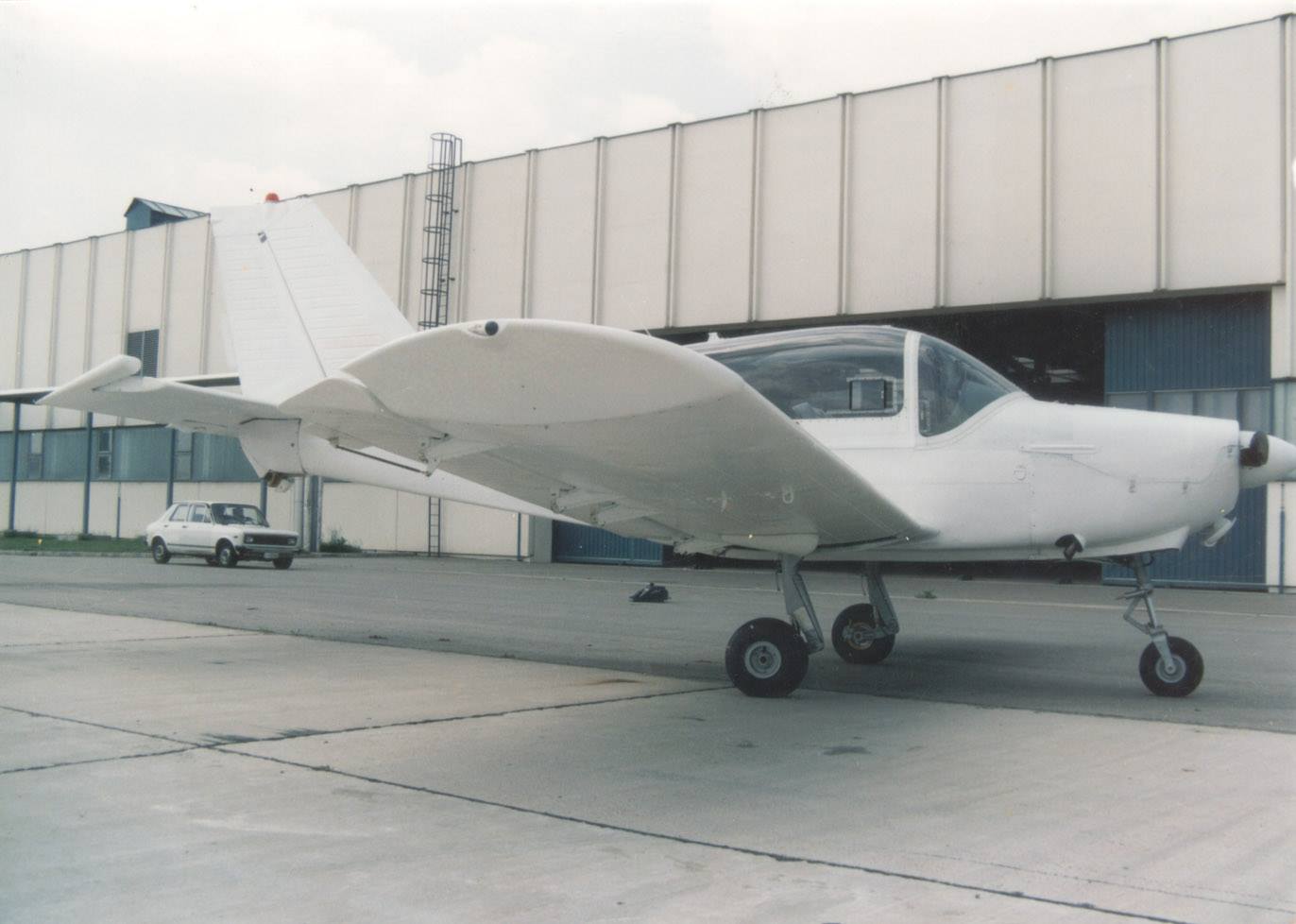
If you’ve ever wanted to send the ex-Yugoslav aviation scene into a fit of fond nostalgia and blind rage at the same time, there was only one aircraft you’d need to mention: the Utva U-75. Behind its facade as a rather conventional two-seat basic trainer, it had over the years evolved into one of the most polarizing aircraft ever made by Yugoslavia’s aviation industry, a rough but capable diamond to some – and a vile deathtrap to others. While the truth is inevitably somewhere in the middle (and requires quite a bit of historical context to place), the fact remains that even today the type is very firmly ingrained in the local aviation psyche.
This, in turn, meant that it was only a matter of time before it would start appearing in force here at Achtung, Skyhawk!. Indeed, back in 2017 there was a big piece on the sole surviving four-seat U-75A, followed up a year later by an attempt at making a sensible (!) pilot report for my first ever flight on one. And while their mention here is a shameless plug (💪), they are nevertheless worth a read on their own merits… if anything for providing at least some of the aforementioned context, and helping to illustrate just what the U-75 was supposed to be and why it ultimately succeeded/failed at that.
All of this is also relevant for what is to come now. What had originally started out as just a simple photo showcase of the U-75s I’ve flown so far had, shockingly, gone completely off the rails within minutes. I’d needed only a few catchy captions to go along with the photos… but ended up going on a number of lengthy tangents, each delving deeper and deeper into the juicy, nerdy details of the U-75’s design and operation. Thus, having even a bit of the type’s backstory at hand will make it much easier for this whole (rambling but hopefully interesting) text to fall neatly into place…

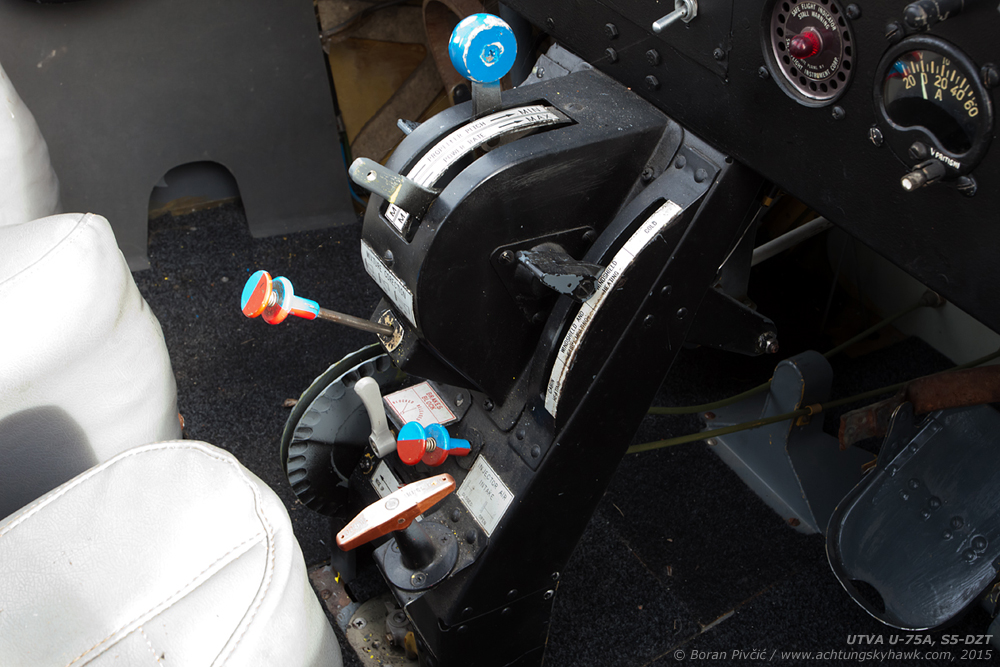
A manly man’s stick with a guarded weapon release switch, and a 70s green ergonomic mess of a panel… who could honestly say no?
The origins of this thing go back to the summer of 2022, when – in an entirely unscripted series of events – I had managed to log time on three different U-75s in three different countries all in the space of just three months’ time. What had set the ball rolling was an innocent decision in June to add another new reg and another new airfield to my logbook. While browsing through available fields within reasonable reach by car, I stumbled upon Prijedor (LQPD) just over the border in Bosnia, whose Facebook page had prominently featured its U-75 E7-PDC in all its galleries. Tick. Having posted photos of that flight on my Instagram account, I was then contacted by an instructor from Maribor (LJMB) in Slovenia, and invited to have one last go on their S5-DCI before it used up its remaining service life and ended its flying career. Tick again. And, having done all of that, I thought “sod it”, and on an impromptu vacation to North Macedonia in September decided to go for a Triple Tick and try out Z3-DCF out of Štip (sans ICAO code), by far the best of the few remaining U-75s in the country. Naturally, my camera had made all three trips as well, making for some entirely predictable results…
On a serious note: the story of every aircraft featured here touches upon, in one way or another, the Yugoslav independence wars of the early 90s; it’s simply the nature of the beast (much to my regret, having lived through those times). Since this site is, and has only ever been, about nerdy airplane stuff – and the 90s are anything but that – you’ll have to forgive me for occasionally skimping on the details… as well as being vague at times, since records from the period are not always easy to find (be it from not being kept at all, honestly lost, dishonestly destroyed, or simply unavailable for any of a myriad reasons)
The Mule: E7-PDC
Kicking off both the photos and the tangents is the youngest U-75 I have on file, manufactured in 1985 under the military ID 532381. Nowadays operated by AK Prijedor (AK = aeroklub, flying club), PDC is your typical small-town jack-of-all-trades, used for everything from basic flying instruction to precision flying competition to glider towing – all of which also makes it one of the busiest and hardest-working 75s on the Balkans today.
Since legacy Yugoslav aircraft tend to be “generational hand-downs” – frequently serving out their entire lives with the same club, or changing hands once or twice at most – PDC, like many 75s, has a disappointingly straightforward history. Initially flying with AK Paraćin of (the Federal Republic of) Serbia as YU-DJS, it would be transferred to Prijedor in JUN 1988, becoming YU-DLY in the process. One of the few 75s that do not appear to have gone into temporary military service during the collapse of Yugoslavia, it would remain on the Serbian register all the way into 2003, when it would become T9-PDC… and then finally E7-PDC when Bosnia swapped out its registration prefix in AUG 2007.

The twins. While the most complicated part of the entire airplane – the powerplant – may be as generic as it gets (a 180 HP Lycoming IO-360 whirling a two-blade Hartzell HC-series constant speed prop), the rest of the airplane is pretty much bespoke. This inevitably became an issue once the spares pool had started to dry out – and was further exacerbated by the type’s withdrawal from the Serbian Air Force in 2016-2017, ending any meaningful official support. Remaining operators are increasingly left with few choices but to cannibalize non-flying examples, a fate that likely awaits E7-PDB as well…
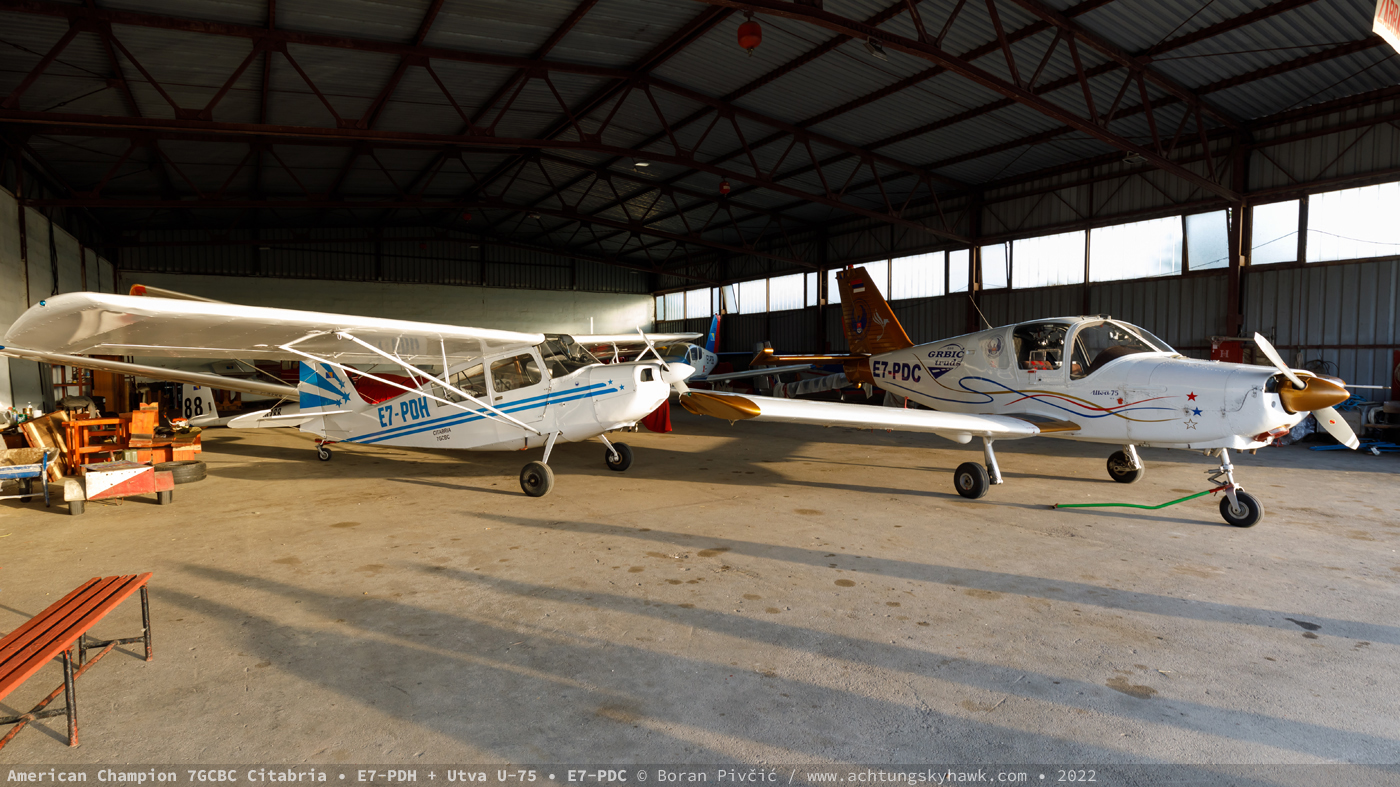
Despite its seemingly compact appearance (accentuated by the short 9.73 m wingspan), the U-75 is a proper chonk of an airplane – which becomes particularly obvious when parked next to something else. The wing root alone is approx. 80 cm off the deck, while the wingtip itself has a very generous 1.1 m ground clearance – both far in excess of many other low-wing two-seaters (E7-PDH would, sadly, be lost with both on board barely six months after this was taken)
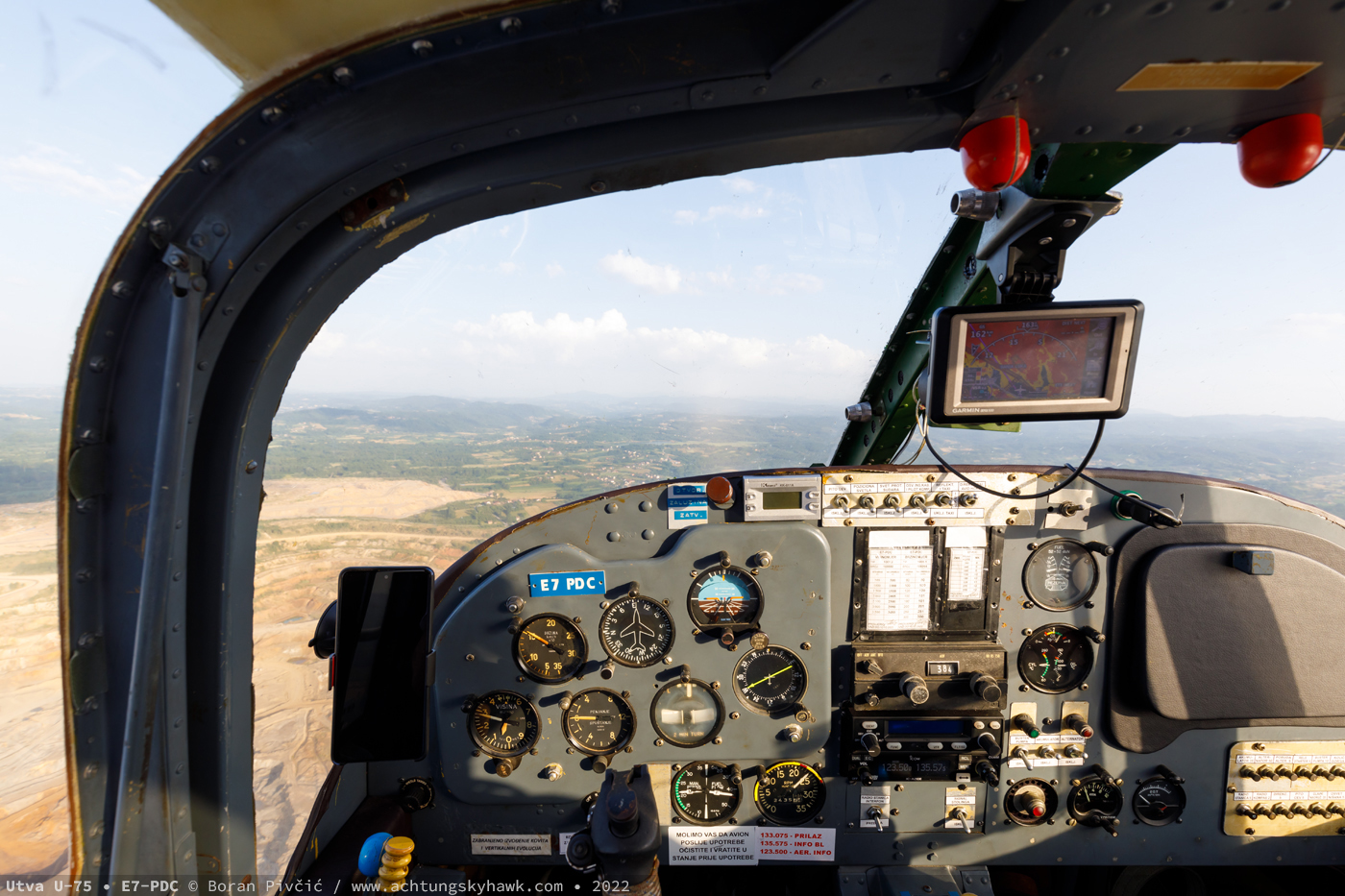
As iconic a cockpit view as there can be on the Balkans! True to its role as an everyday workhorse, E7-PDC has a few add-ons not normally found in other U-75s: a Garmin Aera 500 GPS unit, an ICOM IC-A210E com radio, and a Trig TT31 Mode S transponder (the King KR 85 ADF doesn’t count; that was part of the factory standard fit). Other new bits include more modern seats with modern harnesses, and outside there’s a full suite of LED navigation and strobe lights

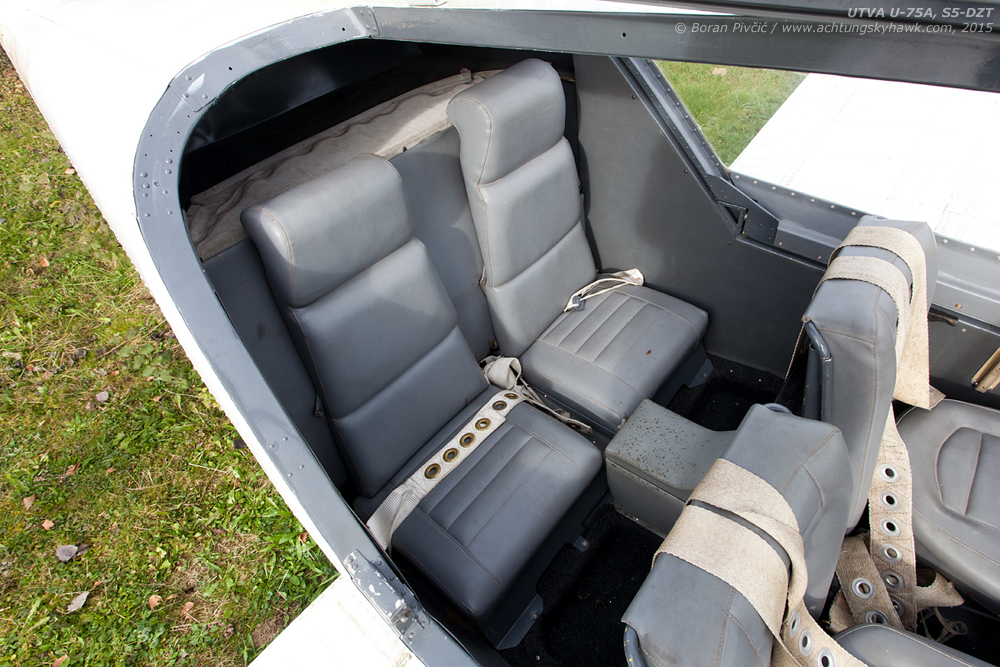
In addition to the panel layout, another thing to get used to inside are the very lines of the cockpit itself. The heavy frame and low door sills mean that looking forward initially feels like you’re peering out of a post box, while glancing over the sides you’d think you’re in an observation airplane. However, once you get a bit more comfortable with it all, it doesn’t feel even remotely as unnatural as it looks; the short downward sloping nose – plus the extensive glazing and generally airy feel to the cabin – mean that visibility is actually borderline excellent in all direction except backwards
1 among the many specifics of Yugoslavia’s aviation industry was the often confusing interplay of civilian and military interests in the design and manufacture of light aircraft. A perfect example, the U-75 itself was conceived to cater for the needs of both the civilian Vazduhoplovni savez Jugoslavije (VSJ, Aviation Federation of Yugoslavia) and the Yugoslav Air Force (Ratno vazduhoplovstvo, RV). It included very nearly equal amounts of input from both of them – a tow hook for the VSJ, underwing hardpoints for the RV for example – and both were intended to split the bill of its development. However, due to the military’s higher position in the state apparatus (not to mention having eventually ended up covering most of the expenses), all of the aircraft would actually be owned by the RV, with an agreed-upon number made available to the VSJ through a lease agreement. The VSJ would, in turn, distribute these aircraft to flying clubs across the land according to its own internal schedule. This meant that in peacetime, the RV could recall aircraft from civilian service to cover its own operational needs (such as replacement of losses) – and in wartime press them into use as nuisance raiders armed with two of either 120 kg dumb bombs, 12-round 57 mm rocket packs, twin-tube 128 mm rocket launchers, or 7.62 mm machine gun pods.
As an upshot of this “ownership structure”, all of the U-75s used by the VSJ would also carry the RV’s standardized five-digit ID (evidencijski broj, record number) alongside their normal civilian registrations. Here, the first two digits would denote the aircraft type, and the last three a particular aircraft’s position in the production sequence (with the 0xx block reserved for prototypes and pre-production examples, and 101 onward for series machines). With the U-75 having been assigned the type code 53 – and the two production batches being 53101-53124 and 53151-53261 – PDC’s ID of 53238, for example, works out to being the 111th production-standard 75 made. These IDs were sufficiently big a thing in fact that they became the stand-in for serial numbers when identifying individual airframes – so much so that many forgot the aircraft even HAD factory/line numbers to begin with.
To complicate matters even further, the RV also used custom type designations for many aircraft in its service, usually a combination of the aircraft’s role and its two-digit type code. The U-75 so became the V-53 (višenamjenski, multipurpose), though this tended to be rarely used outside of official documents and manuals; thus, U-75 YU-DJS of “the civilians” and V-53 53238 of the military would actually be the very same airplane.
But wait, there’s more! “According to its own internal schedule” is just an abridged, diplomatic way of saying the bureaucracy didn’t end there – not even remotely. Subordinate to the VSJ proper were the aviation federations of the individual Yugoslav republics and autonomous regions – much of the same really, but with a more tactical, hands-on approach. In the case of the U-75, the VSJ, as the “head office”, would split the 86 aircraft it had received (later upped to 114) into lots deemed sufficient for the needs of each republic/region – and then sit back and let the individual federations do the heavy lifting of allocating them to individual clubs. I mention this because anybody not from around here trying to make sense of the whole arrangement will inevitably run into a myriad of acronyms for the various organizations involved – VS, ZS, ZLOS, … – all of which may seem different and confusing… but all essentially denoting the very same thing. The main culprit here is linguistics – and to avoid setting off a firestorm, suffice to say that there were two dominant languages in use back then: Serbo-Croatian (Yugoslavia’s lingua franca) and Slovenian. You can probably see where this is going:
- VS: vazduhoplovni savez … “aviation federation” in Serbo-
- ZS: zrakoplovni savez … “aviation federation” in -Croatian
- ZLOS: zveza letalskih organizacija Slovenije … “the union of aviation organizations of Slovenia”, a long-winded way of saying “aviation federation” in Slovenian
The warbird: S5-DCI
The next one, by contrast, is NOT your everyday hauler; indeed, it is (or rather was) possibly as close as you could get to an operational, original military-spec 75 anywhere in the lands of former Yugoslavia. Manufactured in 1980 as 53171, it would be allocated to AK Maribor right from the beginning, initially under the reg YU-DGF. Come the collapse of Yugoslavia in 1991, it and other Slovenian U-75s would be pressed into service with the 15. brigada vojaškega letalstva (15th Military Aviation Brigade) of the newly-formed Slovenian Air Force. Now known as SL-DCI, it would eventually become the S5-DCI we know today when Slovenia was allocated its permanent registration prefix2 in 1992.
Used solely for training duties during this time3, all of the impressed U-75s would be withdrawn from service in 1994 and replaced by the Zlin Z-242L. The surviving machines (some having been lost to accidents) would eventually be released for use by their original flying clubs, though they would nevertheless remain under military ownership for the next two decades4. And while all of them would lead busy civilian lives throughout the rest of the 90s, age and spares and maintenance costs would eventually whittle the fleet down until only DCI remained, operated by AK Maribor’s successor, Letalski center Maribor (LCM).
Initially earning its keep as a glider tug (and occasional competitor in the odd precision landing championship), by the mid 2010s it would increasingly take on the role of the “treasured family oldtimer”, flown pretty much solely for the experience and its historical significance. By mid 2022 however, the Utva Curse would catch up with it as well, with an upcoming engine overhaul – made doubly more expensive by post-lockdown inflation – being simply too expensive to be justifiable, particularly given the financial commitment required by LCM’s large “daily driver” fleet. With just 45 hours left to run by the time I arrived (again), DCI was flown to exhaustion over the summer, and finally ended its career in autumn with some 4,620 hours on the clock…

The last place you could see 1991-1994 Slovenian Air Force colors out in the wild. Serving out its third consecutive year in the hangar at the time of writing, there is a possibility (albeit not a definite one) that DCI might eventually join the ever-growing collection of airplanes at the fantastic Park vojaške zgodovine (Park of Military History)… note also the prominent fairing under the wing just outboard of the main gear; this covers up the fuel level sensor and fuel tank drain port – and NOT the pylon attachments as some seem to claim (these were located further out roughly half way towards the wingtip)

Hopping around tight grass strips on the edges of forests, a green panel inside and beautiful green landscapes outside… happy place, happy place!

A cockpit study… in banging my head against the overhead frame while trying to find a good angle. Unlike PDC, DCI’s interior is entirely stock, the only additions being the King KT76A transponder and Trig TY96 com radio

It’s hard to appreciate just how thicc the U-75 really is until you stand behind it. The vertical stabilizer tops out at approx. 3.2 m, while the trailing edge of the horizontal is at something like 1.7. Note also the tow hook under the tail, a VSJ requirement as stated previously
2 since they actually represent a national radio communication identity rather than just plain nationality, registration prefixes are regulated by an industry-spanning multinational body called the International Telecommunications Union (ITU). Since the ITU is a big thing with its own processes, meetings, committees and all the accompanying inertia, it takes awhile to get anything major done – particularly creating and allocating an entirely new prefix. To expedite abandonment of the now no-no YU-, both Slovenia and Croatia adopted temporary non-kosher prefixes of their own choosing that would be considered “legal tender” until the ITU decided on a permanent solution. Slovenia thus went with SL-, while Croatia opted for RC- (Republic of Croatia). By the mid-to-late 1992, all the required processes were complete, allowing for today’s S5- and 9A- to come into use…
And if anybody’s wondering what was wrong with SL- and RC-: as far as I can work out (and I reserve the right to be wrong), SL- had previously been used between 1947 and 1959 for the Saar Protectorate – a bit of Germany that France likes to occupy after every world war – and likely the ITU didn’t want to reuse it so soon. To dial up the irony in this to 11, Somaliland – an unrecognized breakaway territory of Somalia – is nowadays using the same SL- prefix for itself (apparently illegally), and on U-75s of unknown origin to boot! On the other hand, R + the earlier letters appear to be reserved by Russia for future expansion of its registry (such as the RF- regs used by its military hardware), while HR- (from Croatia’s native name, Hrvatska) was already taken up by Honduras
3 upon their formation, both the Slovenian and Croatian air forces existed pretty much in name only. With no proper combat aircraft and few left to capture (most RV units having been withdrawn to bases in Serbia and Bosnia on the eve of war), both forces had to take whatever they could get their hands on – hence the impressment of civilian aircraft from flying clubs. By virtue of its distance from the actual shooting, the Slovenian Air Force could afford to use its U-75s in the training role only; in Croatia however, the reality of BEING the front line meant that the Utvas actually had to go to war as designed – for the first and only time – hastily armed with Yugoslav M79 and M80 shoulder-launched anti-tank systems strapped to the wings in lieu of proper air-dropped munitions.
While this was (and remains) a masterclass in ad-hoc field improvisation and lateral thinking, the fact that it was organized so quickly and successfully owes something – ironically – to a Yugoslav “institution” called TO. Short for teritorijalna odbrana (Serbian) / teritorijalna obrana (Slovenian and Croatian) – meaning simply “territorial defense” – these were archetypal socialist paramilitary defense organizations, in essence irregular units that could be quickly raised from the civilian population in time of war. With their “biggest selling point” being the speed and geographical extent in which they could be activated, their primary goal was to harass and slow down the enemy using unconventional tactics, giving the regular army time to fully mobilize. A key component of this approach was using off-the-shelf “whatever is at hand” equipment, which also included civilian light aircraft. While even Western types were included in the scheme (Yugoslavia having had sizable Cessna and Piper fleets since the 60s), the most common actor in later years was the U-75 itself, since it was literally designed with this in mind. Using aircraft leased from flying clubs (albeit without pylons fitted), the TOs would run a number of exercises through the 70s and 80s, which went a long way to smoothing out kinks in the concept and providing experience to both air and ground crews. Indeed, the TO program as a whole would be wound down at the end of the 80s for fear that it would provide a nucleus for the formation of proper armies and air forces in any breakaway republics… which, in fact, was exactly what had ended up happening in Slovenia and Croatia
4 in this system, the clubs themselves would pretty much be responsible only for the airplane’s day-to-day operational costs and regular maintenance, while the military would do all major servicing and overhauls of its own accord (and out of its own pocket); more than anything else, this helps to explain why the U-75 held on in Slovenia for so long. However, in the early 2020s, the whole fleet would be placed under the jurisdiction of the civilian Letalska zveza Slovenije (LZS, Aeronautical Association of Slovenia), which would in turn transfer full ownership of individual airplanes to the clubs themselves. Included in this deal was a caveat that the airplanes could not be sold onward, which meant that they were now stuck where they were and completely at the mercy of their clubs’ finances. And while for 99% of the 75s this made little difference (having already been grounded and condemned to “hangar arrest” for years), for DCI it spelled a very resounding “game over”…
The joyrider: Z3-DCF
We had the mule… then the warbird… and now finally, here’s the mule-bird 🤔. Today used for a curious mix of frequent glider towing and even more frequent joyriding, Z3-DCF is one of those stereotypical Balkan aircraft that have been with the same operator and flying from the same airfield their entire lives – albeit with one notable break. 1981 and 53183 being the important bits, it was delivered new to AK Štip as YU-DGX, and would remain with the club all the way until 1993, when it would be pressed into military service5. Becoming Z3-DGX the same year, it would eventually take on its current identity in JUN 1994, when all remaining Macedonian U-75s appear to have been standardized into the Z3-DC* registration block. Finally, it would make its way back to AK Štip in 1996 when the Macedonian Air Force, like its Slovenian counterpart, started the switch to the Zlin Z-242L6.

Push, push, push, I can see the prop! Being a touch under 700 kg empty, pushing the U-75 up any form of slope is a guaranteed workout – especially on a soft surface (and don’t worry, as the youngest present, I did jump in and throw in my lot immediately after this was taken)

Maro says the walkaround is complete, no findings. If you can’t trust the airfield cat, who CAN you trust?!
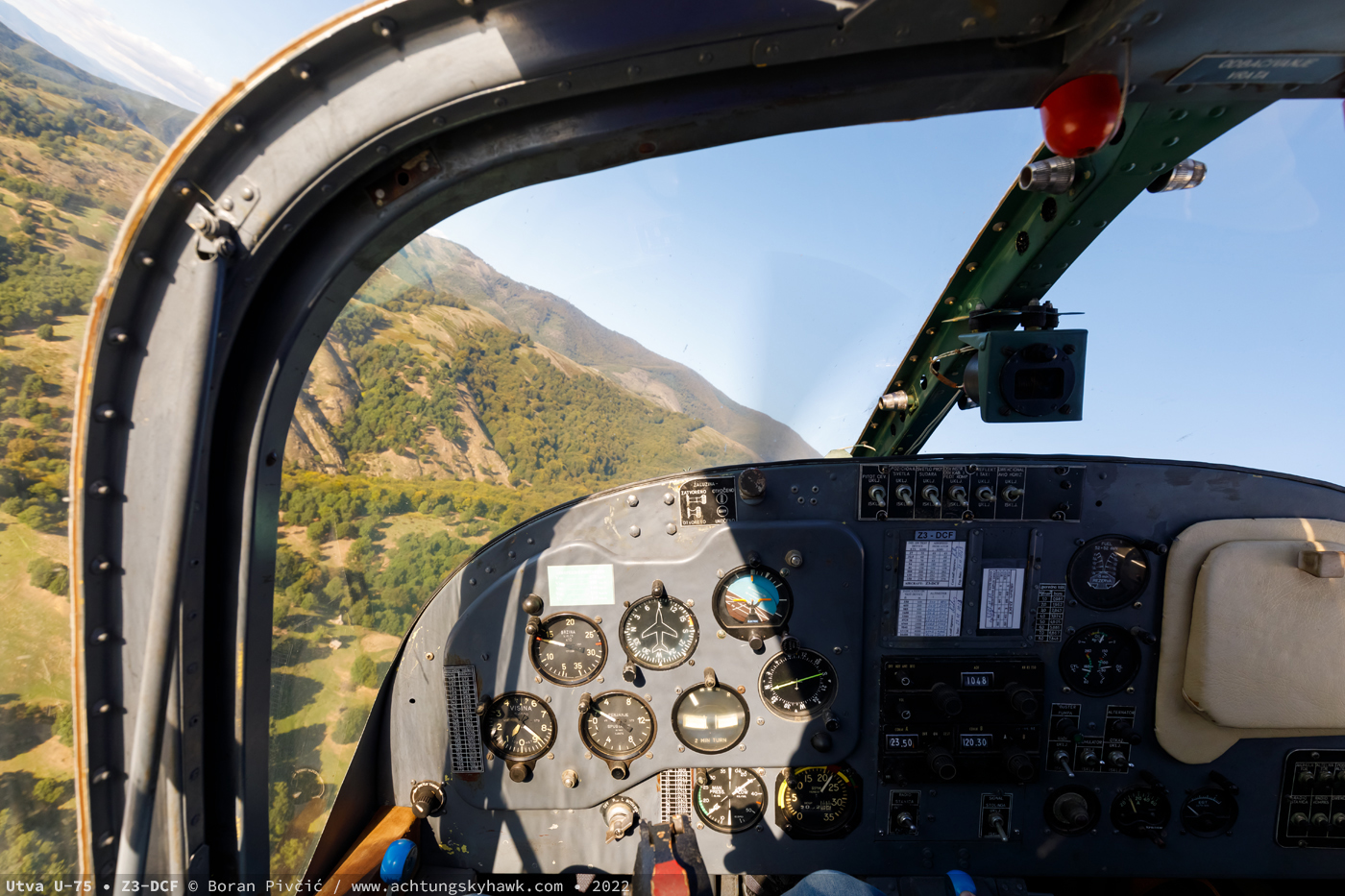
Stick, rudder, throttle… and outside the sun-kissed slopes of Mt. Plačkovica. Had worse days out to be honest!

I may be biased – having grown up around hills, forests and rivers – but the views out here are a sight for sore eyes! Another sight that fails to escape notice is the 75’s small(ish) wing, which does make for quite a good view down. Despite its lack of span however, the wing area is still significant at 14.63 m2; at the type’s usual7 960 kg Maximum Take Off Mass (MTOM), the resulting wing loading is just 65.3 kg/m2, not that much more than the 64.4 of the average 80s Skyhawk
5 while all the countries that broke away from Yugoslavia outright had sizable fleets of U-75s on the eve of independence (Macedonia 10, Slovenia 15 and Croatia 14), it is the Macedonian fleet in particular that warrants another tangent. By virtue of the country’s peaceful and orderly departure, with none of the fireworks seen up north, its 75s were neither sent to the front, nor pushed to destruction through intensive training and liaison operations; indeed, it took two years from the country’s SEP 1991 independence for them to even be drafted. What’s more, faced with the same lack of spares and support as everybody else, it appears that only two machines would actually be impressed and used: DCF and 53167 YU-DFZ/Z3-DFZ (later renamed Z3-DCE).
Being out of harm’s way also meant that quite a significant number of them had survived to fly another day. Of the 10 in country at the time of independence, eight were operational, and six would eventually live to see the Z3- prefix be introduced. According to available info, three remain flying today, DCE, DCF and 53118 YU-DFB/Z3-DCC/Z3-DAN. While this may not sound like something to write home about, the total sum of operational examples in Slovenia and Croatia is currently… zero
6 try to spot a pattern:
- Slovenia declares independence… impresses U-75s from flying clubs… replaces them with Zlin Z-242Ls
- Croatia declares independence… impresses U-75s from flying clubs… replaces them with Zlin Z-242Ls
- Macedonia declares independence… impresses U-75s from flying clubs… replaces them with Zlin Z-242Ls
Either the Zlin really is that good… or we Balkan people are an unimaginative lot 🤔. Joking aside, there are some notable differences though: while Slovenia and Macedonia had ditched their fleets already in the mid-90s, Croatia held on to them until all the way until 2007. Croatia too would be the only one to NOT return the aircraft to their original owners – bar for one, mentioned later
7 I say “usual” because the U-75 actually had two MTOMs – the applicability of which depended, quite literally, on how many times you wanted to use the airplane afterwards. In the “training configuration” (used by the military in peacetime and by civilian operators all the time), the MTOM was capped at the aforementioned 960 kg, which was sufficient for two RV-standard crew and full tanks (2x 75 l). Critically, this was also identical to the Maximum Landing Mass (MLM), keeping things nice and simple, and assuring that the aircraft would (barring “unforeseen circumstances”) survive intact to its expiration date.
In the “combat configuration” however, the MTOM went up to 1,200 kg, which now allowed for two RV-standard crew, full tanks – and, critically, the maximum permissible war load of two 120 kg bombs (960 + 240). Since the aircraft’s role as nuisance raider meant that its expected lifetime in an actual shooting scenario was rather low, the additional stresses imposed on the structure while maneuvering at such masses were not considered limiting – especially since the aircraft would in all probability be lost well before it began to suffer from the strain.
The 1,200 kg limit would have also been pertinent for a proposed “ferry configuration”, in which the aircraft would be fitted with 2x 100 l external tanks, one on each wing hardpoint. With a resulting 350 l of usable fuel, this setup was projected to give a range of almost 2,000 km – but in reality, the aircraft had never been flown even close to that during flight testing, and the whole idea would eventually go nowhere
BONUS: The Silent Ones
With the “three” now accounted for, it’s time to turn our attention to the “a bit” part. This “organized Utva hunting” being a relatively recent development (2017-2018, and then 2022 onward), it took me until typing this whole thing up to realize that I’ve been stumbling upon various U-75s since 2010, usually by accident and without prior knowledge of their existence. Having written off those encounters as a “one of” each time – “like that’s ever gonna happen again” – collating all of those photos into a single gallery had never really occurred to me… until I spotted E7-PDB in one of the shots above and went “hmm”. So, since it is the main culprit for this piece twice as long as it needs to be, we’ll start from there…

A gem straight out of the gate: ID 53182, making it Z3-DCF’s immediate older brother. Initially called YU-DGV, it was operated by AK Prijedor since Day 1; however, in the early 90s it would be impressed into the Bosnian Serb army and given the ID 51104 (it is unclear why the Bosnian Serb military used the Yugoslav type designation for the Cessna 185-lookalike Utva U-66). Following the end of the war, it would eventually become T9-PDB and then E7-PDB. Withdrawn from use sometime in the late 2000s, its future is unclear… though it would surprise no one if it became a parts donor to keep PDC running

E7-PDA, kept company by U-66V E7-PDI/51138 and shot across the dorsal fin of U-66 E7-PDJ/51143… what in another time could have been an Utva promo shot has, sadly, become just another reminder of the demise of the region’s aviation sector as a whole. Manufactured in 1983 with the serial 53219, its history mirrors that of PDB: from being YU-DIZ with AK Prijedor, through 51105 in the military, to T9-PDA & E7-PDA…
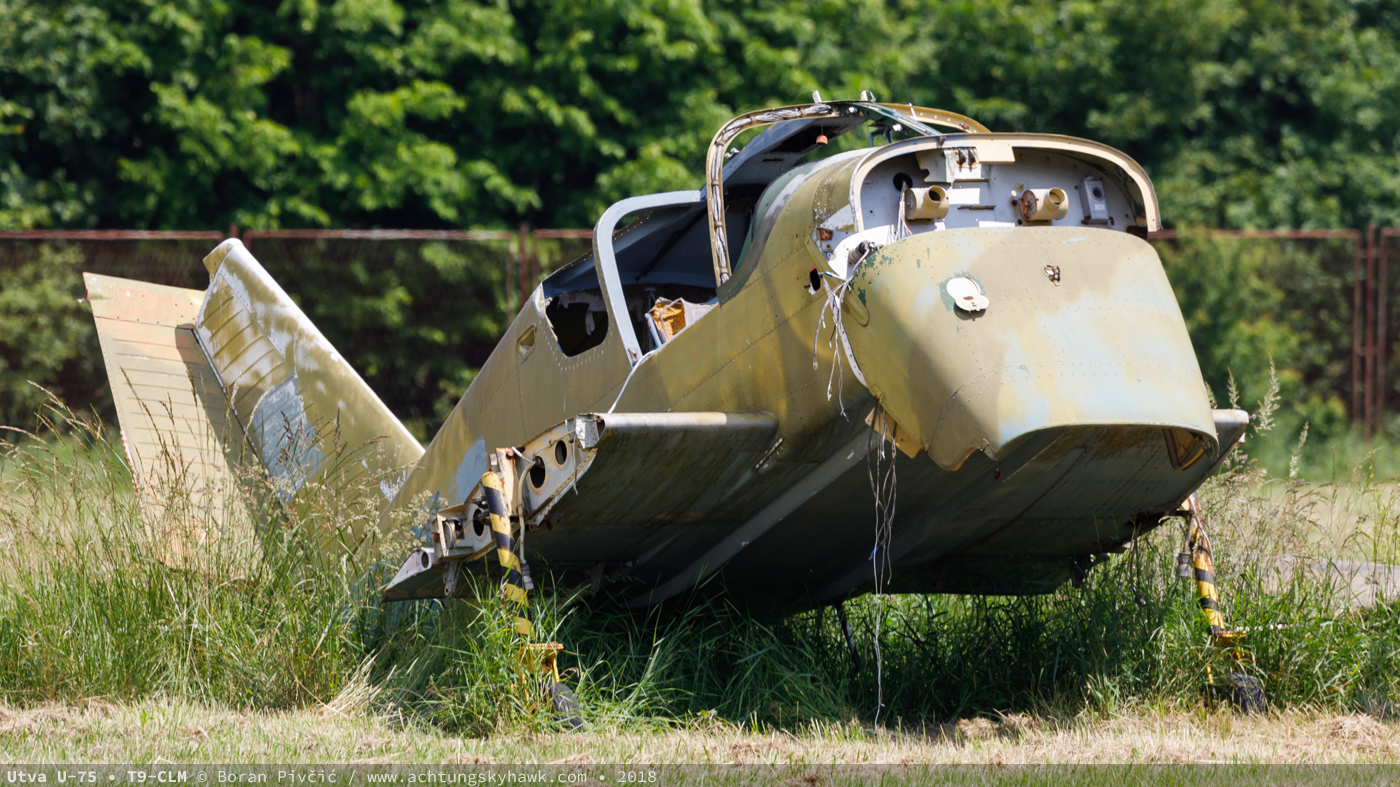
’tis but a scratch! Born in 1981 with the serial 53187, this sad mess was initially known as YU-DHB, first of AK Banja Luka, and then later AK Bihać. One of the few machines to end up in the hands of the newly-established Bosnian Army, it would become known for its 15 JUN 1992 dash from Cazin to Zagreb (100 knots, at night, through unfriendly skies), intended to open up an air bridge between the Bihać area and the Croatian capital. Having stayed at Zagreb (a return flight at that moment likely being deemed too risky), it would be used to train the upcoming generation of Bosnian military pilots, gaining a camo paint scheme and the reg T9-CLM sometime in 1993. It has been reported by some sources that it had actually made a few runs back to Bihać once the military situation had stabilized; be that as it may, the end of hostilities in 1995 would find it back at Zagreb undergoing heavy maintenance. Through a chain of events that’s not entirely clear, it would end up staying here forever, being slowly stripped of parts to keep the Croatian Air Force’s own fleet flying…
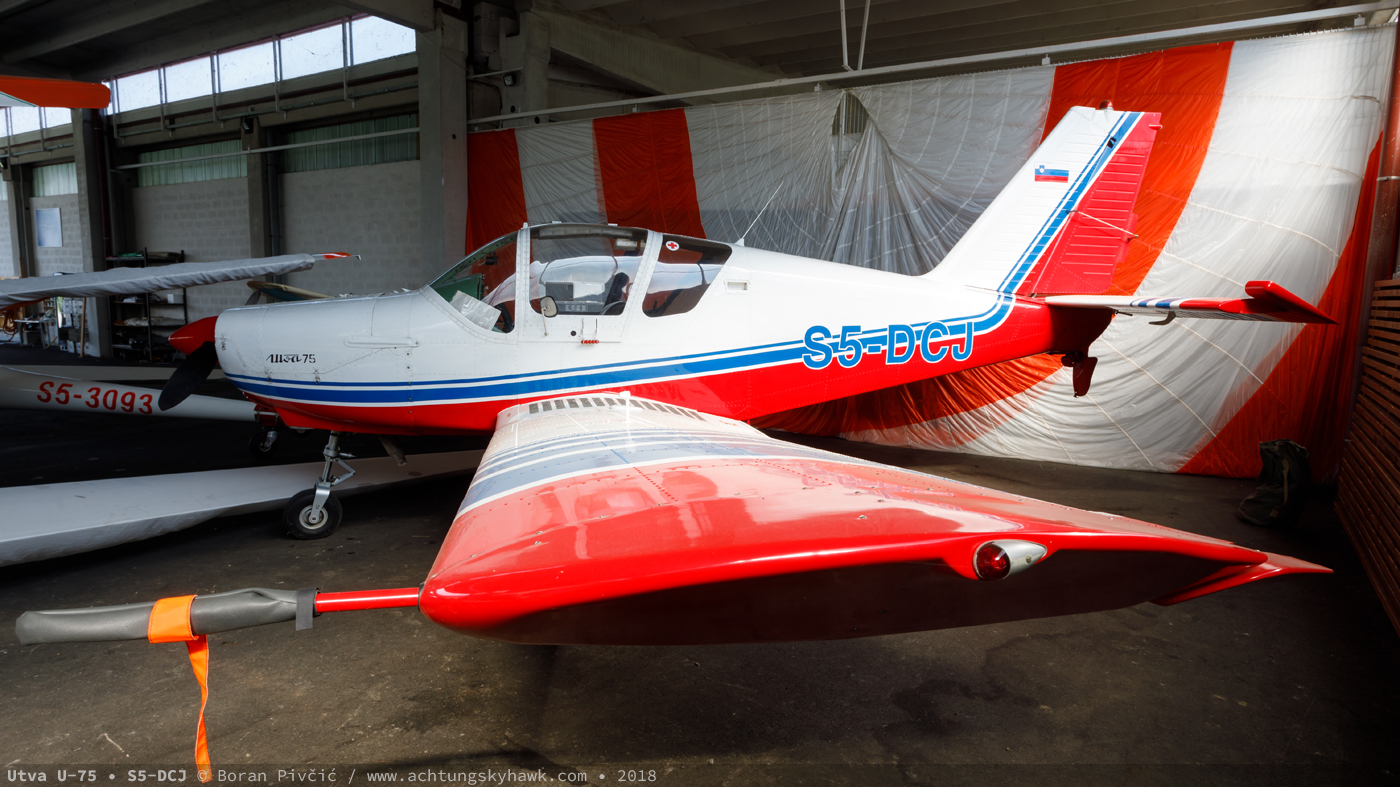
Forming with T9-CLM the second of two “sequential ID” pairs in my collection, 53188 was delivered new to AK Celje as YU-DHC, and would stay with them all the way until its impressment in 1991. Its history immediately after joining the military has some gaps to it, and I could not confirm whether it had ever carried the temporary SL- prefix; what I can confirm is that it became S5-DCJ while there, before rejoining its old alma mater after the introduction of the Zlins. It would serve there primarily as a glider tug, before being replaced by more manageable Western types – including Piper Pawnee HA-TNC, previously a Lučko native called 9A-BLF… and before that YU-BLF, one of a number of PA-25s operated by Privredna avijacija Zagreb

Caught between a trike and a hard place, the 1979 vintage 53122 is the second oldest U-75 I have on file. Originally known as YU-DKT, it would be allocated to AK Novo Mesto, based at the Slovenian airfield of the same name (nowadays LJNM) – ironically today home to world’s sole remaining four-seat U-75A. As was the case with DCJ, I could find no definitive proof that it had carried the SL- prefix in military service, only that it would return to civilian life under the reg S5-DCD. At some unknown point in time (but apparently quite a while ago), it would be withdrawn from use and chucked in the back of the hangar at nearby Metlika Airfield

The first U-75 I have on digital… but not the first one I’ve ever photographed, the honor going to DCI on film in 2002. 53233 from 1983, new to AK Murska Sobota as YU-DJH, all the 1991-1994 stuff as before, renamed into S5-DCN. Don’t really know what had happened to it since, saw it last in 2010 when it was still airworthy…

What could easily pass as an 80s flight line is, in fact, just part of the decommissioned U-75 fleet of the Croatian Air Force (10 strong at its peak). Leading the pack is 009 (1981 • 53177 • YU-DGH of AK Split > 001 of the CroAF (not to be confused with the later 001 of the CroAF) > 9A-DCH of the CroAF > 009 (despite still carrying the civilian reg) … then there’s 002 (1980 • 53169 • YU-DGB of AK Rijeka > 169 of the CroAF > 9A-DGB of the CroAF > 002) … further on, we have 010 (1981 • 53191 • YU-DHF of AK Slavonski Brod > 9A-DHF of the CroAF > 010) … and finally 011 (1983 • 53215 • YU-DJD of AK Vrsar > 9A-DJD of the CroAF > 011)
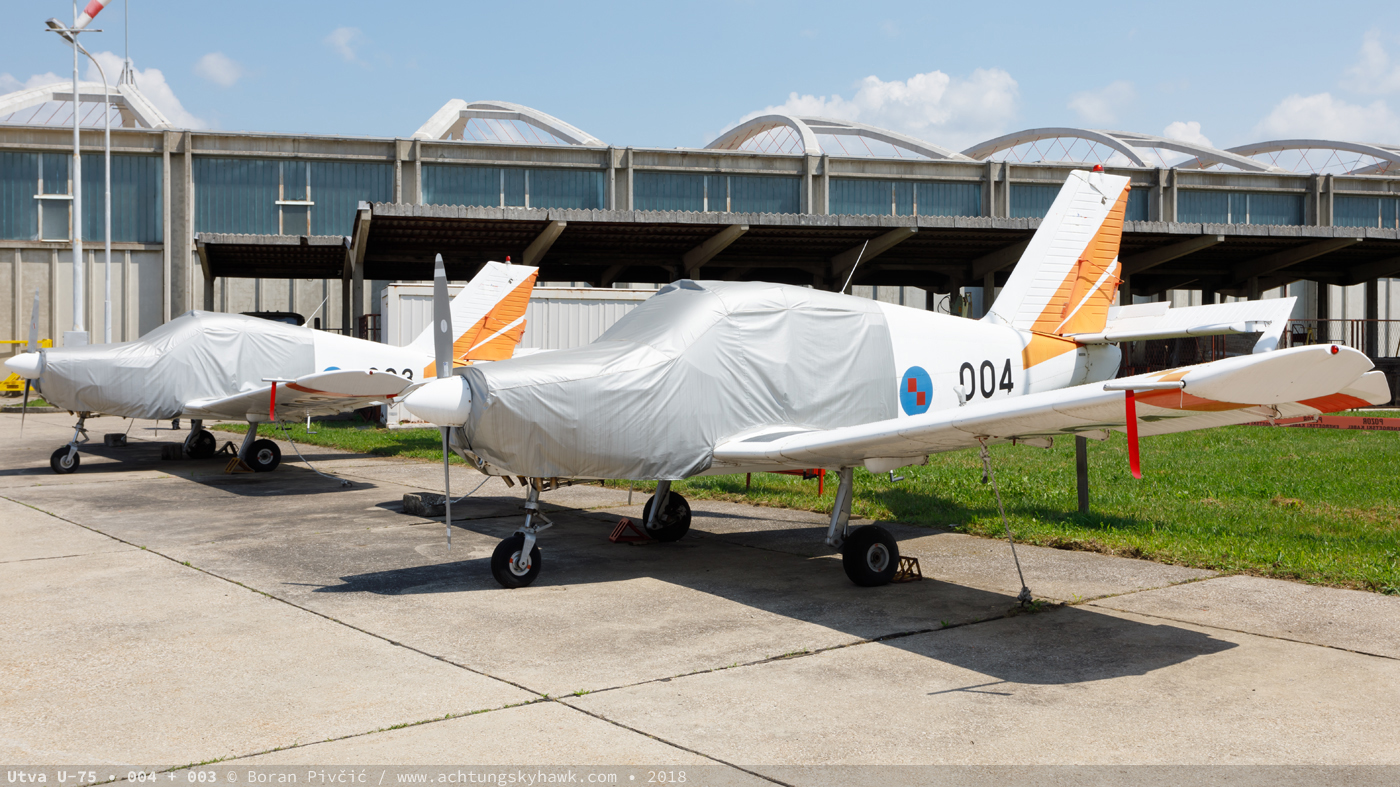
Crap photo, but featuring by far the oldest U-75 I have: 004. Just the seventh ever made (being 53107 of 1979), it would be operated by AK Osijek as YU-DED, before becoming 9A-DED of the Croatian Air Force and assuming its current military identity in 1995. Behind it is 003, 53179 from 1981, originally YU-DGS of AK Kila Like, then briefly 179 of the Croatian Air Force – and then 9A-DGS and finally 003 (UPDATE: as on June 2025, 003 is in the process of being returned to AK Otočac, the successor of AK Krila Like; it is unknown at this time whether it will be just a static example, or will it be returned to airworthy state)

The One That Made It Home – sort of. 53206 of 1982 and initially YU-DIH of AK Čakovec, wartime would find it without a temporary military ID8, and apparently without an RC- reg as well (despite having been QUITE active back then); it would appear in the registers only slightly later as 9A-DIH, before taking up its definitive Croatian Air Force ID, 008. The only U-75 to have been returned to its original owners following the type’s withdrawal from service, it would briefly become know as 9A-DIR (according to some sources), before finally reverting to its new-old identity. Seen here in 2016 during the final stages of a wheels-up restoration, it was supposed to become the first civilian-owned U-75 to fly in Croatia since 1991; unfortunately, a series of events (including the death of the mechanic doing all the work) meant that the project stalled at some 95% complete – and apart from a fast taxi down the runway, it had never actually made it out of the hangar. A couple of years later though, it would be sold to the Delić family of Medulin (LDPM) – well known locally for undertaking such restoration work on a regular basis, and whose members had been very active on the U-75 scene in Yugoslav times – with plans to finally finish it and get it back into the air after nearly 20 years9…
8 because the U-75s had joined the fight during the utter chaos of the first days of the war, it is of no surprise that their new Croatian identities had ended up being all over the shop. Most of the units operating light aircraft had sprung up essentially where and when they could, formed almost entirely through self-initiative and without much in the way of standardization from a central military authority. Thus, each unit had adopted a different way of identifying its aircraft, including:
- the last three letters of their original Yugoslav registration, with the YU- completely or partially removed or covered (e.g. DED, U-DHF and -DIH)
- the last three digits of their original Yugoslav military ID (such as 169 for YU-DGB, 179 for YU-DGS and 227 for YU-DJL/53227)
- and the sequence of joining the unit (001 for YU-DGH or 002 for YU-DLD/53239 for example)
Once the “early days” had passed and the Air Force had managed to bring everything together under one roof, the U-75s would begin to receive civilian registrations – in essence just their old Yugoslav regs, but with RC- and later 9A- prefixes. The reasons for this are not entirely clear, but it has been suggested that this was a means to pass them off as non-military aircraft, thus bypassing the arms embargo imposed on the whole of former Yugoslavia, and allowing for the import of Western-made spare parts (particularly engines and propellers). Only around the end of the war in 1995 would the markings finally be put right with the standardized system used by the air force at large, the U-75s (as the OG air units) being allocated the 0xx block.
Mind you, things were not that straightforward even after the latter was adopted; 9A-DGH (which was 001 in its original unit) would now become 009, whereas 001 would go to a U-75 captured in 1995 during Operation Storm (ex. 53255, a military original with no prior civilian usage or reg)
9 something similar is afoot in Slovenia as well, with AK Slovenske Konjice well on its way to bringing its own 75 back into service. Reported to be as much as 90% done and just waiting on its engine, the aircraft in question is a 1983‘s 53216; interestingly, this is not a Slovenian native, having originally been operated by AK Kumanovo of Macedonia as YU-DJE. Heavily damaged in 1993 during a period of upheaval among the country’s Albanian population, it would be shipped off to Serbia for a complete rebuild in 2001 – and then sold on to AK Slovenske Konjice the same year to become S5-DPM. Having (again) not flown for some years, it is now back in the hands of the people who had rebuilt it the first time round, with a projected (third?) first flight due sometime in the summer of 2025… so watch this space!
BONUS DISCUSSION/RANT: as you have probably noticed (and lost time getting to grips with), the most complex thing about the U-75 is actually the system that created it. With military IDs, civilian regs, aviation federations, four-seat models and so on, it’s very easy to lose track of the basics, and build up an incorrect picture of stuff like the type’s production run, prototypes, versions and other nerdy bits (myself having been guilty of that numerous times). “If 53261 was the last of the production batch, why did I find mention of 53262 and 53265 on the internet?” “If there were only two prototypes, why do some sources also list 53003 and 53004?” and so on. Well, to set the record straight – and not through me being smart, but by asking people from the Utva works itself – here’s a very quick & dirty recap of what was actually going on…
All told, there were 138 U-75s produced, prototypes and production examples included. The first bit of myth-busting concerns the former; and since there’s no one-liner to describe them, we have to make do with a list:
- 53001: the first prototype (sometimes labeled as V53001)
- 53002: the second prototype
- 53003: the first pre-production aircraft – and the first to start the confusion rolling. Representing what the production-standard U-75 would eventually look like and intended to iron out the final bugs, it got caught up in one of the RV’s many whims, specifically a decree that all the aircraft made should be classified EITHER as prototypes or production machines. Since it was, after all, the template for actual production, the Utva works simply rolled with it, and 53003 became 53101, the first of the series examples (incidentally, despite them being called just “U-75” in everyday usage, their proper name is actually U-75A-21)
- 53004: the second pre-production example. Caught up in the same issue as 53003, it would go down a different route, being converted into the first incarnation of the four-seat U-75, called the U-78. Seeing as this was a major “prototype-ish” mod, it had managed to retain this ID until being lost in a crash in 1981
Production examples, as mentioned, came in two batches, 53101+53102 till 53124 and 53151 till 53261; the reason for the gap in IDs has never been conclusively established (since the airplanes were produced pretty much in one go), but it is believed to be another one of the RV’s idiosyncrasies. The outlier here is 53262, the final all-new U-75 ever made. The only machine not intended for the RV/VSJ (hence it mostly being excluded and consequently forgotten from production lists), it was destined for Jordan (to become JY-AKI), but was damaged in a test flight in 1986, and ended up being used as a spares donor for the existing RV fleet.
And finally, two examples that tend to cause way more confusion than actual impact – primarily because they carry bespoke follow-on IDs but are actually based on existing airframes:
- 53263: originally registered YU-XAC (and later YU-BRJ), this was the second incarnation of the U-75 four-seater. Properly called the U-75A-41 (or simply just the U-75A), this was a less extensive rework than the U-78, and was actually made from the surviving bits of 53004, combined with new-built parts and spares; so despite having an entirely new ID number, it was physically (well mostly) an existing example
- 53265: registered YU-XAF, this was a single-seat crop dusting model called the U-75A-11 (or U-75AG to common folk), and was similarly made out of the shell of 53185 following an accident… again, new number, (mostly) existing airframe
53264 (before anyone asks) did not exists; stories say it was supposed to be a twin-engine model… but that may as well be apocryphal, since there is no existing paper trail to ever mention it. Similarly, the aforementioned Somaliland examples – as well as Sudan’s SAFAT 03, 6-12 re-badged U-75s claimed to have been designed and built in-country – are in actuality all standard VSJ U-75s, though their actual IDs are pretty much impossible to ascertain.
So, the final tally is as follows:
- 2x prototypes
- 1x U-78 (later to be rebuilt into 53263)
- 135x production examples (including 53003/53101, 53185/53265 and 53262)
Summary of aircraft featured (state as of MAR 2025):
- 53107 •• 1979 • 004 • non operational
- 53122 •• 1979 • S5-DCD • non operational
- 53169 •• 1980 • 002 • non operational
- 53171 •• 1980 • S5-DCI • non operational
- 53177 •• 1981 • 009 • non operational
- 53179 •• 1981 • 003 • non operational
- 53182 •• 1981 • Z3-DCF • operational
- 53183 •• 1981 • E7-PDB • non operational
- 53187 •• 1981 • T9-CLM • non operational
- 53188 •• 1981 • S5-DCJ • non operational
- 53191 •• 1981 • 010 • non operational
- 53206 •• 1982 • 9A-DIH • in rebuild
- 53215 •• 1983 • 011 • non operational
- 53219 •• 1983 • E7-PDA • non operational
- 53223 •• 1983 • S5-DCN • non operational
- 53238 •• 1985 • E7-PDC • operational
Sources:
- Istorija vazduhoplovstva Pančeva: Utva 75 (printed book by Dragan Kolundžić & Dragoslav Dimić)
- Utva 75 – album VSJ (printed book by Dragan Kolundžić)
- Utva: fabrika aviona 1937-2022 (printed book by Dragan Kolundžić)
- Tango Six – U-75 article (in Serbian)
- sources used in the past two articles, most notably of all Mr. Dragan Kolundžić himself







 Achtung, Skyhawk!